Amanda Gluibizzi

Amanda Gluibizzi is an art editor at the Rail. An art historian, she is the Co-Director of the New Foundation for Art History and the author of Art and Design in 1960s New York (2021, paperback 2025).

Our impressions of Hawai‘i have often been so overtaken by stereotypes—by the simulacra of tiki culture or The White Lotus, as appealing as they are—that its history and native visual culture are regularly obscured.
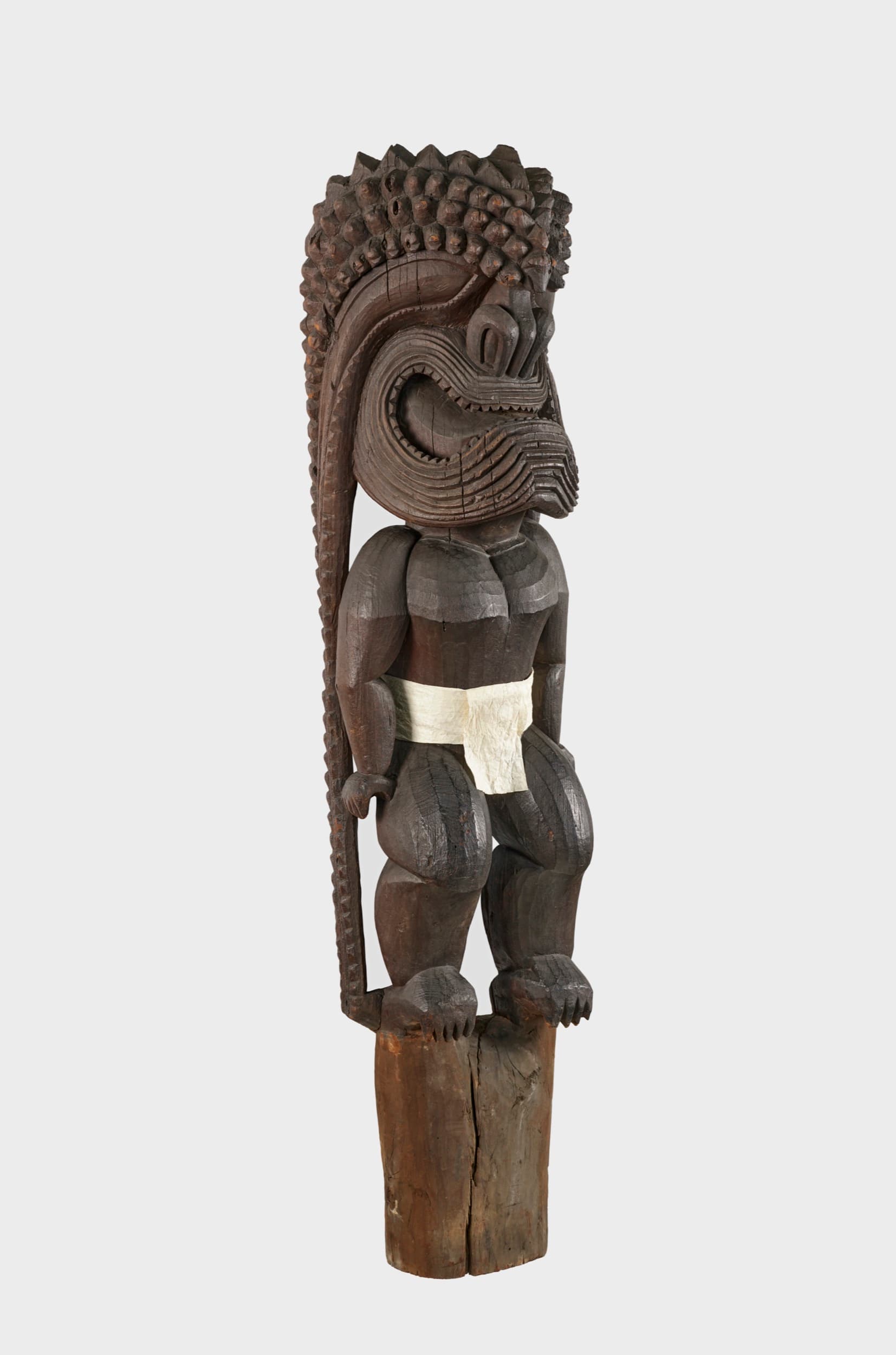
Kiʻi (image) of the god Kū, 1790–1819. Breadfruit tree wood, 102 ¾ × 27 ⅕ × 21 ⅗ inches. © The Trustees of the British Museum.

Contours of a World seeks to correct the paltriness of the art historical record. Both the Tate Modern in 2024 and the Guggenheim in 2021 acknowledged Münter’s centrality in Der Blaue Reiter and as a significant participant in early twentieth-century European modernism, but in the current show, she is presented as an artistic voice in her own right.
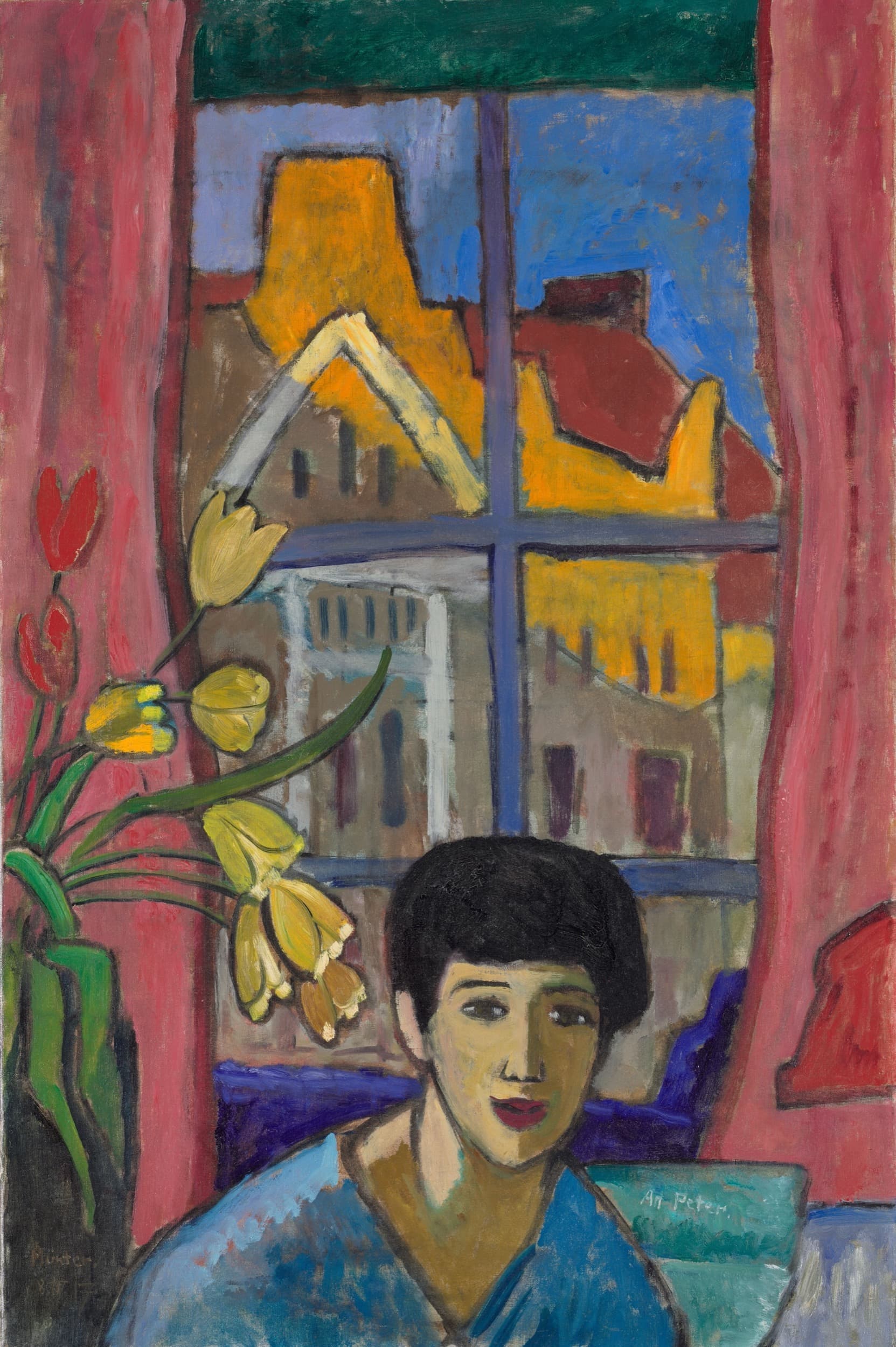
Gabriele Münter, Future (Woman in Stockholm), 1917. Oil on canvas, 38 ⅜ × 25 ⅛ inches. © 2025 Artists Rights Society (ARS), New York / VG Bild-Kunst, Bonn. Courtesy the Guggenheim. Photo: Courtesy the Cleveland Museum of Art.

A Grand Sweep covers thirty years of Helen Frankenthaler’s career, ranging from the then-twenty-nine-year-old painter’s Jacob’s Ladder (1957) to Toward Dark (1988), finished when she was sixty—from hints of narrative and iconography to a melancholy looming of paint.

Helen Frankenthaler, Jacob's Ladder, 1957. Oil on canvas, 113 ⅜ × 69 ⅞ inches. Courtesy the Museum of Modern Art, New York.

UFOs didn’t always look like this: they have their own art history. There are remarkably few flying saucers in Voice of Space: UFOs and Paranormal Phenomena, a show at the Drawing Center curated by Olivia Shao, though they do make some appearances.
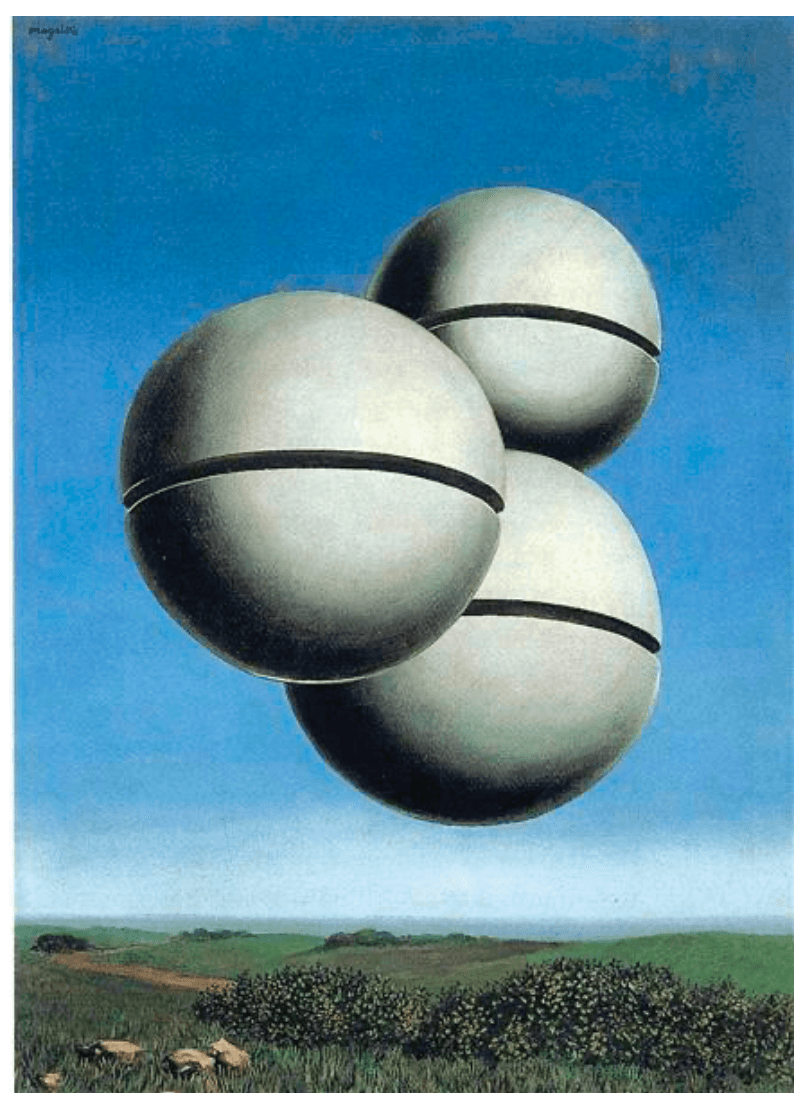
Rene Magritte, Voice of Space, 1931. Oil on canvas, 28 ⅝ × 21 ⅜ inches. Courtesy of the Peggy Guggenheim Collection, Venice (Solomon R. Guggenheim Foundation, New York).

I met with Pamela Phatsimo Sunstrum over Zoom in early November. It was late afternoon in The Hague, the Dutch city of old masters and international diplomacy she now calls home. We spoke about her newest exhibition of paintings on panel and drawings at Galerie Lelong in New York, Parabellum, and the liminality that adheres to space, time, identity, and growing up.
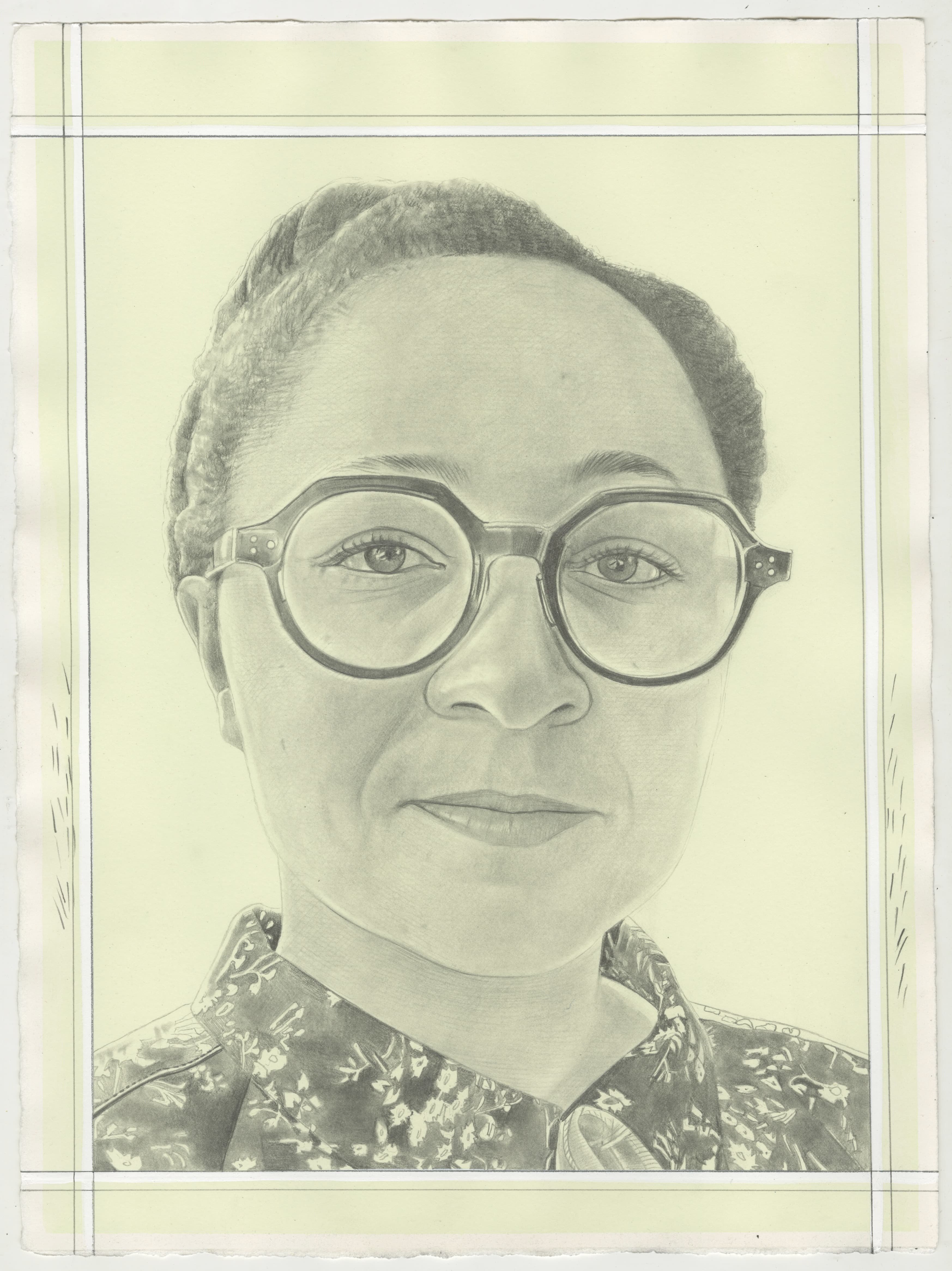
Portrait of Pamela Phatsimo Sunstrum, pencil on paper by Phong H. Bui.

“I just received this wonderful note: one of the visitors, in the handwriting obviously of a young child, left me a note that said, ‘I love the art, but why are all your images fuzzy?’ I love that.” That was how Ann Hamilton began her answer to me about what she’d learned from the process of developing We Will Sing (2025), a large-scale project installed in Bradford, UK. Hamilton portrays her projects as tapestries, nodding to her beginnings as a textile artist and referring as well to the tightly woven visual and aural communities that result from her interventions and collaborations. Acknowledging the close attention undertaken by her visitors and responding with love is emblematic of Ann Hamilton’s embracing and generous practice.

Portrait of Ann Hamilton, pencil on paper by Phong H. Bui.

The opening walls of Tomma Abts’s newest exhibition at David Zwirner are empty, just expanses of gleaming white in front and to the left of our eyes. The three works included in the first gallery hang to our right and behind us—one, Nanko (2025), by itself and the other two, Saske (2024) and Tekes (2022), near each other on the same wall. We could read this as modesty or perhaps as an opportunity for a moment of blankness after leaving the busyness of the street; maybe it’s both.

Tomma Abts, Nanko, 2025. Acrylic and oil on canvas, 18 7/8 × 15 inches. © Tomma Abts. Courtesy the artist and David Zwirner.

At Craig Starr this spring, Tom Otterness re-presents The Frieze, for many of us displayed for the first time. Despite originally intended in 1981–83 as an architectural molding, Otterness has installed it now as discrete panels, all cast in 2025. The work depicts a battle of the sexes, with women facing off against men and deposing (and quartering) their king. 

Portrait of Tom Otterness, pencil on paper by Phong H. Bui.

In addition to its focus on artists’ collectives, Electric Dreams establishes the collaborative by displaying art as “‘systems’ to transmit information, with self-regulating and responsive behaviours (feedback loops) in which the viewer or their environment becomes an active component.” 

Carlos Cruz-Diez, Environnement Chromointerférent, 1974/2018. © Carlos Cruz-Diez / Bridgeman Images, Paris 2024. Photo © 2023 Andrea Rossetti.

Run Together and Look Ugly after the First Rain at Casey Kaplan continues Amanda Williams’s exploration of color, questions about black and Blackness, and interest in the built environment while pushing her practice conceptually and materially. 

Portrait of Amanda Williams, pencil on paper by Phong H. Bui.

Galleries have long been exemplars of adaptive reuse, and Jack Shainman is no exception. The School, the gallery’s upstate project in Kinderhook, NY, repurposed a former high school, opening in 2014 with an inaugural show by the artist Nick Cave.
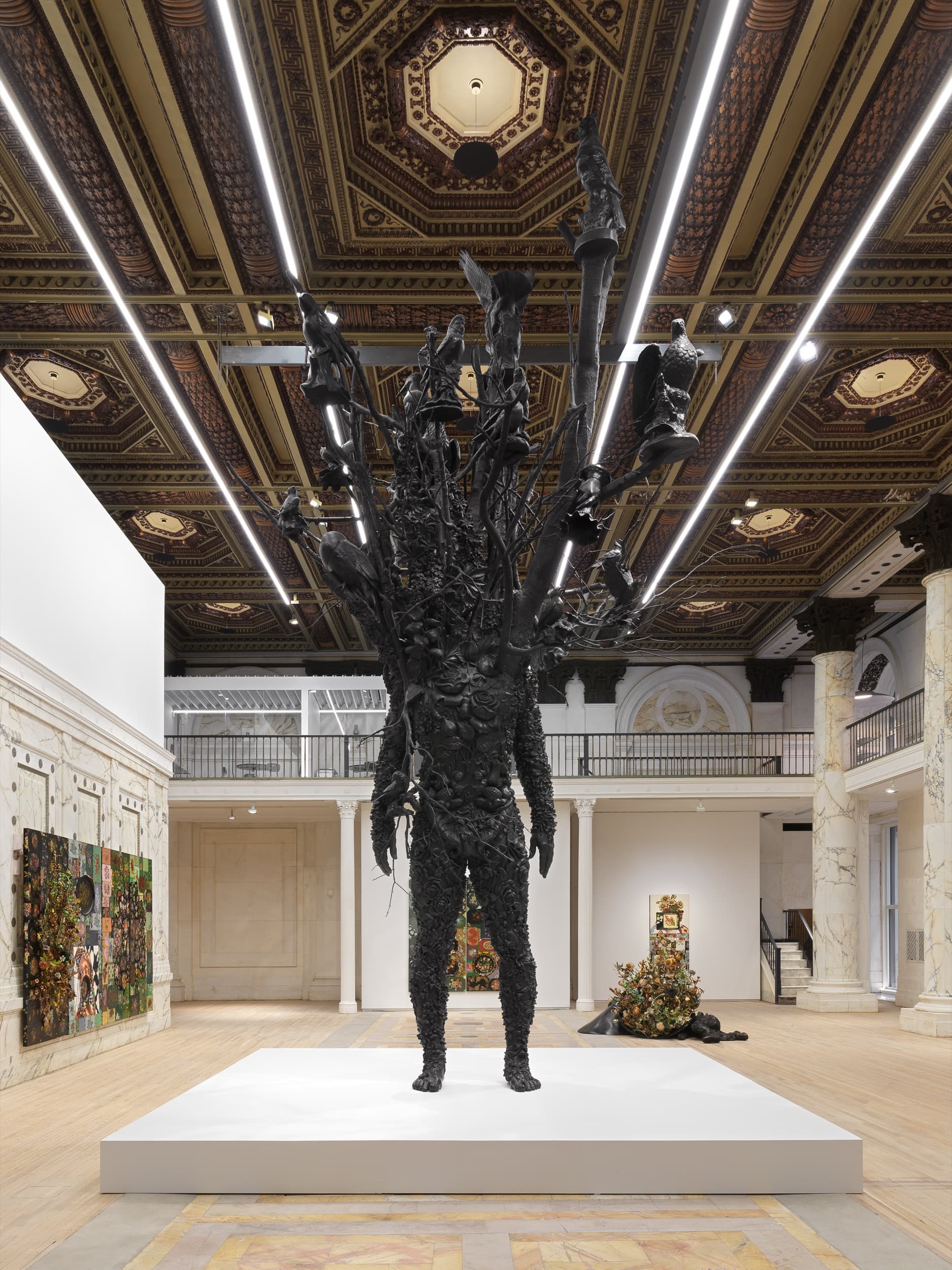
Installation view: Nick Cave: Amalgams and Graphts, Jack Shainman Gallery, New York, 2025. Courtesy Jack Shainman Gallery.

Sixteen years ago, artist Francis Alÿs realized The Gibraltar Projects: Don’t Cross the Bridge before You Get to the River (2008), a performance that called for collaborators to launch boats on each shore, thereby connecting the European and African coasts across the 7.7-mile narrow point of the Strait of Gibraltar.

Francis Alÿs (in collaboration with Rafael Ortega, Julien Devaux, Felix Blume, Ivan Boccara, Abbas Benheim, Fundación Montenmedio Arte, and children of Tangier and Tarifa), Don’t Cross the Bridge Before You Get to the River (Strait of Gibraltar, Morocco-Spain), 2008. © Francis Alÿs. Courtesy the artist and David Zwirner.

Curated by Jess Wilcox and Heather Alexis Smith, Shape Shift is a retrospective that does not trade in nostalgia; rather, it is propulsive and purposeful, much like Burton’s intelligent pursuit of architectures that cause us to think, and think again, about art, its forms, and its communities.

Installation view: Scott Burton: Shape Shift, the Pulitzer Arts Foundation, 2024–25. © 2024 Estate of Scott Burton/ Artists Rights Society (ARS) Courtesy the Pulitzer Arts Foundation. Photo: Alise O'Brien Photography.

This fall, the polymathic artist Robert Longo will see four different solo exhibitions open within a month of each other. Longo and I spoke in his studio in August 2024 before he traveled to Europe, in a conversation that ranged from his current shows to his beginnings as an artist, from how he finds and uses images gleaned from the internet to his desire to make work that is immediate—that “happens every time you see it.”

Portrait of Robert Longo, pencil on paper by Phong H. Bui.

Once you turn the corner of the corridor that begins Doug Wheeler’s installation DN ND WD 180 EN - NY 24 (2024), you see a light-filled niche at a slight distance off to the left while you confront a glowing magenta panel, so potent that it reflects and hovers in the glossy floor you’ve just walked onto.

Installation view: Doug Wheeler: Day Night Day, David Zwirner, New York, 2024. Courtesy David Zwirner.

In her solo installation at the Wallace in London, painter Flora Yukhnovich responds to the institution’s exemplary collection of Rococo paintings while simultaneously taking direct aim at longstanding concerns about the “feminizing” quality of the Rococo and worries that all-over painting might skew toward the decorative.

Flora Yukhnovich, A World of Pure Imagination, 2024. Oil on linen, 102 x 77 1/2 inches. © Flora Yukhnovich. Courtesy the artist and Victoria Miro.
Antony Gormley’s Aerial is unlike anything the artist has installed in this country and indeed does not have many direct precedents in his earlier practice. Aerial takes the form of a complex grid that derives its coordinates from the gallery that houses it, and while it completely fills the space, it is not a solid cube that we can only walk around; instead, Aerial is penetrable, both visually and physically.
Portrait of Antony Gormley, pencil on paper by Phong H. Bui.
The bright creaminess of what was the newly completed sculpture has darkened to a warm sepia, almost as if it were an aged photograph of the thing in addition to the thing itself. The expansion is expanded, in the past. It is done.
Installation view: Eva Hesse: Five Sculptures, Hauser & Wirth New York, 2024. © The Estate of Eva Hesse. Courtesy Hauser & Wirth. Photo: Matt Grubb.
“In [Sonia Delaunay’s] studio,” a 1927 advertising flyer promised, “you will know that you are seeing something new, something that… will transform your life into a work of art.” Delaunay’s Paris atelier in the twenties was producing textiles, carpets, garments, movie sets, furniture, books, and paintings—everything a person might need for an artful existence and all made in the “simultaneous” (simultané) style that the artist developed with her husband, the painter Robert Delaunay.
Sonia Delaunay, Robe simultanée, 1913. Patchwork of various textiles. Private collection. Courtesy the artist and Bard Graduate Center. Photo: Bruce M. White. © Pracusa.
I visited artist Loie Hollowell at her bright Queens studio on a bristlingly cold February day. We were meeting to discuss her ten-year survey at the Aldrich Contemporary Art Museum in Ridgefield, CT, and her solo exhibition of works on paper at Pace Gallery in Chelsea.
Portrait of Loie Hollowell, pencil on paper by Phong H. Bui.
“You must be here for me,” said a woman sitting at a small desk in the lobby of 101 Greenwich. Whether we didn’t look like office workers, or there are no office workers who head into 101 Greenwich on a weekday afternoon, was left unexplained. We were shown to a dedicated elevator that whisked us to the nineteenth floor where artist Christopher Wool has rented the entire story to install his largest exhibition since his 2014 Guggenheim retrospective.
Installation view: Christopher Wool: See Stop Run, 101 Greenwich Street, New York. Courtesy the artist.
Astrid Klein’s “photoworks,” on display in New York for the first time at Sprüth Magers, operate on several levels. The eight photographs of collages, printed at movie-poster scale using a photographic enlarger, depict female film stars of the 1960s and ’70s.
Astrid Klein, Untitled (je ne parle pas, ...), 1979. Photowork, 65 1/2 × 49 5/8 inches. Courtesy the artist and Sprüth Magers, New York.
Curated by Eric Troncy in commemoration of the fiftieth anniversary of the artist’s death (Almine Rech is married to Picasso’s grandson, Bernard Ruiz-Picasso), and complemented by important exhibitions dedicated to Picasso at museums and galleries throughout New York, The Echo of Picasso demonstrates the very real influence—whether positive or anxiety-inducing—that the artist still exerts on art today.
Installation view: The Echo of Picasso, Almine Rech, New York, 2023. Courtesy Almine Rech. Photo: Thomas Barratt.
What a season for seeing contemporary ceramics in New York. Works by Eiji Uematsu, Edmund de Waal, and Ken Price are all being displayed simultaneously, while Grounded in Clay at the Metropolitan Museum celebrates the history and practice of Pueblo pottery from its origins to the present day. And at Salon 94, Myrtle Williams’s first solo show in New York has immediately added her to this list of masters of the medium.
Installation view: Myrtle Williams: Spirit of the Sisterhood, Salon 94, New York, 2023. Courtesy the artist and Salon 94. © Myrtle Williams. Photo: Elisabeth Bernstein.
If you missed, or have been missing, the MoMA show, Hauser & Wirth’s current Exemplary Modern: Sophie Taeuber-Arp with Contemporary Artists, which includes works that were exhibited at the museum, will tide you over until your next trip to Switzerland.
Sophie Taeuber-Arp, Construction géométrique (Geometric Construction), 1942. Ink over preliminary drawing in pencil on paper, 12 5/8 x 12 inches. © Stiftung Arp e.V., Berlin/Rolandswerth / Artists Rights Society (ARS), New York. Courtesy Stiftung Arp e.V., Berlin/Rolandswerth and Hauser & Wirth. Photo: Alex Delfanne.
As I was talking with London-based artist Helen Marten, my mind kept turning to Robert Smithson’s assertion that his “sense of language is that it is matter and not ideas—i.e. ‘printed matter.’” There are many ways to understand Smithson’s statement, but one would be to take him seriously and to try to understand language as material, as stuff, as a medium with which a visual artist can create.
Portrait of Helen Marten. Pencil on paper by Phong H. Bui.
Every time I see a Lisa Yuskavage exhibition, I’m excited to discover the passages of pure painting that the artist permits herself. In Rendez-vous, Yuskavage’s first solo show in Paris, there are such moments in the striped-and-scraped socks that the artist-model wears in The Artist’s Studio (2022), in the dollops of pigment lined up on a wheeled work table in Big Flesh Studio (2022), and—most delectably—in the lick of an apple that curls up toward a listless model in the lower right-hand corner of the same painting.
Lisa Yuskavage, Golden Studio, 2023. © Lisa Yuskavage. Courtesy the artist and David Zwirner.
We could compare it to storyboards, as indeed, the gallery does, but Sillman allows us more control than we’re given when watching a movie. We’re not simply passive viewers; through our agency the objects are activated. In this way, though monochromatic and hard and made after the moves of painting—and therefore unlike Sillman’s limpid drawings, with their transparent medium and evident switchbacks—Temporary Object bears an important resemblance to the drawings included throughout and testifies to the artist’s process.
Amy Sillman, Mug, 2023. Acrylic, oil on linen, 75 x 66 inches. Courtesy Thomas Dane Gallery.
The installation at Kordansky provides something that fans of Eversley’s sculptures have long desired: the chance to see more of them. For, like his California peers in the Light and Space movement and who developed finish fetish, the ways he plays with and exploits optical effects compound when his work is seen in quantity.
Installation view: Fred Eversley: Cylindrical Lenses, David Kordansky Gallery, 2023. Courtesy the artist and David Kordansky Gallery. Photo: Tom Powel Imaging.
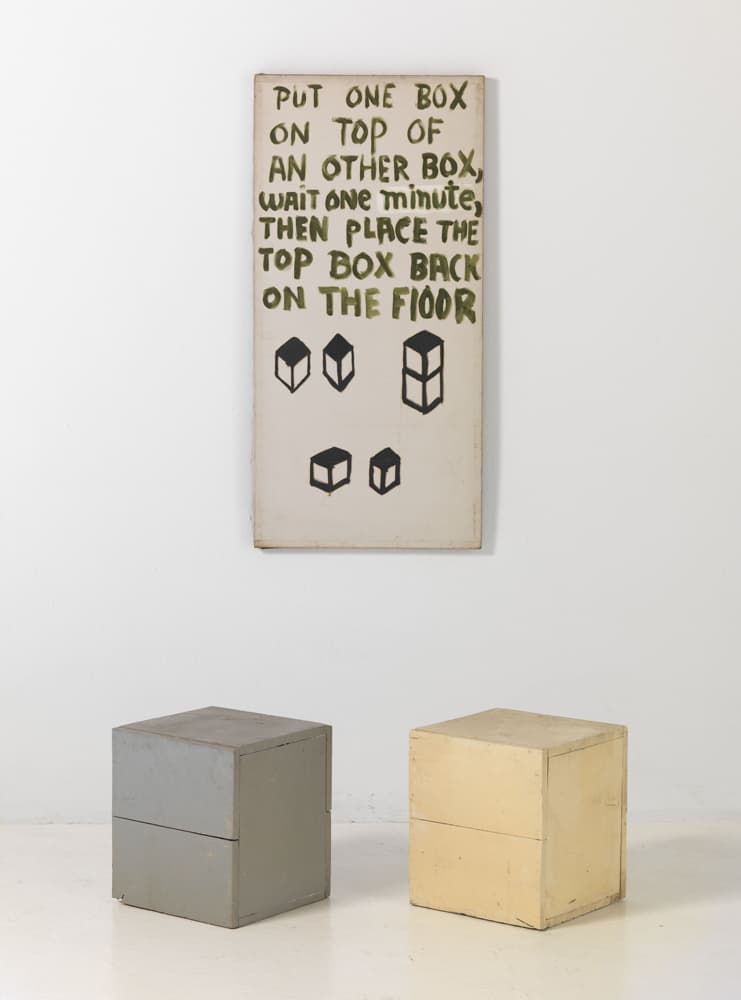
Just as you’re about to step into Walter De Maria: Boxes for Meaningless Work, you might notice a short, high-pitched sound underlying the other noises that occupy museum galleries. It’s the chirping of crickets, and because it emanates from a speaker hung near the ceiling, it seems to envelop the vestibule, both placeable and unlocatable.
Walter De Maria, Put One Box on Top of Another Box, Wait One Minute, Then Place the Top Box on the Floor, 1961. Oil on canvas, wood, and paint, dimensions variable. The Menil Collection, Houston. © The Estate of Walter De Maria. Courtesy Gagosian. Photo: Robert McKeever.
Derrick Adams’s new show at The FLAG Art Foundation, I Can Show You Better than I Can Tell You, is a tribute to the artist’s commitment to color, pattern, and the conditions that make up everyday moments of Black life in America: an expressive melding of form and content.
Portrtait of Derrick Adams, pencil on paper by Phong H. Bui.
When the cedar is fresh and you first cut into it, Ursula von Rydingsvard has said, the wood inside is pink, like “flesh.” Perhaps this is part of the reason why von Rydingsvard has long referred to her sculptures as “she” (though GÒRKA [2021], with its central, vertical lingam may be a “he”)—they’re alive and soft and individual, even as she works within her own aesthetic parameters.
Ursula von Rydingsvard, GÒRKA, 2021. Cedar, 81 x 41 x 14 inches. © Ursula von Rydingsvard. Courtesy Galerie Lelong & Co. Photo: Joshua Simpson.
The possibilities of painting are on full display at Emily Mae Smith’s current exhibition, Heretic Lace, installed at Petzel’s new Chelsea space. This concise show of eleven paintings demonstrates Smith’s command of her medium in strategies such as bravura brushwork, naturalism verging on trompe-l’œil, seamlessly liquid gradients, and backlit contre-jour effects.
Portrait of Emily Mae Smith, pencil on paper by Phong H. Bui.
“These things are BANANAS,” commented another visitor to Bayne Peterson’s Mirage on view at Kristen Lorello. He wasn’t wrong.
Bayne Peterson, Mirage, 2022. Dyed plywood, 14 3/8 x 23 x 11 inches. Courtesy the Artist and Kristen Lorello, NY. Photo: Lance Brewer.
Throughout the Dulwich Picture Gallery’s wide-ranging Reframed: The Woman in the Window, thoughtfully curated by Jennifer Sliwka, we are reminded of that binary—who has agency and who may not?—and the roles that we then assume as viewers of the women represented.
Gerrit Dou, A Woman Playing a Clavichord, c.1665, oil on oak panel, 14.8 x 11.8 inches. Courtesy Dulwich Picture Gallery, London.
This fall, the artist Dan Colen will revisit and expand upon themes that have long preoccupied him in venues as diverse as Gagosian Gallery’s West 21st Street space, the Donald Judd Foundation’s Soho building, and United Nations Plaza. Gagosian will be displaying paintings from Colen’s “Mother” and “Woodworker” series, billboard-sized images that continue his exploration of ideas of home, the development of artists and artistic pursuits, and familiar cartoons as springboards to compositional questions and narratival complexity.
Portrait of Dan Colen, pencil on paper by Phong H. Bui.
Tavares Strachan’s current exhibition at Marian Goodman’s New York gallery leads its viewers through experiences that refute passive contemplation. Installed in several interlocking rooms, The Awakening continues Strachan’s project of uncovering the lives and achievements of forgotten—in his words, “invisible”—people that Western history books regularly overlook. The major character here is Marcus Garvey, an early 20th-century orator and entrepreneur, but figures such as United States congresswoman Shirley Chisholm, Ethiopian emperor Haile Selassie, and the astronaut Robert Henry Lawrence Jr. also make appearances, either directly by being represented by Strachan in paint or objects or obliquely through suggestive iconography such as depictions of the night sky.
Portrait of Tavares Strachan, pencil on paper by Phong H. Bui. Based on a photograph by Robert Banat.
As I walked through Adam McEwen’s latest show at Gagosian, I was surprised to find my hands clenching. Normally I’m an alert art-viewer, of course, but with this exhibition everything felt taut, from the tightly stretched canvases to the tips of Bic pens painted barely to touch the corners of the pictures’ surfaces, and my body responded in-kind.
Adam McEwen, Bic #2, 2022. © Adam McEwen. Courtesy Gagosian.
By sheer coincidence, I visited No Tears: In Conversation with Horace Pippin, which situates Pippin’s John Brown Going to His Hanging (1942) in the context of critical texts and Dean Moss’s video johnbrown (2014), on December 2, the 162nd anniversary of John Brown’s hanging. It was my second encounter with the abolitionist that week, having visited Kara Walker’s exhibition—where Brown made an appearance in the artist’s video Prince McVeigh and the Turner Blasphemies (2021)—at Sikkema Jenkins just a few days earlier.
Installation view: No Tears: In Conversation with Horace Pippin, the Artist's Institute, New York, 2021–22. Courtesy the Artist's Institute.
At the Whitney Museum of American Art, Jasper Johns: Mind/Mirror starts off with such a strong installation that it’s nearly impossible to pick a favorite piece.
Jasper Johns, Target with Four Faces, 1955. Encaustic and collage on canvas with objects, 29 3/4 x 26 inches. The Museum of Modern Art, New York. © 2021 Jasper Johns / Licensed by VAGA at Artists Rights Society (ARS), NY. Photo: Jamie Stukenberg, Professional Graphics, Rockford, Illinois.
Cinga Samson was born in South Africa and spent his early life traveling back and forth between the Eastern and Western Capes. He received his art education from fellow artists, moving into a studio shared by the artists Gerald Tabata, Xolile Mtakatya, and Luthando Laphuwano who helped him to develop and hone his craft.
Portrait of Cinga Samson, pencil on paper by Phong H. Bui.
Amanda Gluibizzi talks with Ghada Amer about her new body of work on view at Marianne Boesky Gallery.
Portrait of Ghada Amer, pencil on paper by Phong H. Bui.
As they were planning their joint exhibition at Ricco/Maresca, Alice Hope, Bastienne Schmidt, and Toni Ross agreed to choose an evocative object from the collection of the Metropolitan Museum of Art that would serve as an organizing principle for each artist’s portion of the show. To their surprise, all of them chose the same piece.
Installation view: No W here: Alice Hope, Bastienne Schmidt, Toni Ross, Ricco/Maresca, New York, 2021. Courtesy Ricco/Maresca. Photo: Jenny Gorman.
Talavera, reveals a somewhat different direction for Varejão, who made her name by referencing the look of azulejo tiles.
Adriana Varejão, Jaguar, 2020. Oil and plaster on canvas, 70 7/8 x 70 7/8 x 1 5/8 inches. © Adriana Varejão. Photo: Vicente de Mello. Courtesy the artist and Gagosian.
An artist with an eye resolutely toward possibility, Hay has been omnivorous, taking advantage of opportunities as they’ve presented themselves, whether in terms of subject matter or medium. As Hay tells us, “the genesis of my work is circumstances.”
Portrait of Alex Hay, pencil on paper by Phong H. Bui.
Wilhelm Sasnal’s paintings are sometimes described as “photorealistic,” but that’s not strictly the case. As his film Paintings and Bikes (2019) makes clear, the images in paintings occupy their own spaces and are preoccupied with their own concerns, not ours.
Wilhelm Sasnal, Youth, 2020. Oil on canvas, 19 3/4 x 15 3/4 inches. © Wilhelm Sasnal. Courtesy the artist and Anton Kern Gallery, New York.
Taking advantage of Paula Cooper Gallery’s West 26th Street double storefront windows, Robert Grosvenor has placed a floor-bound sculpture in each space.
Robert Grosvenor, Untitled, 2019. Sheet metal, auto body filler, spray paint, 41 x 60 x 28 inches. © Robert Grosvenor. Courtesy Paula Cooper Gallery, New York. Photo: Steven Probert.
Souvenirs at Craig F. Starr Gallery brings together six works by Joseph Cornell, Marcel Duchamp, Jasper Johns, and Robert Rauschenberg.
Robert Rauschenberg, Rhyme, 1956. Oil, fabric, necktie, paper, enamel, pencil, and synthetic polymer paint on canvas, 48 1/4 x 41 1/8 inches. Courtesy Craig Starr and The Museum of Modern Art.
In his first solo exhibition with Garth Greenan, Esteban Cabeza de Baca shows paintings and ceramic sculptures that flicker with the colors of Southwest border towns: turquoise and marine blue, dusty terracotta, and the bloody hues of open sky sunsets.
Esteban Cabeza de Baca, Children, 2020. Acrylic on canvas, 60 x 60 inches. Courtesy Garth Greenan Gallery, New York.
Artist Jo Baer speaks with Rail ArtSeen editor Amanda Gluibizzi about her two exhibitions at Pace Gallery, The Risen and Originals, playing with space, and how she wants her work shown.
Portrait of Jo Baer, pencil on paper by Phong H. Bui.
Having spent time with the newer works currently on display at Sperone Westwater, I suspect that they might be his most searching philosophical inquiries. That they were undertaken at moments of career retrospection, recovery from illness, and the care of and mourning for a partner make the underlying melancholy that I somehow always feel when reading Wittgenstein that much more palpable.
Bruce Nauman, Walking a Line, 2019. 4K 120fps 3D projection (color, stereo sound), continuous play, 3D glasses, duration: 15 minutes 46 seconds. Courtesy Sperone Westwater. Photo: Robert Vinas, Jr.
In 2009 the Museum of Modern Art made a major announcement concerning its displays that was dutifully reported by the New York Times: the chief curator of painting and sculpture, Ann Temkin, had decided to remove the frames from the museum’s collection of Abstract Expressionist paintings, thus “freeing” the paintings from the “domestication” of the gallery space.
Portrait of Amanda Gluibizzi, pencil on paper by Phong H. Bui.
Michael Joo speaks with Amanda Gluibizzi about liminal space, the physicality of his performance works, and his scientific research methods.
Portrait of Michael Joo, pencil on paper by Phong H. Bui.
Carnwath’s large-scale paintings feature her personal vocabulary of faces, vases, candlesticks, sinking ships, blocks of color, and constellations, while placing written messages squarely in front of her viewers. Notably, Carnwath also scrawls the titles of her paintings down the left and right edges of her canvases which she always displays unframed, something I wanted to learn more about.
Squeak Carnwath studio storage space, 2020. Courtesy the artist.
The best decision Bell has made is to bevel his edges. Throughout, the bevels bisect fields, color, and visitors, acting as zips that direct the eye and project us around the room. Perhaps most important of all, they let Bell’s contours be sharp, soft to the touch but sharper than glass has ever been.
Installation view: Larry Bell: Still Standing, Hauser & Wirth, New York, 2020. © Larry Bell. Courtesy the artist and Hauser & Wirth. Photo: Dan Bradica.
In her first solo exhibition at Lisson Gallery, Pousette-Dart has included larger-scale paintings alongside vivid 12-inch square gouache and acrylic studies that at first glance look like they mimic the paintings, before going their own ways, and similarly-sized fuzzy sumi ink sketches that have seeped into the weave of their rice paper grounds.
Joanna Pousette-Dart, 3 Part Variation #12, 2017. Acrylic on canvas on shaped wood panels, 66 1/2 x 90 x 1 1/2 inches. © Joanna Pousette-Dart. Courtesy Lisson Gallery.
The visitor enters the gallery and is immediately confronted not by Rakowitz’s recreations of Nimrud’s sculptures but with the backs of their supports. Each of the five panels is displayed in a surround made of wooden two-by-fours, the material recalling nothing so much as shipping or storage crates, the temporary housing of artifacts unearthed (or stolen) from their archaeological environments to be removed to new homes for study or display.
Installation view: Michael Rakowitz: The invisible enemy should not exist, Jane Lombard Gallery, New York, 2020. Courtesy Jane Lombard Gallery, New York.
Materiality, finish, the artist’s hand or lack thereof, and the imitative potential of sculpture: Ray is, in this installation of his work and its important bronze precedents, presenting a philosophical discussion of sculptural possibility. In his essay, Ray asks, “Does my mime sleep, or does he mime sleep?” and his question is justified: sculpture can only ever mime the real.
Installation view: Three Christs, Sleeping Mime, and the Last Supper and Pagan Paradise: Charles Ray and the Hill Collection, Hill Art Foundation, 2019. Courtesy the artist and Matthew Marks Gallery. © Charles Ray. Photo: Charles Ray.
Throughout Wardrobe Test, we encounter women trying things on: costumes, other voices, new or different personae. And yet despite, or even through, this garb, we also witness glimpses of what we have to assume or hope to believe is the person within, the compassionate collaborator and mourner, the artist as empath, the woman of faith above all else.
Installation view: Suzanne Bocanegra: Wardrobe Test, Art Cake, Brooklyn, 2019. Courtesy Art Cake.
Appearing simultaneously at the 2019 edition of the Venice Biennale and this fall at Paula Cooper Gallery, Christian Marclay’s 48 War Movies (2019) and an accompanying series of woodblock prints called “Screams” (all 2018 or 2019) testify to the strangely complex relationship we have with war and its imagery.
Christian Marclay, Scream (Shaking Red), 2019. Color woodcut on Saunders Waterford 190 gsm hot press paper, 90 x 47 7/8 inches. © Christian Marclay. Courtesy Paula Cooper Gallery, New York. Photo: Steven Probert.

Close

Home