Ekin Erkan
Ekin Erkan is a writer, curator, and researcher whose writing has appeared in the Journal of Value Inquiry, the International Journal of Philosophical Studies, and Hyperallergic, among others.
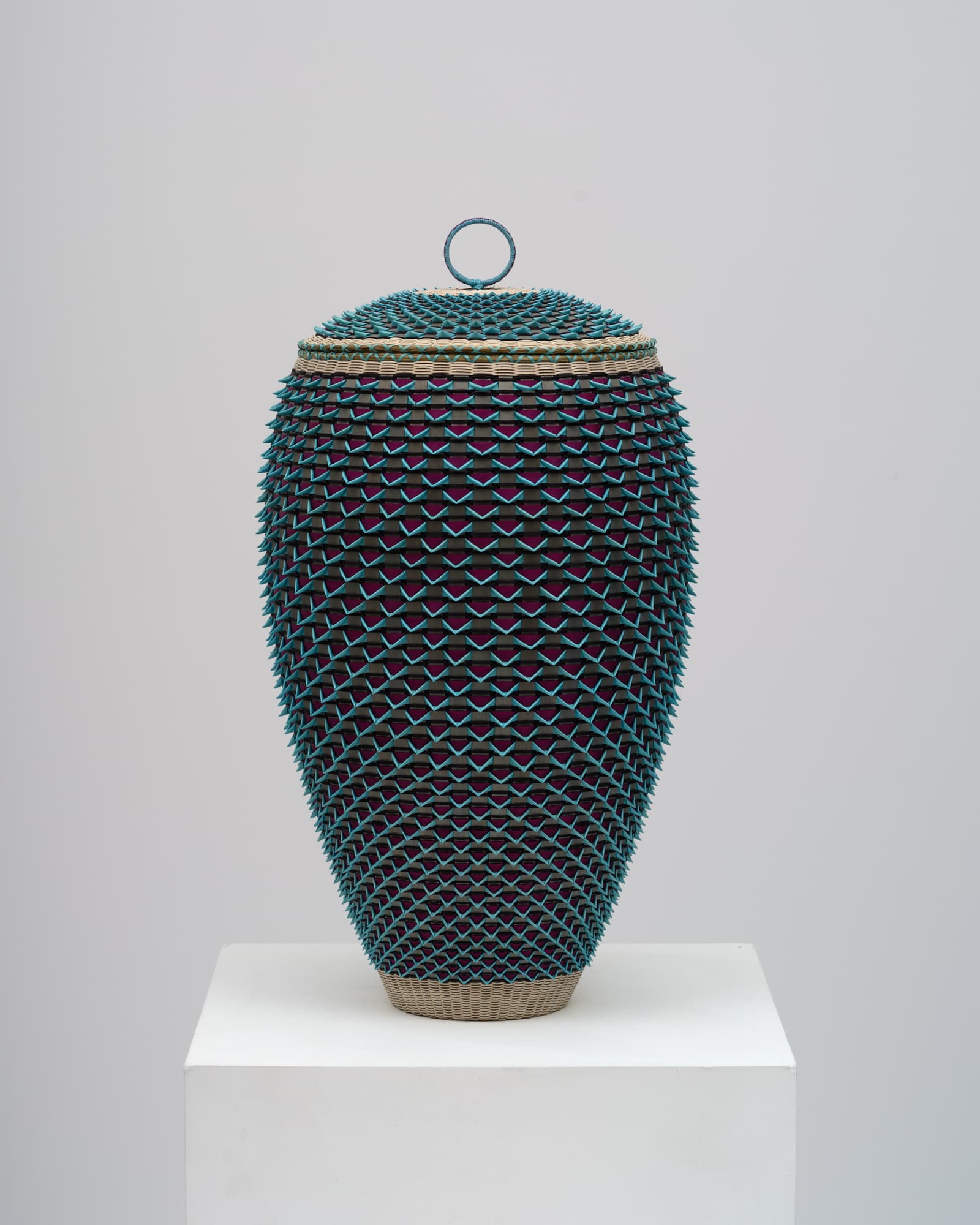
Jeremy Frey’s Permanence at Karma includes various hand-woven ash, cedar, and sweetgrass Wabanaki baskets alongside several relief prints, where the baskets’ wedged ends are flanked into flattened axial cross-ligatures.
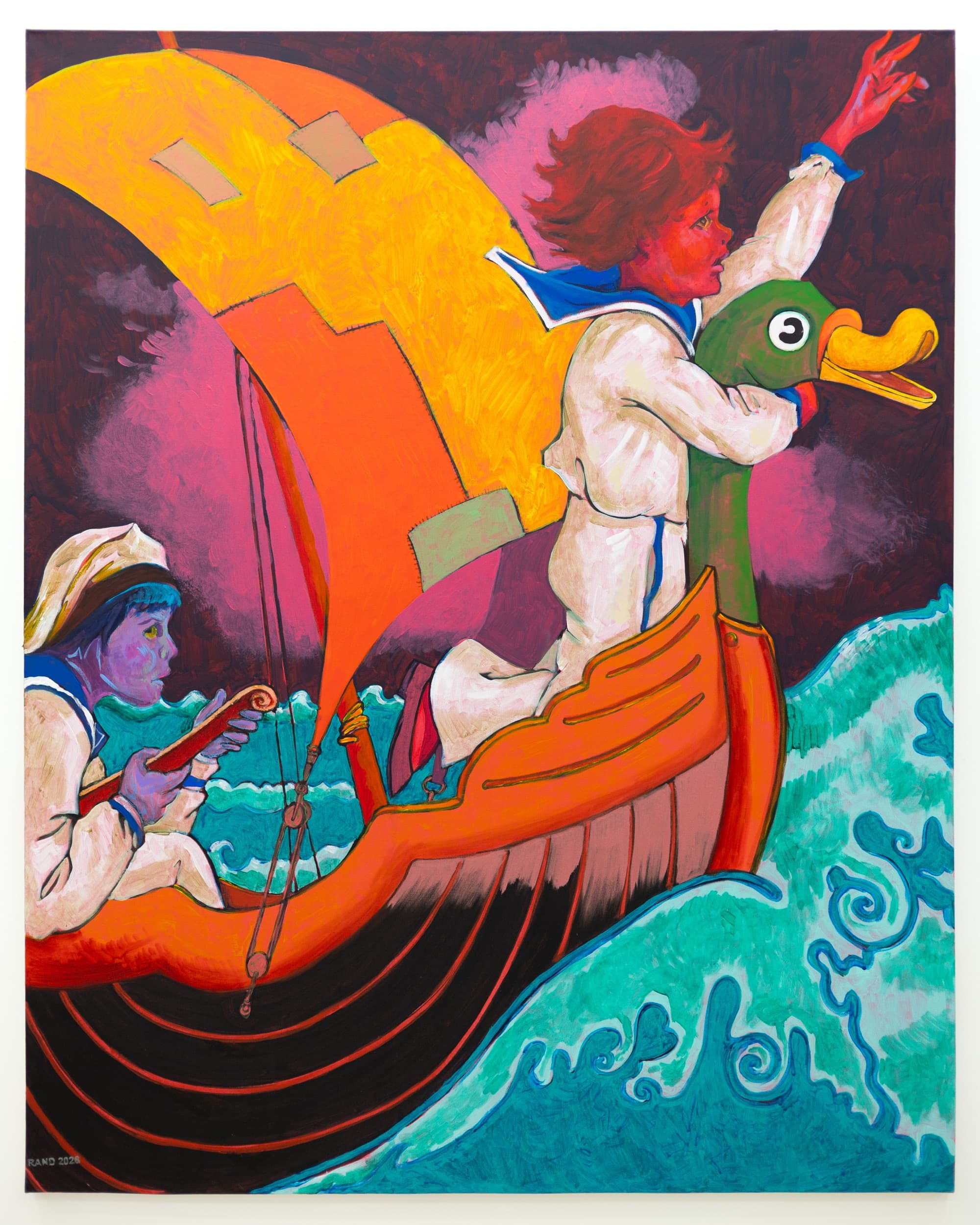
Where Archie Rand’s work most successfully traffics in a phenomenologically attuned sense of familiarity, it is by dint of alienating formalist devices.
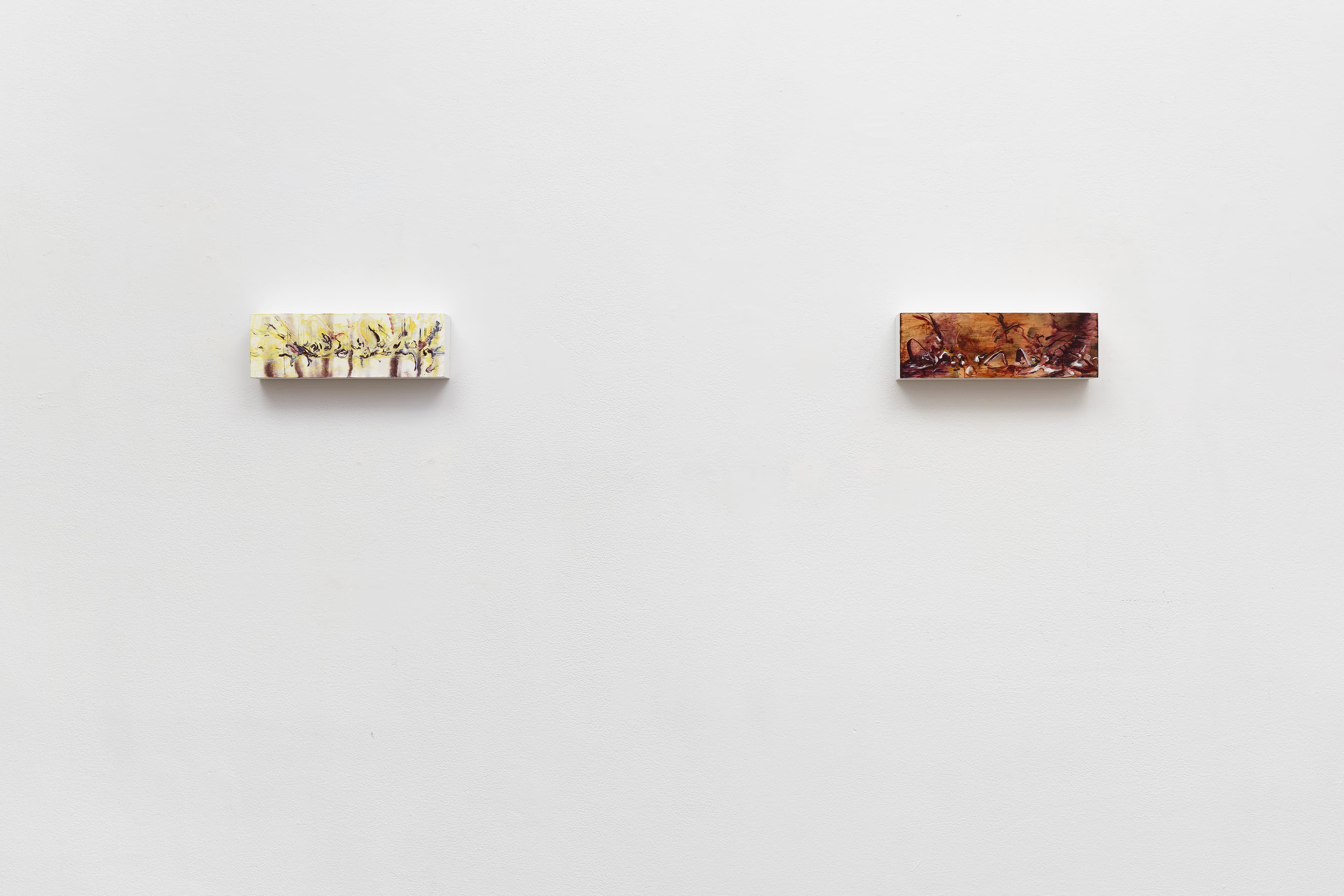
Jo Messer’s Speed Stick, which consists of thirteen oil on panel abstractions, is part of a tendency I have observed in recent contemporary painting: an approach to abstraction that remains attuned to the influence of genre painting—in this case, figure painting—by way of intimation and vestigial cues.
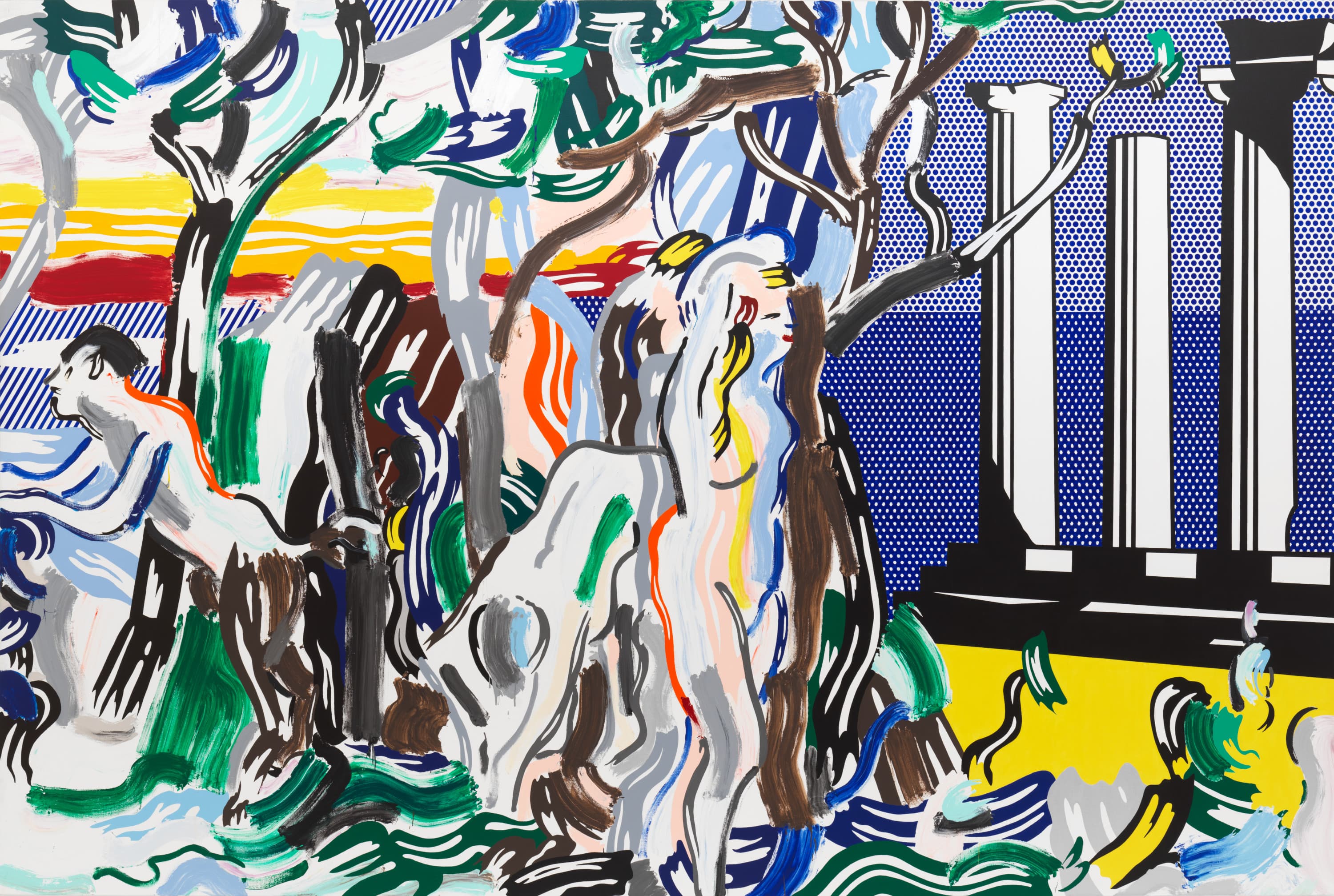
Gagosian’s show, Painting with Scattered Brushstrokes, surveys a suite of paintings, works on paper, and a sculpture that artist Roy Lichtenstein executed throughout the 1970s and ’80s, each rendering the stroke as a delineated Pop motif.
Brandon Ndife and Louis Osmosis’s two-person show at Amanita consists of several sculptural assemblages. The structures are often positioned edgewise with shimmering bric-a-brac, meretricious decoration, and garish frippery, including tinsel chains, glitter-glue residues, and vinyl ivy creepers.
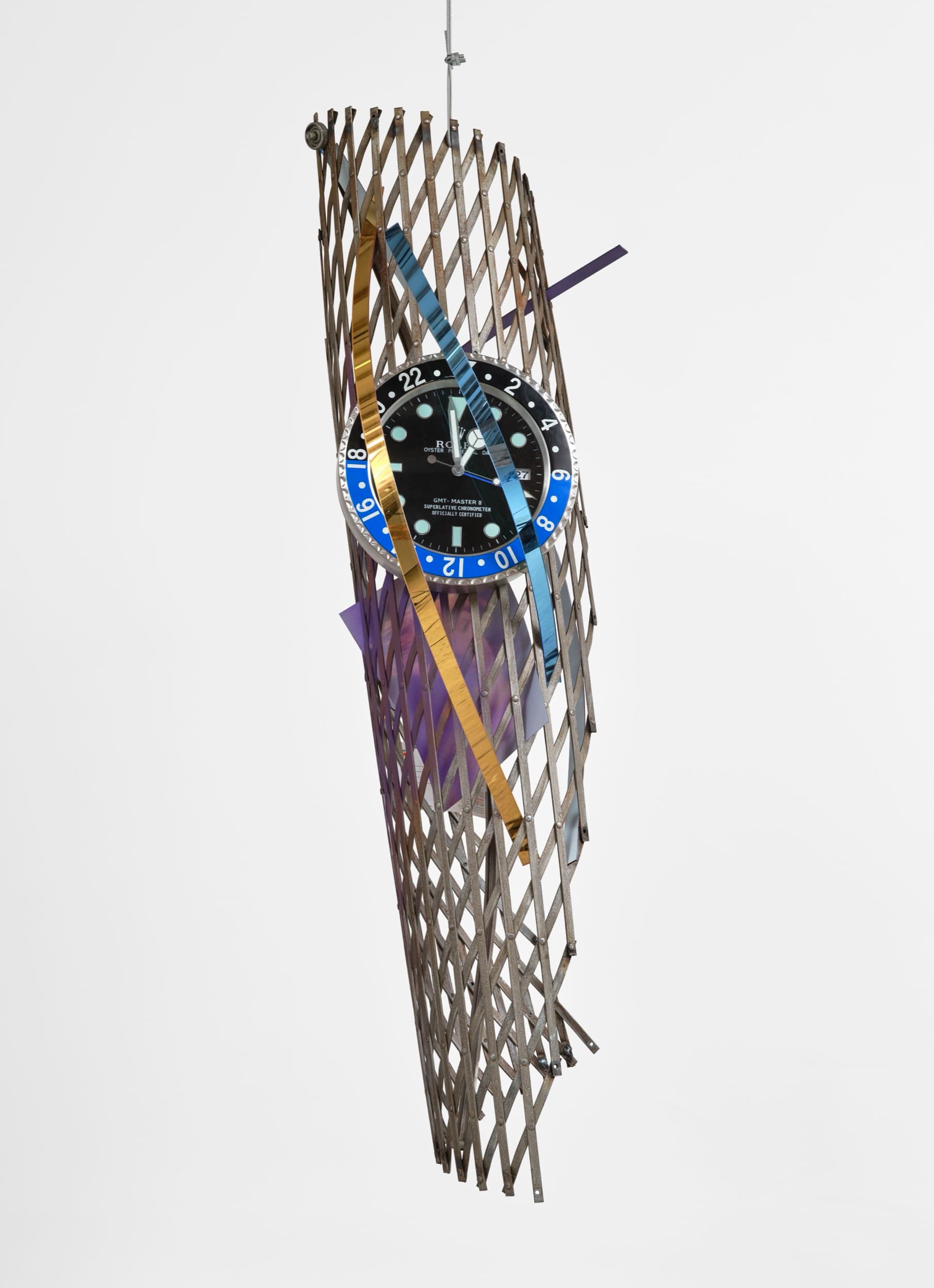
Iranian-American artist Andisheh Avini’s All of You consists of printed postcards, blown glass, steel sculptures, found objects, and sound as one immersive installation.
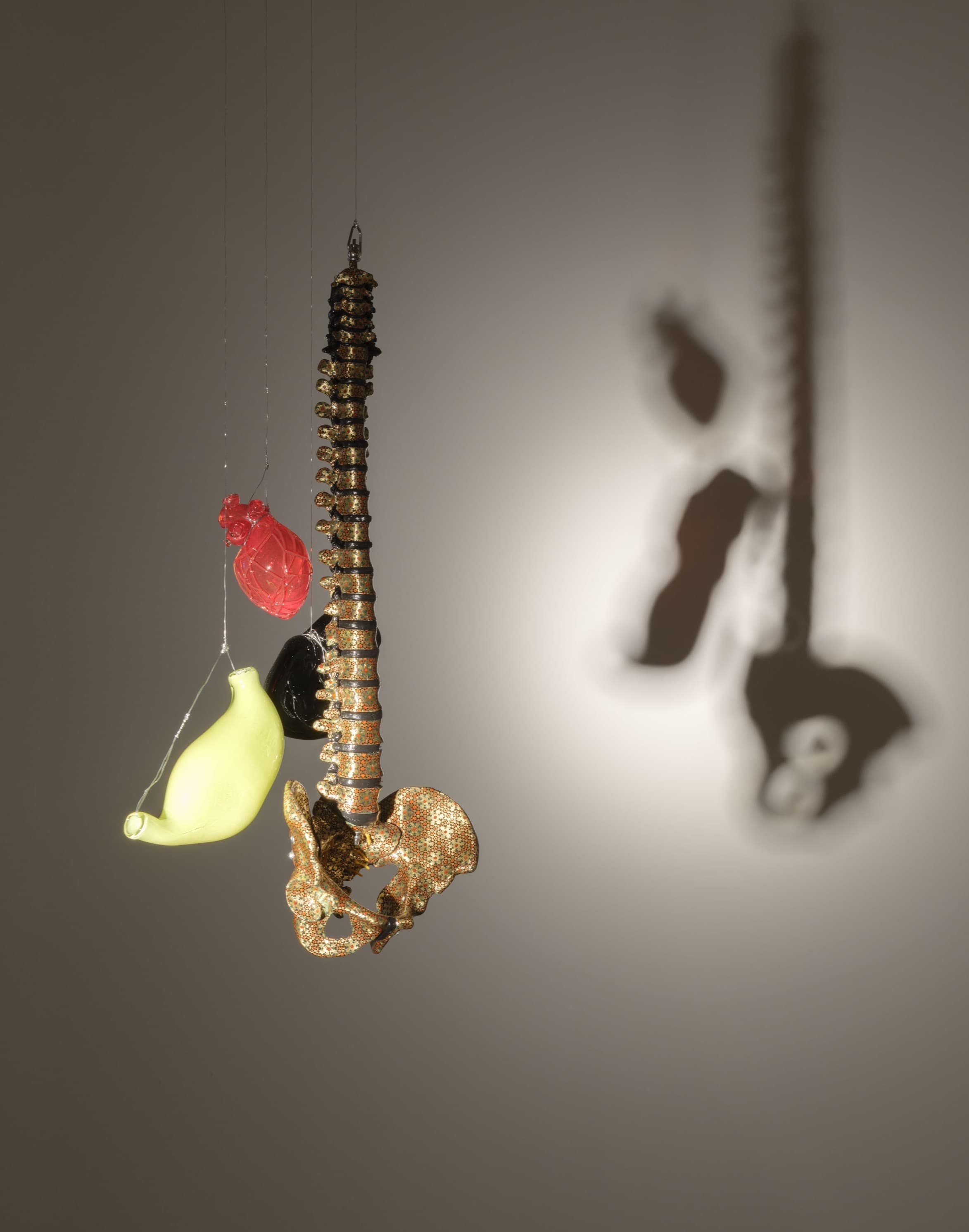
William Kent: Trust the Peeple! at Ricco/Maresca consists of seventeen unique slate-cut posters limned with graphic imagery and political cries.
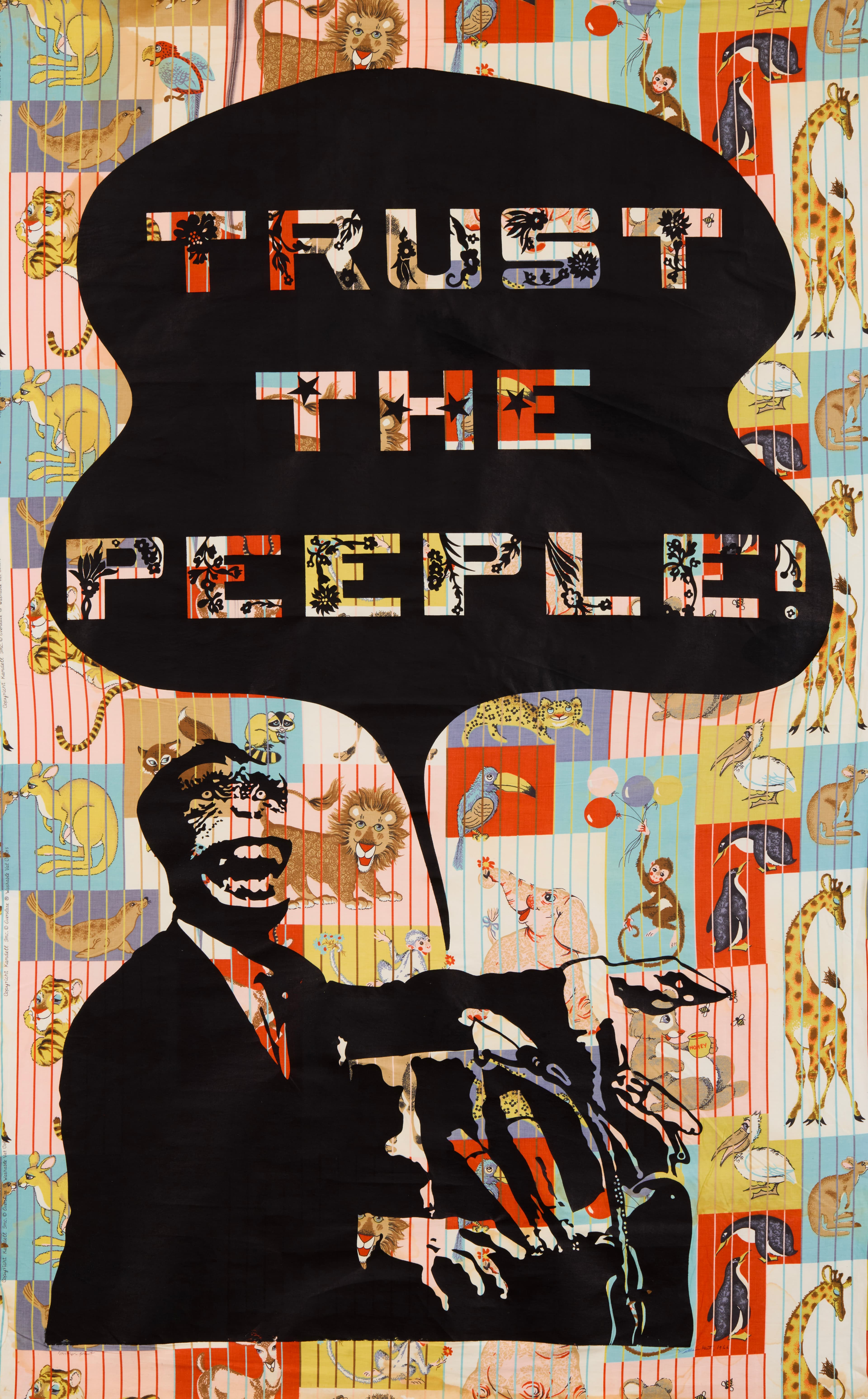
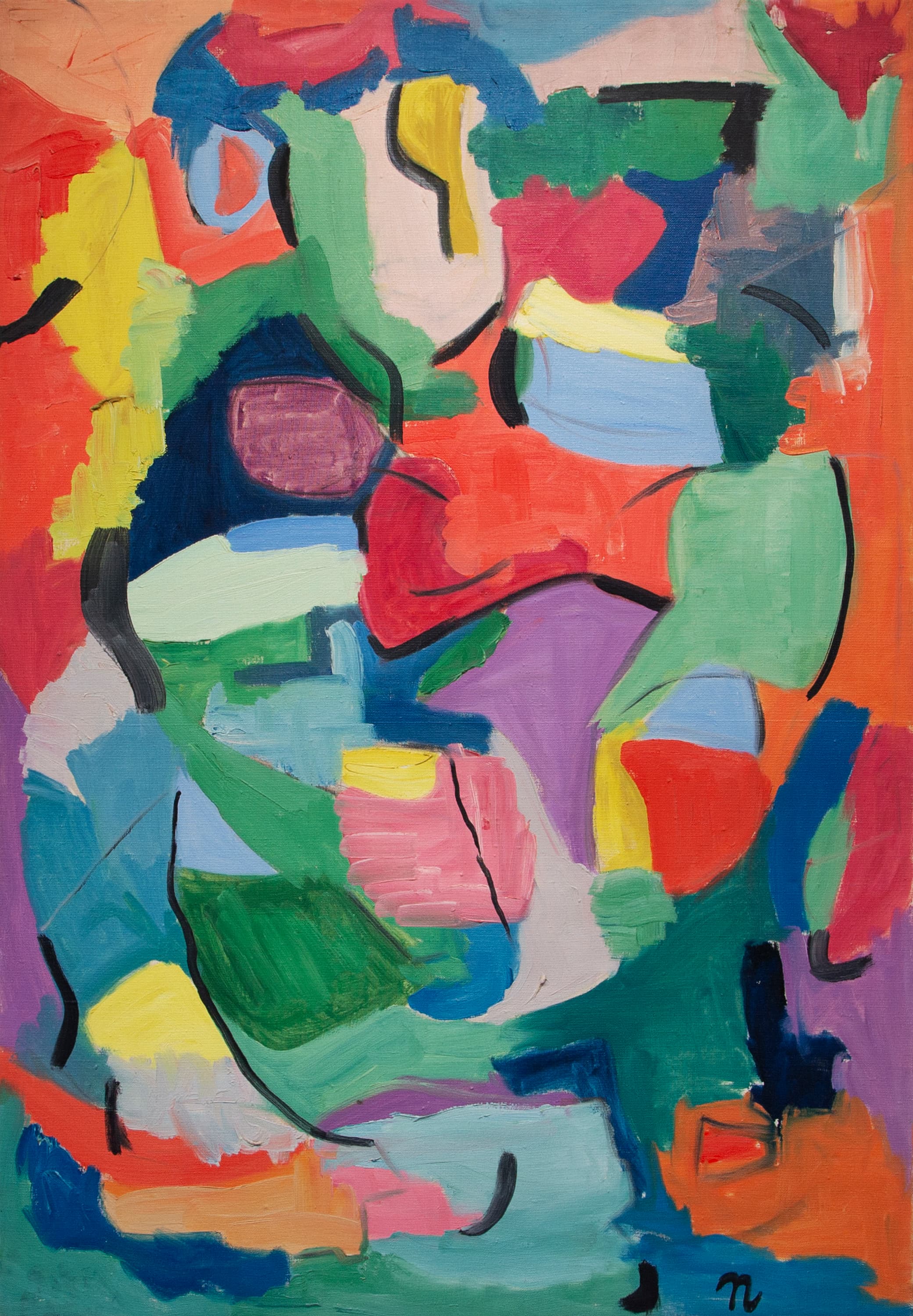
As the unpunctuated title propounds, Craig Starr Gallery’s Stanley Whitney Henri Matisse pairs the titular artists in a broadly fluid hanging. In the show, there are seven oil on linen and two gouache on paper works by Whitney and three Matisses, two of which are oil on canvas still lifes and one of which is a version of the artist’s 1949 cut-out, The Dancer (La danseuse).
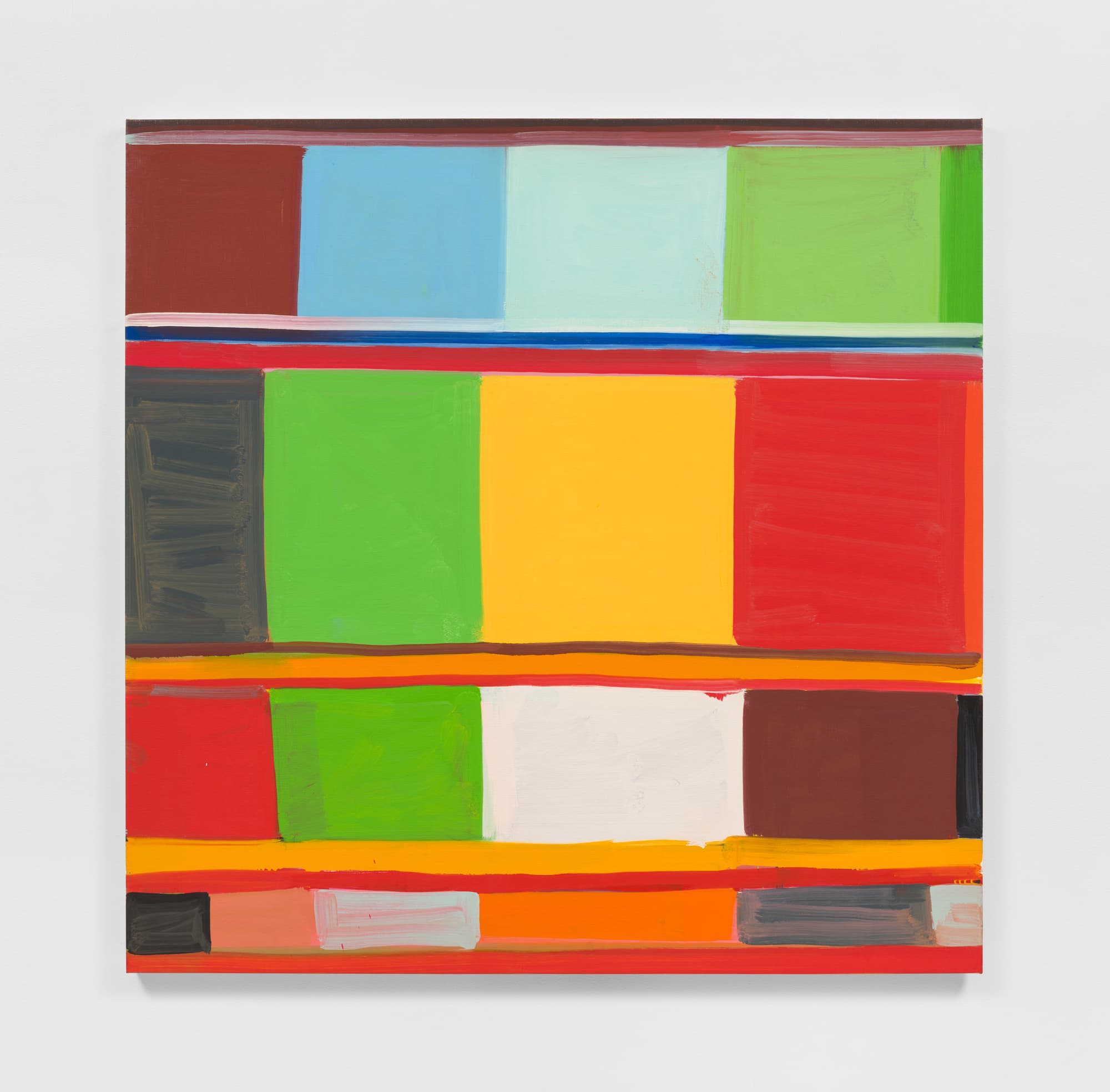
DieFirma’s Nadia Gould: Because I am Young, Beautiful & Talented is a rather comprehensive review of this little-known artist’s oeuvre, which broadly consists of two periods: an early period of geometric abstraction followed by a later figurative one. The former spans the 1950s–60s and the latter, the 1980s. The connective tissue is their common chromatic palette.
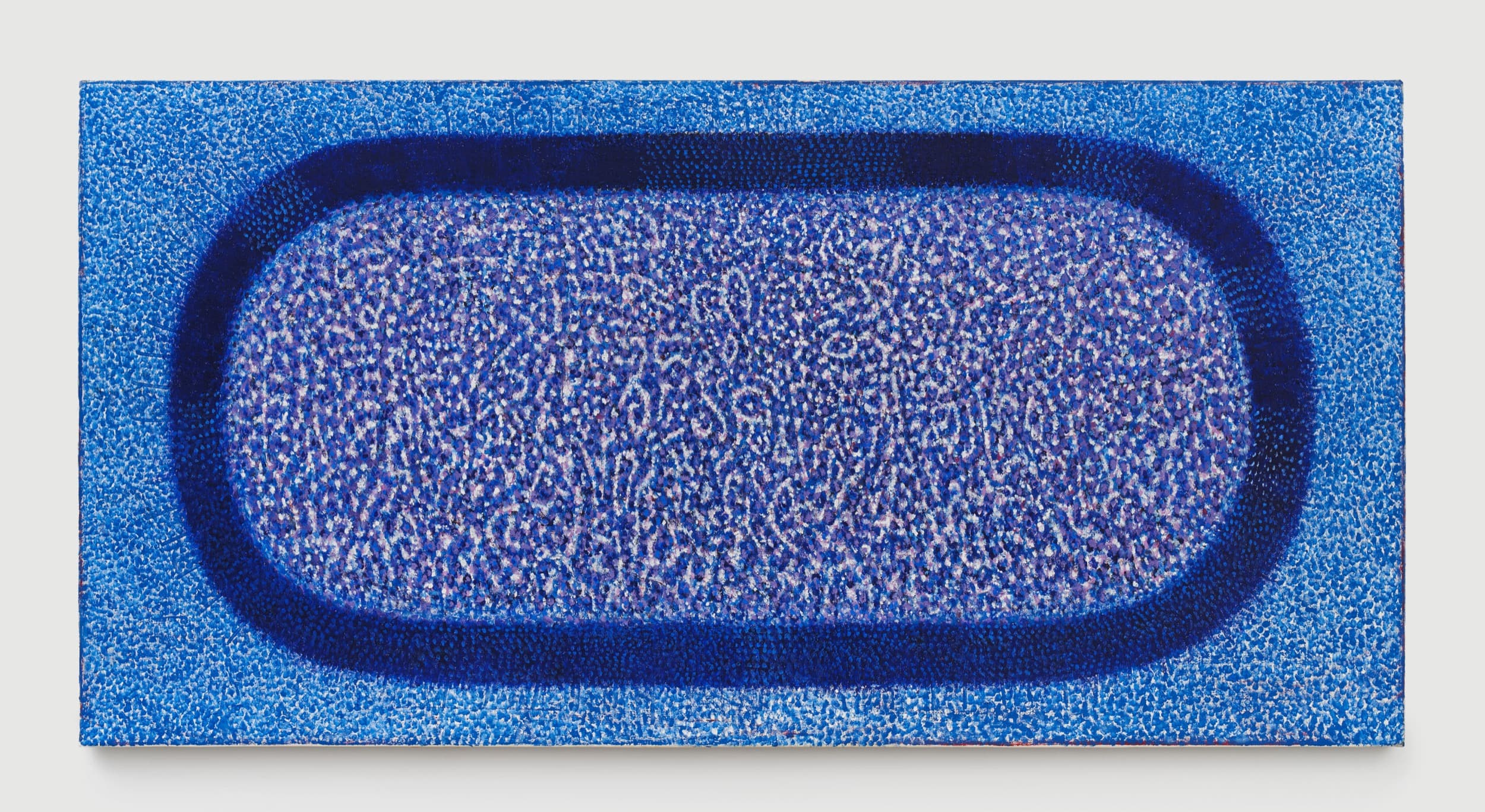
Richard Pousette-Dart: Geometry of Summer at Pace Gallery consists of seventeen works executed between 1974 and 1992 at his studio in Rockland County, New York.
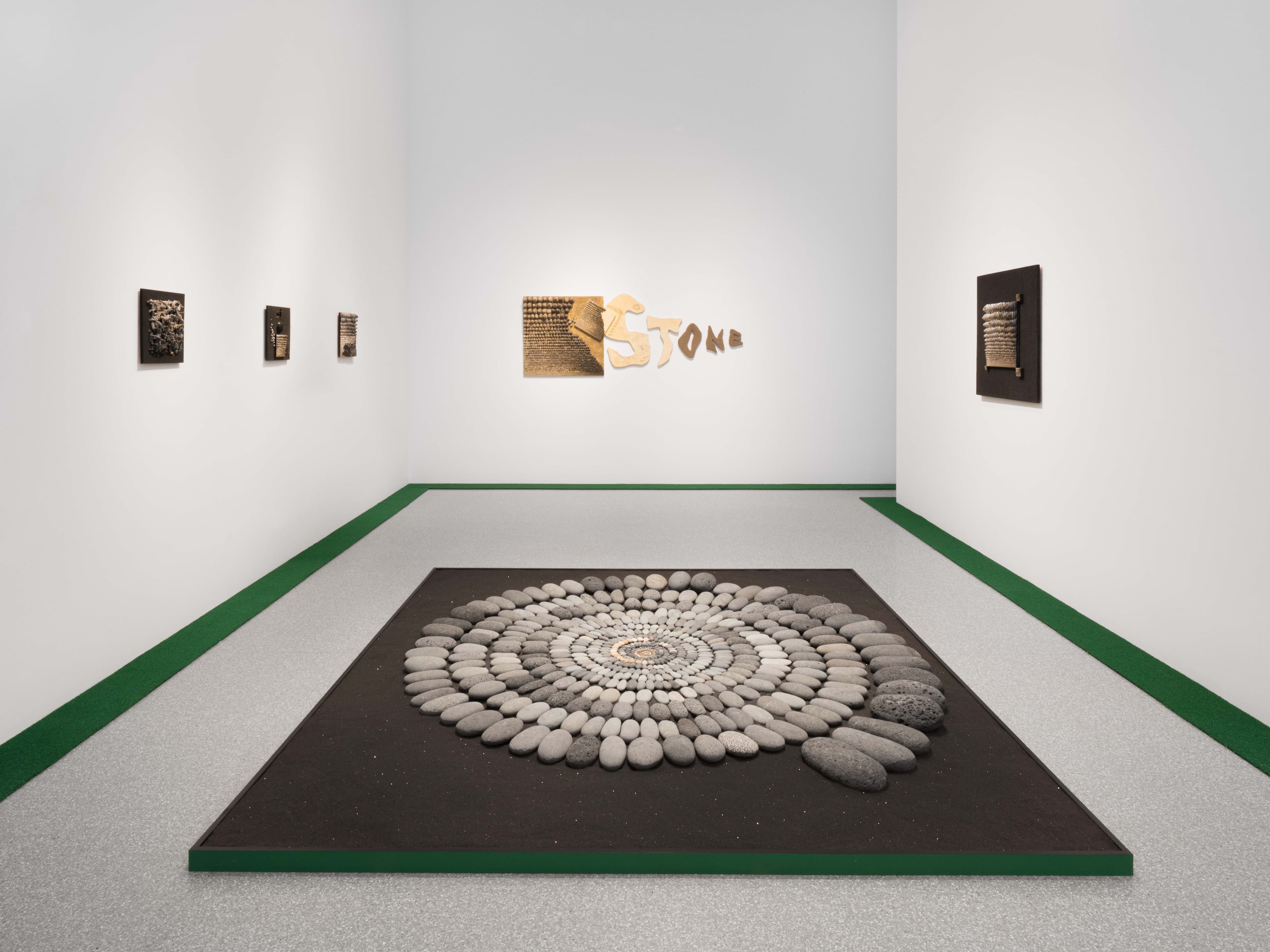
Over the last few years, Michael Rosenfeld Gallery has homed in on various facets of Mary Bauermeister’s career, proceeding in an almost taxonomical manner.
Robert Storr’s one-man show at Vito Schnabel, Fits and Starts, includes an array of Flashe-on-canvas-on-board abstract geometric works, each executed in 2025.

Gagosian Gallery’s Richard Prince: Folk Songs deploys a suite of leitmotifs.
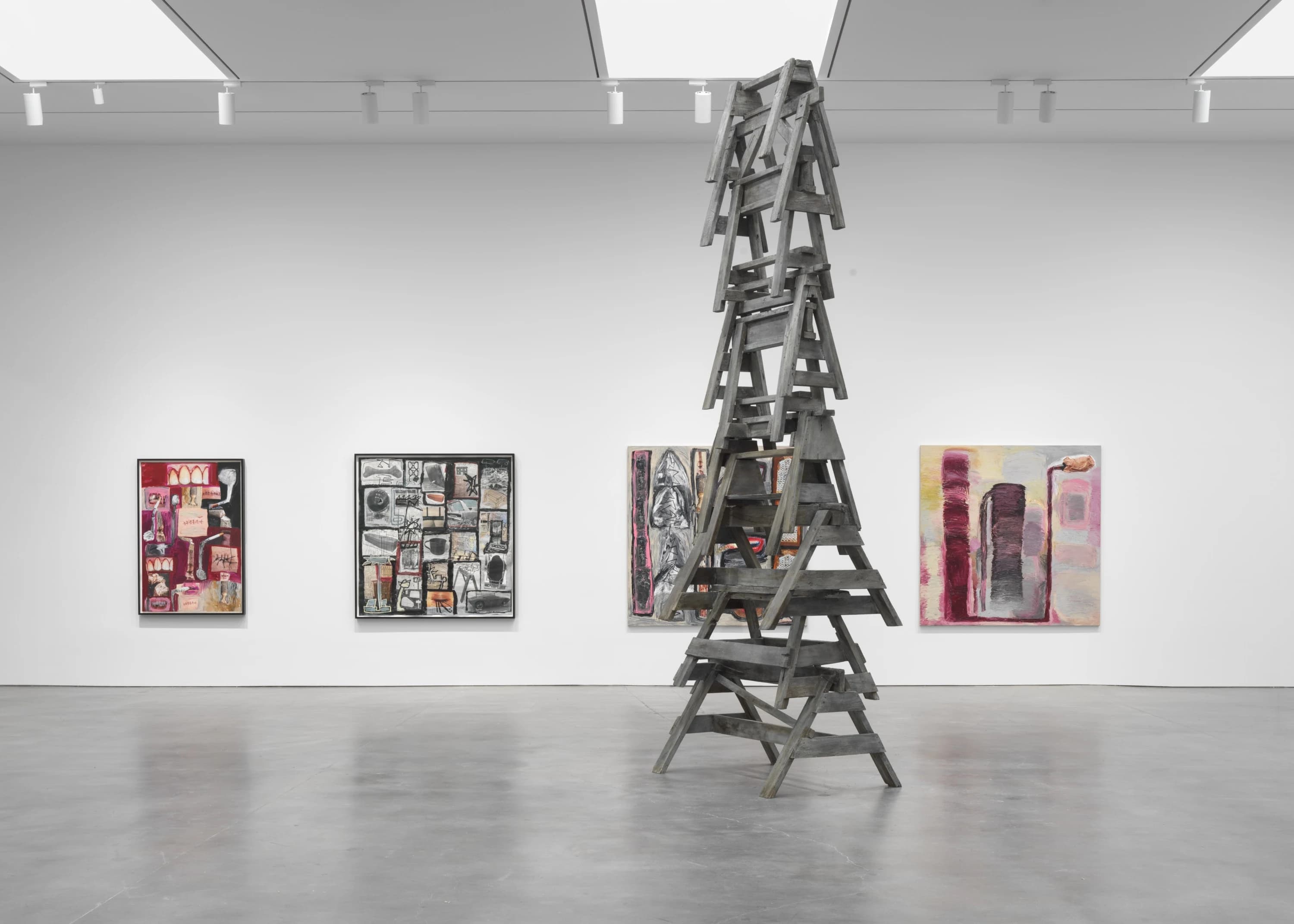
The gallery’s syncretic sensibility is made evident in his fifty-year anniversary exhibition, 50: The View from Tribeca. This show consists of an abundant harvest of works executed by those artists—alive and deceased, venerated and obscure—who most regularly exhibited at the gallery.

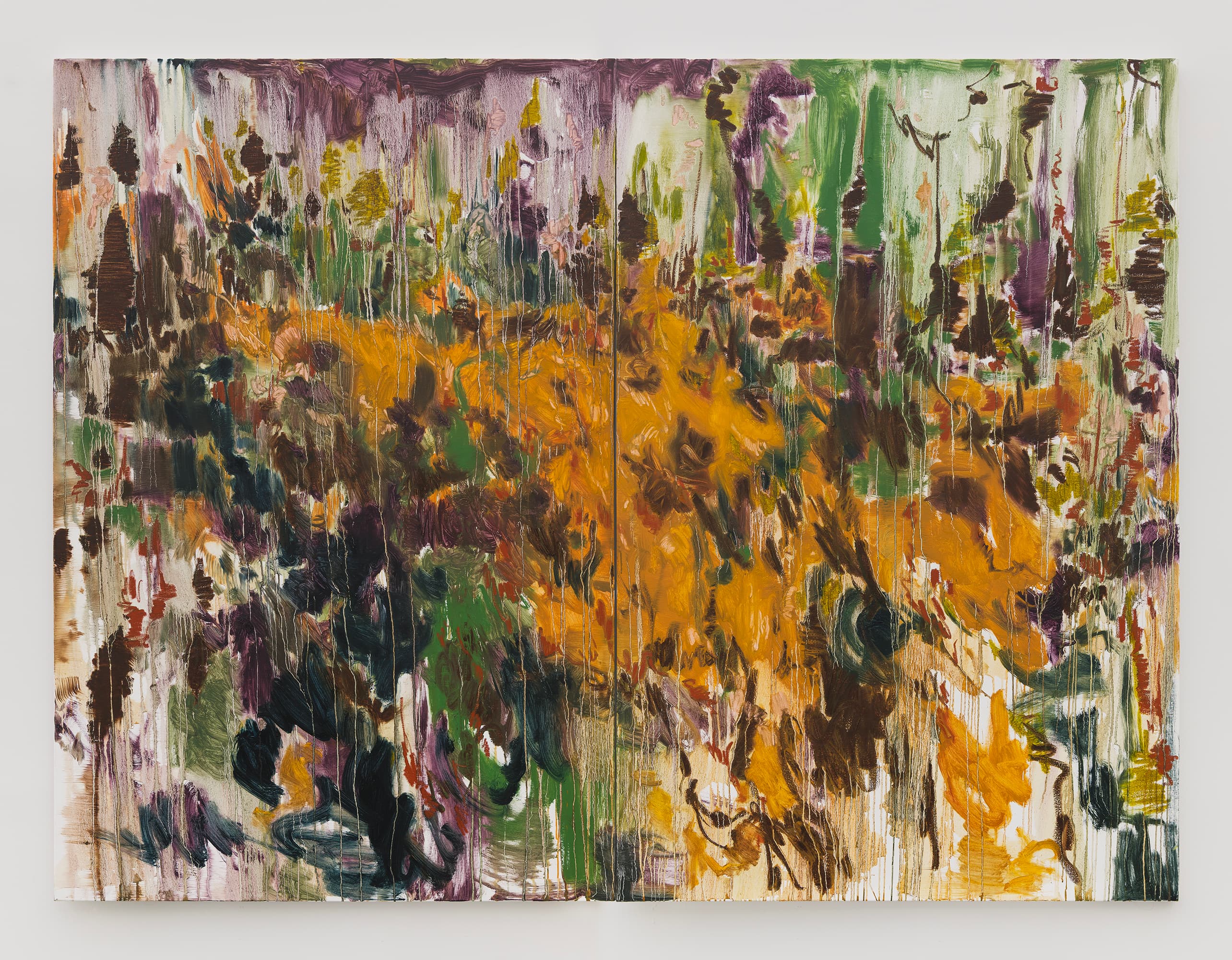
Heather Bause Rubinstein’s Out of the Woods, the artist’s first solo show in New York, includes several large oil on canvas abstracted landscapes executed over the last two years.
The exhibition title of GRAY’s Judy Ledgerwood: Twilight in the Wilderness refers to landscape painter Frederic Edwin Church’s 1860 painting of the same name. Ledgerwood’s body of work is thematically anchored in the oxblood and claret light rays refracting before eventide so pleasantly illustrated in Church’s work.

Almine Rech’s two-person show, Erik Lindman & Augustus Thompson: Slabs and Boards evidences that the connective tissue between the two artists’ sculptures consists in the subtending quadrilateral plane, which Lindman and Thompson instrumentalize in dichotomous modes.

Made up of eight works on canvas, Miles McEnery’s Esteban Vicente is a compact survey that spans four decades of the titular artist’s career, beginning with his 1961 No. 7 and ending with his 1998 Experience. The show clarifies Vicente’s sustained interest in mixing primary colors and his uptake of highly saturated close tones.

Diorama is the young figurative oil painter Alex Sewell’s fourth solo exhibition with TOTAH gallery.

Sacred Geometry, a three-person show at Peninsula, includes square and rectangular Flashe (a vinyl-based opaque paint that dries into a matte finish) works on primed canvas by Robert Storr, Elisabeth Kley’s glazed earthenware works in the round, and acrylic and pastel canvases by Tamara Gonzales.

In the Medium of Life: The Drawings of Beauford Delaney is a masterfully curated survey. The exhibition treks the development of Delaney’s work from the late 1920s up through the early ’70s, shortly before the artist passed away in 1979 following several years dogged by mental illness.

Oscar Murillo’s curatorial endeavor, Eduardo’s birthday party on Ave. Gabriel, is a group exhibition of works on paper by Arshile Gorky, Wifredo Lam, and Roberto Matta. Each work is mounted on a wooden easel situated upon a chair, arranged to circumscribe the percipient. Deflated and semi-deflated balloons are knotted around the chairs, which metonymically denote the titular birthday party’s artist-attendants.
![Roberto Matta, Les tangentes [The Tangents], ca. 1943. Pencil and colored pencil on paper, 11 × 8 ½ inches. Courtesy Fleiss-Vallois.](/_next/image/?url=https%3A%2F%2Fstudio.brooklynrail.org%2Fassets%2F953d42b3-3c15-44e3-8bc6-d2313c082177.jpg&w=3840&q=75)
Ethan Ryman’s exhibition at the Lockwood Gallery, Four Years Built, consists of variegated modular and photo-sculptural box and planar wooden constructions. Although some of the works’ elements convey the influence of Minimalist sculptors like Donald Judd and Dan Flavin, they are indicative of a genuine advance beyond the constraints of Minimalist aesthetics.

Featuring works by Hank Willis Thomas and Liu Shiming, People Everyday, curated by Emann Odufu at the Liu Shiming Art Foundation, adjoins two artists whose work, at first pass, might strike the viewer as belonging to disparate traditions.

At first pass, The New American West: Photography in Conversation, curated by Carrie Scott and Howard Greenberg at Pierre Yovanovitch Mobilier New York strikes one as a squarely photo-biographical venture. Although there are numerous artists exhibited, the exhibition is buttressed by Maryam Eisler and Alexei Riboud’s works, all of which were captured during a 2024 journey that found the two high-school friends reunited after nearly forty years.

Skarstedt’s Andy Warhol: Oxidation Paintings collates an array of Warhol’s 1977–78 “Oxidation” abstractions, which Warhol created by exposing a layer of undried metallic paint to urine.

Pierre Huyghe’s exhibition, In Imaginal at Marian Goodman Gallery, is the US debut of a selection of intermedia works that premiered at the Punta della Dogana, Venice, in 2024. The installations utilize deep learning processes that are networked to trigger each other.

The Milton Resnick and Pat Passlof Foundation’s Joop Sanders: The Last Abstract Expressionist, curated by Isca Greenfield-Sanders and Peter Halley, evinces the history of twentieth-century American abstraction through Sanders’s artistic development.

Fergus McCaffrey’s exhibition Co Westerik, Later Paintings: 2002–2016 consists of eight medium-sized works from the final two decades of Co Westerik’s artistic career.

Rebecca Ward’s exhibition vector specter at Peter Blum Gallery includes ten works, the majority of which were executed in 2025.

Ross's What Remains… at Schoelkopf Gallery includes twenty-four works from various series executed in 2020 and 2021. Throughout, abstraction becomes a graphite afflatus that whisks, overtakes, and swallows photographic imagery.

David Humphrey’s one-man show at Fredericks & Freiser, PorTraits, is made up of two bodies of work: in the front gallery are a suite of paintings from 2024, while in the back are less recent paintings, sculptures, and a work of video art, all of which the artist’s wife, Jennifer Coats, has selected to provide a more comprehensive conspectus of Humphrey’s oeuvre.

The first United States retrospective dedicated to the titular artist, Magazzino Italian Art’s Maria Lai: A Journey to America is exceptional. Born in 1919 in Ulassai, Italy, and passing at the age of ninety-three in the nearby Nuoro commune of Cardedu, Lai bore witness to decades of art history and its myriad constituent avant-garde movements..

Polish artist Jan Baracz's twilight mechanics, curated by Izabela Gola, places Baracz within the readymade tradition of Marcel Duchamp, Ben Vautier, Bernar Venet, and Marcel Broodthaers.

Carolin Eidner’s Daddy Dying Sun at Ruttkowski;68 includes nine works, all of which were executed in 2025 and employ a rather curious technique that makes inventive use of hard plaster, pigment, and extruded polystyrol.

In his current show at Amanita, World-Honored One, Nicholas Campbell stakes out a related neo-formalist position that hews less toward material experimentation than the suggestion of naturalist illusionism, whether it be the possibility of light breaking from an arboreal conglomeration or cavernous crags.

Make Way for Berthe Weill: Art Dealer of the Parisian Avant-Garde deserves studious, unhurried viewing and is sure to please both those with a general interest in Post-Impressionism and specialists interested in the early twentieth-century modernist witness accounts.

Curator Karina Argudo’s pairing of Ryman and Clark is motivated by both artists’ engagement with radiance. This two-man show, Light Constructs at Helm Contemporary, is cleverly curated.

Beyond the Frame: Abstraction Reconstructed, CANADA’s two-man show uniting Denzil Hurley and Reginald Sylvester II, seeks to delineate points of confluence between the two artists.

Curated by Adrienne Edwards, Edges of Ailey is more than a survey of Alvin Ailey’s output. It is a comprehensive view of the associative artistic appendages that relate Ailey to visual artists as varied as Robert Duncanson, Thornton Dial, Norman Lewis, Beauford Delaney, Jean-Michel Basquiat, Carrie Mae Weems, and Purvis Young, to name but a few.

Pierogi Gallery is best known for showing conceptual artists, renowned and unknown, emerging and mid-career. This thirty-year anniversary exhibition demonstrates that this is just one facet amongst many that give shape to Pierogi’s multitudinous ambit.

Javier Calleja’s One true tree for… at Almine Rech includes ten acrylic-on-canvas works, a handful of mixed media on paper drawings, and one sculptural installation.

With her newest exhibition of field paintings at Magenta Plains, Liza Lacroix focuses on a limited palette—the blacks, reds, browns, and grays of a cavernous eclipse—and achieves, with the most effective paintings on view, a palpable sense of depth.

Elliott Puckette’s eleventh solo exhibition at Kasmin Gallery, Unfolding, includes two bronze sculptures and eight ink, gesso, and kaolin on wood panel paintings.

The late, great Richard Serra (1938–2024) collaborated with the Los Angeles workshop, Gemini G.E.L., for fifty-two years, creating over 330 editions. Richard Serra at Gemini G.E.L.: Five Decades of Printmaking begins with early matte black lithographic sculptural studies featuring blotted edges—clearly grown out of Serra’s early molten lead “Splashings” series from 1968–69—and ends with sharply executed, coarse Stygian curvature silhouettes executed shortly before the artist’s death.

David Zwirner’s current exhibition, No straight lines, is a tribute to the self-taught American painter, Jon Serl (1894–1993), organized by artist Sam Messer, who befriended Serl in 1989. Paintings by Serl hang alongside works by a number of contemporary artists: Brook Hsu, Josh Smith, Louis Fratino, Katherine Bradford, Dana Schutz, Andy Robert, and Messer himself.

The five wall-mounted assemblages comprising 56 Henry’s Laurie Simmons exhibition, DEEP PHOTOS / IN THE BEGINNING, are in keeping with the artist’s career-long interest in figurines, dolls, American kitsch aesthetics, and Cold War era suburbia.

Vito Schnabel’s Ron Gorchov retrospective, Exploring the Near/Far Painterly Horizons of Modern Space, excavates works from the late artist’s studio, punctuating them with some of Gorchov’s most important saddle-shaped canvases.

Christian de Boschnek’s Essays on Fragility, in Art Cake’s Studio 10, stages fourteen medium-sized emulsion, encaustic, and gold leaf tableaux on glass. These are accompanied by a mixed media installation, By a Thread (2024), where, pocketed in one of the room’s corners, a suspended and enigmatic feathered creature droops towards a bowl of milkweed.

What unifies the two bodies of work is how they both eschew referential anchors to the forms of the built or observed world. Relatedly, Shapiro’s irregular forms also do not correlate with the evenly layered polygons-cum-polyhedrons forms familiar to architecture and geometry. In turn, these reliefs also abjure the modeled world.

The Austrian Cultural Forum New York’s two-person exhibition, Inspiration Comes from Everyday Life: Works by Elfie Semotan and Nina Hollein, aims to bring together, per the show’s press release, “fashion, photography, [fine] art, and architecture.”


Enio Arroyo Gomez, a Costa Rican artist, recently had his first solo exhibition in the United States at On the Fringe Gallery in Tribeca, which was produced and curated by Enio’s largest collector and patron, Viljon Caka. This exhibition revealed Gomez’s impressive storytelling ability, influenced by his background as a scenographer and thespian.


