William Corwin
William Corwin is a sculptor and writer based in New York. He has been writing for the Rail for fifteen years.
In 1914, the Rokeby Venus, a sultry reclining nude painted by Diego Velázquez between 1647–51, was violently slashed with a meat cleaver by the suffragette Mary Richardson in the National Gallery of Art in London.
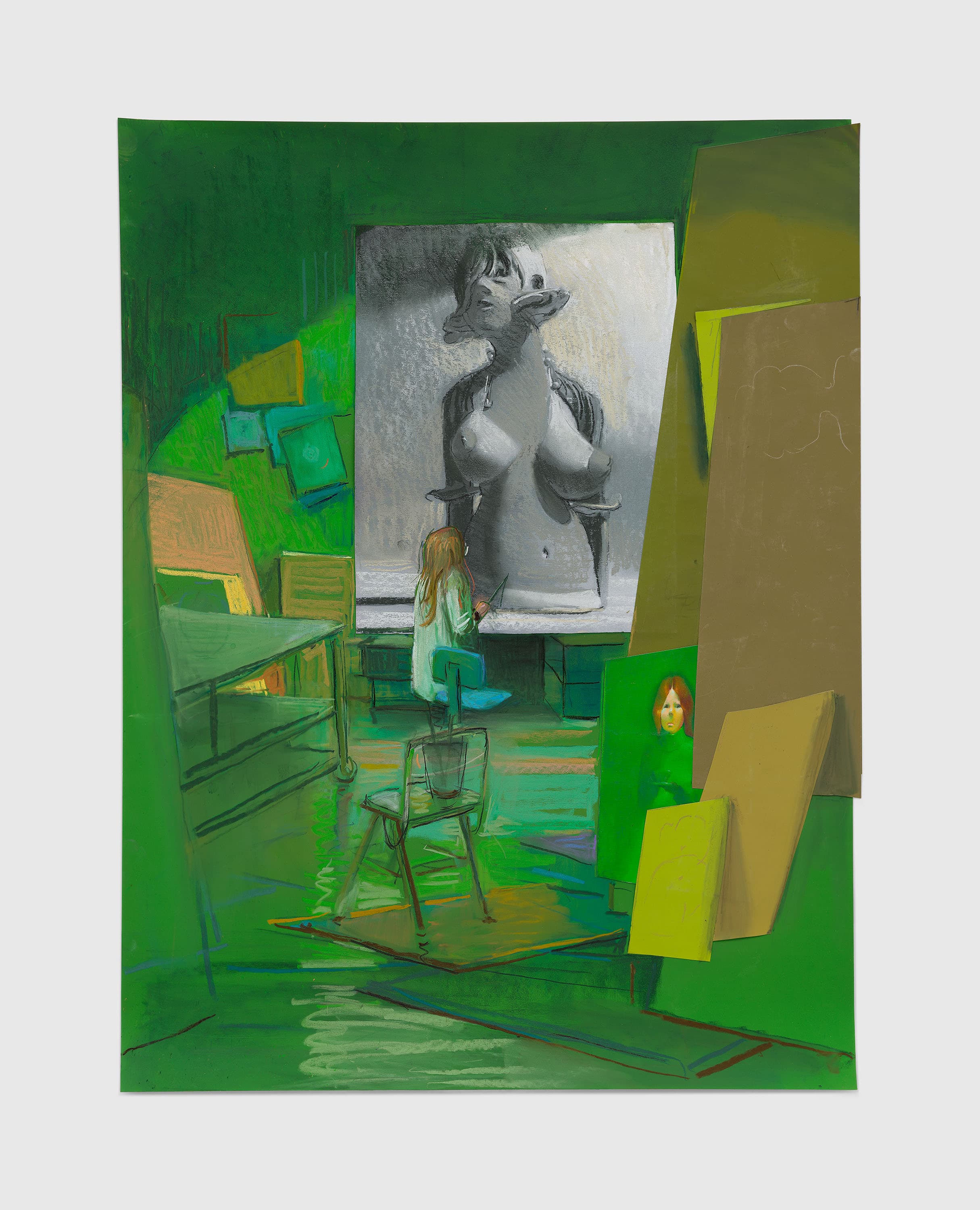
Writing as an artist, looking at the exhibition Self-Made: A Century of Inventing Artists at the American Folk Art Museum makes one question the rules of composition, perspective, proportion, color matching, etc.
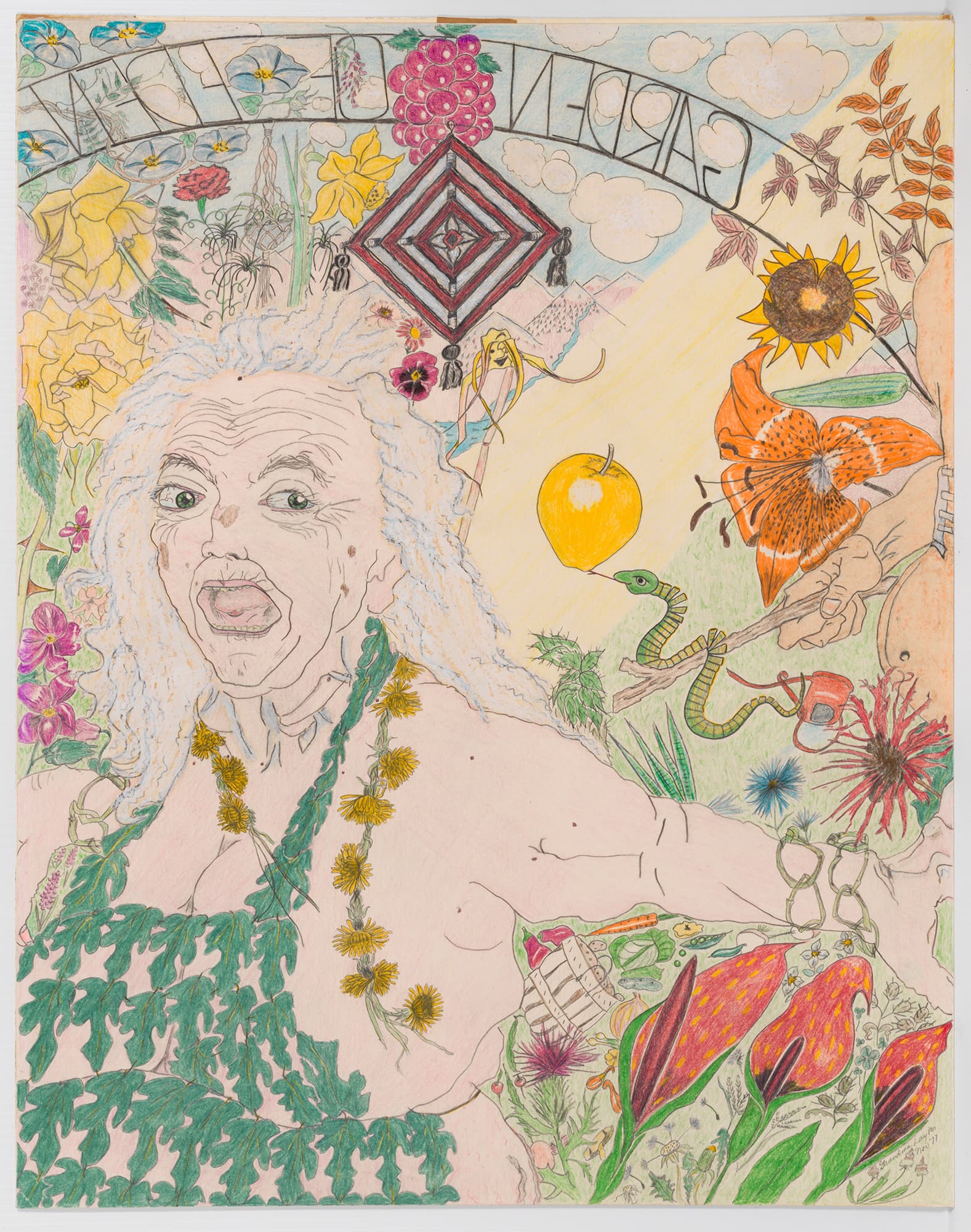
How Asian Is it? is not a critical exhibition of paintings interpreting a concept of Asian-ness, but is instead a question cheekily aimed at the perception of the viewer, critic, curator, and art dealer who have historically, and are currently, looking at the work.
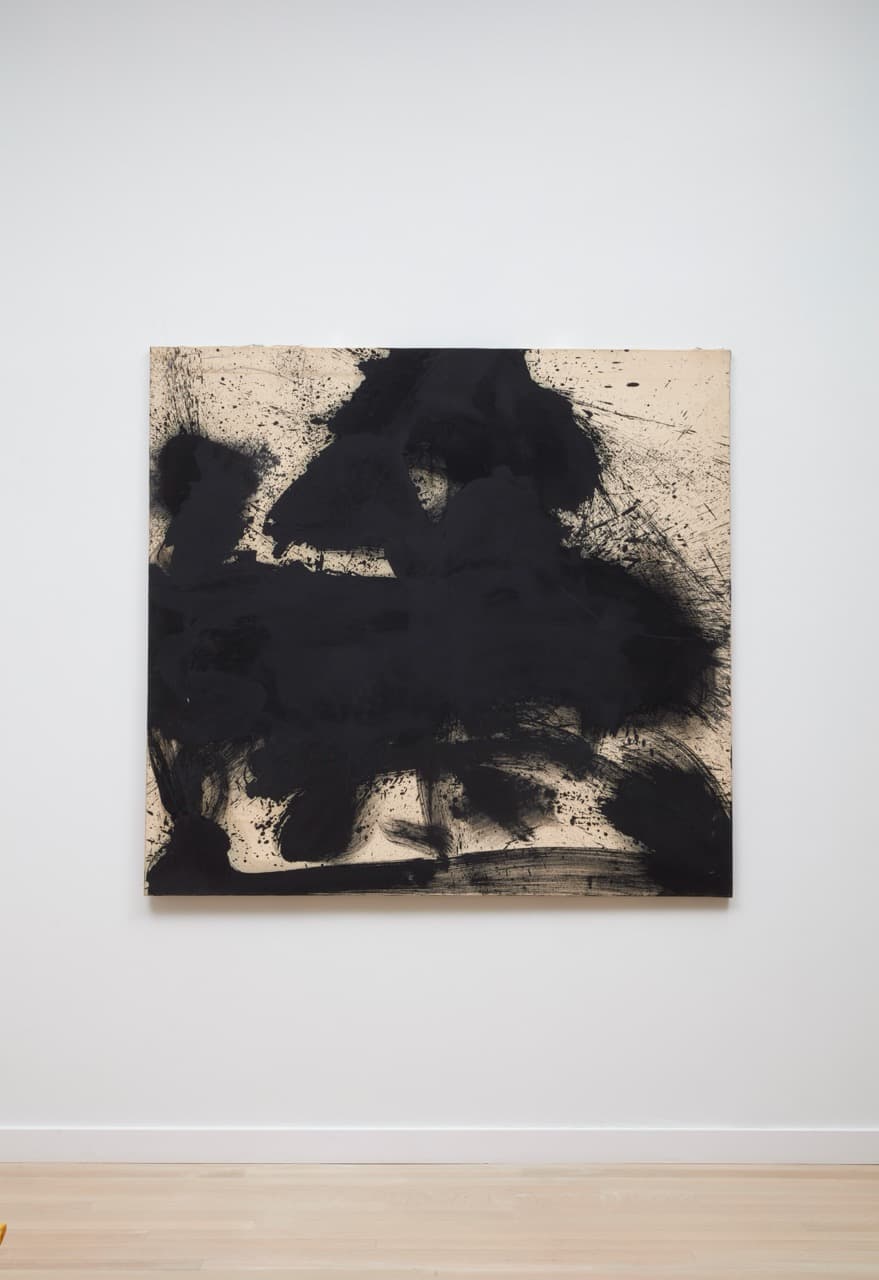
Nyeema Morgan is a conceptual artist. Mike Cloud is a painter. They are married and live in Chicago. Their collaborative exhibition, Mike Cloud & Nyeema Morgan: Story Structure, Pt. 2, at the Neubauer Collegium at the University of Chicago, offers a fascinating test case to explore more deeply the push and pull and intellectual exchanges that take place within the dyad of two artists in a matrimonial partnership.
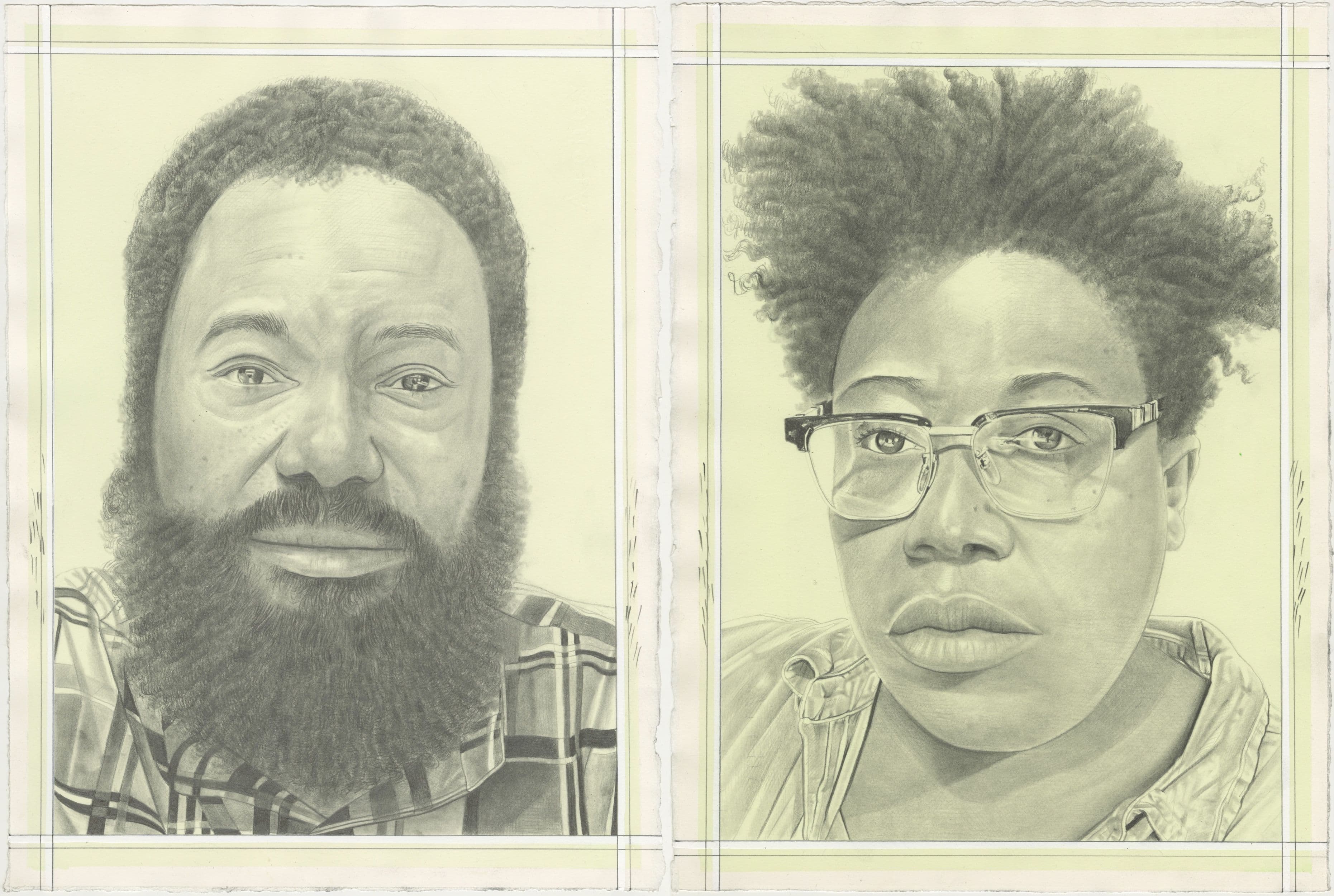
McNutt has a grand time pulling from various traditions and stylistic impulses across the span of history and from around the world.
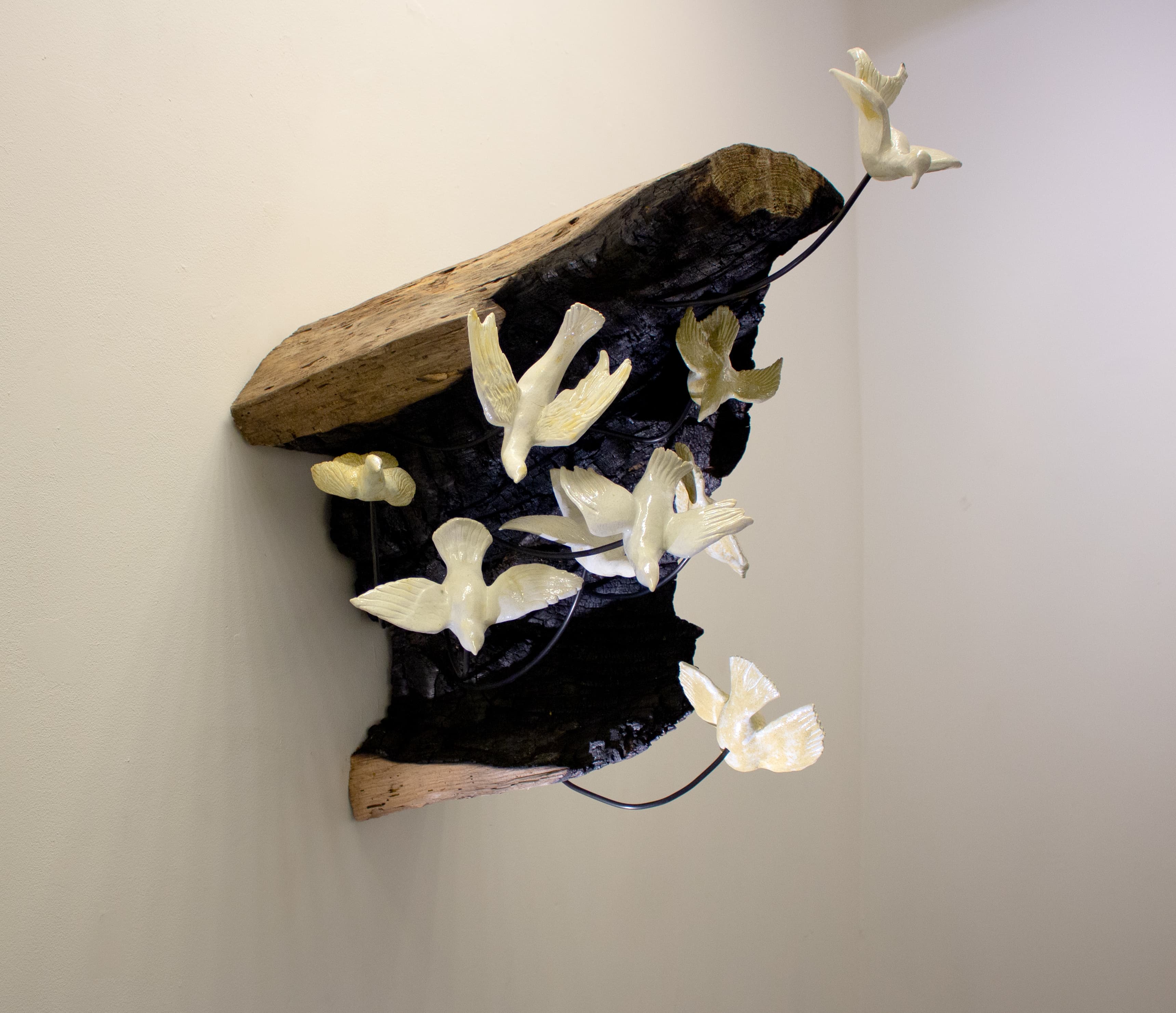
Mouse, mouse, mouse, duck, duck, duck, mouse, mouse, mouse, very big mouse, and so on. Calling out the beasts and characters populating Joyce Pensato’s drawings and paintings is one of the initial responses one has while walking through her most comprehensive museum exhibition to date at the Institute of Contemporary Art in Miami.
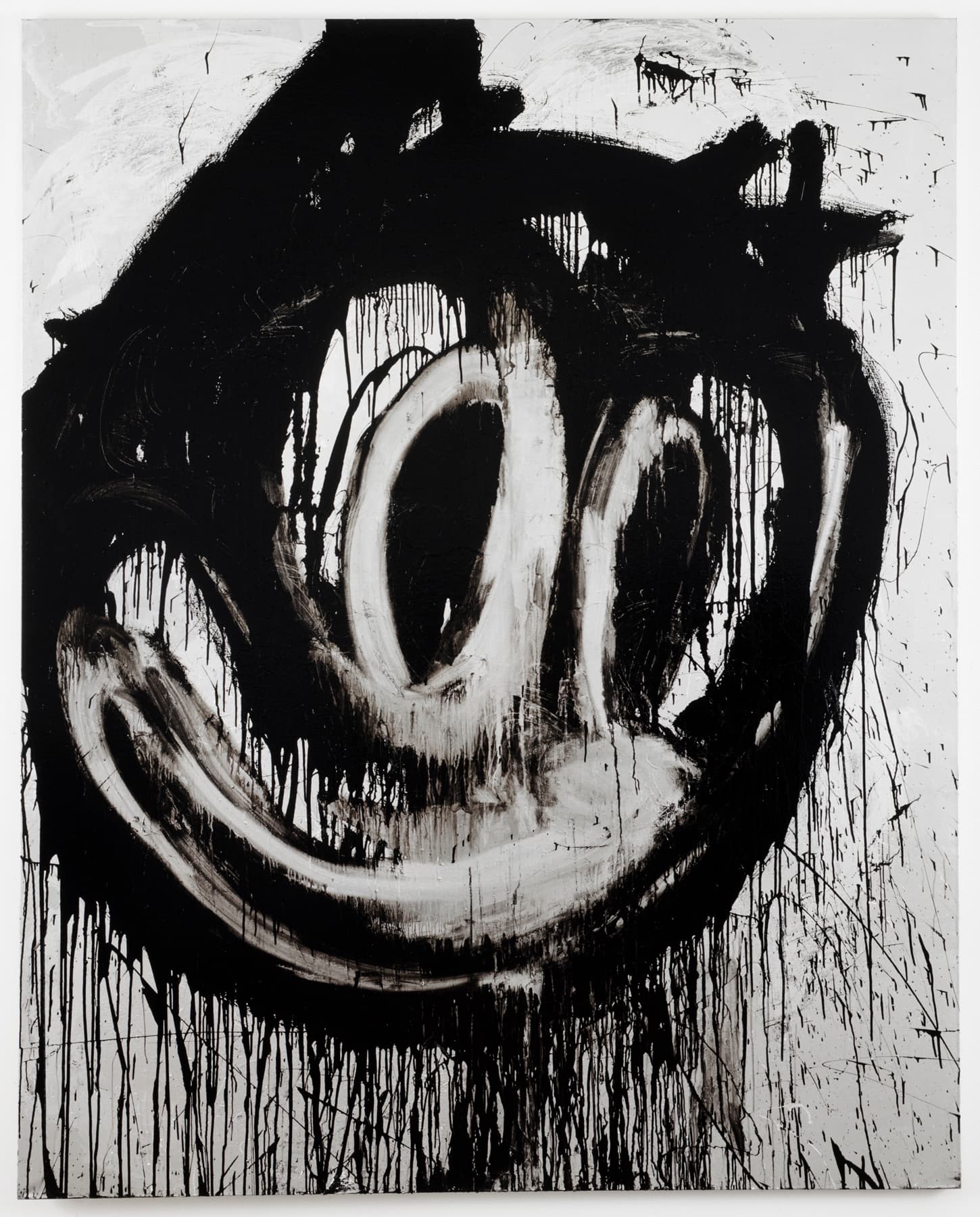
The exhibition MONUMENTS provides an invaluable lesson by presenting a wide selection of decommissioned, often battered, and disfigured Confederate statuary, fragments of marble bases, and even street signs, graphically presenting us with the enormity of the still very present malevolent forces in America.
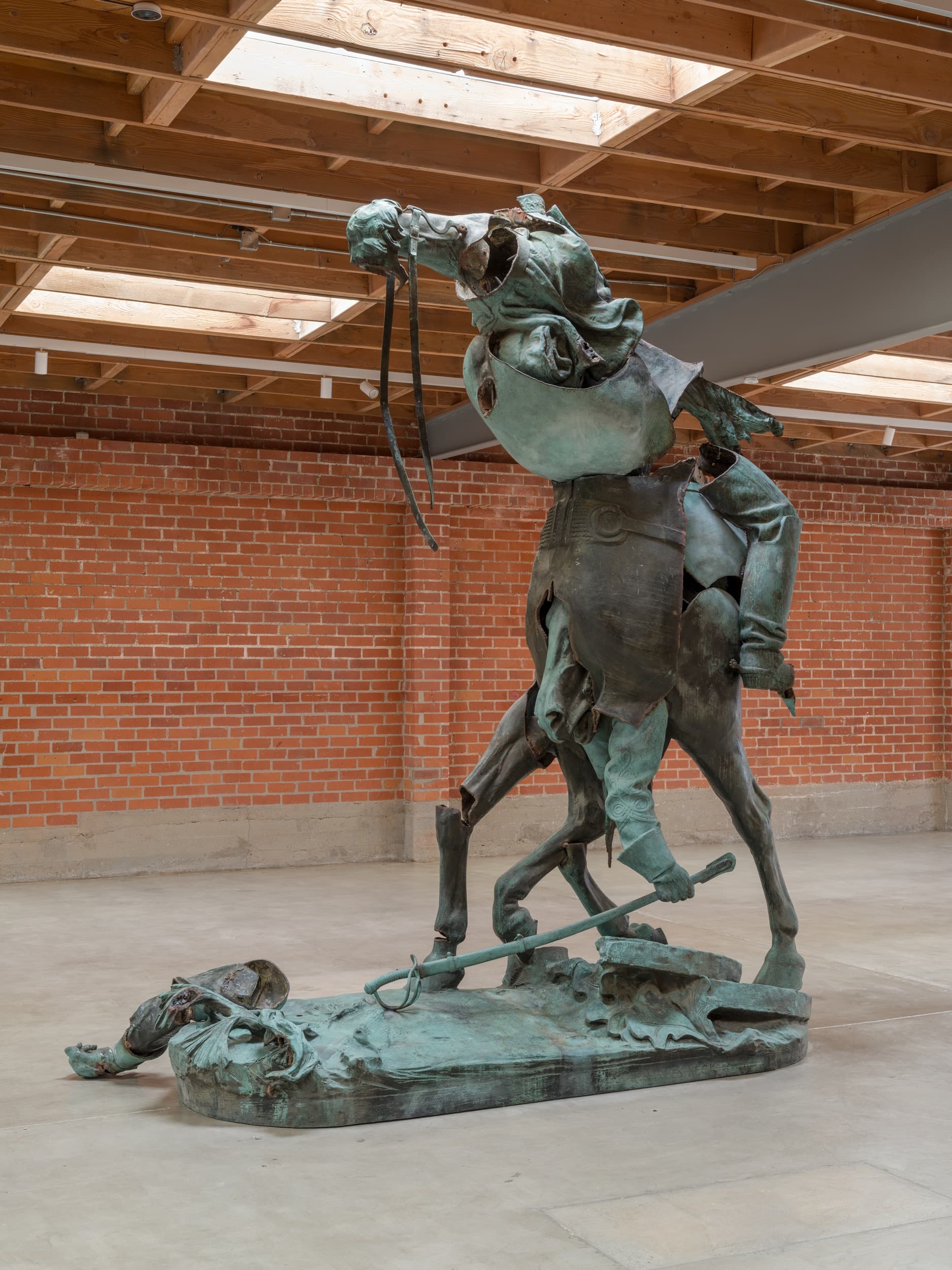
On view at the Embassy of the Free Mind in Amsterdam, the well-known book designer Joost Elffers is exhibiting his drawings for the first time.
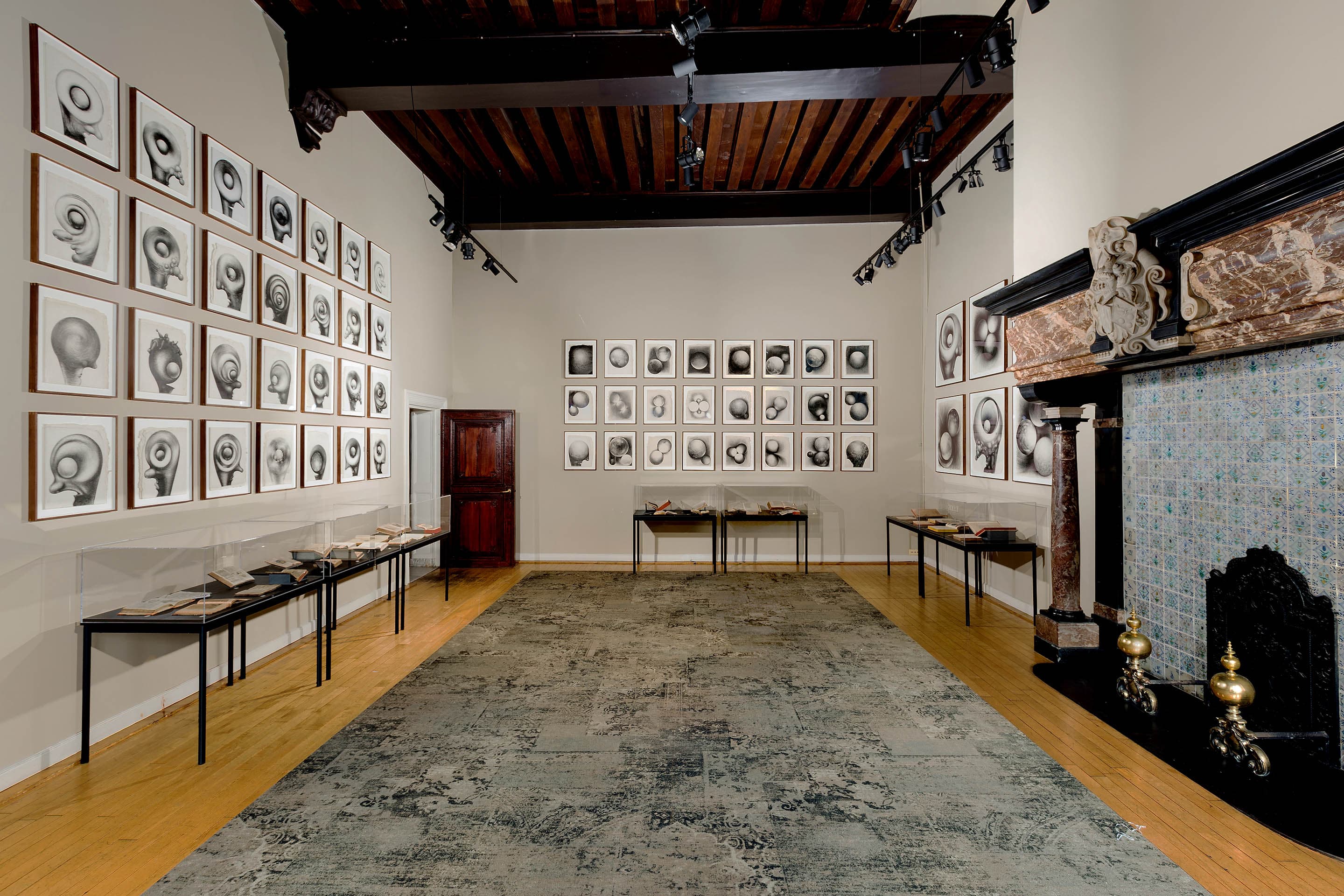
Gabriel Chaile’s gods are big, but not so big that we can’t relate to them and stand in the room with them.

Truly mystical, enigmatic, and wonderful things are what is on display on the four floors of Sperone Westwater in celebration of fifty years of presenting progressive European Art and its correlate on the American scene.

October 2025ArtSeen
Douglas Gordon: Pretty much every film and video work from about 1992 until now’ish…
If one had spent the morning looking at the Roman Forum, then Douglas Gordon’s ziggurat of screens presenting his video practice spanning more than thirty years, installed on the top floor of MAXXI, would not appear unfamiliar.

Within the genre of memoir, Carol Becker has crafted an absorbing psychological thriller. This is not a melodramatic statement: the author juggles meticulously detailed tender anecdotes, psychoanalysis, and a healthy dose of clairvoyance to chart the unraveling of what can be one of the strongest bonds: that between an only child, a girl, who grows into a woman, and her father.

Gourevitch places the viewer in an odd position or extraordinary place in order to remove the land from the equation. In doing that she creates a very personal form of landscape indeed—she makes the viewer the land, responding to the object, which is the sky. Many of the painter’s series, simultaneous to the cloud paintings in this exhibition, also play with landscape from the top or from the bottom—views of terra firma from an airplane, or cities viewed from a skyscraper looking down, with minimal or no sky at all.

Nicolas Africano’s diminutive replicas of youthful male acrobats are, among other things, explorations of the viewer’s response to the real replicated at small scale. The hands, feet, musculature, and faces of the little beings are reproduced so faithfully, we can almost see them breathing. But the smaller the sculpture gets, the less it mirrors the viewer’s presence and the more it tends towards expressing a narrative.

The nine paintings in Randy Wray’s exhibition at Karma are eerie works that tinker with realism, invoke the gothic, and utilize a wide variety of paint applications and textures. The viewer momentarily dips back into that delicious romantic moment of the Symbolists or the Viennese Secession while still engaging with thoroughly contemporary abstract works that acknowledge an anachronistic style without looking back.

Plato’s Timaeus describes the creation of the universe simultaneously as a spiritual event, and as a carefully orchestrated exercise in mathematics, geometry, and the manipulation of forces and ideas. In Harold Wortsman’s exhibition of ceramic objects, reliefs, and prints we see a similar combination of ambiguous ceramic form combined with a diagrammatic energy that both convinces and baffles.

I circled around Let’s Dance (2025) several times. The centerpiece of Rick Briggs’s exhibition I love Painting + Painting Loves Me, Let’s Dance is a five-foot-tall rectangular tower of color.

Tavares Strachan’s goal is to create an alternate and functioning iconology for our times. On entering the exhibition Starless Midnight, one is faced with two objects: a piano, which plays itself, Split Consciousness (Samuel Coleridge-Taylor) (2025); and a book, Encyclopedia of Invisibility (Pocket Guide) (2024) is the blueprint for the artist’s gestures in the exhibition.

Kianja Strobert has fashioned eleven benches as the core of her current show, Pennies from Heaven, in acknowledgement of the fact that in New York, as in so many urban centers, the park bench acts as a pedestal on which the absurd theater of city life transpires.

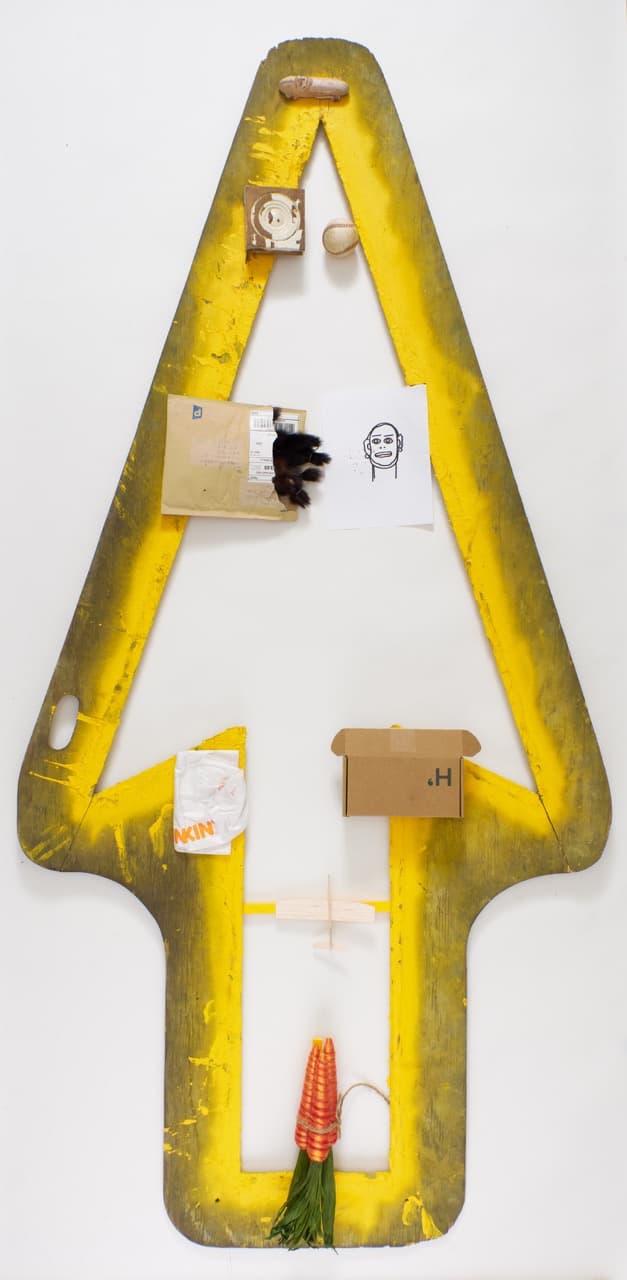
Jim Condron’s sculptures are a tribute to the quieter side of our humanity, our proclivity to keep, treasure, and love odd objects. That Grace Hartigan’s Things (2023) looks very much like John Heliker’s Things (2024), or that Carl Hazlewood’s Things (2023) resembles Ben Pritchard’s Things (2023), speaks to Condron’s personality as a sculptor.
Michael Abel’s exhibition Mutt at YveYANG Gallery is a sweet and meditative return to the Impressionist/Post-Impressionist fixation on the everyday, the pedestrian, and the momentary.

The works in this pair of exhibitions, almost all Lego (or Woma, Chinese Lego), are manipulations of classic paintings and photographs, at times overtly call out the United States morphing towards oligarco-fascism, such as Last U.S. Soldier Leaving Afghanistan (2022) or Truth (2023) a portrait of antihero Julian Assange.

There is nothing more saccharine and sentimental than a painting of a conventionally attractive young woman in a garden. Jaeheon Lee has framed his current exhibition Ghosts in the Garden around this particular subject.

Perhaps the most arresting exchange between two objects in the exhibition Past as Prologue: A Historical Acknowledgment, Part I takes place between a Lilliputian bronze sitting on a pedestal, The Freedman (1862–63) by John Quincy Adams Ward, and his (by comparison) gargantuan and larger-than-life great-grandson, a faceted cardboard construction by the artist Roberto Visani, Cardboard Slave Kit, Freedman (2021).

My family background in journalism has taught me to view it as a job, but there is a contradiction in that it is a job in service to the poetic notion of artistic practice. But the job part means you keep doing it week in and week out, and you don’t torture yourself too much over it—the copy needs to be filed; a dispatch from city hall and an art review aren’t different in that context.
Peter Wayne Lewis’s paintings in the exhibition Monk are about the precise moment of contact between brush and canvas, between the painter and the singular moment in time in which the image is born. In this way the work is improvisational in the best sense of the word and the metaphor of jazz which the artist implies in his title, Monk.

Do we think flags are innocent? In Paramin Jab Molassie (2024) Paul Anthony Smith affixes three black-white-and-red Trinidad and Tobago flags to a print which depicts elements of Caribbean Carnival.

Safranek’s portraits offer a differing narrative of aesthetic choices, but combined with the voices in the background, the visual and the audio work symbiotically in order to lull the visitor into a state receptive to the investigation of something as universal, but universally overlooked in the contemporary art world, as motherhood.

It’s a distinctively terrifying but delicious feeling to be trapped in a beautiful place. In the paintings now on view at Hollis Taggart, Tim Kent has built a claustrophobic neoclassical mansion in which we can wander endlessly, but we cannot leave.

Crafting the Ballet Russes consists of drawings, posters, diagrams, scores, ledgers, letters, and notes used in an attempt to describe a momentous cultural shift in Europe at the beginning of the twentieth century.


