Alex Grimley

Alex Grimley is an art historian based in Philadelphia.

Relief in Sight celebrates two related occasions: the forty-fifth anniversary of Golden Artist Colors and Walsh’s professional and artistic relationship with the company and its founders, which has unfolded in parallel over the same period.
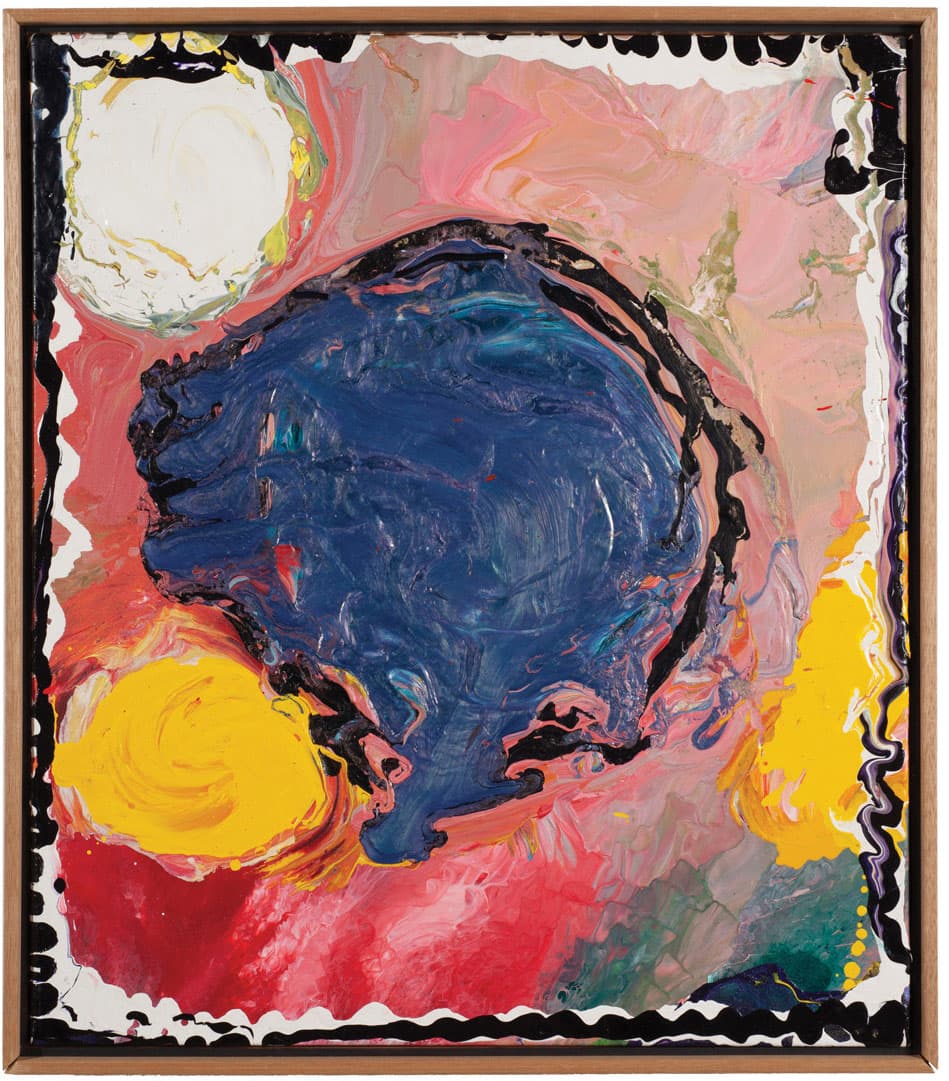
James Walsh, Drawn, 2006. Acrylic on canvas, 28 × 22 inches. Courtesy the artist and the Sam and Adele Golden Gallery.

With the seventeen paintings in Coloratura, currently on view at McKenzie Fine Art, Maureen McQuillan continues her investigations into emphatically material surfaces and visually elusive space.
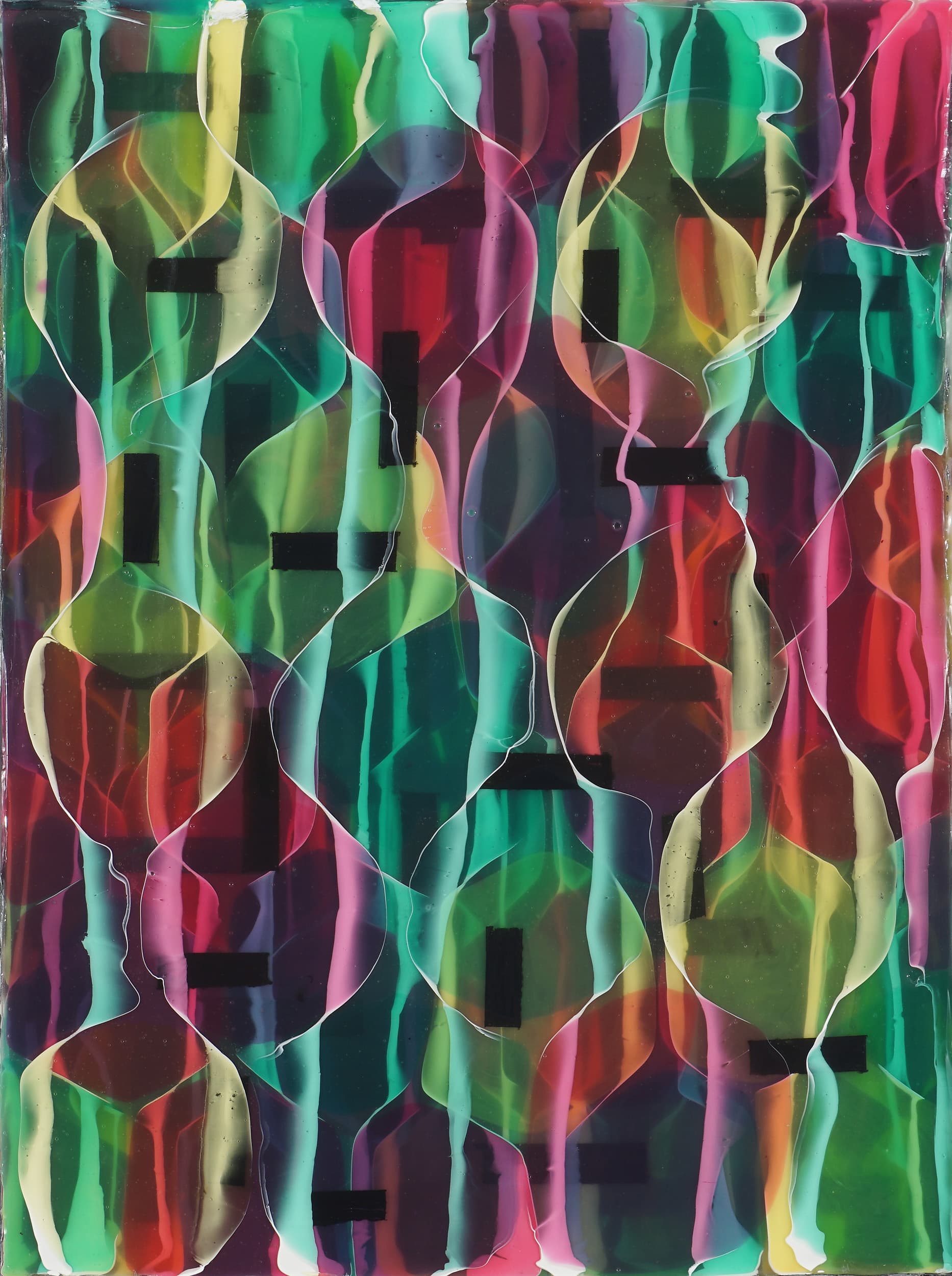
Maureen McQuillan, Untitled (C/V/M), 2025. Acrylic polymer, ink, and acrylic on wood panel, 24 × 16 inches. Courtesy the artist and McKenzie Fine Art.

One of the most striking things about my experience of the paintings in John Zurier’s exhibition Pink Dust was the protraction of time they evoked.

John Zurier, May, Morning Evening, 2025. Oil on linen. 21 ⅝ × 15 ¾ inches. Courtesy the artist and Peter Blum Gallery.

The Shape of Things, currently on view at Garth Greenan Gallery, demonstrates why Feeley’s art deserves a more expansive context than that of an aberrant formalist.

Paul Feeley, Untitled, 1964. Oil-based enamel on canvas, 60 × 60 inches. Courtesy the Estate of Paul Feeley and Garth Greenan Gallery.

There is a visual grammar distinct to Robert Mangold's paintings in Pentagons and Folded Space, a range of abstract sensations that, with concentration, seemed to recalibrate and refocus my senses, opening the paintings to me. The experience is like learning a language. Through the variety of these paintings, Mangold gives us the fundamentals through which we may become fluent in his spatial and sculptural syntax.

Installation view: Robert Mangold: Pentagons and Folded Space, Pace Gallery, New York, 2025. Courtesy Pace Gallery, New York.

Petrichor (described in the exhibition catalogue by the conservationist Terry Tempest Williams as “the unmistakable scent of rain before it falls”) is Claire Sherman’s fifth show at DC Moore in just over a decade and the first in several years to feature paintings of cliffs, crevices, and caves.

Claire Sherman, Grass, 2024. Oil on canvas, 72 x 60 inches. Courtesy the artist and DC Moore Gallery, New York.

Alice Baber is exceptional among once overlooked, now rediscovered postwar artists, as evidenced not only by the steady momentum that has gathered behind her art in the past year but also by the vitality and persuasiveness of the works on display in Colors of the Rainbow, organized by Jody Klotz Fine Art in collaboration with Leslie Feely Gallery.

Alice Baber, Axe in the Grove, 1966. Oil on canvas, 48 x 64 inches. Courtesy the artist and Leslie Feely Gallery and Jody Klotz Fine Art.

Warren Rohrer’s art reflects his deep engagement with and close observation of the rural Pennsylvania landscape that his family first settled in the early 1700s. The twelve paintings in Return to Land at Locks Gallery, dating from the 1970s to the early 1990s, show the subtle changes in Rohrer’s work as he gradually shifted his focus from light to land.

Warren Rohrer, Field: Language 7, 1990. Oil on linen, 54 1/4 x 54 1/4 inches. Courtesy Locks Gallery.

The eight paintings Francine Tint is showing at Upsilon represent a departure from those featured in her previous exhibition at the gallery last year. These are more economical, with open, expansive compositions, zones of raw canvas, and a generally warmer color palette.

Francine Tint, Airlift, 2024. Acrylic on Canvas, 57 x 104 Inches. Courtesy the artist and Upsilon Gallery.

The Mitt Paintings is Yares’s third and most concentrated presentation of work by Jules Olitski, focusing on the years between 1988 and 1993. Opulent and luxurious, the Mitt paintings (so named for the housepainter’s mittens used to create them) are works of baroque exuberance, with inches-thick acrylic crests and troughs that belie their unique illusionistic effects.

Installation view: Jules Olitski: The Mitt Paintings 1988–1993, Yares Art, New York, 2024. Courtesy Yares Art. Photo: Adam Reich.

When standing in the center of Kasmin’s West 28th street space, the seven paintings featured in Zone surround one with moments of stillness and solitude.

Matvey Levenstein, Home, 2024. Oil on copper, 12 x 16 inches. © Matvey Levenstein. Courtesy the artist and Kasmin, New York.
“Time undisturbed” is an apt description for the thirty-nine paintings included in Assum Preto, which follow one another in a procession of motifs that recur without repeating. Sensations of temporality permeate these works—as portraits of light, like in Arruda’s seascapes; in the virtually inexhaustible optical depth of the larger abstracts; and in many of his jungle paintings, their surfaces ghostly and faded like an uncovered artifact—but it is a temporality without motion, time arrested.
Lucas Arruda, Untitled (from the Deserto-Modelo series), 2022 © Lucas Arruda. Courtesy the artist and David Zwirner.
Dona Nelson stands inches from El Toreador (2023), a massive painting mounted in a steel stand several feet from the nearest wall. They’re looking closely at the surface. “This canvas is from China,” they tell me. “It’s whiter, it’s very soft.”
Dona Nelson, El Toreador (Recto), 2023. Acrylic paint and acrylic mediums on canvas with steel stand, 106 x 88 inches. Courtesy the artist and Locks Gallery.
The five large John Hoyland paintings recently on view at Hales Gallery showcase two major moments from the British painter’s early career. Created in the heady years between 1965-1970, the paintings date from a period of cultural cross pollination during which the artist maintained studios in both London and New York City.
Installation view, John Hoyland, Thresholds: Paintings 1965-1970, Hales, New York, December 1, 2023-January 20,  2024. Courtesy the artist and Hales, London and New York. Photo: JSP Art Photography.
More than half of the works included in Edward Hopper as Puritan date from the first half of the 1920s, specifically the years 1922–24, a momentous period during which the artist began spending summers on Cape Cod, met and married his wife Josephine (Jo) Nivison, temporarily gave up etching to focus on watercolor, and had his first museum acquisition.
Edward Hopper, Two Puritans, 1945. Oil on canvas, 30 x 40 inches. Courtesy the artist and Craig Starr Gallery.
Dating from the late 1980s to the late 2000s, the ten paintings and eight small watercolors in Jane Wilson: Atmospheres are at once monumental and meditative, immersive and intimate, in the tradition of artists such as Theodore Rousseau and George Inness, for whom landscape was a means for representing moods and states of mind.
Jane Wilson, Eclipse, 1991. Oil on canvas, 74 x 84 inches. Courtesy DC Moore Gallery.
“I should make sure it doesn’t come across as another of the Chelsea show of paintings or ‘about painting,’” [sic] reads a note from the journal of Enrique Martínez Celaya. Pages from this journal, painted in reproduction on the wall of Miles McEnery Gallery on West 21st St., flank the threshold of the exhibition. “The goal of this passage is to deny the show but without over-explanation,” we read. “The writing should help to clarify it is not a ‘show.’” The artist’s musings in this liminal space prime the viewer to experience the six large and identically sized oil and wax paintings that hang just beyond it.
Enrique Martinez Celaya, The Omen (Blue Poppy), 2023. Oil and wax on canvas, 72 x 60 inches. Courtesy the artist and Miles McEnery Gallery.
Julie DeVries is showing seven oil landscapes and about as many studies in her first New York show, currently on view at Hunter Dunbar. Working both from memory and photographs, her paintings depict lyrical scenes suffused with brilliant color and radiant light.
Julie DeVries, Nocturne - Colored Leaves, 2020. Oil on linen 30 x 40 inches. Courtesy Hunter Dunbar Projects.
“I lived with them,” Jim Dine says of his ruggedly executed self-portraits in pencil. It’s a statement he returns to, first when detailing the years-long process behind the construction of the three massive bronzes that comprise Three Ships (the Magi) (2022), and again, with regard to the over two dozen painterly self-portraits in oil, bodies of work currently on view at Templon. I happened to catch Dine the afternoon before the opening. With a smile, he advised, “Spend some time with the work.”
Installation view: Jim Dine: Three Ships, Templon, New York, 2023. Courtesy the artist and TEMPLON, Paris -- Brussels -- New York. Photo: Charles Roussel.
Stripes/Plaids/Shapes demonstrates the tremendous variety of sensory and somatic effects Kenneth Noland could wrest from these economical means. With its spacious hanging, each of the twelve paintings is presented in its specificity, to be taken on its own terms.
Kenneth Noland, Untitled, 1972. Acrylic on canvas, 112 1/2 × 40 3/4 inches. © The Kenneth Noland. Foundation / Artists Rights Society (ARS), New York.
The selection of works in the Neil Welliver show currently on view at Alexandre Gallery’s Lower East Side location offers a cross-section of the artist’s output in painting and printmaking between 1974 and his death in 2005. Four large landscape paintings (each about eight feet square) anchor the show, with four smaller paintings and seven prints rounding it out.
Neil Welliver, Stump, 2000. Woodcut on Nishinouchi, 35 x 34 inches (sheet). Courtesy the artist and Alexandre Gallery.
Olitski’s was a particularly robust late style. His paintings from the 2000s are both the apotheosis of a lifetime in art and a voyage into new pictorial territory.
Jules Olitski, Romance Felt, Rose, 2002. Acrylic on canvas, 28 1/2 x 24 3/4 inches. Courtesy Jules Olitski Art Foundation Inc. / 2022 Licensed by VAGA at Artists Rights Society (ARS), NY.

Close

Home