Andrew Paul Woolbright

Andrew Paul Woolbright is an artist, gallerist, and Editor-at-Large at the Brooklyn Rail, living and working in Brooklyn, NY. Woolbright is an MFA graduate from the Rhode Island School of Design in painting and is the director of the Lower East Side gallery Below Grand. He currently teaches at Pratt and School of Visual Arts in New York.

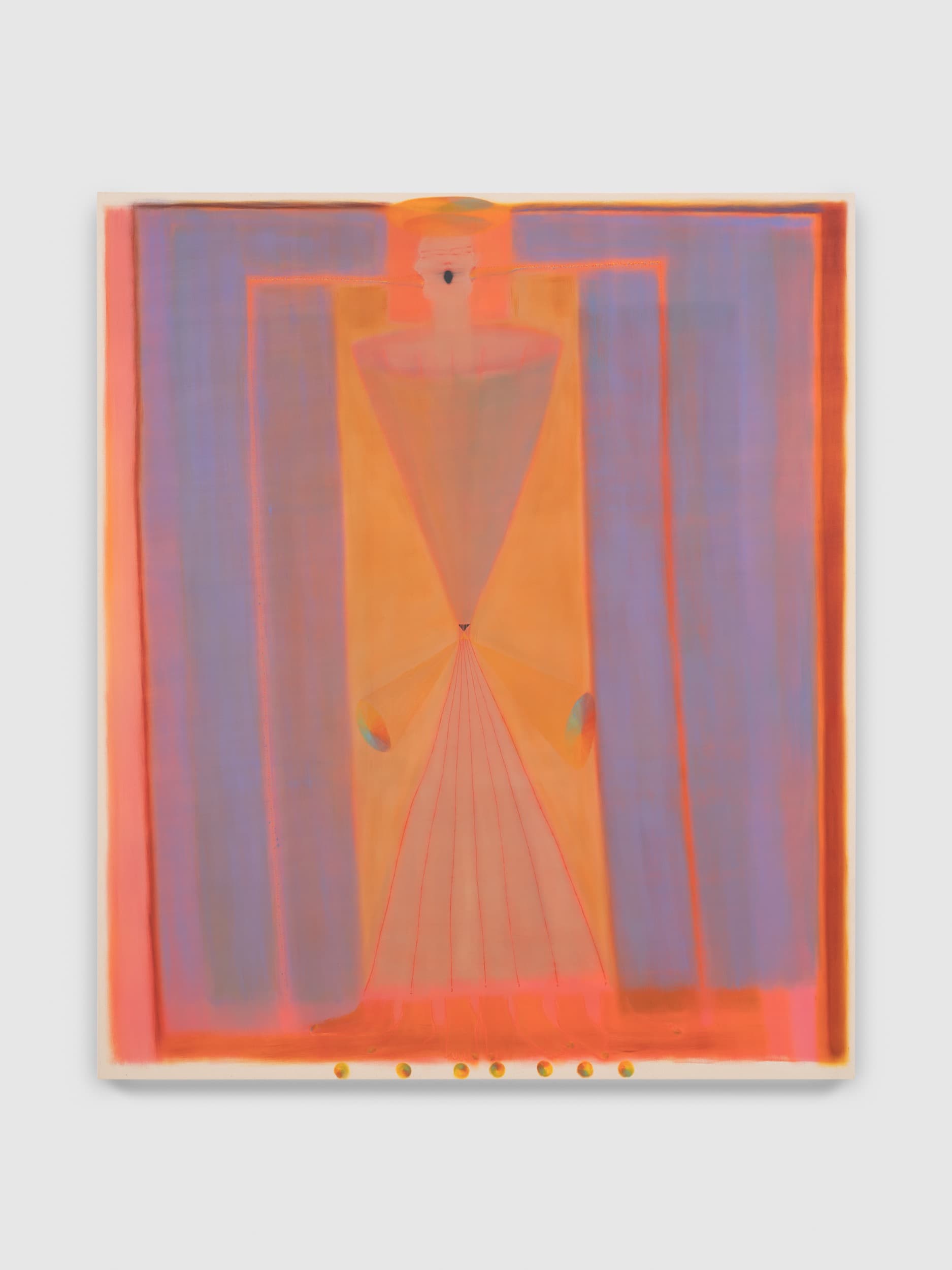
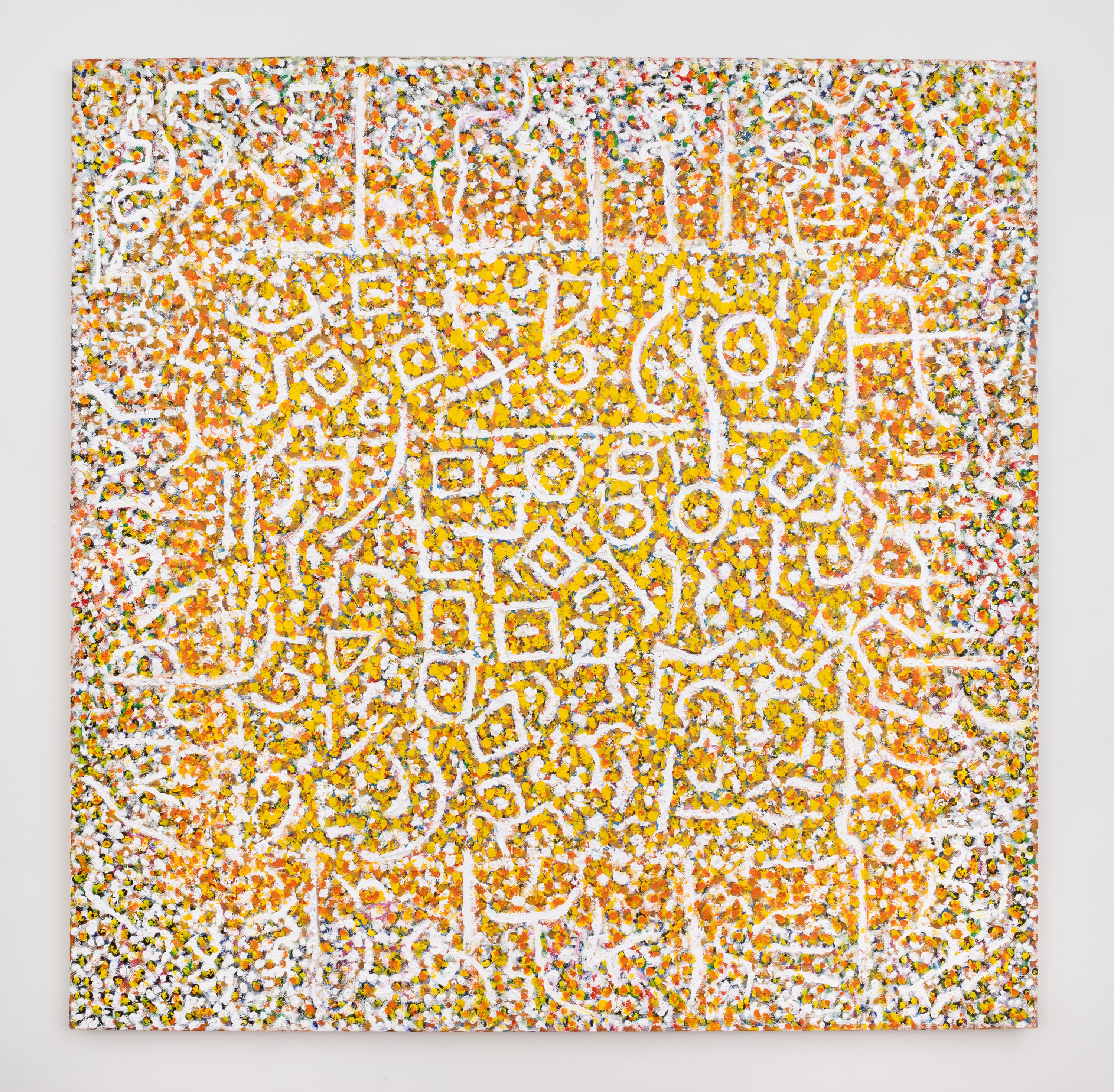
Richard Pousette-Dart’s Geometry of Summer marks a significant moment in the artist’s life and work. The seventeen works represented in the show span across the artist’s last twenty years of his practice, and together provide evidence of the virtuosity of his mature style and the techniques that he developed to exceed the limits of the grid.

Richard Pousette-Dart, Golden Door, 1989–90. Acrylic on linen, 72 × 72 × 2 inches. Courtesy Pace Gallery.

Rob Pruitt began making work as a rebellious art student in the mid-eighties, beginning a professionally successful, albeit brief, collaboration with his then-partner Jack Early. Together the two made sculptures and paintings that in turn interrogated and showcased the masculinity which had policed and persecuted them each throughout young adulthood. After a controversial exhibition and a subsequent hiatus from the art world, Pruitt returned solo in 1998 with Cocaine Buffet—a 16-foot-long mirror laid flat on the floor of the exhibition space with a coordinating 16-foot-long line of cocaine down the middle. Since then, his career has run the gamut from daily portraits of Obama to his trademark panda paintings. The artist spoke with Rail Editor-at-Large Andrew Woolbright to discuss his latest exhibition at 303 Gallery—a series of spectral watercolor gradients that deal in time past and passing, constantly in flux. 

Portrait of Rob Pruitt, pencil on paper by Phong H. Bui.

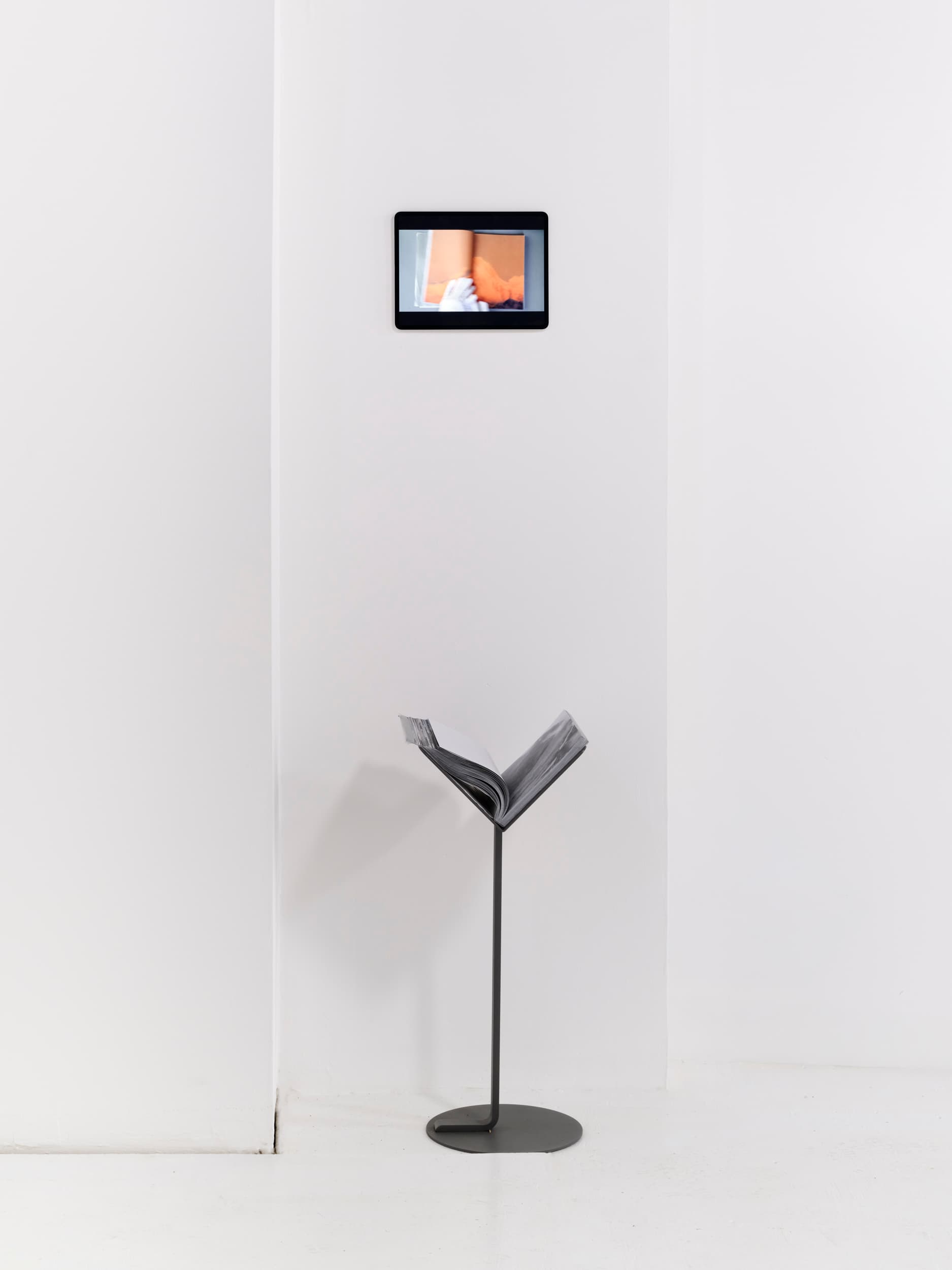
Beset on all sides by this abyss, the painter Louis Jacquot, for his exhibition Tántalo at the Biblioteca Vasconcelos in Mexico City, has suspended his works within the floating racks and aisles of the library.
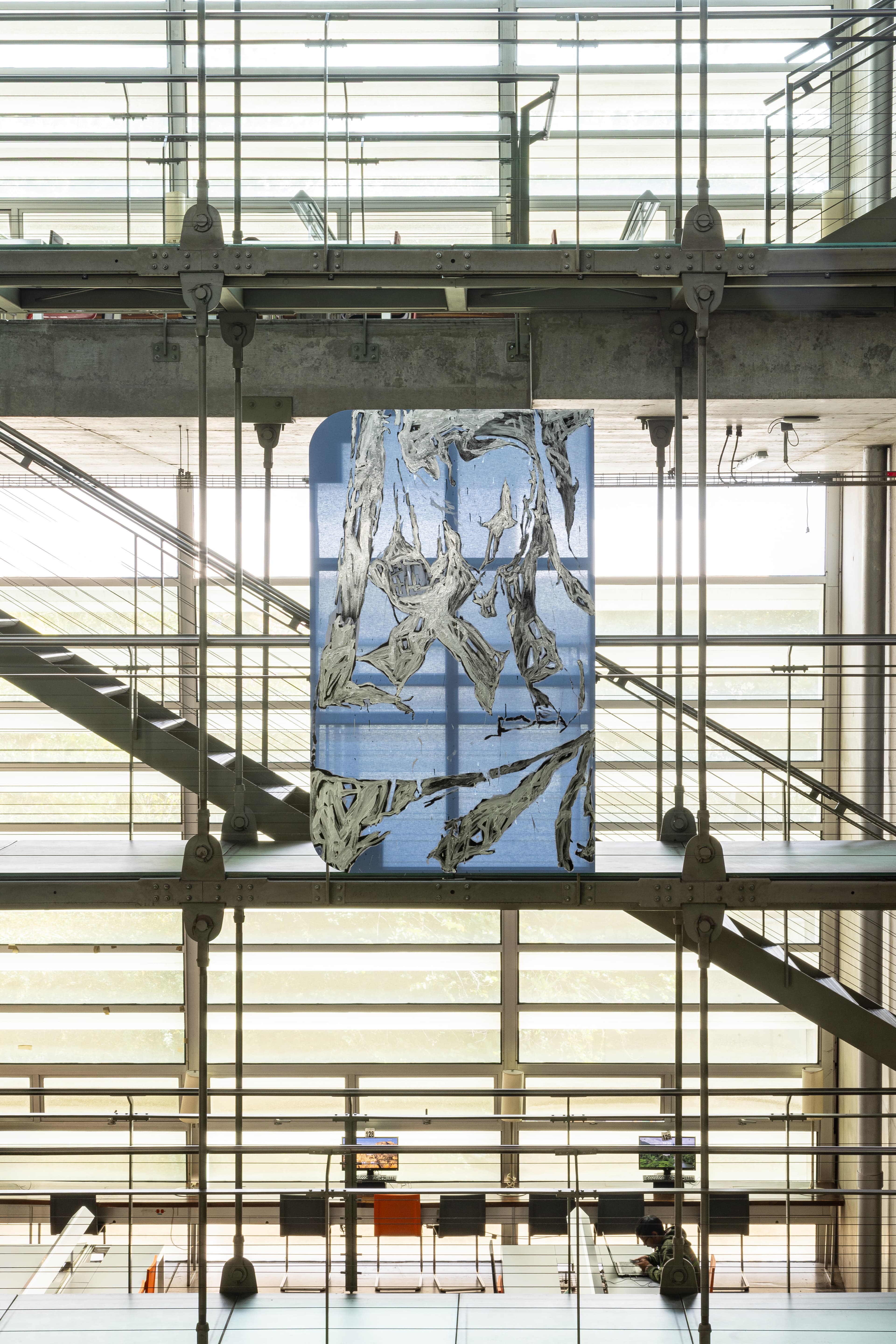
Installation view: Louis Jacquot: Tántalo, Biblioteca Vasconcelos, Mexico City, 2026. Photo: Gerardo Landa Rojano. Courtesy Villa Magdalena.

At Galerie Sardine, Materia: Memoria exhibits the work of Justin Bradshaw and Maria Robledo: two artists who treat their respective disciplines as a way of settling and sieving the elusiveness of the memories of others and the places we once knew.

Installation view: Materia: Memoria, Galerie Sardine, New York, 2025–26. Courtesy Galerie Sardine.

Archie Rand’s Sons, now on view at Contemporary Fine Arts (CFA) in Berlin, continues the anthology painting the artist has become known for.
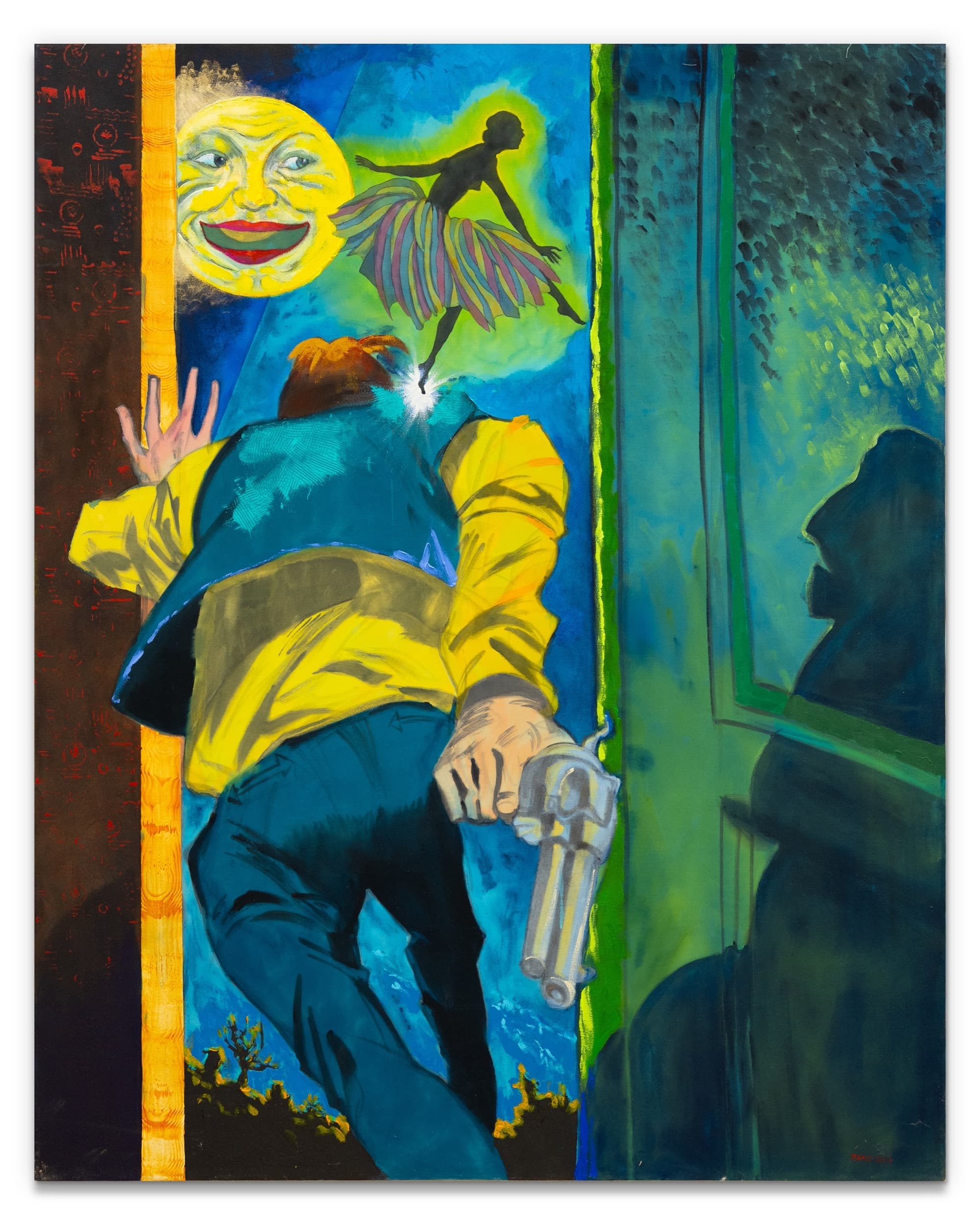
Archie Rand, Levi, 2019. Acrylic on fabric, 59 ⅞ × 47 ⅝ inches. Courtesy Contemporary Fine Arts and the artist.

Tom Friedman’s sculptural practice has established many ideas to the broader discourse, but perhaps most meaningfully, he has advanced the studio past traditional notions of production and into a zone of material grammar; a syntax of ingredients that collectively question what makes an object a thing. 

Portrait of Tom Friedman, pencil on paper by Phong H. Bui.

Aaron Fowler’s RELEASE at Anton Kern Gallery clarifies the motivation that underlies the artist’s inveterate use of materials.

Aaron Fowler, CMac, 2025. Acrylic, oil, sculpting epoxy, uniforms, and pins on hot tub cover, 108 × 91 × 7 inches. Courtesy the artist and Anton Kern Gallery.

In his current exhibition with David Kordansky in LA, Jason Fox reshuffles the deck of sixties counterculture with the immediate present. What is depicted is not nostalgia, or a memorabilia of history. Instead, the rigor mortis of American celebrities are resuscitated into new context—the dead images cast as new characters. Rail Editor-at-Large Andrew Woolbright sat down with him to discuss the archetypical nature of his characters, the humiliation of being an artist within our violent American culture, and the body as a drape or re-skin—a shadowed dream of intellectual property and the celebrities of the American hegemon.

Portrait of Jason Fox, pencil on paper by Phong H. Bui.

Marcus Jahmal’s two exhibitions at Will Shott and Market Gallery find themselves suspended, transfigured, between the leather jacket and the cross. Together, they are the drape of attitude and reflection, a disposition that suggests that the artist strikes between immolation and sacrifice.

Marcus Jahmal, Jaw Shatter, 2025. Mixed media. © Marcus Jahmal Studio 2024. Photo: Izzy Leung.

Mark Leckey’s 3 Songs from the Liver at Gladstone shows us that we are lost in a Warburgian maze of images and the scopic regimes that they suggest, constructing a palace of mirrors and screens that we are unable to escape.

Installation view: Mark Leckey: 3 Songs from the Liver, Gladstone Gallery, New York, 2024. © Mark Leckey. Courtesy the artist and Gladstone Gallery.

The artists included in this exhibition are invested in practices that pull new forms of research into visibility and point to more extensive archives, or what James Voorhies might describe as adjacent forms of “postsensual aesthetics.”

Installation view: Barrier, ArtYard, Frenchtown, New Jersey, 2024–25. Left: Ghida Dalloul, Rolling Paradox. Right: Installation by Ivanco Talevski. Courtesy ArtYard. Photo: Constance Mensh.

What is worldbuilding a reflection on and what is it a symptom of? Is worldbuilding an act of avoidance? A way of engaging with the methods left to artists by Dada and Surrealism without evoking their histories? And maybe most urgently, how then can we develop language for when worldbuilding produces unnecessary escapism, and when it critically is used to better understand the world we are left with?

I find myself approaching the destruction of Shahzia Sikander’s sculpture in Houston as a contemporary ruin. Since the work’s desecration, Sikander’s Witness (2023) is now an unintended monument through ruin—a space to consider what is severed and what, in this moment, seems to be impossible to mend.

Still from a video taken by the University of Houston of the destruction of Sikander’s work.

The point is to attempt to recognize what is at the edge of things; to see if there’s a language to be found in the glow of its aurora. The term avant-garde undermines its own capability. It implies a linear progression of time while also invoking the thin posturing of a guilty bourgeoisie. Avoiding the question has been rendered its own cliché. As far back as the 1960s, it has been dismissed as something dead and gone. 

It feels appropriate to have an exhibition at this scale come off as more of a question—something less declarative. The interventions of the artists fight to keep their edge in a place where everything is drawn into comparison. The space is so expressive. The Campus wants to be a scene, or a milieu; or wants to be, at the very least, visible and uncontained.

Installation view: 2024 Inaugural Exhibition, The Campus, Hudson, NY, 2024. © Annette Kelm; Courtesy the artist and Andrew Kreps Gallery, New York. © Shinichi Sawada; Courtesy the artist, James Cohan Gallery, New York; and Jennifer Lauren Gallery, Manchester, United Kingdom. Photo: Guang Xu.

Joseph Brock’s paintings in his exhibition Every Asterism at Foreign & Domestic clear out space to explore soft architectures, fragile colors, and the light of afterimages.

Joseph Brock, Kearsten (S.1), 2024, acrylic and oil on canvas, 16 x 20 inches. Courtesy Foreign & Domestic gallery.
David Ostrowski has somewhat of a cult status among painters. His “F” series continues on in the memory and discussions of painters here in New York, brought up in the more wistful moments of painters reminiscing about the moments when painting felt like it understood something about culture and about itself.
Portrait of David Ostrowski, pencil on paper by Phong H. Bui.
Francesco Igory Deiana began putting together the group show Spirit Sink as a young kid who found himself stranded on the west coast of America after coming to the country from Italy.
Francesco Igory Deiana, “SMOKE AND MIRRORS,” 2024. Acrylic, latex, one-shot enamel on canvas. 30 x 90 inches. Courtesy Ruttkowski;68.
Maurizio Cattelan’s Sunday at Gagosian isn’t funny. Cattelan has made it clear that he doesn’t consider himself a “joker,” only to then confront those who came to the opening with the phrase “Beware of yourself” rendered in a twisted graphic font reminiscent of Jared Leto’s forehead tattoo or Heath Ledger’s handwriting in their performances as the famed Batman villain.
Installation view: Maurizio Cattelan: Sunday, 2024. © Maurizio Cattelan. Courtesy Gagosian. Photo: Maris Hutchinson.
Knightwatch’s chrome ecology generates an uneasy stillness, perhaps parallel to the moment the forest grows quiet before something strikes out from the darkness. The exhibition is all tendrils, pointed barbs, and camouflage.
Justin Cloud, Water Dance, 2024. Aluminum, amazonite, solvent dye, 20 x 17 x 3 inches. Courtesy the artist and Jack Barrett.
Joe Bradley’s paintings in his exhibition Vom Abend at David Zwirner feel walked out. There are moments within each of his riven landscapes that his painting feels like a long trek, a hike without a compass or a map packed in the gear.
Joe Bradley, Occident, 2023-2024. Oil on canvas, 85 1/8 x 111 inches. Courtesy David Zwirner.
Christopher Wool’s retrospective See Stop Run is located on the 19th floor of 101 Greenwich Street above a corporate lobby with a Rentbrella stand. After passing through elevators with stock updates ticking across video screens, you emerge on a long-empty floor to find a selection of the artist’s work over the last decade.
Installation view: Christopher Wool: See Stop Run, 101 Greenwich Street, New York. Courtesy the artist.
Like Cézanne and his quixotic desire to invent an Impressionism with weight, or Blake who wanted to merge the line of Poussin with the torque of Michelangelo, Kuniyoshi sought out seemingly impossible dialectics, hoping to generate frisson in what were previously seen as impossible and disparate realities. He came to reject the easy offer, and set about forcing its contradictions to move painting forward.
Yasuo Kuniyoshi, Fakirs, 1951. Oil on canvas, 50 1/4 x 32 1/4 inches. Smithsonian American Art Museum. © 2024 Estate of Yasuo Kuniyoshi / Artists Rights Society (ARS), NY.
In his solo exhibition Oh Fortuna! at Clearing, Henry Curchod’s oil and charcoal works reveal undercurrents. They are superimpositions, like Baudelaire’s “Double Room,” a duet of space that finds octaves in registers of ethereal light and the darker tones of alienation, a living atlas of suspended tristesse and doubt.
Henry Curchod, Strapped to your wheel, 2023. Oil and charcoal on linen, 78 3/4 x 66 7/8 inches. © JSP Art Photography. Courtesy the artist and C L E A R I N G, New York / Brussels / Los Angeles.
John O’Connor encrypts and encodes the complexity of our moment into ciphers of drawing. His exhibition Man Bites Dog Bites Man at Pierogi Gallery in collaboration with L Space feels akin to listening to the radio on a late-night drive, like O’Connor’s practice is tuned to that space on the dial between radio towers, where the drift from one message cuts in across another as magnetic fields begin to shift.
John O'Connor, Indeflation, 2023. Colored pencil and graphite on shaped paper, 26 x 27 inches. Courtesy the artist and Pierogi Gallery.
Kyungmi Shin’s Monsters, Vases and The Priest at Sperone Westwater is an act of ceremony. Moving between timelines, the artist has collapsed the space of images through painting to form an important site for contemplation; for gathering distant experiences and ushering them into the present. In understanding her family lineage she avoids self-mythologizing and instead, more broadly, examines the beauty and dignity of the Asian experience.
Portrait of Kyungmi Shin, pencil on paper by Phong H. Bui.
James Prosek’s show Trespassers reorients the subject of the Amon Carter Museum to the Texas prairie tall grass. Knowing full well that we implicate ourselves when we observe something, that the gaze reduces both what is seen and who envisions it, Prosek returns to the earth in a post-humanist strategy of subject building—perceiving secluded worldings, where Galleta grows in the Edwards Plateau, and where Turk’s-cap Lilies bloom within the Blackland Prairie.
Installation view: Trespassers: James Prosek and the Texas Prairie, Amon Carter Museum of American Art, Fort Worth, TX, 2023-24. Courtesy Amon Carter Museum of Art.
Tales of Brave Ulysses, which spans across the galleries of Van Doren Waxter and Garth Greenan, highlights a significant moment of counter-modernism within the 70s and 80s. The work of the artists Al Loving, Howardena Pindell, Alan Shields, and Richard Van Buren are a weft and warp, interlaced in dialogue with each other to reveal an exchange of ideas and innovations.
Installation view, Tales of Brave Ulysses: Al Loving, Howardena Pindell, Alan Shields, and Richard Van Buren, Garth Greenan Gallery, New York, 2023. Courtesy of Garth Greenan Gallery, New York.
Deborah Buck’s Into the Wild: To Crash is Divine at La Mama Galleria connects the thinking-through process of drawing to the loose shaping of crowds and identity.
Deborah Buck, House Plants, 2023. Acrylic, pastel and sumi ink on Arches paper, 51 x 45 inches. © Deborah Buck. Courtesy Jennifer Baahng Gallery.
As early as 1981, when Benjamin Buchloh published “Figures of Authority, Ciphers of Regression” in October, Neo-Expressionism and the concomitant resurgence of texture and pathos within painting was met with almost unanimous critical rejection.
Installation view: Wave Pattern, Presented by Dylan Brant & Max Werner, 2023. Courtesy Brant & Werner.
Deborah Buck’s Into the Wild: To Crash is Divine at La Mama Galleria connects the thinking-through process of drawing to the loose shaping of crowds and identity. Buck’s work breaks down the boundaries between modes of cartooning and abstraction to operate as covert satire. Between her figurescapes and phase shifts of pastiche, Buck generates erased zones of gray that she then utilizes as an important formal resource. By revealing the trace and shadow of her expressive hand, she makes the evidence of her thinking and the provisional sense of communities her subject, allowing the shadows and index of drawing to form productive tension with flat color.
Installation view: Into the Wild: To Crash is Divine, La Mama Galleria, New York, 2023. © Deborah Buck. Courtesy Jennifer Baahng Gallery.
For her current exhibition Halfway Off, South continues to produce from the mind of the hand and its partner, the industrial sewing machine. Between foot and plate, South finds the relational and situational dialectics, tensions, and moments between textures and fibers, discovering synthesis through process.
Installation view: Jane South: Halfway Off, Spencer Brownstone Gallery, New York, 2023. Courtesy Spencer Brownstone Gallery.
It is a daunting task to find new language to discuss Eberhard Havekost’s work. The critical analysis of the artist is exhaustive, including from some of the best theorists and critics working today. As a writer, its density feels encroaching, leaving few places on the map left to discover and explore.
Installation view: Eberhard Havekost: Paintings 1998 – 2016, Anton Kern Gallery, New York, 2023.
In Oscar’s portraiture, the experience is encrypted, withheld, intimate, kept private between the artist and the subject. It is elusive when it needs to be, inviting when it needs to be. It is a language of survival that Oscar has developed to mine and understand his own labor, and reflect the visage of the spectator back at them through mirrors. It holds an account, while finding moments of ceremony for communities and people that need it—deserve it.
Portrait of Oscar yi Hou. Pencil on paper by Phong H. Bui.
We see the figures that populate the settings of Guim Tió’s Roots far off. The artist evokes the unlearning that the land can do to our bodies—and the unforming of identity that happens when we find ourselves in foreign lands.
Guim Tió, El riu calmat, 2023. Oil on linen, 35 7/8 x 46 1/2 inches. Courtesy Ruttkowski;68.
While the archival impulse deals with the canon of majoritarian culture on its own terms and with its own language, provisional sculpture provides a visual alterity of the marginal that has always run parallel to it—a vibrant language of ordering and piecing together what has been broken.
Installation view: My My My Tintals and Fishscales, Palo Gallery, New York, 2023. Courtesy Palo Gallery.
In Emmanuel Louisnord Desir’s Ashes of Zion, painting and sculpture employ a skeuomorphic glitching of material to address biblical stories and collective histories. The work is remarkably attuned to the American vernacular, but the energy of it builds out of the artist’s ability to produce softness in the material resistance of wood. Desir gives us an allegorical metanarrative that begins with the garden and ends with the fall of Babylon.
Installation view: Emmanuel Louisnord Desir: Ashes of Zion, 47 Canal, New York, 2023. Courtesy the artist and 47 Canal, New York. Photo: Joerg Lohse.
The Dungeons and Dragons Monster Manual, a book on the work of Albert Bierstadt, René Daumal’s Mount Analogue, and Roy Gallant’s Our Universe are arranged along the front desk of Pace. While these books index the aesthetics of Matthew Day Jackson’s exhibition, it is Huysmans’s Against Nature that inspired the show’s title, and its protagonist, the isolated collector of extravagance Des Esseintes, who acts as its aegis.
Installation view: Matthew Day Jackson: Against Nature, Pace, New York, 2023. Courtesy Pace Gallery.
Tim Brawner’s Glad Tidings at Management sustains horror past its breaking point. In his exploration of genre through the passages of B-movie horror reels and its more recent evolution into online creepypasta, the artist is able to fixate on the tremulous imagery of jumpscares and translate a clever act of self-negation into painting. What is shed, what is stayed, and what new tension is currently relayed?
Tim Brawner, Semiochem, 2023. Oil on canvas. Courtesy the artist and Management. Photo: installshots.art.
In New Paintings at Kasmin Gallery, Jan-Ole Schiemann utilizes a segmented compositional structure to annotate different modes of mark marking. The artist makes extensive use of pastiche within the gaps of the picture plane, in a process that disconnects signs from the literalness of representation.
Installation view: Jan-Ole Schiemann: New Paintings, Kasmin Gallery, New York, 2023. Courtesy Kasmin Gallery.
The actor Ben Becker is playing Albert Oehlen. He is sitting on Oehlen’s studio rooftop and surrounded by empty beer cans. In a listless shrug, he tells the cameraman that they've been left up there by the neighborhood teenagers and that he wishes to leave it so they can see the mess they’ve left. Oehlen is ventriloquizing through the belligerent and maudlin Becker for the docufiction The Painter (2022).
Installation view: The Ömen: Albert Oehlen paintings and Paul McCarthy sculptures, Gagosian, New York, 2023. Courtesy Gagosian. Photo: Rob McKeever.
When everything is adornment it becomes a critical gesture, a self-negation, a reflexive desire that suspends us forever in the moment of the close Victorian look. When the dream becomes too romantic or too dreamy, it shakes us awake. Narrett is able to generate a transcendent interiority on the scale of Emily Dickinson, where self confinement becomes transgressed, drawn and redrawn, to inscribe it within fantasy before breaking its illusion.
Sophia Narrett, Carried by Wonder, 2022–23. Embroidery thread, fabric, acrylic and aluminum, 56 x 28 inches. Courtesy the artist and Perrotin. Photo: Stan Narten.
In John Tursi's New Works at Ricco/Maresca, the artist cultivates a sense of movement and psychedelic animation through dense repetition. Simple shapes are plaited into larger patterns that Tursi combines into machinic bodies. Each figure evokes pulsating Broadyway Boogie-Woogies of movement, that systematize the body into reeling conveyor belts of synapse.
John Tursi, Untitled (12:30pm), 2022. Ink on paper, 22 x 22 inches. Courtesy the artist and Ricco/Maresca Gallery.
How did the show “The Poet-Engineers” come about? When I think of the Lower East Side, and I think about its difference and the texture of it, I think about Miguel Abreu Gallery, and I think about that show, in particular. It’s a show that still stays with me and I still consider and think about. And I think part of the reason is it really articulated a philosophy or it believed in an exhibition that was a way forward, or an examination of the present, or a series of possibilities. And I think that that oftentimes gets lost in things. So I just, I'm happy to be sitting down with you and wanted to know, how did this show come about? What I think is the perfect show. 
Jean-Luc Mouléne, Pyramid'os, 2020. Bronze, green patina, 21 1/4 x 30 3/8 x 25 5/8 inches. Courtesy Miguel Abreu Gallery. Photo: Stephen Faught.
The artist and critic Jesse Murry described “a breath that makes possible another breath.” How can our movements allow for other movements? As artists, how can our practices extend space for others as much as it asks for space; and give language and poetry to others as much as it asks for those things. I’ve been told I wear many hats, and I want to address the why of it for the first time, while also bringing together a small vibrancy of others who share in strange navigations and similar obligations with me.
Portrait of Andrew Paul Woolbright, pencil on paper by Phong H. Bui.
Protocol is about many things, but maybe most directly about the history of control and the shift from disciplinary societies to societies of control. Can you explain what led you to want to write the book? And those historical differences, which I think are incredibly important?
An illustration of bionumeric evolution, using an algorithm for cellular automata developed by Nils Aall Barricelli in 1953.
Ted Gahl’s Le Goon at Harkawik picks the plangent chords and stirs the submerged chromas of terra melancholia. Melancholia, as opposed to anhedonia, conjures a sensual pleasure within the somber. While his paintings don’t seem to exist in the present, they also don’t seem to be nostalgic for another time, instead dealing with some time outside of time.
Ted Gahl, The Entertainer, 2022. Acrylic, Moroccan pigments, graphite, colored pencil on canvas in artist's frame, 40 x 30 inches. Photo: Harkawik.
Jan Baracz’s exhibition Mutiny’s Darling at Peninsula Art Space provides a map of the overlooked. The artist utilizes materials marked by subtlety, favoring an inconspicuous tonality that exists somewhere between the woodshed and the boathouse, to address the impinged and imperceptible experience of traversing the ordinary.
Installation view: Jan Baracz: Mutiny's Darling at Peninsula Art Space, 2023. Courtesy the artist.
In Philip Taaffe’s exhibition currently on view at Luhring Augustine, the artist explores the transcendent possibilities of symmetry and visual density. Through a series of prismatic mandalas, Taaffe’s mixed media works on panel set up painting as a form of New Materialist meditation, a relational way of seeing the world that challenges anthropocentrism and probes the ethics of our engagement with non-human kin.
Philip Taaffe, Panel with Larger Frogs, 2022. Mixed media on panel, 30 7/8 x 41 5/8 inches. © Philip Taaffe; Courtesy of the artist and Luhring Augustine, New York. Photo: Farzad Owrang.
The material conditions of being an artist in New York have a direct impact on the aesthetics and considerations taken in the studio and within an artist’s practice. While the return of the influence of Arte Povera and the prominence of post-studio practices can both can be attributed to ideological and conceptual decisions or to new “structures of feeling” in Raymond Williams’s terms, they can also be translated and defined through the prices of lumber, rising studio costs, and the commuting culture created through the gig economy.
Advisory Committee: Irving Sandler, Harriet Shorr, Chuck Close, Janet Fish (photo), Cynthia Carlson, Philip Pearlstein, and Robert Storr, 1992.
There may be no better example of a product of Chicago’s transgression, specifically the ethos of the School of the Art Institute of Chicago (SAIC), than Angel Otero.
Angel Otero, Mi Acuario, 2022. Oil paint and oil paint skins collaged on canvas, 95 x 142 x 1 1/2 inches.© Angel Otero. Courtesy the artist and Hauser & Wirth. Photo: Thomas Barratt.
The exhibition provides the unique experience to see where Gorchov expands the saddle into more of a field, plays at the boundaries, attempts to relate it more directly to the edge of the paper through trial and error, before finally settling on his aesthetic.
Ron Gorchov, Untitled, 1968. Spray paint and graphite on paper, 24 x 19 inches. Courtesy Cheim & Read.
Wray’s ability to avoid semblance and reduction prioritizes specific but undisclosed sources, creating distinct shapes that defer recognition. Hovering in the protean spaces that can simultaneously suggest the interiors of bodies, bones, plants, and tools, Wray’s practice stays in the apeiron, presiding over the final moment where forms resist determination and luxuriating in the mutable recognition of shadows.
Randy Wray, Plot Device, 2022. Oil on linen, 52 x 28 inches. Courtesy the artist and 15 Orient. Photo: Daniel Greer.
Mark Laver’s Within at Ricco/Maresca approaches the landscape through a radical subjectivity that blurs the boundary separating nature itself from our perception of it.
Mark Laver, Don't think twice, it's alright, 2022. Oil on wood panel, 60 x 48 inches. Courtesy the artist and Ricco/Maresca.
Iqbal concretizes the momentary but vivid perceptions of strangers we capture in crowds—the tangible effects of faces, of fading voices, of the colors and silhouettes of clothing—while recording the translucent uncertainty of sightings that our memory is unable to make more permanent.
Mala Iqbal, New York Time Warp, 2022. Oil on canvas, 48 x 84 inches. Courtesy the artist and Soloway Gallery.
There’s an enchantment one feels with Dr. Charles Smith’s work. Whether it is the sheer expanse of his world building or the peculiar levity he has developed as an aesthetic, it can prove challenging to interpret his practice beyond the initial impact of its immersive charm.
Installation view: Dr. Charles Smith, White Columns, New York, 2022. Courtesy White Columns, NY. Photo: Marc Tatti.
In early May, Spencer Sweeney’s exhibition Perfect opened at the Brant Foundation. The drawings and paintings that spanned across the two floors of the foundation represented fifteen years of work and achieved the depth and dimension of both a retrospective and a concert . When the energy finally settled from the opening, we talked in his studio, where I found myself surrounded by the same palpable excitement and energy captured at the Brant. Next to his drums and guitars, and flanked by a ring of booming paintings still in progress, we discussed the shared spaces of music and painting, how painting can be used to anticipate and store the energy of an announcement, and how self-portraits can hold the tension of contradictions to emanate and reflect the soul.
Portrait of Spencer Sweeney, pencil on paper by Phong H. Bui.
Banshee Sunrise, Linhare’s second solo exhibition with P.P.O.W., solidifies her painterly presence and influence, specifically the important connection she has been able to draw between the figure and Abstract Expressionism through a phenomenological turn within representational work since the late seventies and eighties.
Judith Linhares, Walk Against the Wind, 2021. Oil on linen, 51 x 67 inches. Courtesy P.P.O.W., New York.
Tathata is a Buddhist sentiment that translates roughly to “the suchness of things.” In practice, it’s trying to understand the essence of something before words can circumscribe it. For forty years, Ouattara Watts has similarly resisted being assimilated or codified. His exhibition Paintings, currently on view at Karma, reveals a dedicated and thoughtful practice of painting that can only be achieved through the experiences of a world traveler.
Ouattara Watts, Sigui, 2002. Mixed media and collage on canvas, 107 5/8 x 119 7/8 inches. Courtesy the artist and Karma, New York.
Jarrett Key is interested in the slow, germinating speed of folklore and the gradual repetition needed for world-building.
Jarrett Key, We Were Dancing, 2022. Oil on panel, 48 x 36 inches. Courtesy the artist and 1969 Gallery.
Danica Lundy’s exhibit Three Hole Punch potentially offers an alternative response to a post-humanist painting practice through an intentional multivalent painting.
Installation view: Danica Lundy: Three Hole Punch, Magenta Plains, New York, 2022. Courtesy Magenta Plains, the artist, and Super Dakota, Brussels. Photo: © Shark Senesac.
Raymond Saunders’s current solo exhibition at Andrew Kreps presents a series of gripping assemblages, hung on the walls like excavated fragments. The individual configurations might be referred to as slabs, panels, boards, or slates. However, thinking of the works instead as decks of culture or rafts of visuality may lend us a better lens for interpreting the work.
Raymond Saunders, Recuerdos, Not in the Chair, 1989. Mixed media on canvas, 123 x 78 1/2 inches. Courtesy Andrew Kreps Gallery.
You feel the parallels between the aesthetic endgame of painting and American decline itself when you walk into Mike Shultis’s Animal Crackers at ASHES/ASHES.
Mike Shultis, Hunting Legends, 2021. Oil, acrylic, Afghan war rug, wood, fabric, beads, shoes, pants, fake money, cologne bottle, flag pole, foam board, archival inkjet prints, screws, resin, button-up shirts, t-shirt, hats, wigs, zip ties, foam, taxidermy bat, taxidermy ducklings, taxidermy baby chick, fox hides, fox tails, stuffed animals, work gloves, neon sign, night lights, extension cord, plexiglass, fake cockroach, fake flies, toys, dog leashes, fake butterflies, glasses, cuckoo clock, flamingo lawn ornament, artist's hair, glass sphere, fraternity paddles, vintage gun patches, wristbands, pins, vinyl, and string on panel, artist's frame, mounted on painted cracker wall, 117 x 96 x 20 inches. Courtesy the artist and ASHES/ASHES.
What is exhaustible versus what is inexhaustible comes to mind in Nicky Nodjoumi’s We the Witnesses at Helena Anrather. Newsprint is exhaustible. The images that circulate within newspapers, the ones that swarm around events, elicit quick shocks of something limbic but rarely have permanence past the next day’s issue.
Nicky Nodjoumi, We the Witnesses, 2021. Oil on canvas, 96 x 60 inches. Courtesy the artist and Helena Anrather, New York. Photo: Daniel Terna.

Close

Home