Word count: 723
Paragraphs: 7
Takako Saito’s philosophy of art and life, and its intersection with education, has always resonated deeply with me. Before beginning my doctoral research into her work, I was a school teacher. Meeting Takako and encountering her art felt less like discovery than recognition—as if something I had long carried through teaching suddenly found its language. Her belief in creative independence and freedom of expression articulated what I had come to understand in classrooms: that learning, at any age, flourishes when experimentation and imagination are given space.
Takako’s playful philosophy of life developed prior to her involvement with Fluxus. She explained to Fluxus filmmaker Jeffrey Perkins the mission of Sōbi, the Japanese educational philosophy that encouraged individual self-expression, was to create creativity: “not just make children free, but we ourselves [had] to be free.” Takako’s own artistic education was similarly unconventional. “I didn't go to art school,” she explained in 2014, “that’s not how I began. I used painting, drawing, and writing as materials to express myself.” Her refusal to be shaped by institutiouonal norms mirrors her approach to participatory artworks—to carve out spaces where audiences could create and express without fear of being “correct.” Although Takako occasionally taught in formal settings, her truest pedagogy unfolded outside these structures, in informal and communal settings where learning and art-making were inseparable. A formative example emerged during a Sōbi summer seminar around 1956, she recalled:
During such seminars, I was in a sense an officer and caretaker, so I had to think about other people. I didn't have time to diligently sew things for my own performance. I just had ideas and would present them. What I did there was buy two pieces of cloth, one red and one white, without making any alterations to them. Among the members, there would be couples or pairs of people, so I would take two people as a pair and wrap them together in alternating the red and white cloth, tucking the end of the fabric in between the cloths. Then I had them walk on stage as I explained, “This is clothing for couples,” and that was it—a simple thing. It was just an idea of wrapping people who came together and having them walk around.
This simple spontaneous act captures the heart of Takako’s vision. Yet it also reveals the tension that shaped Takako’s reception as an artist: where did caretaking end and art begin? Much of her labor within Fluxus was also framed by caregiving. She au-paired for fellow artists, cooked for communal dinners, and catered Fluxus events. Traces of this support work appear in the pieces she contributed to group exhibitions, many of which adopted a game format and blurred the boundaries between care, play, and creation. When I first encountered these works, I was struck by how closely they mirrored the invisible labor of teaching—work that enables others to flourish, yet often remains unacknowledged. In Reggio Emilia, Takako continued to inhabit this hybrid role. Recently uncovered footage of Picnic Game and Couples Game from 1977 shows participants of all ages joyfully embracing her invitation to play, suggesting her presence as a form of gentle entertainment.

Stills from Takako Saito’s Game Picnic and Couples Game presented at Pari & Dispari. 1977. Courtesy Takako Saito Archive.
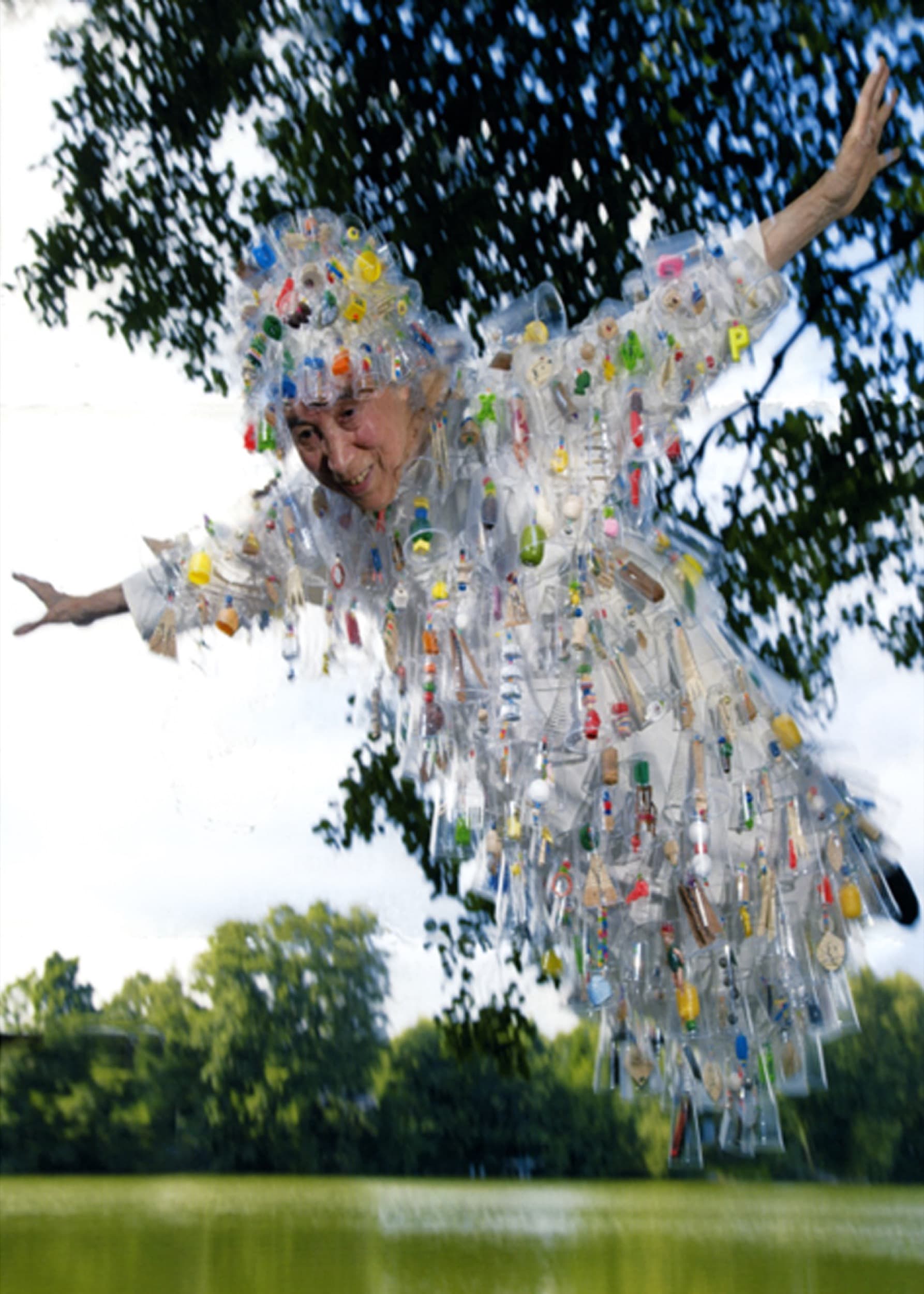
Even after settling in Düsseldorf and increasingly focusing on her own creative output, collaborative play remained central. Fashion games were a prominent focus; she created over fifty costumes—from altered T-shirts to elaborately tailored gowns—each one waiting to be awakened through performance. During her 2019 retrospective in Bordeaux, a group of schoolchildren were so inspired by her fashion show that they created their own. As someone who has witnessed the transformative impact of art on young people firsthand, this moment feels emblematic of Takako’s true legacy: creativity passed on not through instruction, but through permission.
As both playful facilitator and artist, Takako challenged the hierarchies that govern artistic recognition. This insistence on freedom helps explain why her work was so often overlooked or misunderstood, but also why today it feels so vital. For me, Takako showed how art can nurture independence, joy, and collective imagination. Her life and work are not only subjects of my scholarship; they are guiding principles for my teaching, learning, and creating. Learning from her directly was nothing short of extraordinary, and these lessons live on through my own students. Takako’s true masterpiece is the network of people she inspired to create.
Emily Clarkson, an Ishibashi Foundation fellow in Japanese Art by the Sainsbury Institute for the Study of Japanese Arts and Cultures, is a Ph.D. candidate in history of art at the University of Edinburgh and a member of the Takako Saito Archive staff.