Megan N. Liberty

Megan N. Liberty is the Art Books Editor at the Brooklyn Rail. Her interests include text and image, artists’ books and ephemera, and archive curatorial practices.

Relatively faithful to the original zines in scale, texture, and color, this facsimile collection has the same intimate yet throw-away feel to it. The collection creates an interplay between Sepuya’s sitters that may not have been present at the original time of the zine release. 
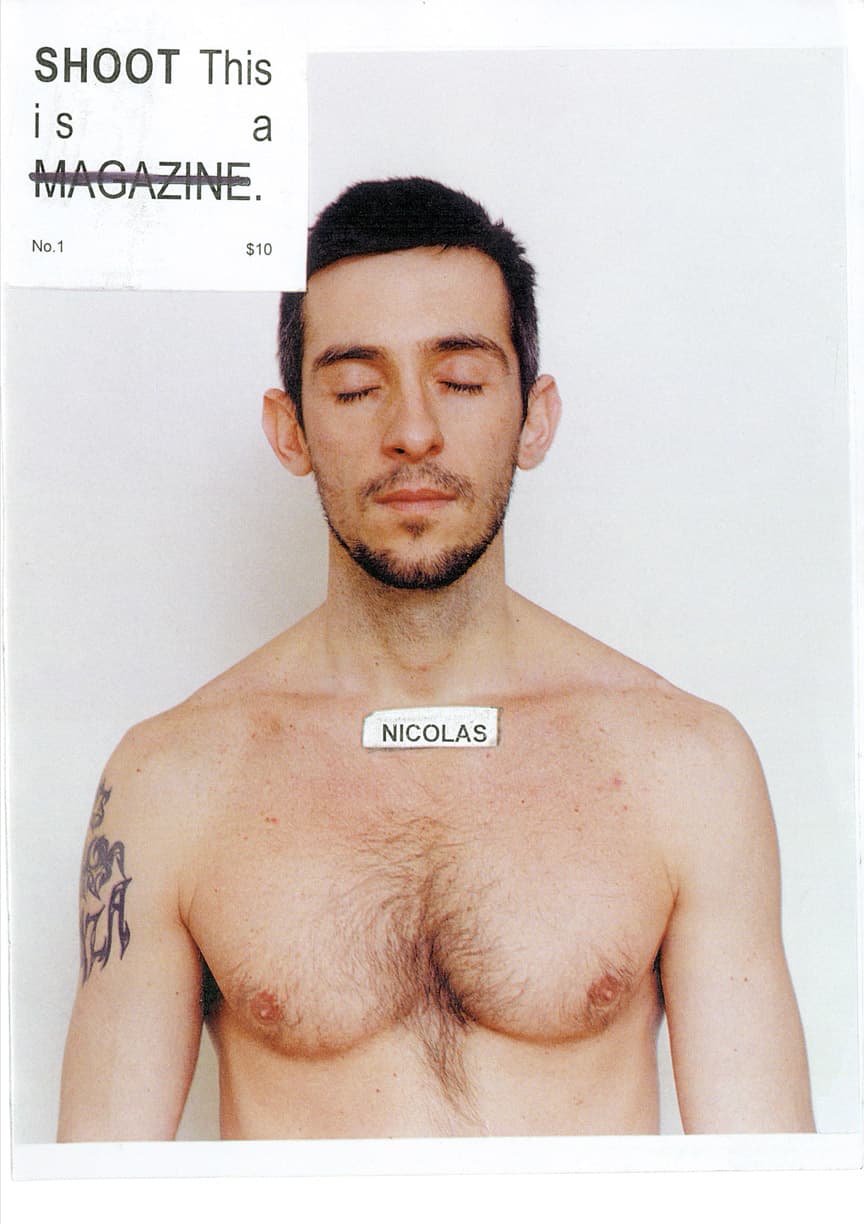
Paul Mpagi Sepuya’s SHOOT

It brings together a selection of Brockman’s photographs, stills from her films, ephemera from her performances and editorial work, some of her own writing about her work, and invited contributions from scholars, family members, and her fellow artists. These offer a much needed access point to Brockman and her work.
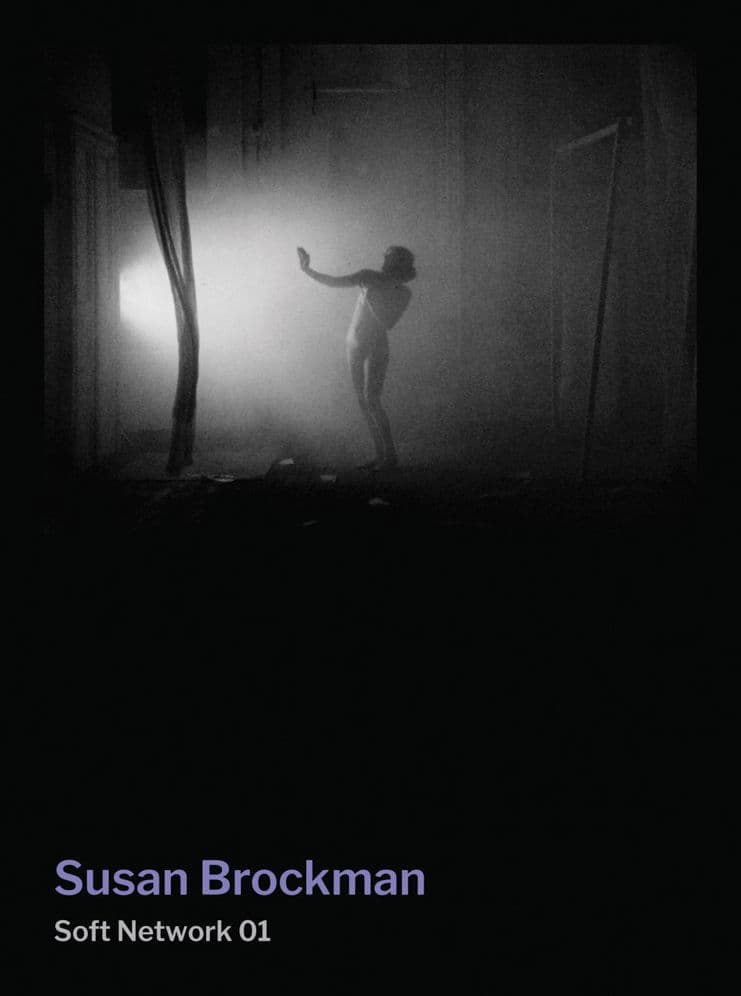
Susan Brockman: Soft Network 01

At the opening of American ex-pat artist Howard Smith’s first retrospective in the United States, a young couple posed next to a screenprint they lent to the exhibition. 

Howard Smith, Untitled, ca. 1967. Textile collage, 56 ¾ × 52 ½ inches. Courtesy Palm Springs Art Museum. Photo: Johnny Korkman.

This anthology presents a collector’s vision of visual and concrete poetry. The groupings highlight asemic writing, experimental typography, assemblage publications, Xerox, and glyphs, putting the works in a visual context, as well as a historical one. 

After Words: Visual and Experimental Poetry in Little Magazines and Small Presses

The breakfast event offered a break from the LA Art Book Fair action and alternative gathering of the book community. ICA Los Angeles hosted Pancakes and Placemats early in the morning before the last day of the fair with chef Jessica Wang on the griddle and sheets of the placements as the setting.

Installation View: J&L Books: Reading Room, Institute of Contemporary Art, Los Angeles, 2025. Courtesy Institute of Contemporary Art and J&L Books.

After the embargo period set by the artist, thirty-six volumes of writing and photographs are now online.

Carolee Schneemann diary, 1973. https://purl.stanford.edu/sj124qr3751. Courtesy the Carolee Schneemann Foundation.

This book brings her Art Notes, Art into the world as a typed book, each page undated save for the year. What comes across is Hawkins’s dedication to art making and willingness to experiment.

Cynthia Hawkins’s Art Notes, Art

The two-volume monograph makes the case for this work as intertwined conceptual art and storytelling. It illustrates the importance of bookmaking and reading to Álvarez Muñoz’s practice.

Celia Álvarez Muñoz: Breaking the Binding
It is not an easy task to document and anthologize performance art in a monograph, especially performances so attuned to published forms. But at last, this is a monograph documenting this full expanse.
Barbara T. Smith: Proof
The catalogue, which also serves as a standalone monograph, examines the ways in which he used and circumvented systems for his networked art. Carrión emerges as a figure who teaches himself systems and technologies (such as the mimeograph) in order to dismantle or destabilize them as a means of rebuilding a more open network, one that emphasizes plural authorship, community, and artist-led creation.
Ulises Carrión: Bookworks and Beyond
While the illustrations of stuff move the story forward, the book is more a matter-of-fact account of the writer’s life than a catalogue of objects. Although the memoir itself isn’t as much about stuff as is about life events, it alludes to a problem plaguing many artists, writers, and creatives—where will all the stuff go?
Stuff: Instead of a Memoir
Over the nearly five decades since its founding, Franklin Furnace has been known as a hub of the avant-garde, and one of the foremost organizations responsible for establishing the fields of both performance art, and artists’ books.
Installation view: The Page as Alternative Space: 1909-1929, 1980, Franklin Furnace at 112 Franklin St. Courtesy Franklin Furnace Archive, Inc.
Archive and working process are at the center of the exhibition Darrel Ellis: Regeneration at the Bronx Museum of Art.
Installation view: Darrel Ellis: Regeneration, The Bronx Museum of the Arts, Bronx, New York, 2023. Photo: Argenis Apolinario. Courtesy the Estate of Darrel Ellis, Candice Madey, New York, and Hannah Hoffman, Los Angeles.
The conceit of Colby’s small photographs such as these, made from images she took or sourced from magazines, is not immediately obvious. But the more time spent in the small exhibition Sas Colby: Stamp Collecting at Stellarhighway, the more the stamps reveal themselves, connecting Colby’s ongoing interests in photography, mail art, and collage across her fifty-year career.
Sas Colby, Red Nude Running, ca. 1983. Vintage photo stamp composition mounted to museum board; unique, 5 x 7 inches. Courtesy the artist and Stellarhighway.
Anne Hicks Siberell’s series of book sculptures blur the lines between detritus, dailiness, and diary. Her “Concrete Journals” series, begun in the 1970s and now numbering in the hundreds, each measure about 4 by 5.5 inches and encase what to the naked eye appears to be trash: used tubes of paint, fortunes from cookies, scraps of newspapers and magazines, and museum entrance pins. But for Siberell, these represent collaged memories—or “memory jogs.”
Installation View: Anne Hicks Siberell: Concrete Journals, Museum of Craft and Design, San Francisco, 2023. Courtesy Museum of Craft and Design. Photo: Henrik Kam.
Spanning all four floors (in addition to one sculpture in the sky room), Wangechi Mutu: Intertwined brings together nearly three decades of the multimedia artist’s work, from intricate collages and large-scale sculptures, to videos and small assemblages.
Wangechi Mutu, Intertwined, 2003. Watercolor with collage on paper, 16 1/8 × 12 1/8 inches. Minneapolis Institute of Art. Gift of Mary and Bob Mersky. Courtesy the artist and Gladstone Gallery.
In lieu of an exhibition catalog, Smith’s memoir serves as the show's accompanying publication, foregrounding the personal nature of her practice, which places her own body and lived experience as material, even at times to her own detriment.
Barbara T. Smith's The Way to Be
Nguyen transforms her research into glittering lacquered paper paintings, collages, and artists’ books.
Portrtait of Tammy Nguyen, pencil on paper by Phong H. Bui.
Wandering around the flower district of Manhattan, you may be surprised to see a green flag hanging high above the flowers, signaling the location of the Center for Book Arts (CBA) on the third floor, where it has been located since 1999. As artist and designer Ben Denzer recently wrote to me, “Despite coming and going to CBA all the time, I can never really get over how much of an unexpected gem it is. The fact that this book utopia is hiding on the third floor of a random building on 27th street has always made me look at all NYC buildings as if each might contain delightful secrets inside.”
Richard Minsky at Center for Book Arts, 15 Bleecker Street, 1974.
As the trend in institutions turns towards greater support of BIPOC artists, Changing Spaces is just one historical exhibition offering substantial attention to their work.
David Hammons, Untitled, 1976. Grease and pigment on paper. 29 × 23 inches. © David Hammons. Hudgins Family Collection, New York.
These collages use the multiple interpretations and histories of the stitch to explore masculinity, sexuality, and marginal identities. In a moment when conversations around the policing of Black bodies in public space continue to grow and gain momentum, Montes-Michie’s quiet scenes of interiority dramatically change the context.
Troy Montes-Michie’s Rock of Eye
A poetry comic that requires (and rewards) constant re-reading, like learning a new language. A chaotic mix of black-and-white photocopy-style images and texts that is an ode to the anti-storytelling potential of poetry.
Paolo Javier’s O.B.B. a.k.a. The Original Brown Boy
The guise of the archive is the best under which to first approach Frame’s body of work, especially his color photography from 1981. The photographs are snapshots in a way—quick and unframed—and yet, the small details and omissions reveal as much as they conceal, evidencing a close looking, documenting, and refocusing.
Allen Frame’s Fever
Interested in ephemera, networks of distribution, and how materials are activated through circulation and use, Sullivan’s latest book translates an exhibition catalogue documenting ephemera (audio tapes, manuscripts, buttons, and books) from a 1984 show at Art Metropole into an artist book. This rendering shows that history and the archive are always ongoing, constantly being revised, added to, amended, redrawn, and redistributed.
Derek Sullivan’s Evidence of the Avant Garde Ex-Library
This collection of zines and book jacket designs celebrates Brainard’s generosity, but also his skill as a designer, highlighting the material aspects of the artist’s hand, his graphic design sensibility, and use of the space of the page.
A Joe Brainard Show in a Book
Her first artist book examines the human toll of corporate design aesthetics.
Courtesy Jessica Vaughn and Printed Matter.
Using collaged inkjet printed images, tracing paper, and embroidered beaded felt, the artist creates an object that reads as both amateurish and skillfully crafted—qualities often set at odds. Yamashita elevates these private practices to the public practice of publishing, making space for the concerns and desires of girls and young women.
kill me in peace. Courtesy the artist, Crevasse, and Miriam Gallery.
First published in 1972 as a typewritten staple-bound mimeograph book of 44 typographic versions of a Dante Gabriel Rossetti sonnet, the republication of this bookwork as a trade paperback with scholarly essays gives it a new afterlife. In it, the words themselves and their meaning become secondary to the typography itself.
Ulises Carrión's Sonnet(s)
Martine Syms makes her material digital influx, trafficking in the visual and textual overload of contemporary communication. While her videos reflect the pace and flux of digital life, her publications offer a moment to slow down and move at one’s own pace.
Martine Syms's Shame Space
The white lined drawings glow against the full-bleed black pages, encased in a black hardcover with embroidered white lines that are physically raised off the surface. These cityscapes, celestial scenes, and cartographic “paragraph drawings” conjure a vision of a different world, reconsidering the form of a sentence.
Renee Gladman’s One Long Black Sentence
Leslie Hewitt speaks with Rail Art Books editor, Megan N. Liberty on the occasion of the opening of her project space at Perrotin, NY, Anatomy of a Flower and Other Studio Experiments.
Portrait of Leslie Hewitt, pencil on paper by Phong H. Bui.
This addendum to the history of concrete poetry makes evident the connections between concrete poetry and artist books. Chance visual connections between the diverse works included make visible the materiality of language, the unifying component of concrete poetry.
Women in Concrete Poetry 1959–1979
Two new books document the artist’s lesser-known practice of making ripped and folded drawings, making the case that they deserve the attention and scholarship of two books, and many more.
Sol LeWitt, The Area of Manhatten [sic] Between The Places Where I Have Lived Is Removed, 1980. Silver gelatin print, 19 1/4 × 15 1/4 in. (48.9 × 38.7 cm). Addison Gallery of American Art, Andover, MA, gift of Suzanne Hellmuth and Jock Reynolds (PA 1965), 1995.65.
While these two attached books tell very different stories, the first about the death of the artist’s grandmother and the other a science fiction tale of a family living on a space station, both grapple with grief, love, and the haunting nature of bodies.
Courtesy the artist and Capricious
At a time when touch is limited, a new photobook showing an abstracted collage of bodies—disembodied arms, clutching hands, bottoms of feet, clumps of hair, edges of chests and nipples—reminds us of the alluring sensuality of contact.
Mayumi Hosokura’s New Skin
Brooklyn-based artist Chitra Ganesh speaks with Megan N. Liberty about rethinking public space and public monuments, the way comics are uniquely equipped to represent this time of rupture and isolation, modernist narrative strategies, and reimagining archives.
Portrait of Chitra Ganesh, pencil on paper by Phong H. Bui.
A facsimile of Singh’s original maquette showcases her cut-and-paste working method, revealing the centrality of craft and sequence and offering insight into the bookmaker’s meticulous choices.
Dayanita Singh's Zakir Hussain Maquette
This facsimile of the original 1989 zine that originally accompanied a show at P.P.O.W gallery, reveals the artist’s vulnerable and deeply symbolic writing style alongside his visual work. His writing shifts from urgent whispers to angry pleas, revealing an artist willing to bare his inconsistencies publicly.
Courtesy of Primary Information, the Estate of David Wojnarowicz, and P.P.O.W.
Artist Sara Erenthal’s canvases are discarded objects: flat-screen TVs, couches, refrigerators, and wooden panels and doors. Her characteristic iconography is a hand-painted, black-outlined woman with big hair, almond-shaped eyes, and small red lips accompanied by lines like “I’LL BE AS LOUD AS I NEED TO BE,” “GOOD NEWS IS COMING STAY TUNED,” and “I WON’T MAKE MYSELF VULNERABLE TODAY” (the last notably written on a discarded mattress).
Sara Erenthal’s Art of the Street and Screen
Including a full facsimile reproduction of Madeline Gins’s out-of-print 1969 novel WORD RAIN, as well as previously unpublished essays and poems, this collection illustrates Gins’s ability to capture the embodied experience of reading and celebrates her mastery as an experimental writer.
The Saddest Thing Is That I Have Had to Use Words: A Madeline Gins Reader
Including paragraphs of prose poetry and drawings with hand drawn lines of text, Richardson’s visual-verbal poetry collection speaks to the condition of being a woman today.
Robin Richardson's Try Not to Get Too Attached
For over four decades, artist and writer Mark Bloch has been fastidiously building his archive of mail art, a practice he began in the late ’70s under the banner of the Postal Art Network—giving him his artistic pseudonym PAN.
Portrait of Mark Bloch, pencil on paper by Phong H. Bui.
Printed Matter has something of a legendary origin story, equal parts oral history, hearsay, and gossip, passed down through the decades in letters, postcards, photographs, and artist accounts. The exact series of events remains a bit murky—nearly all the early participants claim status as an originator.
Window Installation by Jenny Holzer at Printed Matter's Lispenard Street location, 1979. Photo: Nancy Linn.
Equal parts artist book, poetry collection, and memoir, SIR explores Hinkle’s mother’s decision to name her first son Sir, the aspirational power of names and what they carry for their bearers, and the inescapable nature of history.
Kenyatta A.C. Hinkle's SIR
The art of the 1960s and 1970s is characterized by its tendency to disintegrate—to take forms other than physical ones. As Lucy Lippard writes in the opening to her book Six Years: The Dematerialization of the Art Object from 1966 to 1972, “Conceptual art, for me, means work in which the idea is paramount and the material form is secondary, lightweight, ephemeral, cheap, unpretentious and/or ‘dematerialized.’”
Steven Leiber Catalogs
A new collection that captures the enigmatic prose of poet and interdisciplinary figure bpNichol. The collection appears not like a traditional collected stories, but rather a book grouped thematically by time and subject matter more so than genre or form.
Nights on Prose Mountain
Djuna Barnes (1892–1982) remains one of the most important lesser known modernist figures. A true Renaissance woman, Barnes was a literary pioneer of modernism, writing queer novels like Nightwood (1936) and Ladies Almanack (1928), in addition to plays, poems, and her work as a New York-based journalist.
Shattered Objects: Djuna Barnes's Modernism
My conversation with Devers underscored the importance of collecting as a means of rectifying history. “It seems like a nostalgic pursuit, but the more energy in the market around certain books, the more likely it gets onto syllabus and back into print.”
Photo: Sarah K. Marr.
In much the same way her wall works create a relationship between humans and nature, her two-part publication, Littoral Drift + Ecotone, pushes the form of the book towards water, highlighting the surprising formal qualities these two mediums share.
Meghann Riepenhoff's Littoral Drift and Ecotone
These stories fall into the category of more traditional ghost stories, where a poltergeist haunts a place it once lived—or died—in. But what rings most true and fits within the context of Shapton’s larger work (Important Artifacts particularly) are the ghosts not of people but of things.
Guestbook: Ghost Stories
Poetry makes language visual, emphasizing its ekphrastic potential to conjure images out of words. Sometimes the words themselves form images, as in concrete poetry, in which the mise-en-scene of the words on the page is essential to their meaning. Other times, the enjambment acts only to create a break in action, a pause. Other times still, the words spill out like long endless paragraphs, as in prose poetry. In all these cases, what ties these words together is a certain indefinable focus on the visual potential of language.
Penny Slinger was studying at Chelsea College of Art when she discovered Max Ernst's collage books. Ernst's printmaking and collage remains a landmark in artistic and literary publishing. While Slinger was inspired by his techniques of visual narrative and exciting juxtapositions, she was also struck by his poor representations of women, shared by most of the male-dominated Surrealist milieu.
Penny Slinger's 50% the Visible Woman and Inside Out
Leslie Hewitt’s photography blurs the lines between photo and sculpture, exploring the intersection of history, memory, and archive.
Leslie  Hewitt
The human spine supports our bodies; it is both sturdy and flexible, bending, moving, shifting, and curving us. But spines are also fragile—something slips out of place and suddenly our bodies crumple. Books, too, have spines, structures that hold together the fibers of its pages, sometimes stiff and solid, sometimes flexible and soft.
Installation view of SPINE, Ortega y Gasset Projects, 2018. Left to right: work by Anne Eastman, Cati Bestard, Shoshana Dentz. Courtesy Ortega y Gasset Projects.
Michalis Pichler's edited anthology, Publishing Manifestos, intended to celebrate and archive ten years of the Berlin-based art book fair Miss Read, asks two central questions: what is the function of art fair catalogues and what can they be?
Michalis Pichler's Publishing Manifestos
The diversity of Richard McGuire’s work is surprising; from his illustrations for The New Yorker and McSweeney’s and published graphic novels Here (2014) and Sequential Drawings (2016) that treat the book as a sculptural object—something I’ve argued in a previous review of Here—to his musical and performance career as a founding member of the post-punk band Liquid Liquid.
Richard McGuire’s Art For The Street 1978 – 1982
I first met Sonel Breslav, Printed Matter’s new Director of Fairs and Editions, through the BABZ Fair (formerly known as the Bushwick Art Book & Zine Fair) organized by Blonde Art Books, which she began in 2012 as a vehicle for self-published and small press art and poetry books. On the occasion of Printed Matter’s thirteenth Annual NY Art Book Fair (NYABF), I talked with Sonel about the rising interest in art books and fairs, the challenges of exhibiting books, and how to balance programming, display, and commerce at the fair.
Photo: Jesse Winter.
In the 1920s, Professor Edward Forbes, Harvard art historian and then-director of its Fogg Art Museum, wanted to give his students the opportunity to learn from European masterworks. But in order to be sure he was acquiring the real paintings, he had to develop a better sense of the authenticity of painting materials. To accomplish this, he built what is now one of the largest and most expansive collections of color samples, including over 2,500 of the rarest pigments in the world.
An Atlas of Rare & Familiar Colour
Imagine if writing was a purely visual endeavor without linguistic or syntactical meaning. Could we read the curves and slants, thickness, and size of the lines like we would alphabetical or pictorial characters? The writings and drawings of Mirtha Dermisache and Renee Gladman beg these questions.
Mirtha Dermisache's Selected Writings and Renee Gladman's Prose Architectures
Known as an abstract painter for his bold use of gridded color swatches, Stanley Whitney crowds his drawings with an abundance of line, as seen in his September-October exhibition of drawings at Lisson Gallery in Chelsea.
Stanley Whitney: Sketchbook (Lisson Gallery, 2017)
While British artist Sarah Tulloch was completing her undergraduate degree in fine art, she inherited a collection of photographs from her grandfather, an amateur photographer whom she hadn’t known very well because he lived in Australia and she in the United Kingdom.
Sarah Tulloch's ObjectImage
How do we enter a book? How do we move around in it and travel between its pages, chapters, and various corners and openings? These are some of the questions Tate Shaw asks in his collection, Blurred Library: Essays on Artists’ Books.
Blurred Library: Essays on Artists’ Books
Can reading be a form of making? And if reading is making, what, then, of publishing? Two recent publications take these questions as their starting points.
Reading as Art & Publishing as Artistic Practice
Some artists, such as Bianca Stone and Jon-Michael Frank, are responding to the new order of things through the genre of poetry comics, which combine illustrations with brief lines of text.
Jon-Michael Frank and Bianca Stone
The British art critic Lawrence Alloway, one of the earliest theorists of Pop Art, wrote that the “term [Pop Art] refers to the use of popular art sources by fine artists: movie stills, science fiction, advertisements, games boards, heroes of the mass media.”
International Pop
John Cage’s musical compositions are known for requiring a high level of interpretation on the part of the musician: they are more of a collaboration with the composer than a direct translation of written notes into auditory musical form.
Diary: How to Improve the World (You Will Only Make Matters Worse)

Close

Home