Paul Mpagi Sepuya’s SHOOT
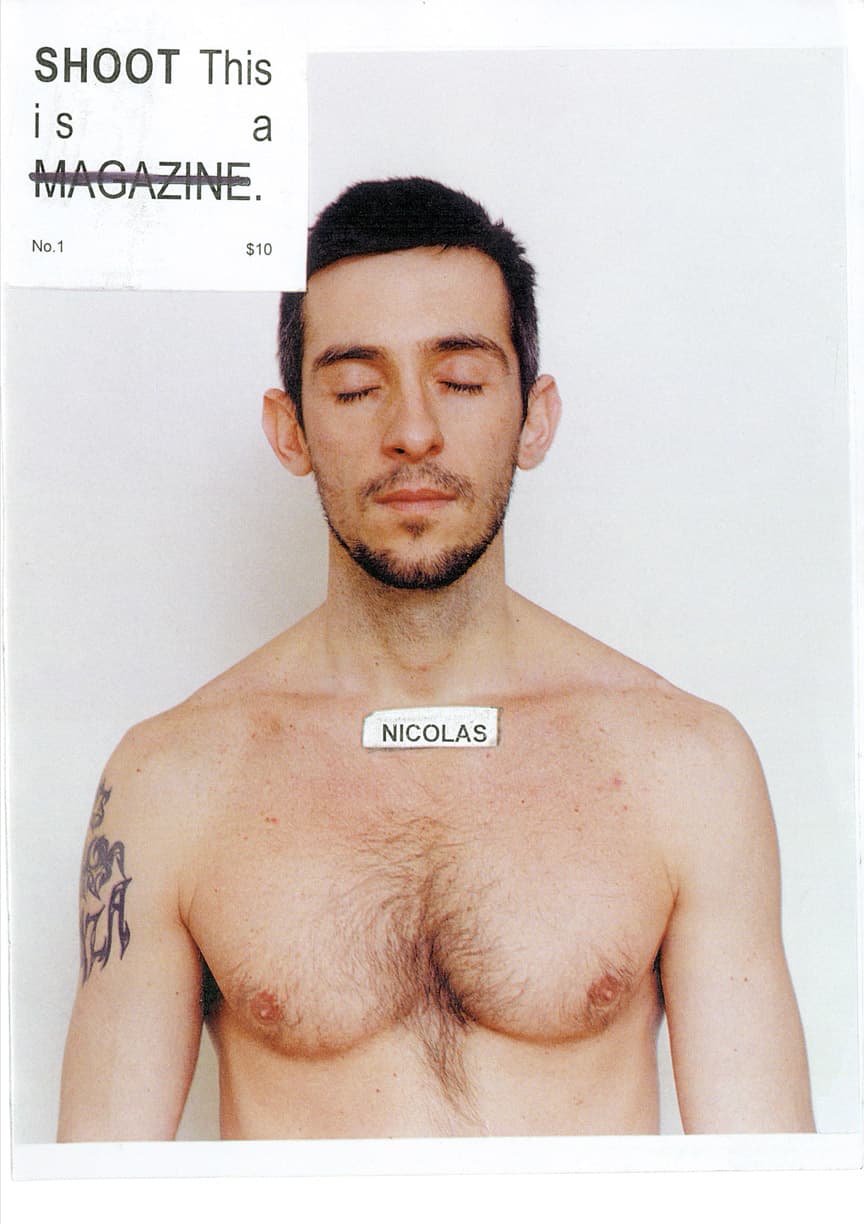
Relatively faithful to the original zines in scale, texture, and color, this facsimile collection has the same intimate yet throw-away feel to it.
Word count: 871
Paragraphs: 8
Paul Mpagi Sepuya
Primary Information, 2026
For those interested in contemporary photography, Paul Mpagi Sepuya is a household name. His portrait photographs—which often incorporate himself somewhere in the frame—play with traditional photographic authorship in the space of the studio. But before Sepuya began making large portraits, before he had hardcover monographs emblazoned with his name, and before his work was collected internationally by museums, he began, like many other photographers working in the mid-1990s and 2000s by making zines. From 2005–08, Sepuya published SHOOT, a slim zine produced on copy machines with letter pages folded in half and staple bound. At first, each zine featured a multi-page portrait of his sitter: close portraits of men taken in Sepuya’s own bedroom with his white bedsheets visible at the edges of the frame. Eventually, Sepuya himself would appear in issues. The pages usually include selected portraits alongside contact sheets, mostly in black and white with a color-copied cover. Printed in small editions of two or three hundred, the zines quickly became something of collectibles for early fans of Sepuya’s intimate imagery.
The popularity of the zines made Sepuya’s friends and subjects part of the “economy of images” circulating in the queer zine space of publications like BUTT magazine and in artists’ book shops and alternative publishing spaces like Printed Matter. In a 2007 survey of the emerging gay art scene, the New York Times referred to SHOOT as, “photographer Paul Mpagi Sepuya’s autobiographical me-and-my-naked-friends magazine.” Over its short duration, it grew to be much more.
“When they were happening, they were incredibly popular,” Sepuya recalled to me. “They became kind of a cult thing.” So much so that “every time I made them, they sold out.” Back in 2020, when I began researching Sepuya’s early work, I spoke to the artist about the zines after viewing them by appointment in the Museum of Modern Art’s library, which holds a full set of all seven. Now, for those interested in this formative early body of work, there is no need to make a library appointment, thanks to the new collected publication by Primary Information.

Relatively faithful to the originals in scale, texture, and color (except now perfect bound instead of staple bound), the collection has the same intimate yet throw-away feel to it. As separate issues, each is dedicated to one portrait, made across the few pages of the booklet. These tactile and personal artifacts were often titled after their subject with a few introductory lines as to how they met. The first issue, “Nicolas,” explains in a tiny sans serif font on the top left corner of the first page, “SHOOT is a self-published artist's booklet of photography. The idea is simple: to put to use the huge amount of material generated by my photography addiction. Each booklet will feature a different portrait shoot.” The small introduction is signed, “Please enjoy. P” with a handwritten edition number (also reproduced in the Primary Information collection). In No. 2, Sepuya writes of the sitter Alex, “He is one of those people with such striking features that you never forget him, but sometimes can’t quite place where you’ve seen him before. When I met him I knew that I’d have to take his portrait.”
In Primary Information’s collected SHOOT, Nicolas and Alex exist back to front, with the color back cover of No. 1 featuring Nicolas seated with his nude back to us on the left page facing a close portrait of Alex, whose eyes gaze invitingly at us, a slight smirk on his face, on the right page. Another such moment occurs between No. 2 and No. 3, where Alex stares out at us on the left while on the right, a new sitter is introduced in another close portrait. These moments are unique to this collection, creating an interplay between Sepuya’s cast of characters that may not have been present at the original time of release. This is fitting since Sepuya’s complex layering of references, to literature and to his past work, create a quality of overlap. I imagine all these people and books together, drifting in and out of his photographic frame, though I have no way of knowing if they ever were together in his studio, and their arrangement is certainly much more intentional.

In a 2008 interview with the artist for BUTT magazine, AA Bronson notes of the series, “They are all portraits, all shot against the same blank whiteness that is his bedroom wall. There is something about the exchange between photographer and sitter that draws one in, that captures a kind of delicacy about the sitter that we might not otherwise have noticed.” The dynamic between photographer and photographed is one that Sepuya continues to interrogate, even in his work today. “The zines helped me organize a sequence of things or ideas around the pictures rather than having to edit or select a single portrait as a stand-in,” Sepuya explained. They evidence his early explorations with the blurry lines of studio space, authorship, sequence, and the physical materials of the photographic image. Gathered together, readers can now find new connections between the issues, and Sepuya’s later work.
Megan N. Liberty is the Art Books Editor at the Brooklyn Rail. Her interests include text and image, artists’ books and ephemera, and archive curatorial practices.