Joachim Pissarro

Joachim Pissarro has been the Bershad Professor of Art History and Director of the Hunter College Galleries, Hunter College, New York, since 2007. He has also held positions at MoMA, the Kimbell Art Museum, and the Yale University Art Gallery. His latest book on Wild Art (with co-author David Carrier) was published in fall 2013 by Phaidon Press.

The great classical archeologist Vinzenz Brinkmann once said to Jeff Koons that if the ancients had the technology that we do today, they’d be doing exactly what Koons is doing. This is particularly apt when one considers the paintings and sculptures in Porcelain Series, Koons's new exhibition at Gagosian. Joachim Pissarro visited the artist at his studio in the lead-up to the installation to discuss the visual power of art, how that power stimulates a viewer’s sensations and arouses emotion, as well as our noetic faculties.
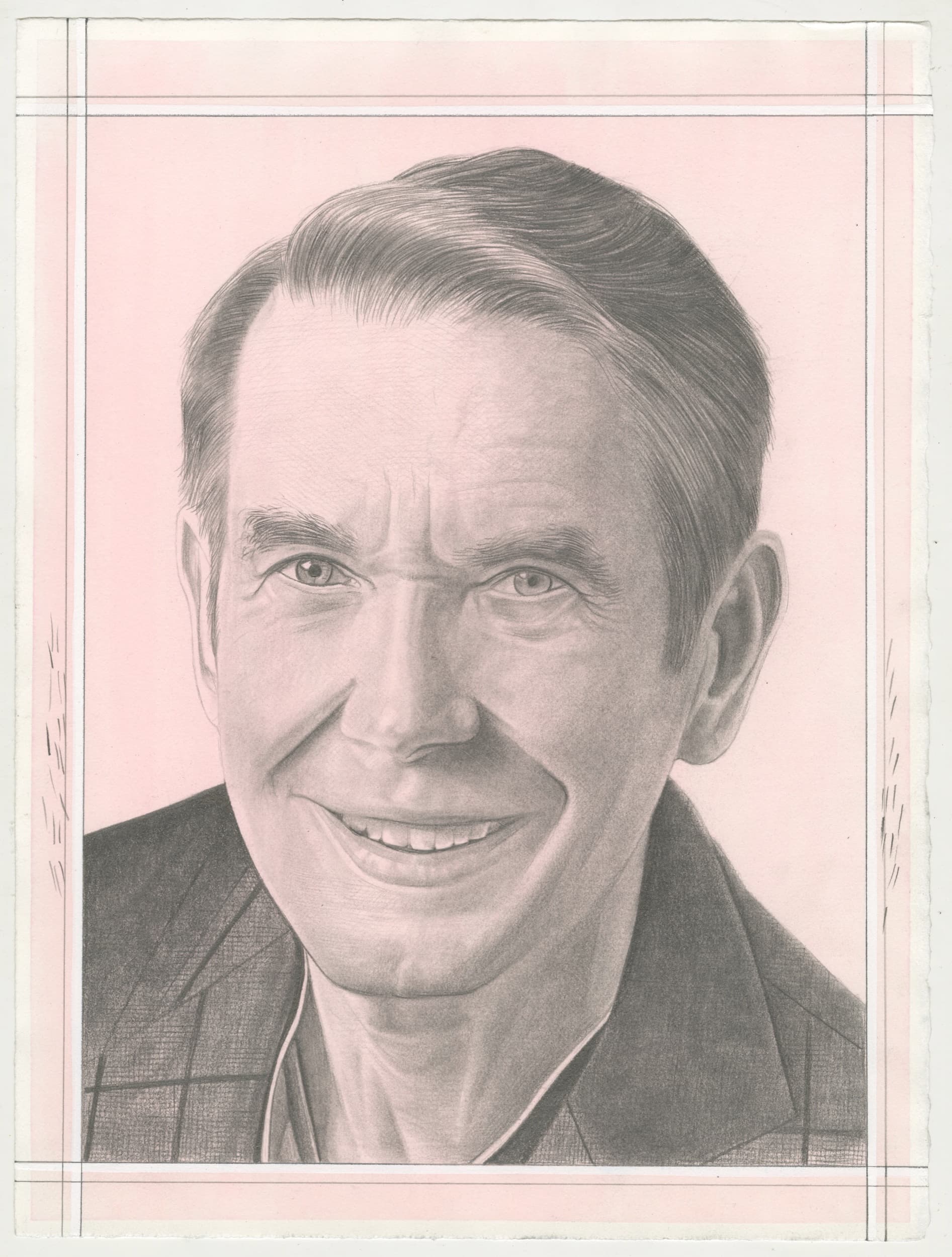
Portrait of Jeff Koons, pencil on paper by Phong H. Bui.

For this iteration of the Brooklyn Rail’s Director’s Series, Min Jung Kim joined Guggenheim President Emeritus Jennifer Stockman and Rail Consulting Editor Joachim Pissarro for a conversation that spans her time at Sotheby’s Korea, the Samsung Art Foundation and Ho-Am Art Gallery, the Guggenheim Museum, and the Eli and Edythe Broad Art Museum. 

Portrait of Min Jung Kim, pencil on paper by Phong H. Bui.

Dorothy Kosinski is the Director Emerita of the Phillips Collection as of 2023. Recently, she joined Guggenheim President Emeritus Jennifer Stockman and Rail Consulting Editor Joachim Pissarro to discuss her work as the curator of the Douglas Cooper Collection, her tenure in Dallas, how the expansion of private foundations affects public museums, and the challenges—and ultimate success—of guiding the Phillips Collection through the turbulent politics that surrounded the Black Lives Matter movement..

Portrait of Dorothy Kosinski, pencil on paper by Phong H. Bui.

Since 2008, Madeleine Grynsztejn has helped the MCA redefine contemporary art museums as artist-activated, audience-engaged spaces for generating art, conversation, and connection while stewarding the best-attended exhibitions in the MCA’s history. Recently, Grynsztejn joined Guggenheim President Emeritus Jennifer Stockman and Rail Consulting Editor Joachim Pissarro to discuss the importance of action and purpose within a museum, the ways our personal narratives influence our artistic and professional lives, and the joy of giving young artists their first big exhibitions.

Portrait of Madeleine Grynsztejn, pencil on paper by Phong H. Bui.

An art historian by training, Laurent Le Bon served as Director of the Musée Picasso prior to his appointment as the President of the Centre Pompidou. In the conversation that follows, Le Bon discusses the importance of returning to the testimony of Brancusi, staying true to the mandates of the museum’s architects, and the Guggenheim as a pioneer of international satellite institutions.

Portrait of Laurent Le Bon, pencil on paper by Phong H. Bui.
Richard Armstrong joined Guggenheim President Emeritus Jennifer Stockman and Rail Consulting Editor Joachim Pissarro to discuss the parallels of politics, religion, and art; the joys and challenges of spearheading one of New York’s most storied cultural institutions; and the importance of keeping the art—and the artists—close.
Portrait of Richard Armstrong, pencil on paper by Phong H. Bui.
In one of Picasso’s pithy phrases, the artist remarked “Every child is an artist. The problem is how to remain an artist once we grow up.” This quote stuck with me as I took in the exhibition Sean Scully: Jack the Wolf, which presents the drawings Scully made for a forthcoming children’s book in collaboration with his son Oisin, who was, at the time, five years old.
Installation view: Jack the Wolf, Cheim & Read, New York, 2023.  © Sean Scully. Photo: Alex Yudzon.
Melissa Chiu has been the director of the Smithsonian’s Hirshhorn Museum and Sculpture Garden since 2014. During that time, she has focused on bringing the museum and its collections into the twenty-first century, with direct attention to what she terms “radical accessibility.”
Portrait of Melissa Chiu. Pencil on Paper by Phong H. Bui.
Janne Sirén is the director of the Buffalo AKG Art Museum, a 161-year-old institution with one of the most important collections of American Abstract Expressionism. He was named director in 2013 and guided the organization through a major building project in which the concept of partnership was the cornerstone of the process. Sirén joined Guggenheim President Emeritus Jennifer Stockman and Rail Consulting Editor Joachim Pissarro for a conversation about the history of the Buffalo AKG, the fascinating career path Sirén created to arrive where he is, and the visionary work that goes into building a venerable collection.
Portrait of Janne Sirén. Pencil on paper by Phong H. Bui.
Sumayya Vally and Aya Al-Bakree joined Guggenheim President Emeritus Jennifer Stockman and Rail Consulting Editor Joachim Pissarro for a conversation as part of the Rail’s New Social Environment Director’s Series, a series spotlighting the work of those who lead important cultural institutions.
Portrait of Sumayya Vally, pencil on paper by Phong H. Bui.
The year is 1945. The Second World War had just ended, laying waste to the old political order erected by the signing of the Treaty of Versailles in 1919. In the eastern end of continental Europe, a country geographically encircled by two revisionist forces—Nazi Germany and Communist Russia—is reduced to a smoldering ruin.
Stefan Gierowski in his studio, 1990. Photo: Erazm Ciołek.
Levitt’s works sensitively depict objects atop tapestries which are cropped to suggest clothing or the body. A grid overlays the patterned backgrounds of the paintings, resulting in an acrylic texture that mimics a textile weave.
Talia Levitt, My Moon, 2021. Acrylic on canvas, 20 x 16 inches. Courtesy ATM Gallery.
Museums have to expand and add previously unrepresented visual traditions to the collection. All of them have to contend with increasing numbers of visitors. Henri Loyrette, former director of the Louvre, speaks with the Rail about these challenges.
The Louvre. Photo: © 2019 Olivier Ouadah.
Museums have to contend with increasing numbers of visitors, but how these expansions of the buildings and the collections are supported financially considerably varies from one country to another. Pierre Rosenberg speaks with the Rail about his tenure as director of the Louvre, from 1994 to 2001.
Visitors in front of Delacroix’s Liberty Leading the People. © 2017 musée du Louvre. Photo: Olivier Ouadah.
The Louvre is the most visited museum anywhere. And so, when, some years ago, we inaugurated this series of interviews with museum directors, naturally we wanted to interview all three living former Presidents of the Louvre: Michel Laclotte (1987–95), Pierre Rosenberg (1994–2001), and Henri Loyrette (2001–13). In February of 2019 Rail Consulting Editor Joachim Pissarro talked with all three men in Paris.
Michel Laclotte. Pencil on paper by Phong Bui.
In his luminous essay “The School of Giorgione” (1877) Walter Pater, asserting that painting “must be before all things decorative, a thing for the eye, a space of colour on the wall,” describes the art of Giorgione, as he imagines it.
Helen Frankenthaler, Open Wall, 1953. Oil on unsized, unprimed canvas, 53 3/4 x 131 inches. © 2019 Helen Frankenthaler Foundation, Inc. / Artists Rights Society (ARS), New York. Photo: Rob McKeever. Courtesy Gagosian.
On successive mornings in July, in sunny Dublin, I had the privilege of interviewing two museum directors. We talked about practical and conceptual issues—and we discussed the history of their institutions
National Gallery of Ireland, Shaw Room. Photo: Roy Hewson / © National Gallery of Ireland.
Aptly named in witty double entendre, Lineage: de Kooning and His Influence focuses upon the physical lines painted by Willem de Kooning and the subsequent impact of these lines on contemporary painters as diverse as Joe Bradley, George Condo, Brice Marden, Albert Oehlen, Sue Williams, and Christopher Wool.
Installation view of Lineage: de Kooning and His Influence, Skarstedt gallery, 2018. Photo: John Berens.
Our prime interest in this interview has been to inquire on the origins of the JPNF and how this museum came to be established in this location. As most of our readers will have not (yet) visited Dubai—indeed, thus far only one of us has made the journey—we wanted to get some essential background information about Dubai’s art scene.
Portrait of Deborah Najar, pencil on paper by Phong Bui.
Sylvain Bellenger, who was born in Normandy, took French degrees in philosophy and in art history. He then moved to the United States, where he held curatorial posts at the Cleveland Museum of Art and at the Art Institute of Chicago before being appointed in 2014 Director at Capodimonte in Naples.
George Condo is a New York-based artist whose career launched in the East Village in the early 1980s. During this time, he also worked in Andy Warhol’s factory before moving to Los Angeles and holding his first solo exhibition in 1983.
Portrait of George Condo, pencil on paper by Phong Bui.
When Joachim Pissarro and I began to organize our interviews with major museum directors—men or women who had decisively changed their institutions—from the very start we planned to talk with directors both in this country and internationally. Thus we interviewed not only Jeffrey Deitch, who had directed MOCA in LA; Philippe de Montebello of the Metropolitan; Alanna Heiss, and then Glenn Lowry, from MoMA; Massimiliano Gioni of the New Museum; and Thelma Golden of the Studio Museum in Harlem; but also Sir Norman Rosenthal from the Royal Academy, London; and Mikhail Piotrovsky at the Hermitage in St. Petersburg. In this, the eighth of our interviews, we talk with Nigerian-born Okwui Enwezor who, after a distinguished early career as curator in the United States, organized exhibitions in Europe, where now he is director of the Haus der Kunst, Munich.
Portrait of Okwui Enwezor by Phong Bui. Pencil on Paper. 2017
Thelma Golden, Director of the Studio Museum in Harlem, is a native New Yorker who grew up in Queens a precocious art lover. After graduating from Smith College with a BA in Art History and African-American Studies, in 1987 she became a curator at the Studio Museum.
Portrait of Thelma Golden. Pencil on paper by Phong Bui.
This is not an apology for ignorance. Rather, this is an attempt to suggest that there are many more avenues of knowledge than we think—or, that knowledge cannot be the preserve of a happy few, especially when it comes to art.
Alanna Heiss is hailed as a founder of what we know as the “alternative space movement,” and one of the most important centers for contemporary art in the country.
Portrait of Alanna Heiss. Pencil on paper by Phong Bui.
When we began this ongoing sequence of interviews with museum directors, we knew that we wanted to talk with Glenn Lowry. To be a director of any museum is a complex, highly conflicted job. To be director of MoMA involves special pressures, which seem unique to the flagship American museum dedicated to collecting and reflecting on modern and contemporary art.
Portrait of Glenn Lowry. Pencil on paper by Phong Bui. From a photo by Zack Garlitos.
Fresh Window Gallery presented the exhibition NightLight from September 5 through October 18, 2014. The two-person show featured the work of Swiss-born painter Marc Egger and Japenese-Russian painter and sculptor, Miya Ando.
Marc Egger, "Cyrene," with light, 2013. Phosphorescent Acrylic on Linen, 97 × 130 cm. Image courtesy Fresh Window.
When one of us, Joachim Pissarro, was chief curator at the Kimbell Museum in the 1990s, he worked with Mikhael Piotrovsky, the director of the Hermitage. And so when it happened that the other one of us, David Carrier, was visiting Saint Petersburg in July, 2014, we wanted to interview Piotrovsky.
Portrait of Mikhael Piotrovsky. Pencil on paper by Phong Bui.
When recently we interviewed Philippe de Montebello, it happened that Sir Norman was in town, and so he participated in that discussion. He had much to say which was of great interest and so we thought it natural to continue the discussion with an interview devoted entirely to him.
Portrait of Sir Norman Rosenthal. Pencil on paper by Phong Bui.
Philippe de Montebello was appointed the director of the Metropolitan Museum of Art in New Yorkin 1977 after having served at the same museum as chief curator under Thomas Hoving. When he retired in 2008 he was the longest-serving director in the institution’s history, and also the longest-serving director of any major art museum.
Portrait of Philippe de Montebello. Pencil on paper by Phong Bui.
During a job search at a prominent university about 20 years ago, a search committee decided not to appoint a scholar in non-Western art despite the fact that, all agreed, this person surpassed in knowledge, field research, languages, and publications almost all (few) contenders in the field. The rationale of the decision was pithily expressed by a member of the committee: “He doesn’t have enough Theory.”
Portrait of Joachim Pissarro. Pencil on paper by Phong Bui.
True to the spirit and intentions of street art, this vast and indeed wild exhibition organized by the city administration of Frankfurt took place everywhere but within the clean confines of the museum itself. The city of Frankfurt became the canvas upon which works were executed by about a dozen Brazilian taggers, writers, and graffiti artists who represented a plethora of genres.
Alexandre Orion, Frankfurter Sparkasse, Frankfurt. 2013.
Courtesy: Schirn Kunsthalle Frankfurt and Alexandre Orion. Photo: Norbert Miguletz.
Recently Jeffrey Deitch has been much in the news. He has just returned from L.A. where he held the directorship of MOCA for three years. Within this relatively short span of time, Deitch managed to transform radically the ways we approach museums, whether as insiders or outsiders, and, further even, he may have introduced a seismic change within the Art World proper.
Portrait of Jeffrey Deitch. Pencil on paper by Phong Bui.
I grew up at the complicated and taut interstices between the art gallery world and the avant-garde museum space.
Wolf Vostell, "VOAEX" (1976). Museo Vostell Malpartida © ARS.
Calder Foundation President Alexander S. C. Rower held a public talk with art historian Joachim Pissarro at Mnuchin Gallery on the occasion of Calder: The Complete Bronzes (October 25 – February 9, 2013).
Original plasters and bronzes from 1930, Calder: The Complete Bronzes, L&M Arts, New York. Photo: Tom Powel Imaging, Inc. Artwork © 2013 Calder Foundation, New York.

Close

Home