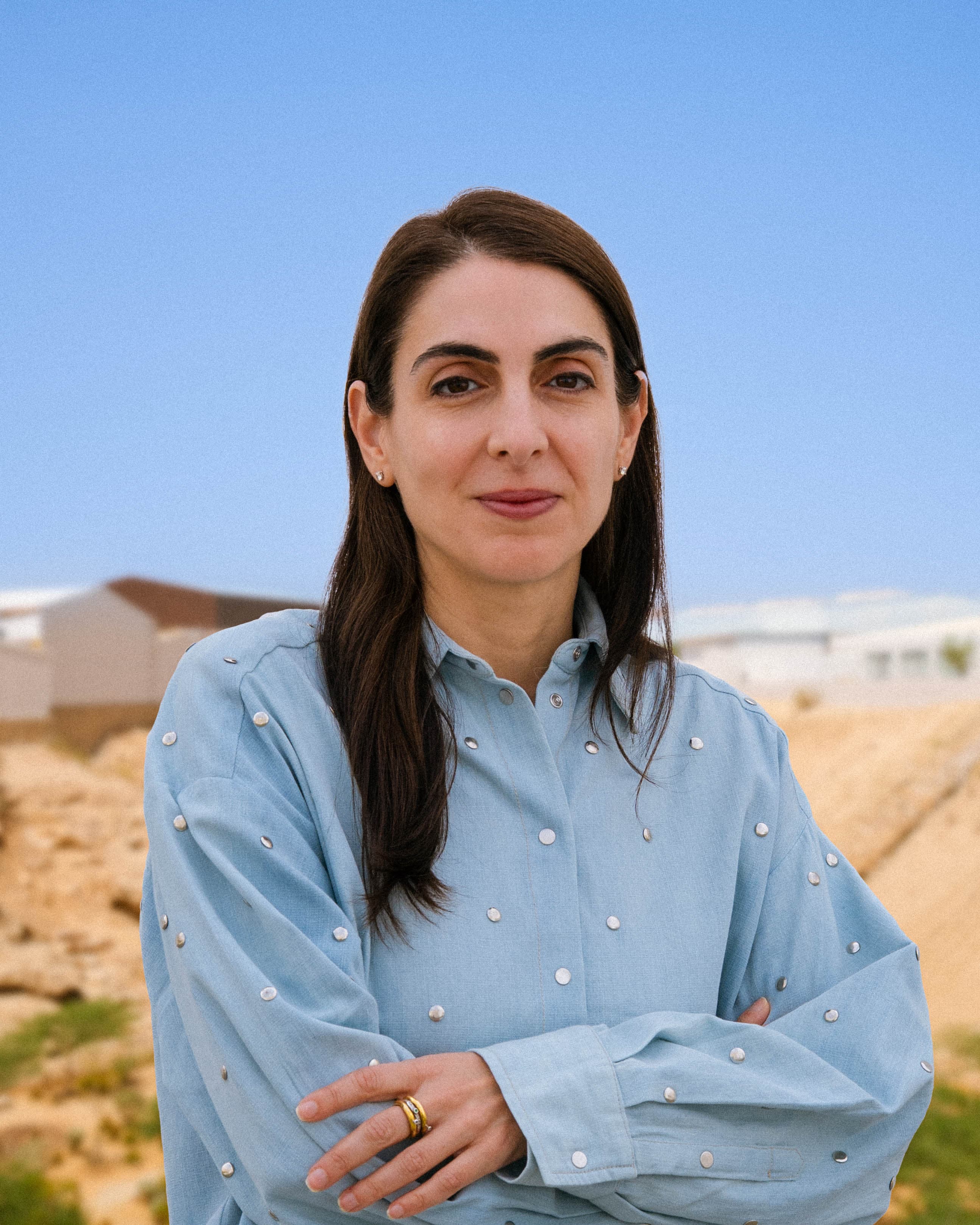
Natalia Gierowska

Natalia Gierowska is a political scientist and art critic whose research has been featured in various academic journals, including Springer. Her areas of expertise include the politics of the Middle East, public policy, and refugee law. At Brooklyn Rail, Natalia is an Editor-at-Large and predominantly reviews exhibitions outside the United States. Together with her cousin, Łukasz Dybalski, she jointly leads the Stefan Gierowski Foundation, dedicating efforts to advance its cultural and educational missions.

As the Centre Pompidou prepares to close its doors for five years of renovation, it entrusts its final exhibition to Wolfgang Tillmans—an artist whose work has consistently redefined how images can be made, seen, and shared.

Installation view: Wolfgang Tillmans: Nothing could have prepared us—Everything could have prepared us, Centre Pompidou, 2025. Courtesy Wolfgang Tillmans, Jens Ziehe.

The historic resonance of Klára Hosnedlová’s installation at Hamburger Bahnhof stems not only from its setting—the museum’s grand central hall, reminiscent of Tate Modern’s Turbine Hall—but also from the nature of the collaboration that enabled its creation.

Installation view: Klára Hosnedlová: embrace, Hamburger Bahnhof, 2025. Courtesy the artist, Kraupa-Tuskany Zeidler, White Cube / Nationalgalerie – Staatliche Museen zu Berlin, Zdeněk Porcal – Studio Flusser.

At the most fundamental level, the Islamic Arts Biennale is about reunification: between the ancient and the contemporary, the tangible and the immaterial, and the intersections of civilizations and religions. The Biennale is structured around seven interconnected blocs, unified under the theme And All That Is In Between

Installation view: Islamic Arts Biennale 2025: And All That Is In Between, King Abdulaziz International Airport, Saudi Arabia, 2025. Courtesy the Diriyah Biennale Foundation. Photo: Marco Cappelletti.

It is within the impenetrable walls of the Alhambra, the Moorish fortress of Granada, inside the Renaissance-style Palace of Emperor Charles V (1500–1558), that the latest dual exhibition of Jeff Koons and Pablo Picasso takes place.

Pablo Picasso, The Three Graces, 1923. Oil and charcoal on canvas, 78 3/4 x 59 inches. © Succession Pablo Picasso, VEGAP, Madrid, 2024. © FABA Photo: Marc Domage.

The Biennale presents a remarkable collection of 500 objects from the Islamic world, sourced both from the Kingdom and through collaborations with over 30 institutions across 20 countries—including the Vatican.

Installation view of the AlMadar component of the 2025 Islamic Arts Biennale. Courtesy of the Diriyah Biennale Foundation. Photo by Marco Cappelletti.

The latest exhibition of Sean Scully—one of America’s preeminent contemporary abstract painters—in Caen, Normandy, does not take place in a conventional venue such as a gallery, museum, exhibition hall, or art fair.

Installation view: Sean Scully: Procession at Église-Saint-Nicolas, Caen, 2024. Courtesy Église-Saint-Nicolas.
I had the opportunity to speak to Ute Meta Bauer, the Artistic Director of the 2024 edition of the Diriyah Contemporary Art Biennale, about leading the Biennale’s second edition and Saudi Arabia’s cultural transformation.
Ute Meta Bauer. Photo: Christine Fenzl.
Adriano Pedrosa, the head curator of the Venice Biennale, unveiled an unprecedented international exhibition where the preponderance of the artists selected to participate represent those whom Europe had historically attempted to exclude both in the realm of politics and art. Pedrosa’s exhibition thus confronts the fortified borders of the art world, mirroring those of sovereign states. I had the opportunity to discuss with Mr. Pedrosa the organisation of this politicised, restitutive edition, which focused on highlighting marginalised artists from the Global South.
Adriano Pedrosa. Courtesy La Biennale di Venezia. Photo: Andrea Avezzù
Positioned among the mountains of Hong Kong, the exhibition Celestial Mechanics: Form and Future in the Work of Gerhard Richter and Sean Scully, organized by Ben Brown Fine Arts at the Asia Society Center during Hong Kong Basel and curated by Joachim Pissarro, presents a compelling juxtaposition of two titans of abstract art.
Gerhard Richter, Ohne Titel [Untitled], 1970. Signed, dated and numbered '255' on the reverse. Oil on canvas, 39 1/2 x 38 3/4 inches. Courtesy the artist and Ben Brown Fine Arts.
“During World War II, it became nonsensical to get involved in painting men playing violins, or cellos, or flowers,”1 reflected Barnett Newman, as he rationalised the value of the (then) unappreciated abstract movement. Today, as we witness the escalation of regional conflicts in Africa, Eastern Europe or the Middle East, Newman's words resonate with renewed significance. In an era teetering on the brink of global conflict, abstract art emerges as a more fitting artistic expression reflective of contemporary world affairs.
Installation view: Mark Rothko, Gallery 9, Floor 2, Fondation Louis Vuitton, Paris, 2023–24. Left to right: Mark Rothko, Untitled, 1960, Blue, Orange, Red, 1961, No. 14, 1960. © 1998 Kate Rothko Prizel & Christopher Rothko - Adagp, Paris, 2023.
During the 17th Chinese Communist Party Congress in 2017, China’s former President, Hu Jintao, proclaimed: “China must enhance the country’s cultural soft power,” officialising the concept of “soft power” in Chinese politics. This sentiment was echoed by the present President of the PRC, Xi Jinping, who underscores the importance of enhancing China’s soft power to realise the 'Two 100 Years' goals and to bring to fruition the Chinese Dream.
Installation view: Time Gravity–2023 Chengdu Biennale, China.
The year is 1945. The Second World War had just ended, laying waste to the old political order erected by the signing of the Treaty of Versailles in 1919. In the eastern end of continental Europe, a country geographically encircled by two revisionist forces—Nazi Germany and Communist Russia—is reduced to a smoldering ruin.
Stefan Gierowski in his studio, 1990. Photo: Erazm Ciołek.
This monographic exhibition at the Museo Picasso Málaga is the most extensive retrospective of the artist’s work to date, and impeccably illuminates the artist’s limitless imaginative power. Curated by Elena Crippa and organized in collaboration with Tate Britain and the Kunstmuseum Den Haag, it features over eighty works, including collages, pastels, drawings, and etchings.
Paula Rego, Untitled, 1986. Acrylic paint on paper, 44 × 30 inches.  © From the Collection of Kim Manocherian. © Paula Rego.
As COVID-19 grips the world and Europe sees war for the first time since the defeat of the Axis, the desolate and demoralized reality depicted by T.S. Eliot echoes the current state of affairs. The opening of the 59th International Art Exhibition of La Biennale di Venezia was a respite from April’s proverbial cruelty. Curated by Cecilia Alemani, the biggest international art exhibition evokes our pre-pandemic memories and inspires hope for a return to normality. I sat with Cecilia Alemani to gain insights into the organization of what is arguably the most prestigious event in the art world under these challenging circumstances.
Cecilia Alemani with Natalia Gierowska
The Morozov Collection: Icons of Modern Art brings to light the forgotten story of Russian brothers Mikhail Morozov (1870–1903) and Ivan Morozov (1871–1921), who amassed one of the world’s most spectacular collections of Impressionist and modern art. It is the first time that the Morozov Collection, which comprises nearly two hundred paintings and sculptures, has been shown outside Russia.
Valentin Alexandrovitch Serov, Portrait of Ivan Morozov, 1910. Tretiakov Gallery, Moscow.
The recently opened exhibition at the Kunstmuseum Basel, Camille Pissarro: The Studio of Modernism, is a Pissarro retrospective which, instead of uncertainty, would likely bring a lot of pride to the artist. Curated by the museum’s director, Josef Helfenstein, and Christophe Duvivier, this exhaustive show gathers nearly 200 works by the artist, including 100 paintings.
Camille Pissarro, Côte des Bœufs at L'Hermitage, 1877. Oil on canvas, 45 x 35 inches. National Gallery, London.
Jeff Koons. Shine is Koons’s most recent exhibition at the Palazzo Strozzi in Florence. This extensive exhibition features over 30 of the artist’s most lionized and varied works spanning from the 1970s until the present.
Installation view: Jeff Koons. Shine, Palazzo Strozzi, Florence. Courtesy Palazzo Strozzi. Photo: Ela Bialkowska, OKNO Studio.

Close

Home