Martin Longley

Martin Longley is frequently immersed in a stinking mire of dense guitar treacle, trembling across the bedsit floorboards, rifling through a curvatured stack of gleaming laptoppery, picking up a mold-speckled avant jazz platter on the way, all the while attempting to translate these worrying eardrum vibrations into semi-coherent sentences. Right now he pens for Down Beat, Jazzwise, and Songlines.

The gloriously quirked Elbphilharmonie in Hamburg has an ongoing taste for themed sequences of concerts, and Arctic Voices offered performances of the type that most listeners will have had few opportunities to experience, all lined up during a four-day celebration of these multiple aspects.

Arctic Voices

There is Winter Jazzfest in New York City (completely bursting), and then there is Winterjazz in Cologne (smaller, faster, but still completely bursting). The latter just celebrated its fifteenth edition, revolving around the Stadtgarten venue, which opened nearly four decades ago and soon became central to the jazz and improvised music scene of Cologne.
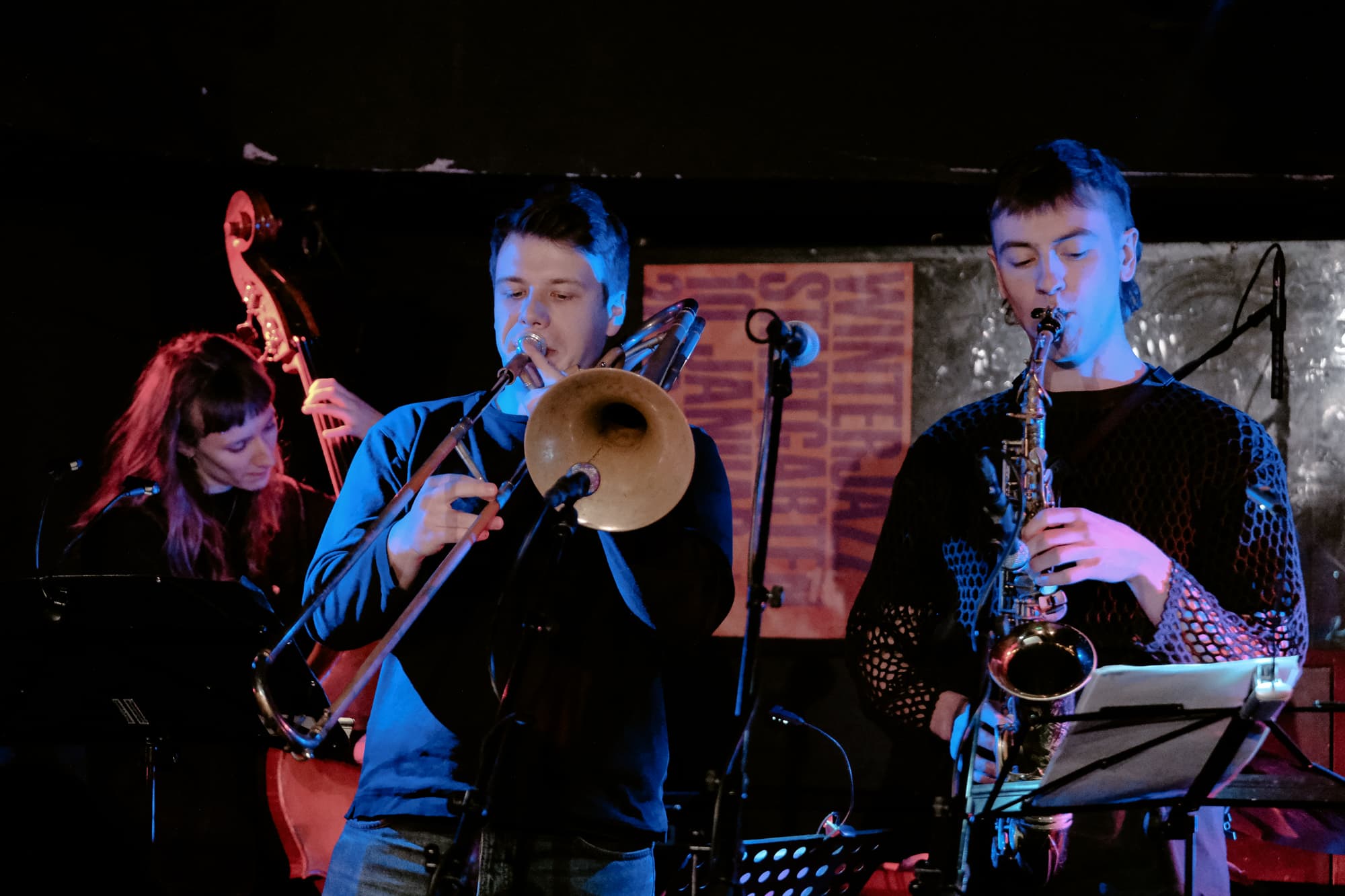
Dog Soup. Photo: Kristina Zalesskaya.

Oslo World is one of those festivals that inhabits an entire city, presenting events in venues that range from concert halls to small bars, churches to clubs, folk halls to jazz clubs. It has no hierarchy of native countries, and no bias toward either folk purity or deejay bastardization.
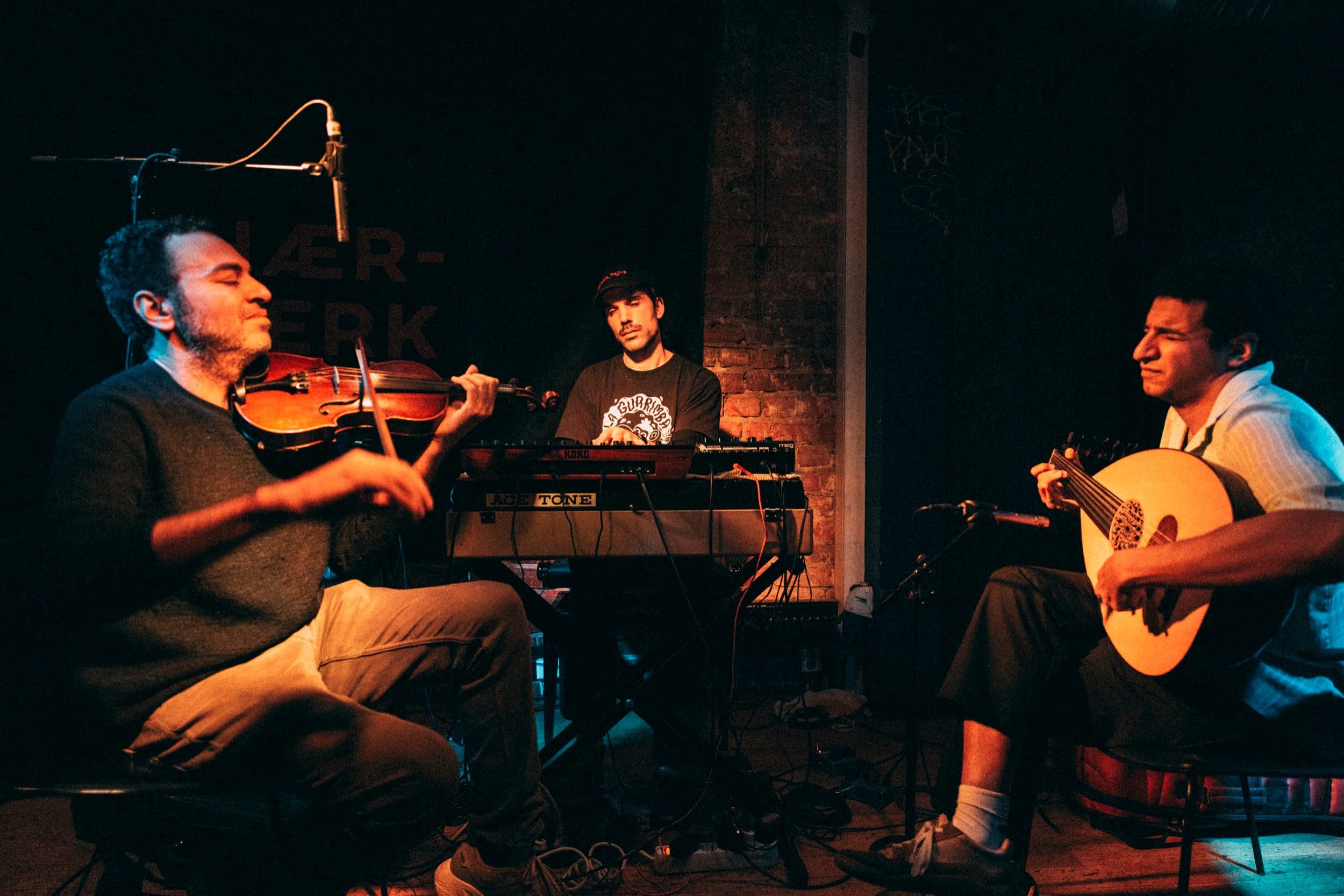
The Handover. Photo: Pia Bråthen.

The Norwegian electroacoustic trumpeter Nils Petter Molvær became the artistic director of Kraków’s long-established Jazz Juniors festival in 2024. Next year has it hitting fifty, but this forty-ninth edition served as a fitting preparation to a presumed higher climax in 2026.

Soheil Shayesteh and Nils Petter Molvær. Photo: Michał Łepecki.

Ostrava Days festival is a smoldering furnace of new music with an emphasis on established experimental figures sharing an environment with emerging student composers. The program will typically combine old “classic” pieces with world premieres, separate days devoted to string quartets, jazz, and improvisation.

Petr Kotik conducting the Ostrava New Orchestra. Photo: Martin Popelar.

Jazzfest Budapest is relatively young, this being its fourth edition. Blessed with a marathon duration, plus a sprawl of citywide venues in the style of jazz long-runners in London, Copenhagen, and Cologne, its musical outlook spans styles and types from mainline ticket-sellers to underground extremists. This is a hardcore jazz festival: no bland pop or neo-soul outfits welcomed.

Miklós Szilveszter (drums) & Péter Ajtai (bass), at Lumen. Photo: György Kiss.

Babel Music XP is the reincarnated Babel Med (2005–17), a global-folkloric festival that’s open to the public, but also acts as a music biz showcase and conference. Following a post-lockdown slumber (Babel Music born in 2023) its problems aren’t over yet, as its core venue, the Docks Des Suds, closed at the end of March and is now under threat of demolition.

Yousra Mansour. Photo by Keuj.

The East Riding Theatre (a converted 1910 Nonconformist chapel) provides the venue hub, in its main seated hall and its smaller, more informal hang-out of the adjacent café bar. Given its medium size, there’s no surprise that virtually every gig is at capacity. Organized by Stage4Beverley, two of the weekend’s most striking shows happened in the afternoons, and both of these stretched far from local folk. 
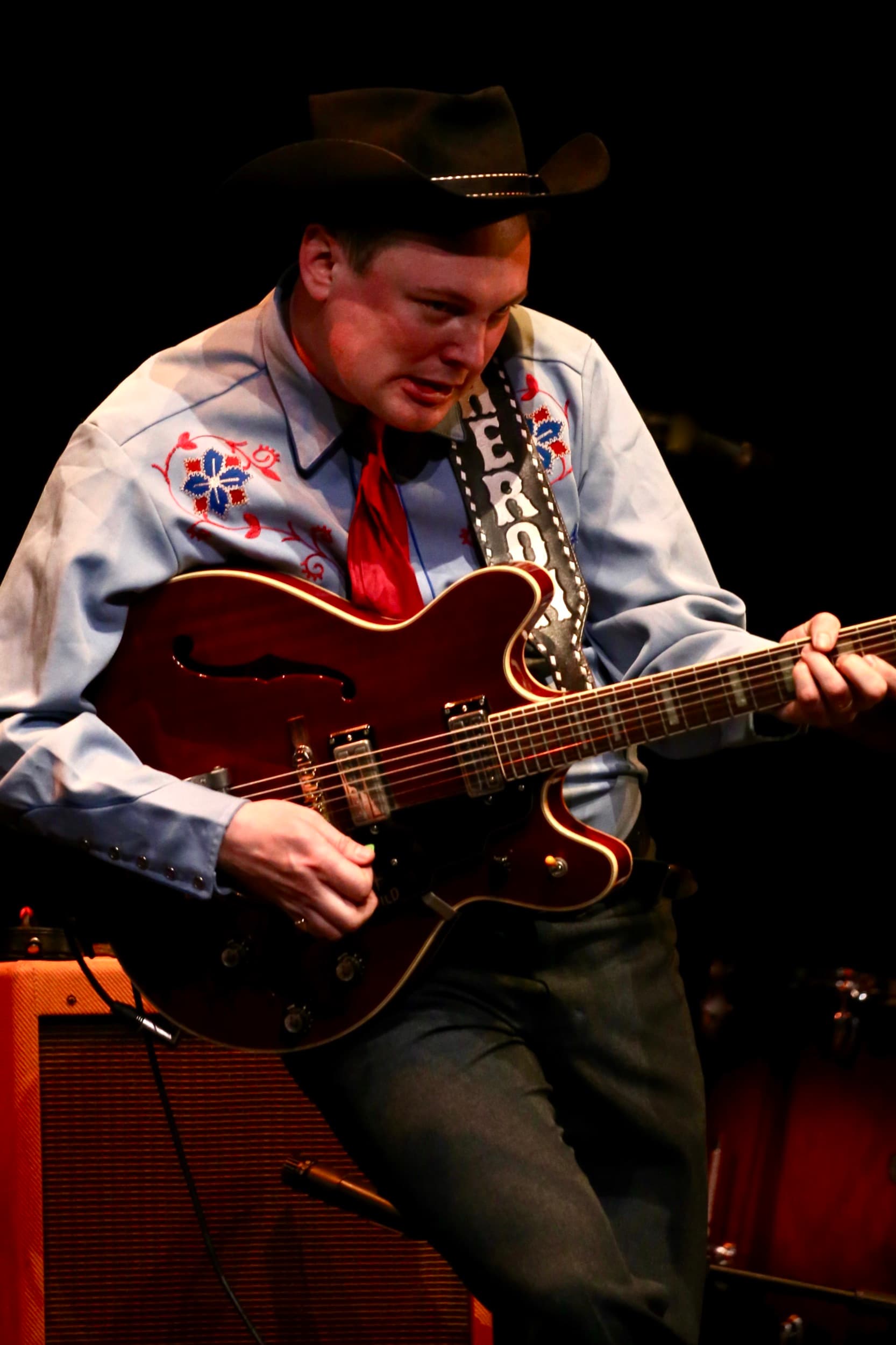
Rob Heron. Photo: Melvyn Marriott.

Although now forty-five years old, Dark Music Days remains a strangely clandestine festival outside of Iceland. If we wake at ten, it is still not sunrise. Your scribe first visited Reykjavík in the summer of 2023, so is pleased to be experiencing the full snowfall winter during his three days at the colossally impressive Harpa concert hall (or halls, as it’s possible to discover a new, different sized space each day of the weekend).

Guðrún Óskarsdóttir and Heleen van Haegenborgh. Photo: Brian Fitzgibbon.

One of the recent Adelphi fortieth highlights was provided by the unlikely appearance of one of Belgium’s finest combos, Don Kapot, crashing together no-wave jazz, monomaniac funk, and punk skitter, a trio from Brussels that has been active for around a decade and now risking the hassles of a mini-tour across the fortified borders of Great Britain.

Don Kapot. Photo: Michael Wolteche.

Enjoy Jazz might have a mainstream, accessible title for a festival, but all levels are embraced, from an impressive spread of starry names to a strong contingent of adventurous artists, mainly arriving from the jazzed quarter but often representing rock, hip-hop, electronic, global-ethno, or modern classical.

Pat Methney. Photo: Manfred Rindserspacher.

The gigs of Cologne Jazzweek seem to be multiplying in the short history of this now-established multi-venue-festival.

Cologne Jazzweek
FOCUS Wales reflects many similar events globally, where the facets of showcase, conference, and public gigs are intermingled, the primary aim being to transmit the word on new artists and new music. Taking over the rapidly-rising north Wales city of Wrexham (only graduating from town-status in 2022), this fourteenth edition presented an impressive number of sets, most of these limited to thirty minutes of condensed action.
DVTR at Focus Wales. Photo: Steve White.
Whichever her chosen setting, this French composer and improviser has a marked penchant for the prepared piano, even if her approach to such interior tinkering might differ from many of her predecessors.
Eve Risser. Photo: Sven Tupits.
There’s a marked element of excess thought surrounding this adventurous ten-day Berlin festival of “moderne” composition. Its schedule is loaded with afternoon discussions, panels, laboratories, and general conceptual wrangling, but much of the evening performances are emphatically visceral, jagged, unpredictable, and disobedient toward implied traditional staging requirements of new works.
Ensemble Musikfabrik. Photo: Camille Blake.
The Portuguese guitarist Rafael Toral first made his presence resonate around three decades ago, with a sequence of naked guitar extensions, durational pieces that suspended themselves somewhere across the ambient music spectrum.
Rafael Toral. Photo: Vera Marmelo.
Free improvisation need not descend from the common tradition of jazz, or free jazz. Perhaps it’s pointless to untangle suspected lineages. Perhaps the two-decades-old All Ears festival isn’t dedicated to fully free improvisation anyway.
Caption: Glupsk. Photo by Christian André Strand.
BALKAN:MOST was the culmination of a four-year project to promote this Eastern European region’s music and culture, involving gigs, conferences, and a mentoring program. The initiative was organized by the Hungarian global sounds outfit Hangvető, situated in Budapest.
Barcelona Gipsy Balkan Orchestra. Photo: Márton Pesthy.
Jazz em Agosto (simply Jazz in August) has now reached its 39th edition, presented in the Calouste Gulbenkian Foundation’s gardens, in a recently refurbished amphitheatre. The concerts take place over eleven days, at 9:30 each evening, when the sun has toned down its blaze. Artistic director Rui Neves favors the alternative avenues of jazz, inviting free improvisation, folkloric infiltrations, electronic attachments, and loud guitars.
Marta Warelis. Photo: Vera Marcello.
In the Zulu language, Oluzayo means “what lies ahead," and this five-day festival aimed to present new African music that circumvented familiar patterns of reception and presentation. The organization behind this festival is the Cologne-based African Futures, regularly presenting a program of panels, lectures, workshops and discussions. Innovation wasn’t always compulsory, as some of the acts involved maintained deep traditional roots. Whatever might be “new” usually possessed familiar traits and elements at the core of its style.
Ancient Voices. Photo: Miriam Juschkat.
There are few festivals where all musics are equal. Big Ears (Knoxville) and Le Guess Who (Utrecht) might make good examples. In Brussels, BRDCST (Broadcast, or Breadcrust?) operates on an intimate level, still incorporating significant artists, but not overcrowding the adventurous Ancienne Belgique venue, which is itself a home for all styles, filling its calendar with rock, electronic, hip-hop, jazz, folk, and global sounds. BRDCST proclaims itself as “the ideal antidote for paranoia and hysteria.”
Caption: Steve Gunn and Zoh Amba. Photo by Laurent Orseau.
Back in the spring of 1999, the three embarked on a European tour, including a session for the Amsterdam radio station VPRO. These recordings are here presented as the LP-length May 99.
Charles Curtis, Alan Licht, and Dean Roberts
La Tène’s tools are more in the analogue realm, with their central trio playing ruggedly amplified hurdy-gurdy, scarecrow percussion, and bronchial Indian harmonium. Their four guest extensions will usually bring their amplified acoustic twelve-string guitar, electric bass, and cabrettes—small French bagpipes originating in the Auvergne region.
Caption:  La Tène and guests. Photo by Antoine Cognet.
The essence of this new festival is to discover artists from the southeast of Europe, bringing them farther north than is often the case. For this second edition, there were acts traveling from Bosnia-Herzegovina, Macedonia, Romania, Greece, and Turkey, as well as one band that co-opted members from Moldova, Bulgaria, Italy, and Belgium.
Islandman. Photo: Caroline Lassire.
Jazztopad’s manifestation of jazz is multiple, with core concerts in the National Forum Of Music’s multi-floored modern edifice, usually including international visitors and collaborations with new music groups.
Marek Pospieszalski. Photo: Joanna Stoga.
The Belgrade Jazz Festival has a history of battling adversity. Despite a substantial run from its founding in 1971 until 1990, the festival was understandably dormant during the Yugoslavian Civil War.
Schime's Luka Ignjatović. Photo by Tim Dickeson.
Sly & The Family Drone offer an extreme experience of catastrophic electronic density, primitive analogue origins perverted via intense manipulation and exaggeration. They appreciate doubled power, boasting two drummers and two electronicists—but only one baritone saxophonist, which may well be sufficient. They play loud, they improvise heartily, and they always vote for performing in the round, preferably directly rooted to the floor, no stage allowed, and unavoidably surrounded by their acolytes in deep noise appreciation.
Sly & The Family Drone. Photo by John Convery.
Green Man enjoys one of the most scenic settings of all possible festivals, surrounded by low mountains and rising forests, its Mountain Stage lying at the base of a huge natural amphitheater. Normally it rains heavily for half of the four days, but this time the heavens beamed. This was the sunniest Green Man for at least six years.
Kraftwerk at Green Man. Photo: Parri Thomas.
World Of Music, Arts & Dance celebrates its 40th anniversary in 2022, a festival still dedicated to global sounds from numerous nations, and returning in full, following two years of virus-imposed hibernation. It’s a sprawling, outdoor camping experience, with five chief stages offering simultaneous choices, as well as smaller satellites for workshops, panels, poetry declamations and cookery masterclasses (given by musicians who divide their given hour between playing and stirring).
Fantastic Negrito at WOMAD. Photo by Garry Jones.
One of the city’s chief exports is the Trondheim Jazzorkester, which has also played regular concerts on the Norwegian festival scene since its formation in 1999. It is extremely versatile, with a malleable instrumentation that facilitates wildly different stylistic possibilities.
Trondheim Jazzorkester & Anna Webber at Dokkhuset. Photo by Arne Hauge.
Fanfared as a “celebration of music and diversity,” the Listen Festival mostly revolves around contrasting breeds of electronica, ranging from idiot-bangin’ house to the most diaphanous environmental strokings. Brussels gorges on sounds that, via different routes, are descended from dance floor culture, in all its variegated manifestations.
Acid Arab. Photo: Dieter Hoeven.
New York composer, improviser, alto saxophonist and organist John Zorn has been taking his entire repertoire on tour in recent times, colonizing venues and festivals, immersing audiences in his variegated musical strategies.
John Zorn. Photo: Daniel Dittus.
Coventry Cathedral invited Down Is Up from London, an ensemble dedicated almost solely to the music of Moondog, that old inhabitant of New York City. The cathedral is famed for both being bombed into destruction (1940) and optimistic rebirth (1962), providing a suitably majestic setting for the works of composer, performer, and Viking-robed street musician Louis Hardin.
Moondog, Hamburg, Germany. Courtesy The Louis Hardin Estate.
Entering the music realms, dreaming of running a record label, programming a festival, publishing a magazine, being visually articulate on the graphic design front, operating a record store, spinning records onstage—or on a radio station—most mere mortals would tend to fixate on just one or maybe two of these pursuits. In Helsinki, the polymath audio obsessive Matti Nives has, during quite a short careering spell, managed to fulfill all of these roles.
Caption: Y-Otis at We Jazz Festival 2021. Photo: Justus Mättö.
Audibly limbering up in an adjacent room in this heavily white-painted, minimalist Cologne church, the NYC alto saxophonist and multi-layering composer Lea Bertucci was appearing at Week of Surprise, formerly titled Night of Surprise. Innate saxophonic reverberation qualities rippled and bounced around the corner, through the doors, into the performing space, and Bertucci hadn’t even started her set yet…
Lea Bertucci. Photo by Niclas Weber.
The new solo album by Cairo-dwelling guitarist and composer Maurice Louca makes a radical shift from its predecessor, which featured the specially formed Elephantine ensemble.
Mauris Louca. Photo: Tony Elieh.
Ostrava Days Festival is a biennial new-music festival founded, and still helmed, by the longtime New Yorker, flutist, and composer Petr Kotík, who was born in Prague.
Alvin Curran. Photo by Martin Popelar, courtesy of Ostrava Days.
The true hedonistic live performance explosion will arrive when everyone present feels confident that the vaccinating drive is coping with the virus variants, but even so, progress will be measured among some quarters, and a rapid rush for others.
Puuluup Crowd Swimming. Photo by Kirke Kuiv.
The singer and oud player Natik Awayez has been involved with music since the 1980s, but hardly any of his work is currently available online. He’s dipped in and out of activity, down the decades, but a recent solo release, Manbarani, on the Sublime Frequencies label is now essential listening—pressed on vinyl this spring, but first released digitally in November 2020.
Natik Awayez. Photo: Maged Nader.
The majority of Nairobi metal bands operate within a classic heavy metal perimeter, but Khanja and Karuga are set on heading out so far that they no longer recognize the “rules” of rocking.
Duma. Photo by Chrisman, courtesy of  Nyege Nyege.
The Kansas City-born alto saxophonist Logan Richardson is enjoying an ongoing relationship with the Szczecin Jazz festival organizers.
Logan Richardson. Photo by Sebastian Wołosz.
Tiwaline is primarily beat orientated, with percussion usually to the fore, a bass thrum acting like a magnified frame drum interior. She often chooses a portentous mood-construction, with swirling soundscapes, sometimes scattered with metal percussion, or marimba sounds, perhaps with a wooden flute swirling to evoke a desert trance state.
Azu Tiwaline. Photo by Loten Grey.
Rarely can an audience witness a performance-art orator who operates on such a multitude of simultaneous levels, from prompting laughter to issuing sonic threats, chatting casually, or barking on the edge of hysteria.
The Free Musketeers. Photo: Matti Komulainen.
Lucrecia Dalt appeared as part of the Botanique venue’s annual sprawl-festival, Le Nuits. Dalt fell into the “esoteric” category, with her solo electronics investigations and her concentrated inwardness.
Lucrecia Dalt. Photo: Lucinda Wahlen.
There was a pivotal juncture shortly before this year’s Tallinn Music Week when fortitude bloomed and the organizers threw themselves into realizing 2020’s already postponed conference-cum-festival—the Estonian government giving permission to operate at a reduced venue capacity—across the city’s broad range of indoor and outdoor stages. Braving a steady domino-fall of cancellations by visiting international acts, as red-patches proliferated, TMW understandably placed the emphasis on indigenous artists, covering most styles, including rock, jazz, folk, hip hop, electronica, ambient, pop, and modern classical.
Eschatos. Photo: Ake Heiman.
Spaced-out performance is easier in a park expanse. Pandemic people-separation was observed, as the annual Citadelic festival persevered, even if it eventually happened a month later than its accustomed May–June dates. Presenting sounds that are on the improvising edge of jazz, or even completely free-form, the concept of not flooding the park with folks was manageable, given that the Citadelic musical stance is somewhat esoteric.
Mâäk Quintet. Photo: Martin Longley
Fairuz is now 85 years old, still the dominant female singer in Lebanon, and indeed the Arabic world itself. The departed Egyptian singer Umm Kulthum is the only other contender. Fairuz is the Arabic word for “turquoise,” her birth name being Nouhad Haddad. She started out as a radio chorus vocalist, which led to meeting the Rahbani Brothers, Assi and Mansour, who instantly clicked into a songwriting partnership with Fairuz. Assi and Fairuz married in 1955. This personal and professional relationship was sundered in 1979, from which point Fairuz inducted her son Ziad Rahbani as her chief composer and arranger.
Fairuz with Ziad Rahbani. Photo courtesy of We Want Sounds.
Participating musicians need high quality microphones and an audio interface for acoustic instruments, which is why universities are the axes for Telematics, rather than the bedrooms of performers. “Also, it requires ethernet connections,” says Dresser. “That has limitations for almost anyone. The challenge is how do you create a musical community, and work between levels of access?”
Mark Dresser. Photo: Jim Carmody.
Sixty Sixth Congress is a fairly obscure bar on Greenpoint Avenue, and the gig happens in its rear room. Lunch held court just as much as performed, her lines as much poetry readings as rock’n’roll verses, her lolling demon tongue repeatedly sent out to taste the bad-droplet atmosphere. She was relaxed as she smoldered, spitting and mocking, drawling and growling
MECHA Sonic. Photo: Ashley Sheperd.
Opus presents jazz gigs on an average of five nights per week, its ground level acting as a mezzanine, with the main stage area squatting down in the basement. With its rows of tables, sonic warmth, and general aura being redolent of New York’s own Jazz Standard club, Opus is a fine haunt, with a diverse set of bookings.
Peter van Huffel. Photo by Lajos Somogyi/Bands Through The Lens/Budapest Music Center.
The festival offers three gigs each night for most of its 10-day run, with a few matinées to boot. Amongst a native Belgian core, there are always international invasions.
Makaya McCraven. Photo: Michael van Rhijn.
The Jazz Jantar festival has now reached its 22nd edition, and is housed at Klub Żak in the Polish city of Gdańsk. This is a cultural center whose roots stretch back to 1955, though the present building was completed in 1991. Jantar is the Old Polish word for amber, a mineral that’s been central to this port city since the end of the 16th Century.
Matt Nelson and Tim Dahl. Photo: Maciej Moskwa.
Much of the music of this 56th edition moved further away from jazz, even in that music’s more out-there manifestations. Unlike some other wayward jazz fests, this Berlin four-dayer set the controls for modern composition, rather than rock, electronic, or global-rooted side-sounds—although all of those aspects were present to some degree.
Anthony Braxton. Image © Berliner Festspiele, Jazzfest Berlin 2019.Photo: Adam Janisch.
Artonov is a young festival, only in its fifth edition. Its central concept involves risk, with a strategy of marrying art forms that would most often be separated. Even if a pair of disciplines might have an established relationship, it’s unusual for three or four vocabularies to be actively intertwined in one ‘happening’—music, dance, painting, storytelling, photography, costume design, even culinary adventure.
Atsushi Takenouchi. Photo by Dyod Photography.
The World Of Music, Art & Dance has been running since 1982, when its inauguration was a glorious cultural success, but unfortunately a complete financial disaster. Peter Gabriel was a founding (and funding) force, so he decided to reunite with Genesis bandmates to play a massive benefit gig. Given a second life, the WOMAD organization began to build a sound infrastructure, and the festival has subsequently become a revered global music institution, maintaining its annual English core version, as well as sprouting offspring in Spain, Chile, Australia, and New Zealand. There was even a short-lived US edition, close to Seattle.
Nadine Shah at WOMAD. Photo by Brenna Duncan.
Unlike the soft fusions of many other global music festivals, Ethno Port adopts a hardcore folkloric approach, presenting unfiltered forms in the Polish city of Poznań. If styles are to be blended, their amalgamation usually has a harder surface of creative confrontation, or perhaps a subtle creeping together of twinned, introspective forms.
Zohra Kherabi of Lemma. Photo: Maciej Kaczyński.
Avant Gardner thinks it’s an airport. Security is paramount—just look at their website to check out the heavy restrictions on what’s allowed inside its warehouse-like cavern. Rows of metal fences zig-zagged, herding this capacity crowd into a performance that was understandably in phenomenal demand.
Aphex Twin at Avant Gardner. Photo by Zach Dilgard.
Sons d'hiver (Winter Sounds) has been running in Paris for almost three decades, presenting artists on the perimeter of jazz, usually with a pair of acts each evening, and taking up most of February. For the festival's last weekend (22nd/23rd) of its accustomed three-week run, Paris was basking in unseasonal sunshine, and spring sounds were already sprouting.
Steve Coleman at Sons D'Hiver. Photo: Dimitri Louis
Nuits Sonores is an electronic music festival, but there is always room for a musical detour.
Karpov Not Kasparov. Photo by Brice Robert
A towering green man looms over the Far Out area of the Green Man festival, in the Black Mountains of the Brecon Beacons. His fate is to be burnt at the witching hour, on the final midnight of this Welsh weekender, his leaves, roots, goat horns, and brandished bowl of fruit immolated just prior to an even bigger fireworks display. An ancient mythological figure of cyclic renewal, the green man’s roots might be pagan, but he persisted to the early days of church decoration, and his visage spans variegated global cultures. Greenery was fresh in the 2018 spring, but now as autumn falls, it’s time for flaming destruction. First, though, there were four days full of musical performances, with satellite spaces devoted to film, discussion, comedy, healthy living, installation art, and copious quantities of indigenous Welsh real ale and cider.
Goat Girl. Photo by Nici Eberl
The Punkt festival in Norway revolves around a unique concept.
Anja Lauvdal and Heida Mobeek. Photo by Alf Solbakken/Punkt
Following the inspired-as-ever 2016 Moers Festival, there was a worrying period where it looked like this deeply entrenched alternative German institution would suffer a sudden death. Its artistic director for just over a decade was Reiner Michalke (he runs the equally alternative venue Stadtgarten in Cologne).
Talibam! Photo by Kurt Rade.
Tallinn is renowned for the old and the new, its castle-walled
quaintness and its digital advancement, its Old Town, and its
cultural youth. Skype was born here, and Estonia is recently
offering an amorphous (though effective) online residency e-status.
Caption: Kadri Voorand. Photo by Rene Jakobsen.
We could flit down from NYC to historically rich Savannah, Georgia, exchanging frostbite for mosquito-bite.
Marty Stuart and his Fabulous Superlatives at the Savannah Music Festival. Photo: Elizabeth Leitzell
Itching for action, Sexmob swelled up an introductory theme, doing battle with the Jazz Standard’s disembodied announcer, bandleader Steven Bernstein competitively laying down his own alternative house rules.
Sexmob and John Medeski at Jazz Standard, March 9th, 2018

Close

Home