Jonathan Fineberg

Jonathan Fineberg is Director of the new PhD in Creativity at Rowan University and author of Modern Art at the Border of Mind and Brain (University of Nebraska Press) and the career survey Christo and Jeanne-Claude: On The Way To The Gates, 20th Anniversary Edition (Yale University Press, 2025).

Curated by Matthew Affron, Dreamworld: Surrealism at 100 now in the Philadelphia Museum, lays out the story of Surrealism—its themes, its central preoccupations and its various and evolving morphologies—with brilliant clarity.
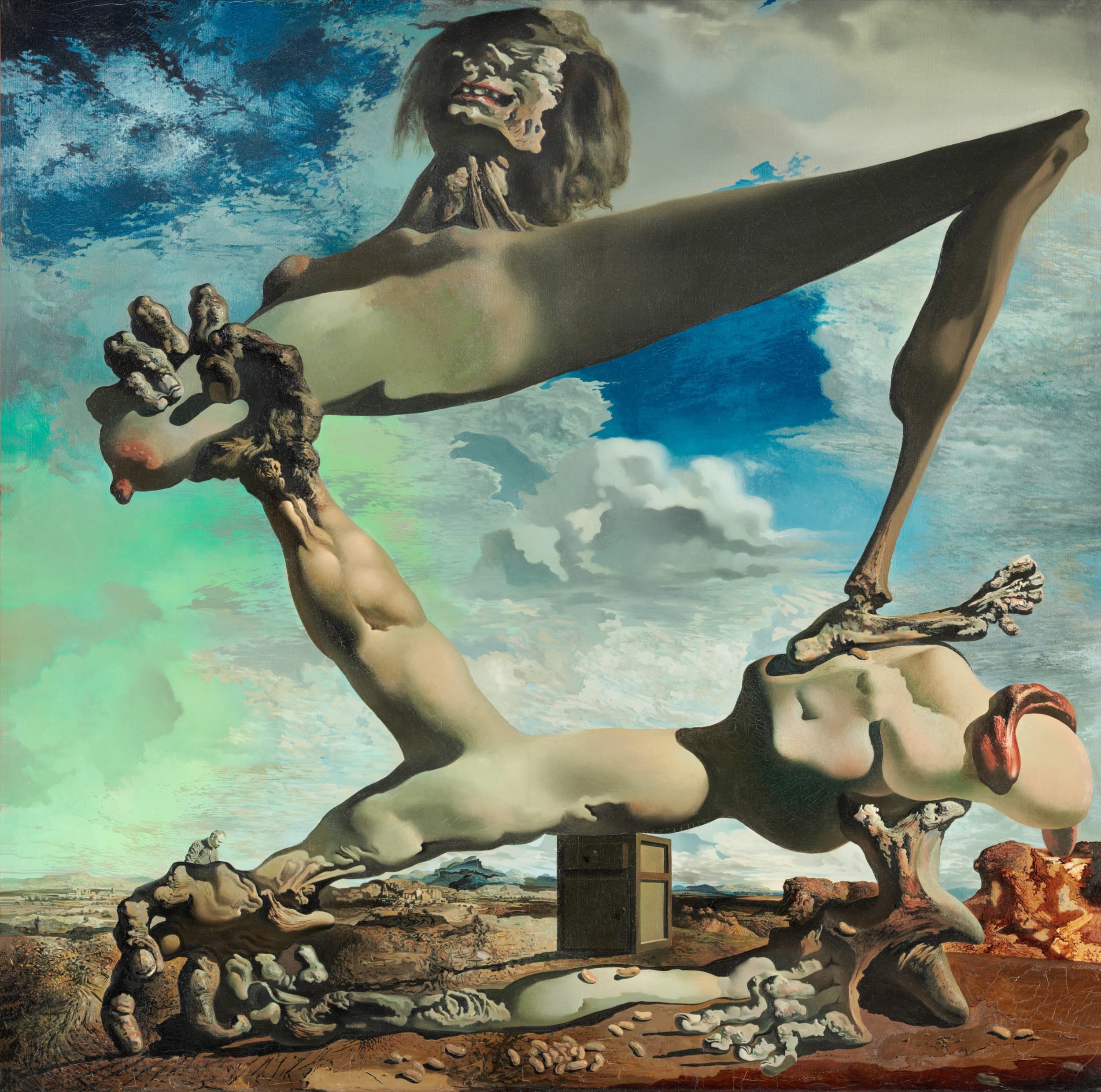
Salvador Dalí, Soft Construction with Boiled Beans (Premonition of Civil War), 1936. Oil on canvas, 39 5/16 x 39 3/8 inches. Courtesy Philadelphia Museum of Art.

L'Octroi is the first thing you see walking into the current exhibition of “Henri Rousseau: A Painter's Secrets” at The Barnes Foundation in Philadelphia and it sets the tone.
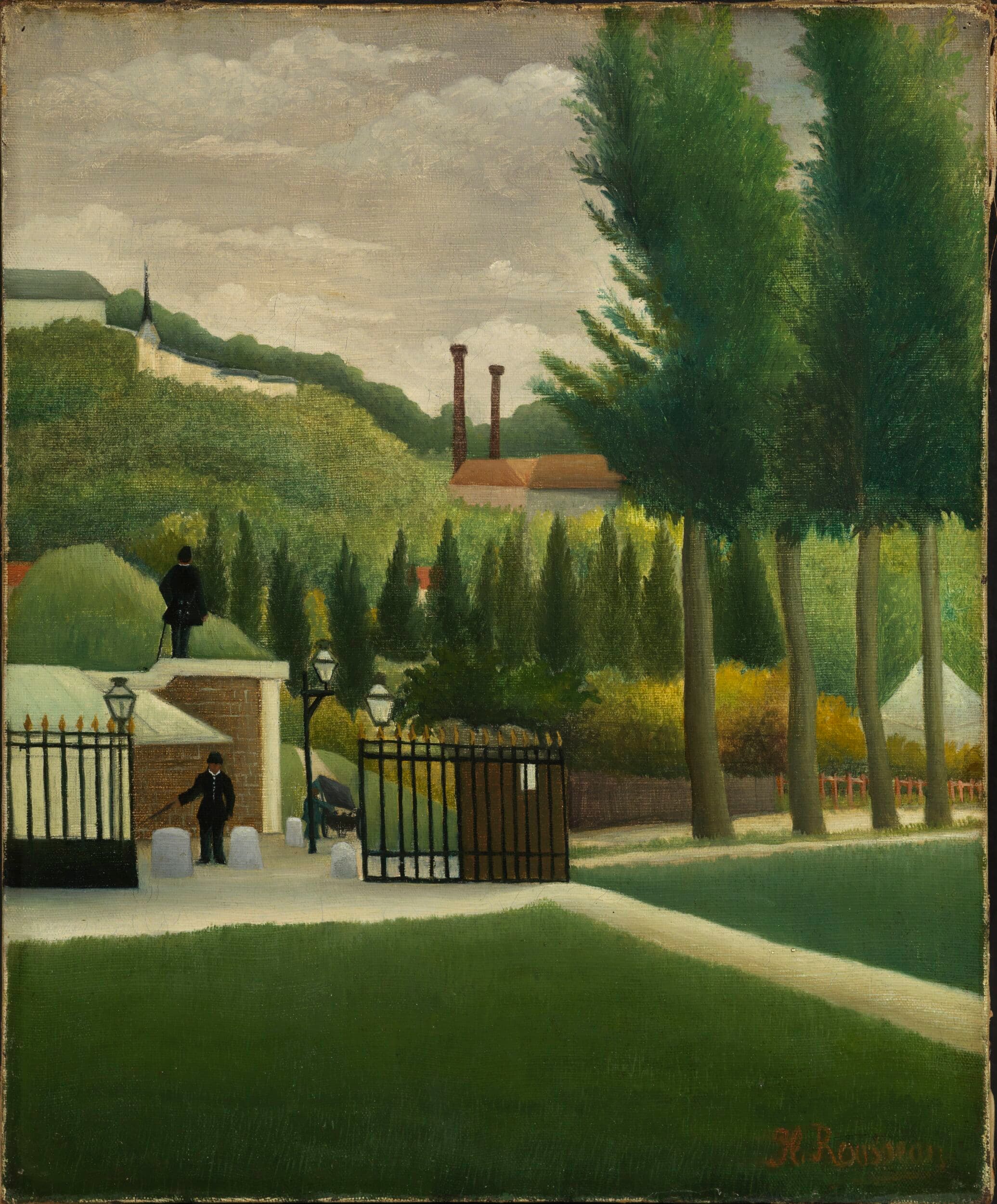
Henri Rousseau, The Toll Gate (L'Octroi), c. 1890, Oil on canvas, 16 × 12 7/8 in. (40.6 × 32.8 cm), The Courtauld, London, Samuel Courtauld Trust, Image courtesy The Courtauld.

A spectacular exhibition at the Philadelphia Museum of Art called Boom: Art and Design in the 1940s recreates that world for us with some 250 works selected entirely from the museum’s permanent collections.

Abram Games, Use Spades Not Ships - Grow Your Own Food and Supply Your Own Cookhouse, 1939–43. Color offset lithograph, 14 ½ × 9 ½ inches. Courtesy Philadelphia Museum of Art.

The installations of Christo and Jeanne-Claude elicit a powerful, emotionally bewildering and at the same time exhilarating effect on the people experiencing them. Documentation exhibitions of their works were on display at The Shed in New York (Christo and Jeanne-Claude: The Gates) and Surrounded Islands at the NSU/Ft. Lauderdale Museum.

Christo and Jeanne-Claude, Surrounded Islands, Biscayne Bay, Greater Miami, Florida, 1980-83. Island no.2 photographed from a helicopter by Jonathan Fineberg. © 1983 Jonathan Fineberg. Photo: Jonathan Fineberg

Suzanne Hudson and Tanya Sheehan have assembled a series of essays by a diverse collection of authors that situate art therapy within a much more complex postmodern perspective, threading it through intellectual history (including modernism), studio practice, social activism, and the health sciences.

How Emotions Are Made and Modernism, Art, Therapy
You can’t walk into Matisse & Renoir: New Encounters, the current show at the Barnes Foundation, and not be astounded. Who else can put on an exhibition like this? During his lifetime, Albert C. Barnes (1872–1951) bought 181 paintings by Renoir—the largest collection of this artist in the world—and fifty-nine canvases by Matisse.
Pierre-Auguste Renoir. Grape Gatherers (Vendangeuses), ca. 1888–1889. Oil on canvas, 21 7/16 x 26 inches. Courtesy The Barnes Foundation.
Imagine you’re watching the cacophony of action-packed scenes rapidly and randomly bumped up against one another in the trailer for Federico Fellini’s already disorienting film Juliet of the Spirits and suddenly you find yourself actually in the film; it has become reality! That’s the best way I can describe the sensation of Federico Solmi’s exhibition Solmi - Ship Of Fools at the Venice Biennale (Palazzo Dona’ Dalle Rose, Fondamente Nova).
Federico Solmi, The Gracious Host, Donald Trump, 2024. Single channel video, 1 minutes and 22 seconds, loop. Courtesy Luis De Jesus Los Angeles and Var Digital Art by Var Group.
Together, the concurrent exhibitions Only The Young: Experimental Art in Korea, 1960s–1970s and The Shape of Time, Korean Art After 1989 offer a glimpse of the breathtakingly rapid achievement of a people, built on reservoirs of memory and imagination, optimism, extraordinary resilience, but also on tragedy.
Lee Kang-so, Disappearance--Bar in the Gallery, 1973. Performance, June 25-30, 1973, Myongdong Gallery, Seoul. Ten digital chromogenic prints, each 31 × 4 42 13/16 inches. National Museum of Modern and Contemporary Art, Korea. © Lee Kang-so. Photo courtesy National Museum of Modern and Contemporary Art, Korea.
Just when we thought we knew the landscape of French art in the first quarter of the 20th century, Marie Laurencin: Sapphic Paris, co-curated by Simonetta Fraquelli and Cindy Kang, shakes up the narrative with a fresh exhibition of a major Parisian painter largely neglected by art history. A bisexual woman (already two reasons for her prior invisibility in that now dated story), Laurencin (1883–1956) carefully crafted a “feminine” aesthetic into a significant body of work that was ahead of its time.
Marie Laurencin, The Visit (La visite), 1916. The MetropolitanMuseum of Art, New York. Bequest of Scofield Thayer, 1982.Artwork © Fondation Foujita / Artists Rights Society (ARS),New York / ADAGP, Paris 2023. Image © The MetropolitanMuseum of Art. Image source: Art Resource, NY
The School of Paris was a breathtaking collection of artists who were young together, going in and out of one another’s studios, meeting in the nearby cafés of Montmartre and Montparnasse: Constantin Brâncuși, Georges Braque, Marc Chagall, Juan Gris, Marie Laurencin, Jacques Lipchitz, Henri Matisse, Amedeo Modigliani, Piet Mondrian, Pablo Picasso, Henri Rousseau, Chaïm Soutine, Suzanne Valadon were all there, not to mention poets, playwrights, and composers such as Guillaume Apollinaire and Gertrude Stein, Alfred Jarry, Erik Satie, and more. Can you be nostalgic about a place you only went in imagination?
Amedeo Modigliani, Reclining Nude from the Back (Nu couché de dos), 1917. Oil on canvas. Courtesy the Barnes Foundation.
Lucy Fowler Williams, a curator from the University of Pennsylvania Museum of Archaeology and Anthropology, has brought an historical overview to both the Water, Wind, Breath catalogue and to the exhibition itself, telling the history of the encounter between technologically advanced European cultures and Native Americans in the eighteenth, nineteenth, and early twentieth centuries.
San Ildefonso Pueblo, ca.1780. Storage jar, black-on-cream earthenware. Barnes Foundation, Philadelphia.
I am writing to mark the passing last Sunday (November 28) of Bob Thompson, the Colonel John Trumbull Professor of African and African-American art at Yale, at the age of eighty-eight. His colleagues and students will write a more professional obituary than I ever could, but these are a few personal memories for myself and for friends who loved this magical man.
Jonathan Fineberg with Bob Thompson.
That the unforgettably beautiful 18-year-old who modeled for Renoir’s 1883 Dance at Bougival (in Boston’s MFA) should turn out to be one of the great painters of the early 20th century is a puzzle designed to baffle any art historian of my generation.
Suzanne Valadon, Young Girl with a Mirror, 1909. Oil on board, 41 x 29 3/8 inches. Courtesy Emelia Wilson.
Whereas Soutine’s work brings out emotional turmoil, de Kooning treats the ambiguities of perception as an exciting epistemological adventure.
Chaïm Soutine, The Room Service Waiter, c. 1927. Oil on canvas, 34 1/4 x 26 inches. Musée de l'Orangerie, Paris.
Nora, my Bernese Mountain Dog had many endearing traits; she would amble over and lean affectionately into my legs and I enjoyed having her lie down on my feet under my desk
If you attended the Salon of 1863 in Paris you would remember Manet’s Olympia which caused quite a stir.
Installation view: 58th International Art Exhibition - La Biennale di Venezia, May You Live In Interesting Times, with work by Njideka Akunyili Crosby. Courtesy the artist, Victoria Miro, and David Zwirner.
“You know each of our projects is like a slice of our life, myself and Jeanne-Claude. And the journey is so exciting—not only the realized things.”
Christo, Over The River (Project For Arkansas River, State Of Colorado), 2006, drawing in two parts: 15 x 65 and 42 x 65 inches, pencil, charcoal, pastel, wax crayon, enamel paint, aerial photograph with topographic elevation and fabric sample, Reference 26, Private Collection Sweden, Photo: André Grossmann, © Christo.
Creativity is an elaborate game of connect the dots where you can’t actually see the dots, you have to infer them. Moreover, these dots are charged with emotional and autobiographical significance. From a psychoanalytic perspective we might say that you keep yourself from seeing them. I asked ten remarkably creative and accomplished people in a wide range of professional practices to write down a few thoughts about creativity. Where does it come from? Does it apply to any realm of endeavor? Can we teach it? Are our institutions nurturing it?
Portrait of Jonathan Fineberg, pencil on paper by Phong Bui.
Rarely in the hectic, increasingly commodified world of art today has a museum exhibition so successfully taken us to another place in our heads as did this show in Houston this winter.
Some of Gandhi's last possessions, ca. 1948 – 50. Photographer Unknown. James Otis/GandhiServe.

Close

Home