Raphy Sarkissian

Raphy Sarkissian is a contributor to the Brooklyn Rail.

At 447 Space, Hughie O'Donoghue's paintings have arrived like cargo—heavy, freighted, not entirely welcome until they are.
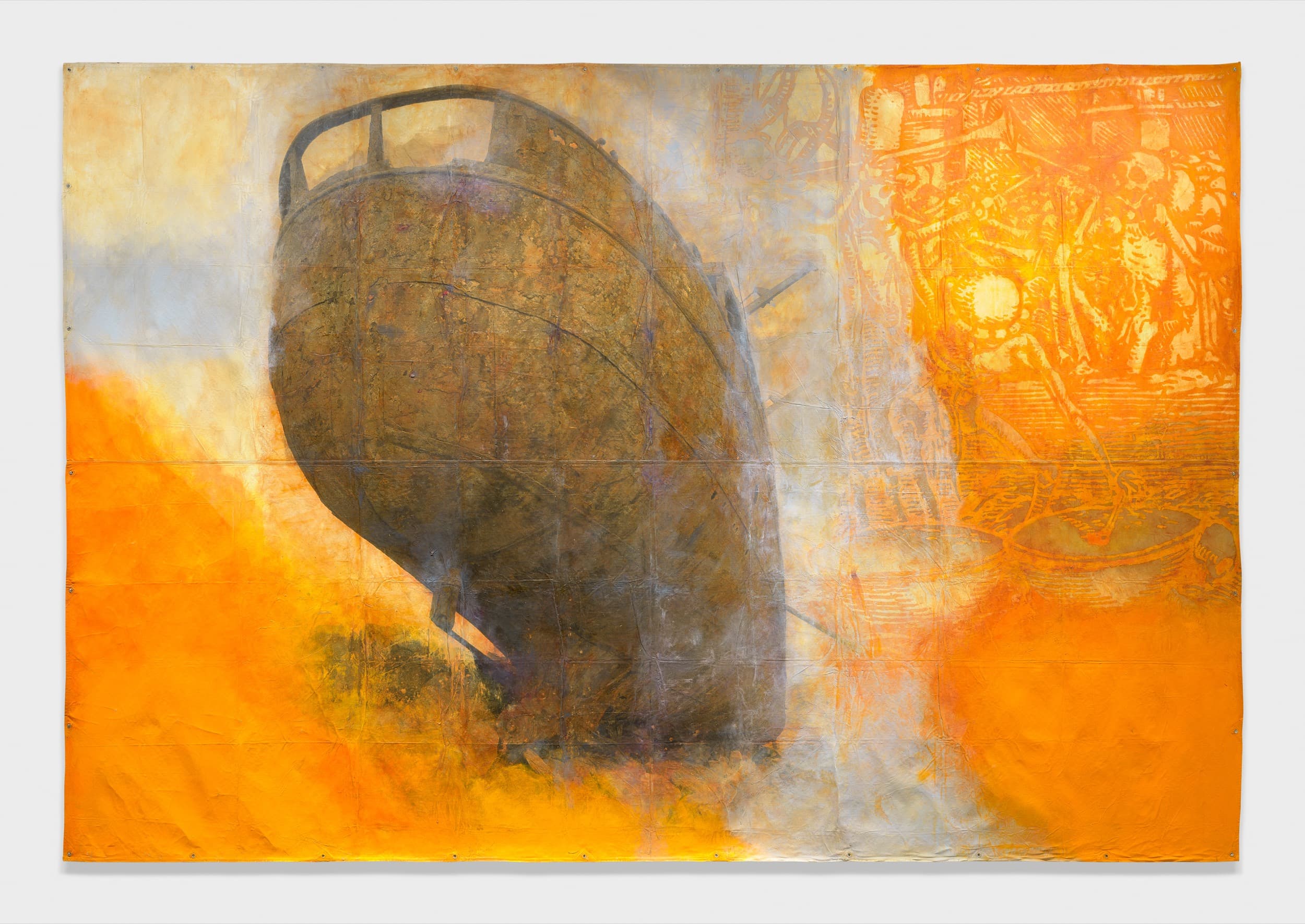
Hughie O’Donohue: Time and the Architecture of Memory

Geometric abstraction today carries a layered visual memory. In Fits and Starts, Robert Storr works squarely within this terrain. Rather than offering a singular resolution, the exhibition is structured as a confrontation between the clarity of a geometric vocabulary and the materiality of paint.
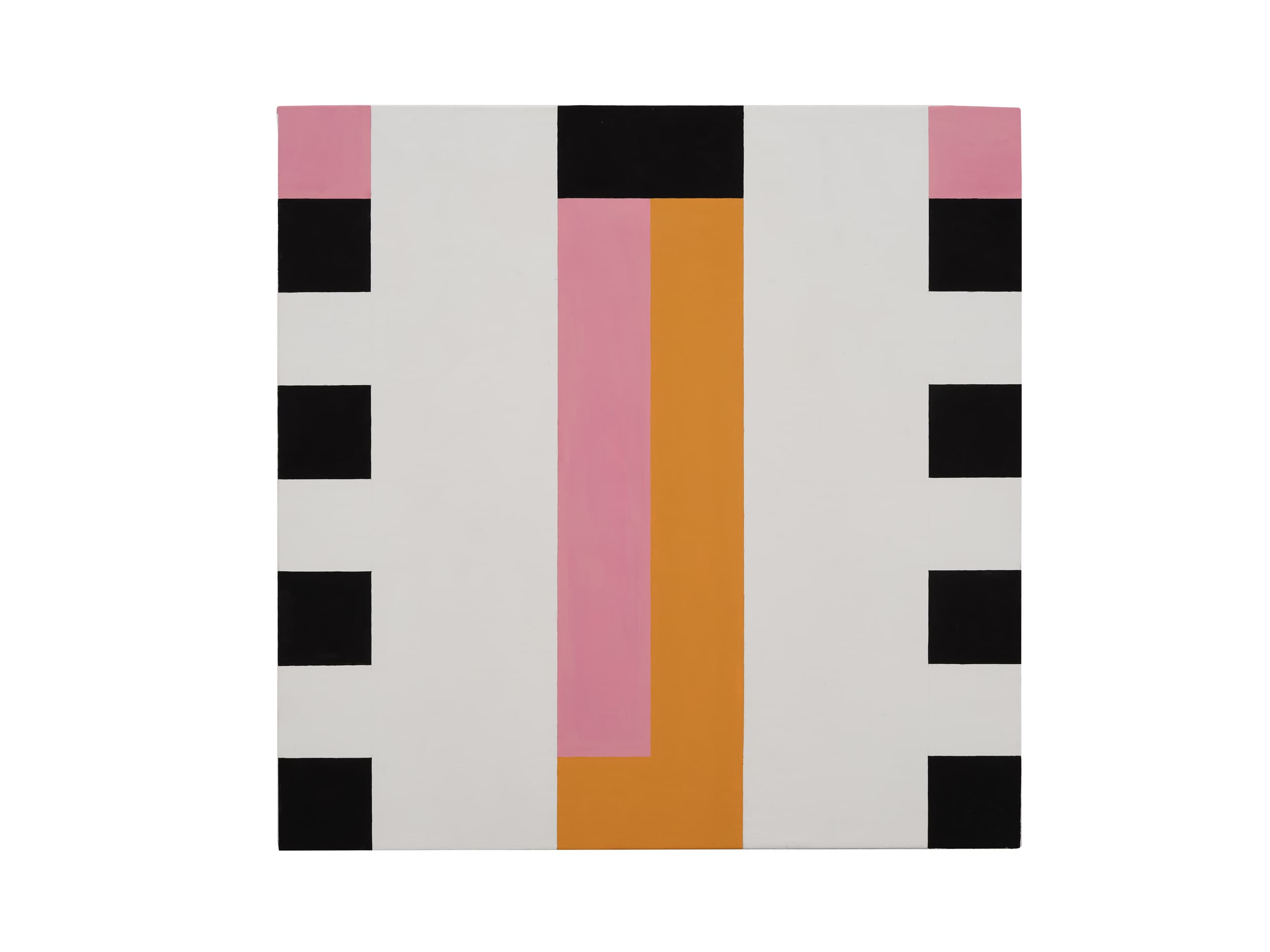
Robert Storr, Untitled, 2025. Flashe on linen on board, 24 × 24 inches. © Robert Storr. Courtesy the artist and Vito Schnabel Gallery. Photo: Argenis Apolinario.

In I Crave to Be All, Mai Blanco’s thought-provoking first solo exhibition in New York, the self-portrait embodies maternity as a lived experience. Here buildups of unconstrained brushwork culminate in buoyantly stylized and theatrical bodies, often positioned within semi-representational landscape settings.

Mai Blanco, Abundance, 2025. Oil on linen, 78 ¾ by 63 inches. © Mai Blanco. Courtesy Mai Blanco and Nino Mier Gallery. Photo: Erin Brady / Dan Bradica Studio.

In 1983 the English art critic John Russell, commenting on the newly-executed series of paintings by Sean Scully that are now on view at Lisson Gallery, remarked, “Whoever said that abstract painting was finished?” 

Sean Scully, Araby, 1981. Oil on canvas, 96 x 78 inches. Courtesy the artist and Lisson Gallery.
When viewed from the street through the storefront glass of the gallery, the peaceful and harmonious landscapes of Isca Greenfield-Sanders may momentarily register as peculiar revivals of a bygone era or strange adaptations of photorealist painting. In Seven Trees (2024), credible perspectival illusionism prevails, revealing a depiction of scenery where light and animated branches convey the lure of the natural world. Wildflowers and Distant Lake (2024), mounted adjacent to Seven Trees, imparts the thrilling vastness and limitlessness of nature.
Isca Greenfield-Sanders, Seven Trees, 2024. Mixed media oil on canvas, 68 by 68 inches. Courtesy the artist and Miles McEnery Gallery.
These most recent paintings of Liliane Tomasko present abstraction as a conduit for self-reflexivity. Upon color-drenched surfaces, raw traces of paint and concealed brushwork give rise to visual spaces wherein maelstroms of undulating bands and illuminated forms incite yet halt recognizable imagery. Painted wet-into-wet, free-floating marks give way to veiled and unstructured masses poised in space. Translucence and opacity meld into one another.
Liliane Tomasko, Shifting Shapes, installation view. © Liliane Tomasko. Photo: Robert Kastowsky. Courtesy the artist and Bechter Kastowsky Gallery, Vienna.
Too elegant, too tactical, too perfect: such were the characteristics of Anish Kapoor’s hyperreflective sculptures of the unforgettable and exuberant exhibition held at Lisson Gallery in New York some four years ago. With immaculately polished surfaces, those optical devices, whether immense or human in scale, appeared as matchless catalysts for arresting phenomenological inquiries into the parameters of vision and the paradoxes of visual representation.
Anish Kapoor, God's Advice to Adam II, 2022. Oil on canvas, 120 1/8 x 96 1/8 inches. © Anish Kapoor. Courtesy Lisson Gallery
Tranquility and reflective expansiveness pervade the walls of Peter Blum Gallery, where the diaphanous colors of John Zurier frequently haze the distinctions between the concrete and ineffable, between opacity and luminosity, between tangible matter and color.
John Zurier, Sketch for Winter II, 2023. Oil on linen, 78 x 48 inches. Courtesy the artist and Peter Blum Gallery, New York.
To Bend the Ear of the Outer World, an engaging exhibition astutely curated by Gary Garrels, brings together abstract works by forty-one artists in Gagosian’s two Mayfair galleries.
Installation view. Left: Oscar Murillo, manifestation, 2020-22. Right: Jadé Fadojutimi, And willingly imprinting the memory of my mistakes, 2023. © Oscar Murillo, © Jadé Fadojutimi. Courtesy Gagosian. Photo: Lucy Dawkins.
The enigmatic paintings of Arthur Cohen, mounted elegantly on the walls of the Scully Tomasko Foundation, exude both linearity and painterliness. In this exhibition, titled Ripped Terre Verte, lyrical abstractions blur the boundaries between the finished and unfinished, between unity and disunity of forms, recalling the tenets of the outstanding exhibition Unfinished: Thoughts Left Visible, held at the Met Breuer in 2016.
Installation view, Arthur Cohen: Ripped Terre Verte,  Scully Tomasko Foundation, New York, 2023. Courtesy the artist and Scully Tomasko Foundation, New York.
Intentional and accidental marks of the artist’s hand, purposeful and irresolute expressions of gesture, vigorous and reticent swaths of paint: these are the oppositions that govern the gestural idiom of Richard Hearns, a prolific painter of abstracted landscapes.
Richard Hearns, Icarus, 2022. Oil on canvas, 70 by 52 inches. Courtesy the artist and Cadogan Gallery.
Severe yet expressive, hermetic yet lucid, circumspect yet luxuriant, the geometric abstractions painted by Robert C. Morgan are absorbing explorations of form.
Installation view: Robert C. Morgan, The Loggia Paintings: Early and Recent Work. Courtesy the artist and Scully Tomasko Foundation, New York.
A leading champion of contemporary artmaking, Sean Scully has come to project his image of an artist as a formalist conundrum, as intimated by the above metaphor that exudes a sense of pathos.
Sean Scully, Opulent Ascension, 2019. Felt on wood, 401 x 142 x 142 inches. Courtesy Museo d'Arte Moderna di Bologna. Photo: Ornella de Carlo.
In Hovnanian’s exhibition the definitions of medium and message, artist and spectator, addresser and addressee, sacred and secular, along with the aesthetic and the real, have been rendered interdependent.
Installation view, Rachel Lee Hovnanian, with a detail of Performance Instructions and La scatola catartica (The Cathartic Box) and Awakening Bell (2022), vinyl text on wall and mixed media, including wood. Courtesy the artist and Leila Heller Gallery. Photo: Angela Colonna.
Here the boundaries of form and content dissipate, as medium and message are rendered interchangeable, undermining the closure of meaning and anticipating those interpretations that emerge from the perception and intuition of the observing subject.
Sean Scully, The Fall, 1983. Oil on canvas, 116 x 96 5/8 inches. Courtesy the Philadelphia Museum of Art. © Sean Scully.
One of the most intriguing exhibitions of recent years is Liliane Tomasko: Evening Wind at the Edward Hopper House. Scattered somewhat randomly upon the walls of Hopper’s living room and dining room in Nyack, the abstract painterly marks on surfaces of paper, notwithstanding their aggregation of luscious streaks and seductive palettes of subdued and brilliant hues, register as self-contained entities. Yet the seeming abstractions of Tomasko, framed within her overall body of work and the context of Hopper’s self-absorbed human figures, translate as conduits to the perceptual states of the human subject, as cryptographs of the subconscious, as passages toward the unconscious. These works compel us to reconsider the referent of the term “abstraction.”
Installation view, with a detail of The Nightmare (2019) of Liliane Tomasko. Acrylic and oil on linen, 63 by 63 inches. Courtesy of the artist and Edward Hopper House Museum & Study Center.

Close

Home