Charles Schultz

Charles M. Schultz is Managing Editor of the Brooklyn Rail.

If one were to make a tally of artists who have the longevity to work for more than half a century, it would be a short list. Dorothea Rockburne would be on it. She’d also be the first to say, “Who cares?”
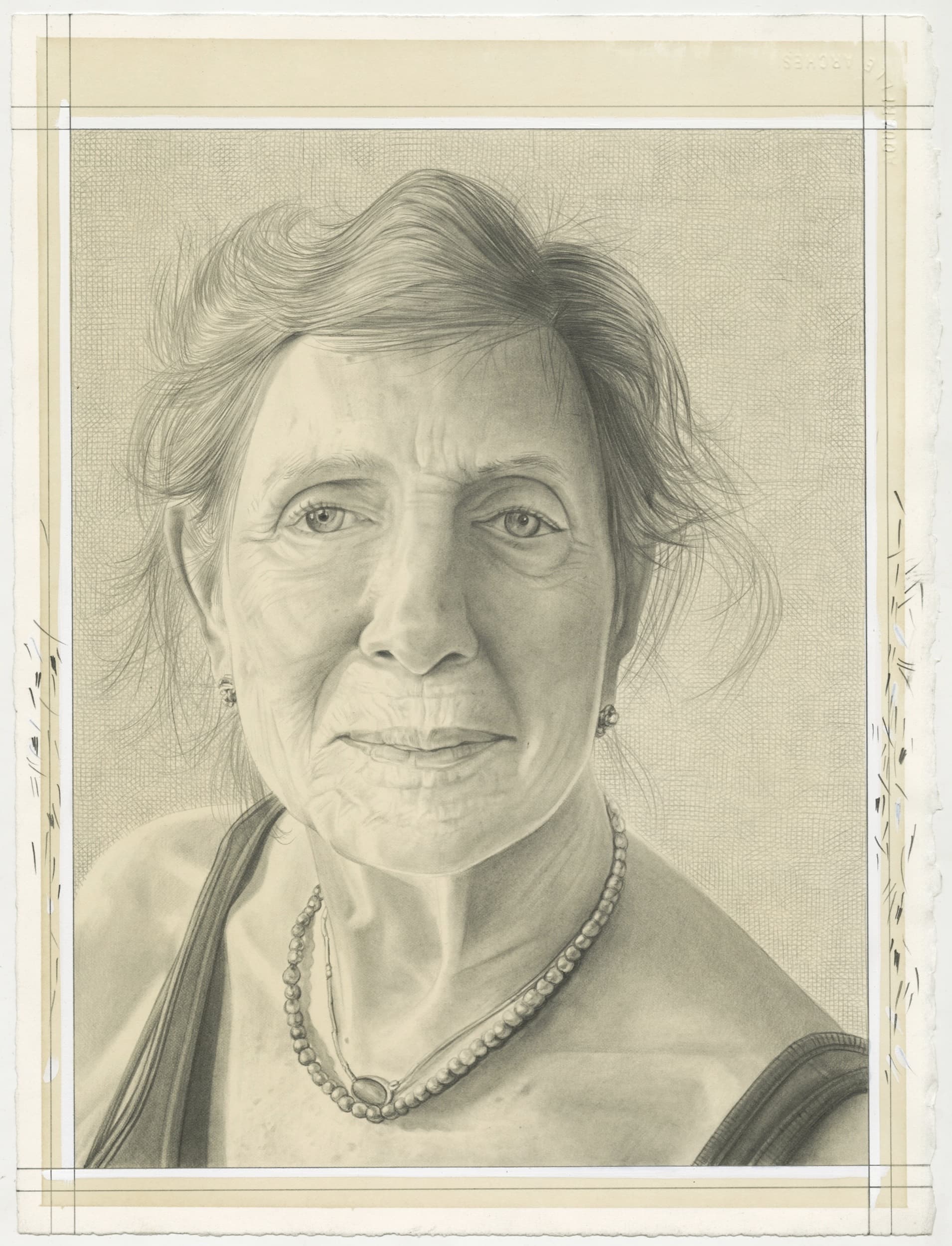
Portrait of Dorothea Rockburne, pencil on paper by Phong H. Bui.

First published in 2005, Richard Hell’s Godlike is being reissued this year as a NYRB Classic, which means that after a little over two decades it has been selected as a work of literature most likely to be discovered “outside the classroom and then remember[ed] for life.”
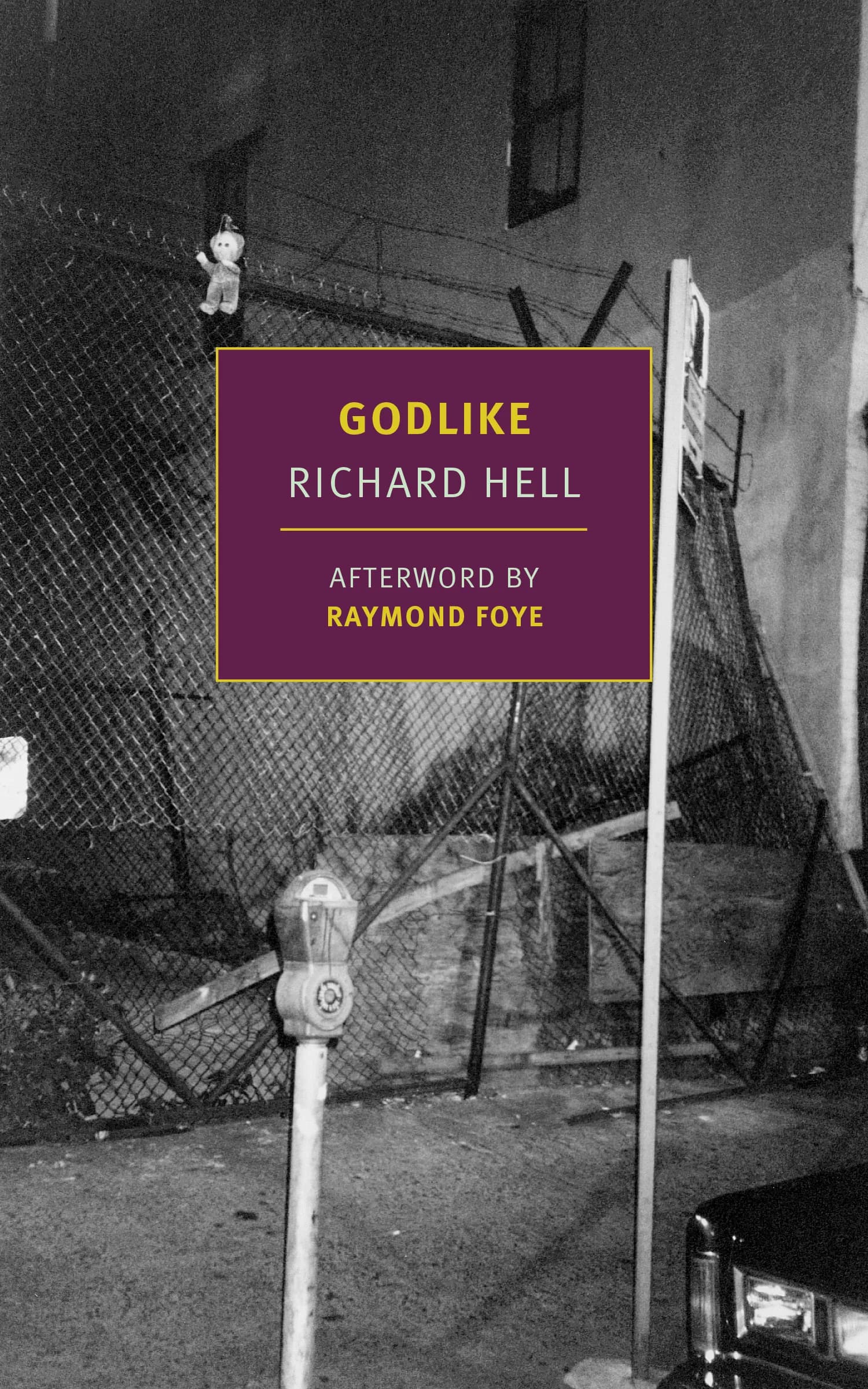
Richard Hell’s Godlike

When I saw Steve Joy’s paintings, I knew immediately I was in the presence of paintings that were made to open doors of perception.
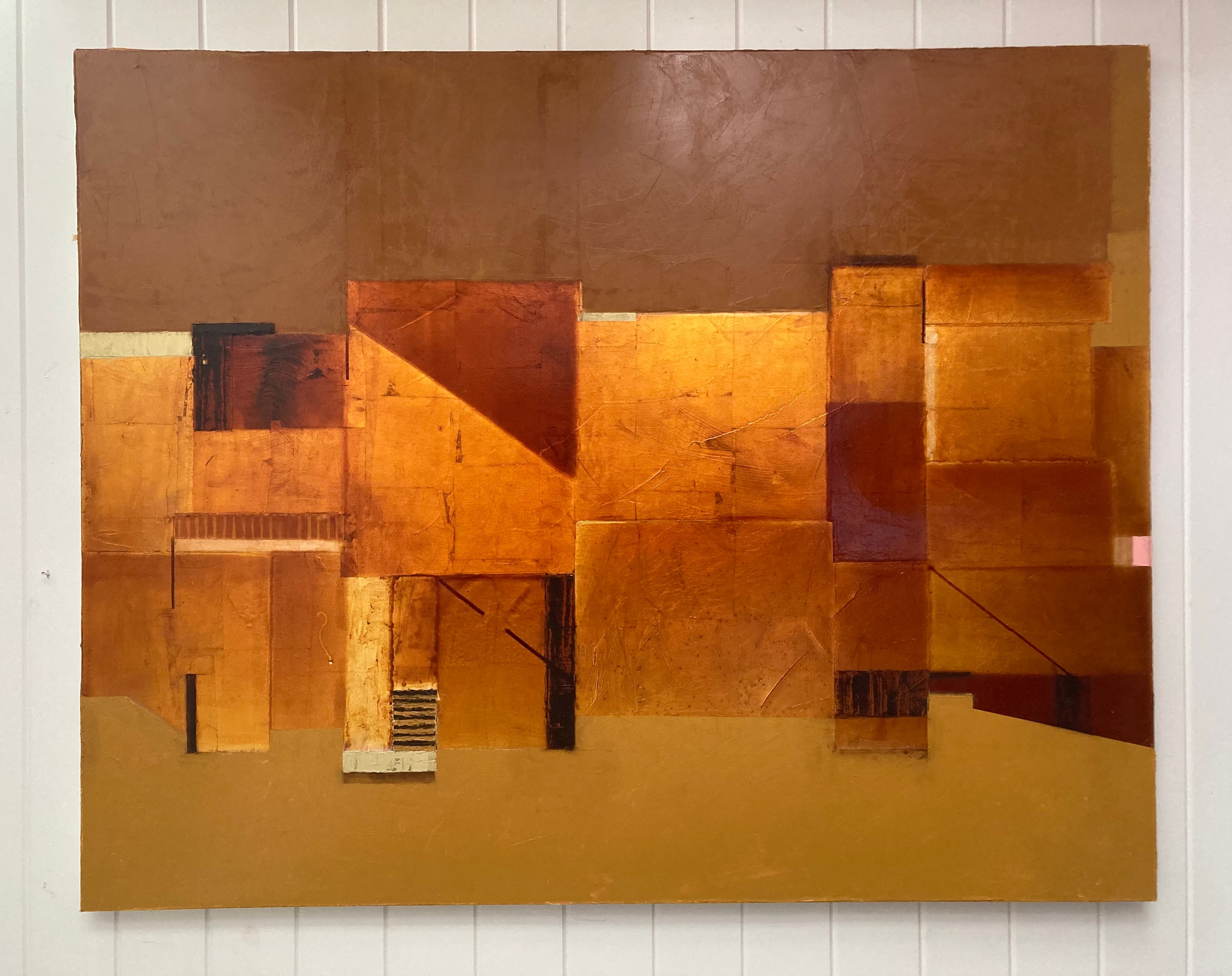
Steve Joy, Ozymandias, 2022–2025. Mixed media on canvas, 60 × 48 inches. Courtesy the artist.

The first thing that happens in the 4:00 a.m. hour? A group of musicians take a break. And so the hour begins with a moment of interruption, or pause. Of course, it only lasts a beat, and then the scene cuts. One alarm clock after the next clamors explosively, blasting sleepers out of slumberland. It’s violent in the most appropriate way, when you consider the arms of the clock aren’t appendages, but weapons of disturbance.

Christian Marclay, The Clock (detail), 2010. Single-channel video with sound, 24 hours. © Christian Marclay. Courtesy Paula Cooper Gallery, New York.

Despite the vitality of Barceló’s energetic paint handling and his tendency towards vivid color, the work exudes a pensive sensibility.

Miquel Barceló, À la bougie, 2023–25. Mixed media on canvas, 55 1/2 x 55 1/2 x 1 5/8 inches. Courtesy the artist and Acquavella Galleries.

In the late sixties, Mel Bochner began making works of art that were measurements. These took many different forms, some more ephemeral than others, and challenged notions about what an artwork could be. Among this expansive body of work is a series called “48" Standards,” which the artist developed over the course of a month in a notebook of graph paper. For the first time, the complete set will be exhibited in New York. Ahead of the installation the artist spoke with Rail Managing Editor Charles M Schultz about the origins of his measurement works in Singer Labs, the musical subtext of the “48" Standards,” and what happens if you just stop believing in the things you’re supposed to believe in.

Portrait of Mel Bochner, pencil on paper by Phong H. Bui.

Alexandre Lenoir (b.1992) is a French painter with studios in Paris and Brooklyn. Over several years he’s developed a particular system for making paintings that is based on sets of instructions, or “protocols,” as Lenoir has come to call them. Every painting has a unique set of protocols, which are carried out by assistants. And the protocols make room for interpretation, even improvisation. The question is whether works of art can occur as a result of people living and working within Lenoir’s system. His paintings are the answer.

Portrait of Alexandre Lenoir, pencil on paper by Phong H. Bui.
Hugo McCloud likes to work with his hands. He’s a builder who thinks about making sculptures the way certain philosophers think about knowledge, as a process. There is no absolute, no certainty; the way the material transforms guides his approach to working with it.
Portrait of Hugo McCloud, pencil on paper by Phong H. Bui.
It takes but an instant with Whitney’s work to appreciate the value of gesture and line. The quality of active, energized mark-making runs through the show like a current of electricity. It seems to be there from the start, and in a way it was, but it isn’t truly charged until the artist has an epiphany in the printmaking workshop of Robert Blackburn. When he lays ink down on mylar, it retains his touch.
Stanley Whitney, James Brown Sacrifices to Apollo, 2008. Oil on linen, 72 x 72 inches. Private Collection. © Stanley Whitney. Courtesy Stanley Whitney Studio. Photo: Lisson Gallery.
A group exhibition is always—must be—a mélange of opportunity. It is a place one visits for the intensity of variety as opposed to the singularity offered by a solo operator. You don’t see the artwork so much as you grasp its relativity to the field in which it’s been placed. In this sense, every biennial is as much about the interactive relationships established between the artworks as it is oriented to any particular object.
Installation view:  Whitney Biennial 2024: Even Better than the Real Thing, Whitney Museum of American Art, New York, 2024. Torkwase Dyson, Liquid Shadows, Solid Dreams (A Monastic Playground), 2024. Courtesy the Whitney Museum of American Art. Photo: Audrey Wang.
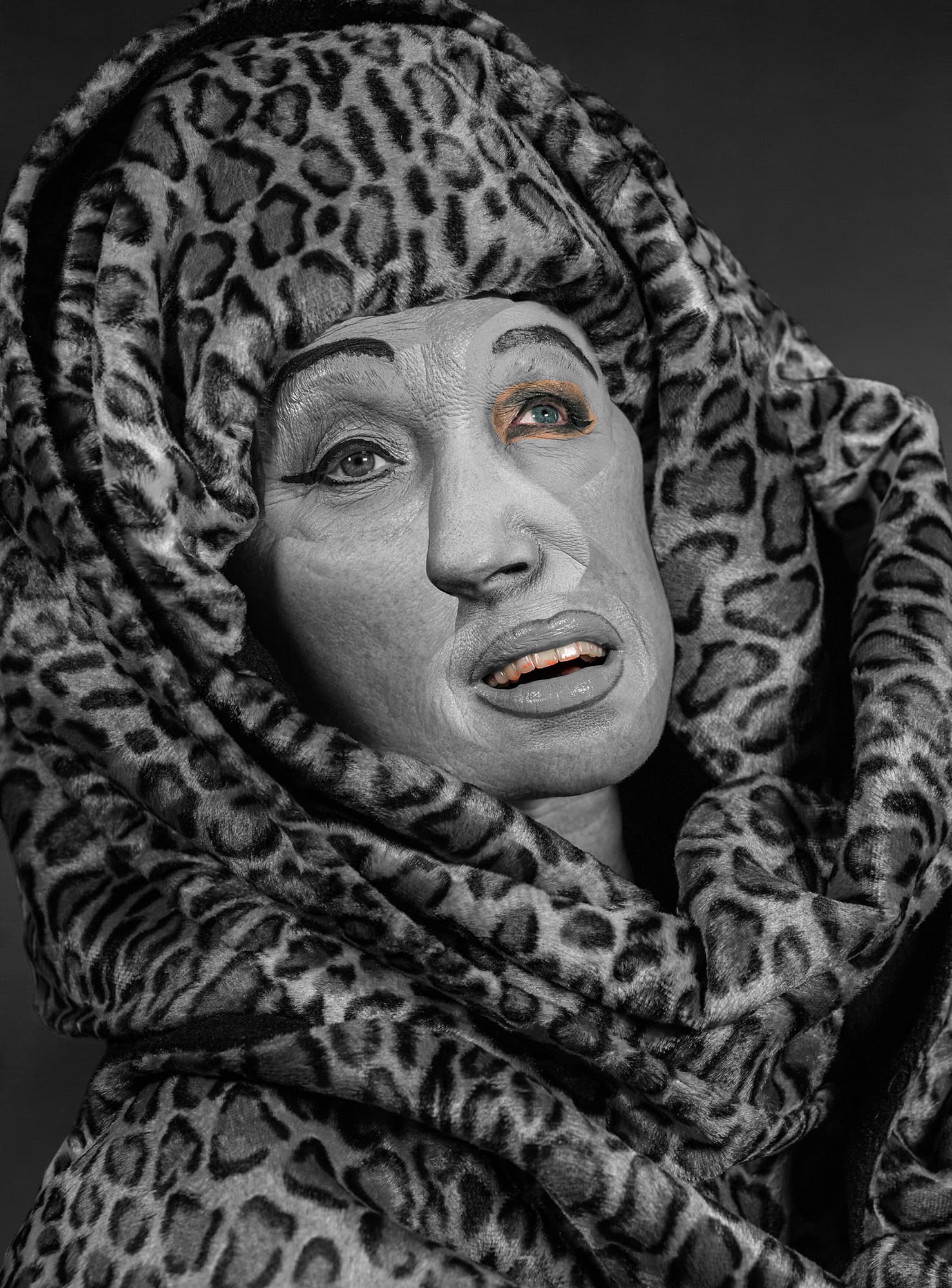
Cindy Sherman keeps a work diary, and she can be frank in its pages. In late March of 2023, as she was shooting her current body of work, she wrote, “No one has to see anything I don’t like.” It’s a message from Cindy to Cindy, but it’s available to the public, published (and presumably polished) in a tidy catalogue for the exhibition.
Cindy Sherman, Untitled #659, 2023. Gelatin silver print and chromogenic color print, 40 x 29 1/2 inches. © Cindy Sherman. Courtesy the artist and Hauser & Wirth.
The edges of EJ Hauser paintings are mysterious places. Things occur on the periphery that one doesn’t expect. Disjunctions in the system—the perceived order of the system—unsettle the composition. Those edges push in on the networks of marks that connect across the canvas, and this compression increases the force of visual impact.
EJ Hauser, Untitled (Grow Room Series #7), 2023. Permanent marker on paper, 11 x 8.5 inches. Courtesy the artist and Derek Eller Gallery.
If you can’t feel the joy in Tamara Gonzales’s paintings, call an ambulance. Her newest body of work (twenty-one paintings made in 2023) spreads across four walls, two of which are hung salon style. The effect of being surrounded by Gonzales’s colorful paintings is overwhelming. To feel the buoyant and rejuvenating energy of spring on a gray day in mid-winter is a profound gift.
Tamara Gonzales, Tapir, 2023. Acrylic and pastel on canvas, 54 x 45 inches. Courtesy the artist and Klaus von Nichtssagend Gallery.
I wonder how often Ann Craven hears wolves howling at the moon. I wonder if she has ever tried to paint that sound. It seems like an unfair proposition for a painter, but Ann Craven paints the wind. She paints the wind, and she does it without recourse to secondary phenomena like bending branches and blossoms in flight.
Ann Craven, Moon, (Yellow Moon, Crazy 8's, Again, 10-7-23), 2023, 2023. Oil on canvas, 24 x 18 inches. Courtesy of Karma Gallery.
Tracey Emin’s new paintings embody the energy that carried her through this journey. Serendipitously, a major work from early in Emin’s career, The Exorcism of Last Painting I Ever Made (1996), is also on view in New York. The two shows—one in Brooklyn and one in Manhattan—compliment one another in unexpected ways.
Portrait of Tracey Emin, pencil on paper by Phong H. Bui.
An old wooden cabinet is illuminated on the inside by a single bare bulb. The door tilts open. The light is warm. A dark cushion rests at the base. The texture of the object corresponds with its age and sets up a particular channel of domesticity to view the many small paintings that hang upon it, both inside and outside. It’s not comfortable, but it calls for the nearness of intimacy, and up close its strangeness is only amplified. The paintings depict heads, and the heads share the rippled and bumpy surface of the earth after an earthquake. They’re turbulent, but charming. The way Trude Viken paints a mouth brings joy.
Installation view: Trude Viken: Night Crawlers, Fortnight Institute, New York, 2023. Courtesy Fortnight Institute.
The artist’s friend loans her the keys to an empty apartment in Venice. It’s the middle of summer, 1988. She makes numerous train trips to Padua, visiting Giotto’s chapel, but more often she remains on the island, and when she does she walks to the Scuola Grande di San Rocco, where Tintoretto’s Crucifixion adorns a wall in the great room designated for gatherings of the fraternity’s governing body.
Dorothea Rockburne, The Cross is in the Center, Tintoretto, 1988–89. Watercolor and gold leaf on prepared acetate, 93 x 59 5/8 inches. Parrish Art Museum, Water Mill, N.Y. Gift of Susanne Emmerich in Memory of André Emmerich.
Henry Mandell knows the subsurface teems with vitality. In his debut exhibition at Anita Rogers Gallery, the painter draws upon the interconnected qualities of mycelium as a grounding agent for a remarkable body of work.
Installation view: Henry Mandell: Superunknown, Anita Rogers Gallery, New York, 2023. Courtesy Anita Rogers Gallery. Photo: Andrew Toth.
In bright light shining three sculptures dominate the interior of the gallery. The bolt of lightning from the print has been cast in bronze, painted fluorescent yellow, and placed with two companions, each a unique shape. They are more than twenty feet tall.
Installation view: Ugo Rondinone: bright light shining, Gladstone Gallery, New York, 2023. © Gladstone Gallery. Courtesy the artist and Gladstone Gallery.
On the occasion of his exhibition at Galerie LeLong Charles Schultz visited Tariku Shiferaw’s studio in the Bronx. Their conversation ranges from the night sky as a site where different civilizations have inscribed their visions of the world to the influence of mythologies on the order of social codes, and what it means when boundaries become porous.
Portrait of Tariku Shiferaw. Pencil on paper by Phong H. Bui.
There would be no right angles. There would be almost no artificial light. There would be nothing on the walls to explain the work. For Horn’s biggest exhibition in Asia she wanted her audience to do more looking than reading, to engage with the heart as much as the mind.
Installation view: Roni Horn: A Dream dreamt in a dreaming world is not really a dream ... but a dream not dreamt is, HE Art Museum, Guangdong, China, 2023. Courtesy the artist and Hauser & Wirth. © He Art Museum. Photo: JJYPHOTO.
To those who ask what her poems are about, Lauterbach answers, “the poems find their subjects as they are made.
Ann Lauterbach's Door
In Miami, the largest gathering of Didier William’s work yet to be assembled took place. Years of conversations and studio visits with Dr. Erica Moiah James led to a selection of paintings and prints that convey a passage of artistic evolution. The passage is concerned with the figure. Twenty years ago William had been exploring abstract compositions until the murder of Trayvon Martin compelled a new direction. This exhibition begins at that moment and concludes at its chronological counterpart: the birth of a child and the formation of a family.
Portrtait of Didier William, pencil on paper by Phong H. Bui.
It is exciting to see an artist use material so masterfully, and even more so when that mastery is the evident gain of a persistent and dogged pursuit.
Bill Miller, Mill Valley, 2022. Vintage linoleum collage, 60 x 60 inches. Courtesy the artist and dieFirma.
An essay on floating.
Cecilia Vicuña, Galaxy of Litter, New York, 1989. Photo: César Paternosto.
In a room with fewer corners than one expects hang two new paintings by Marina Adams that mesmerize and bewilder. They are the same big size and the structures of their compositions are of a kind, but the surfaces tell different stories. When painters use form as a vehicle the tendency is to explore color relationships and textural variety.
Marina Adams, Twenty Springs, 2022. Acrylic on linen. 90 x 70 inches. Courtesy of the artist and LGDR, New York. Photo: Dan Bradica
You either start in darkness, or you start in the light. One is not better than the other, but the choice is the first one that affects your experience of the Whitney Biennial. The show spreads out across multiple floors, but it mainly takes place on two: one is designed like a labyrinth, the other as an open field. It’s a dramatic shift. In the labyrinth your eyes can’t travel far; in the open field there is almost nothing to stop them.
Raven Chacon, still from Three Songs, 2021. Three-channel video installation; 6:51 min. Image courtesy the artist.
Michael Rado wants you to know how the fabulous works on the walls of his exhibition at Art Cake were made. He wants you to know so that you can trace the progress and appreciate the choices that organize multiple fields of information into singular compositions.
Michael Rado, Sunrise, Sunset, 2022. National Geographic, acrylic, rabbit skin glue, marble dust, Masonite panel, poplar, 13 1/2 x 19 inches.
A Joe Bradley painting is many things, but it is not for the dainty of heart. When you walk amongst his canvases you walk through a kind of dream jungle where the meaty atmosphere is mottled and streaked with sinuous filaments that may or may not cohere into something you think you recognize.
Joe Bradley, Jubilee, 2022. Oil on canvas, 108 x 144 inches. Courtesy the artist and Petzel, New York.
On the top floor of Hauser & Wirth’s Chelsea building Takesada Matsutani and his friend Olivier Renaud-Clément stand beside a massive paper scroll, thirteen meters long, that extends from the ceiling to their feet. It is from the early nineties and is covered in graphite that softly reflects the light coming in the gallery windows.
Portrait of Takesada Matsutani, pencil on paper by Phong H. Bui from a portrait by Robert Banat.
Chris Martin has shown with Anton Kern enough times to know how to manipulate the unique characteristics of the place. Because of its essentially linear structure, the exhibition space sets up a loose expectation for some form of narrative.
Chris Martin, Gold Teeth for Lance De Los Reyes, 2021. Acrylic, spraypaint, and collage on canvas, 40 x 34 1/2 inches. © Chris Martin. Courtesy the artist and Anton Kern Gallery, New York.
A work of art is what it is, obviously, but it is also what it could be. In other words, it is more than itself, but how much more? And through what means does an audience recognize the multifariousness of its being? This is the question that gives gravity to the astute essays of Constance M. Lewallen, Dore Bowen, and Ted Mann in the remarkable book Bruce Nauman: Spatial Encounters.
Bruce Nauman's Spatial Encounters
Rockburne has created a chapel of her own in a townhouse on the Upper East Side of Manhattan that draws from her experience in Padua. To sit in her dark blue chamber and gaze upon the artist’s dramatically lit paper collages is to take part in a reenactment of a certain kind, a doubling of experience, where the audience has an opportunity to be in two places simultaneously.
Dorothea Rockburne, Blue Collage, I Am A Tree, 2021. enamel paint, Aquacryl, gold leaf, and watercolor wax crayon on paper mounted on board in artist's frame, 24 x 21 inches. Courtesy David Nolan Gallery.
An Irish painter and an American art critic form a bond that generates more than 10 years of engagement, culminating in a handsome book of tightly edited conversation. The book moves in places you expect it to, but there are narrative surprises and plays of cleverness built into the design that keep your attention. There is also great humor and the witty intelligence of two canny observers.
Kelly Grovier's On the Line: Conversations with Sean Scully
Brown spots spread across the blue veins and red knuckles of the artist’s hands, telling their own story of age and effort. These hands are the hands of a creator; these hands have made artworks that have affected the lives of people the artist loves and the lives of people he will never know.
Installation view: Bruce Nauman: His Mark at Sperone Westwater. On view January 13-March 12, 2022. Photo Courtesy Sperone Westwater, New York.
There are those who believe a work of art doesn’t exist until it is discussed. As a young artist in Chicago, one of Dread Scott’s first audiences was the Supreme Court of the United States from whom a discussion on the merits of a work of art can stimulate a populace. The particular aspect of Scott’s work that disturbed them: standing on the American flag. The sitting President made a statement; the conversations led to change. Dread Scott (b.1965) was just getting started. Since then his performance work has inspired and provoked a generation of artists for whom political and historical reckoning are central to their practice. On its most fundamental level much of Scott’s work comes down to how a person engages an environment: What they do, or don’t do.
Portrait of Dread Scott, pencil on paper by Phong H. Bui.
The show includes seven artists and draws a tight focus on a particular line of painting from the ’80s that can be characterized by the artists’ use of geometric forms to generate or suggest narrative.
Regina Bogat, The Phoenix and the Mountain #9, 1980. Acrylic, wood, rope on canvas, 50 x 40 inches. Courtesy of Zürcher Gallery, NY / Paris.
The surfaces of Pessoli’s paintings teem with a diversity of mark making, which is part of what gives them their sketchbook quality. He uses pencils and stencils, oil sticks and spray paint, pastels and oil paint; all of them come together in an elegant play of texture which is especially charged when the viewer moves around the wooden panels and the gallery light rakes across the matte and reflective zones.
Alessandro Pessoli, Carousel, 2021. Oil, spray paint, and pencil on wood panel, 30 x 24 1/2 inches. © Alessandro Pessoli. Courtesy the artist and Anton Kern Gallery, New York.
I sit on a thin carpet laid on a wooden floor smoking and gazing up at colorful drawings of people and animals. There are no children; the figures are mature humans whose eyes and mouths are open conduits of pleasure. Perhaps the subjects are depictions of specific people, but they feel like expressions or metaphors of emotional conditions in a world boiled down to experiences of joy, laughter, and contentment.
Reza Shafahi, Untitled, 2016. Ink and color pencil on paper. 36 x 28 inches. Courtesy the artist and Club Rhubarb.
Marcus Jahmal’s new show of paintings takes you into a world of spiritual healers and reverends who traffic in good luck bags for gamblers.
Marcus Jahmal, Chocolate Genius, 2019. Acrylic on canvas, 48 x 72 inches. Courtesy the artist and Almine Rech. Photo: Matthew Kroening.
The evening of September 11th I sat on the smooth concrete floor of James Cohan’s new gallery in Tribeca to take in a performance by Hamid Al-Saadi and Amir ElSaffar.
Josiah McElheny, Moon Mirror, 2019. Pressed colored prismatic glass, stainless steel, hardware, 103 x 191 1/2 x 71 inches. © Josiah McElheny 2019. Courtesy the artist and James Cohan, New York.
Leonardo Drew (b. 1961) considers himself an elder statesman of the art world.
Portrait of Leonardo Drew. Pencil on Paper by Phong Bui.
James English Leary was part of the gang of artists who brought Bruce High Quality into the world, and then took Bruce out of it.
Portrait of James English Leary, pencil on paper by Phong Bui.
The title of Liza Lou's exhibition, The Classification and Nomenclature of Clouds, draws upon an essay from 1802 by Luke Howard, a chemist and amateur meteorologist, wherein the author gives clouds the names we still use today.
Portrait of Liza Lou, pencil on paper by Phong Bui.
Samaras’s “photo-transformations” are the result of chemical manipulations the artist made to Polaroid images as they were developing.
Lucas Samaras, Photo-Transformation 8/12/76. Instant dye diffusion transfer print (Polaroid SX-70, manipulated) 3 1⁄8 x 3 1⁄16 inches. Courtesy Craig F. Starr Gallery.
In advance of his exhibition at Galerie Eva Presenhuber, Ketchup as a Vegetable, Blalock paid a visit to the Rail HQ for a conversation with Charlie Schultz that ranged from Blalock’s formative years, to his perspective-broadening experience of Moby Dick, to the way his new work (somewhat) describes the off-kilter quality of our contemporary moment.
Portrait of Lucas Blalock, pencil on paper by Phong Bui. From a photograph by Zack Garlitos.
Raha Raissnia’s first solo exhibition in a museum, Alluvius, opened in early December at the Drawing Center. Organized by the museum’s Assistant Curator, Amber Harper, the exhibition highlights Raissnia’s mixed media work on paper as a central element of her multivalent practice, which encompasses film, photography, and performance.
Portrait of Raha Raissnia, Pencil on Paper by Phong Bui
The title of Tracey Rose’s performance sets these two ships against one another, as if one might expect a boxing match, which would not be out of character for an artist who has used boxing as a structural form in earlier performances.
Photo: Paula Court
Lisa Oppenheim’s first one-person exhibition in an American museum took place this year at the Museum of Contemporary Art in Cleveland, Ohio. Her second one-person exhibition at the Tanya Bonakdar gallery, A Durable Web, is on view through October 21, 2017.
Pencil Portrait of Lisa Oppenheim by Phong Bui
With the Puerto Rican debt crisis as well as the controversy over legendary political activist Oscar López Rivera’s participation in the Puerto Rican parade as backdrop, we took the opportunity to discuss Luciano’s long engagement with Puerto Rican politics and history, his love of creatively refurbished bicycles, and how the two intersect in Ride or Die, Luciano’s solo exhibition of commissioned work, which was on view at Brooklyn’s BRIC gallery this past spring.
Portrait of Miguel Luciano. Pencil on paper by Phong Bui.
The heart of Rene Ricard’s second posthumous exhibition at Half Gallery is a pair of old tabletops resting on the mantel of a fireplace. The untitled diptych is dated to 1995 but looks much older; its rubber upholstery is yellowing like badly jaundiced skin. Ricard’s cursive handwriting spreads across their surfaces, posing a question that has shifted from hypothetical to literal: “Nan Goldin and David Armstrong, so which photo will they remember? The glamorus one on the bed or the crack face that looked too far?” These two photographs hang on either side of the fireplace: a sexy young poet (à la Armstrong in 1979) and an aging back alley scoundrel (Goldin, shot in 1995). Since Ricard has passed, this question has become even more relevant.
Installation view: Rene Ricard: So, Who Left Who?. Half Gallery, March 29 - April 26, 2017.
I want to tell you what criticism is to me, and why I write it. But first I want you to know how I got involved with art criticism. It was not by design; it was a development that grew out of a basic gut level adoration of art.
John Houck lives in Los Angeles and works out of a studio that previously housed a sizeable weed growing operation. Last Winter, five of Houck’s photographs were featured in the New Photography exhibition at MoMA, and in April he is showing a new body of work at On Stellar Rays.
Portrait of John Houck. Pencil on paper by Phong Bui. From a photo by John Houck.
John Houck lives in Los Angeles and works out of a studio that previously housed a sizeable weed growing operation. Recently, five of Houck’s photographs were featured in the New Photography exhibition at MoMA; in April he is showing a new body of work at On Stellar Rays. Prior to the exhibition’s opening, Houck visited the Brooklyn Rail’s HQ to talk with Charlie Schultz about psychoanalysis, the relationship between drawing and photography, play, and the history of the constructed image.
John Houck, Family Crest, 2016. Archival pigment print. 29 1/2 x 42 3/4 inches.
James Hoff makes paintings with a printer. He does not engage in a tug-of-war with the machine, like Wade Guyton, whose means of creating paintings centers on forcing a canvas past ink jets.
James Hoff, "Skywiper No. 4," 2014. Chromaluxe transfer on aluminum, 20 × 16 ̋. Courtesy of the artist and Callicoon Fine Arts, NY.
Zhang Huan's solo exhibition at Pace Gallery, Let There Be Light (through December 5), includes the largest ash painting Zhang’s made to date as well as a new series of ash paintings that use the language of Braille to transcribe western texts including the Bible and the Star Spangled Banner.
The timelines of art history are marked by eruptions that reorient artistic practices and philosophies, bursting through the prevailing mentalities and cratering the landscape of cultural production. In 1968, three landmark productions—an exhibition, a publication, and a magazine project—set off a decade’s worth of radical action in Japanese contemporary art and photography.
Kazuo Kitai, Students with a Megaphone, Nihon University College of Art Barricade, 1968. Gelatin silver print, 16 × 20 in. Courtesy the Tokyo Metropolitan Museum of Photography.
There was no way to tell Mary Ellen Mark only had four weeks left to live when she embarked on her last assignment, photographing the recovery efforts in New Orleans for the tenth anniversary of Katrina. It was spring and she’d been sent by CNN, who assigned a videography team to work behind her.
Torbjørn Rødland’s exhibition, “Corpus Dubium,” is a warmly felt look at body-oriented insecurity. It is a modest show, including only ten color photographs, but the impact of each image is undeniably potent, perhaps because Rødland’s subject is such a universal aspect of the human condition.
Torbjørn Rødland, The Mirror, 2014–15. C-print, 44 3/8 x 56 1/4 in. Edition of 3. Courtesy Algus Greenspon.
How do we become who we are? What experiences mold our character and how do those experiences alter the way we interact with artwork? For me the experiences that have been the most transformative happened suddenly: one I saw coming for nine months, the other I didn’t see coming at all.
Portrait of Charlie Schultz. Pencil on paper by Phong Bui. From a photograph by Taylor Dafoe.
Alec Soth is an American photographer whose first major body of work, Sleeping by the Mississippi (2004), established his reputation as a deeply feeling documentarian. Soth has just completed Songbook, a project three years in the making for which he and his collaborator, Brad Zellar, traveled around America as a journalistic team producing content for their self-published newspaper, the LBM Dispatch.
Portrait of Alec Soth. Pencil on paper by Phong Bui. From a photograph by Zack Garlitos.
Speaking of People is a powerful group exhibition that focuses on the many ways contemporary artists have taken inspiration from the pages of Ebony and Jet magazines.
Francesca Capone’s recent solo exhibition, Oblique Archive, is a meditation on the nature of language as it is increasingly unmoored from the physical realm of paper and set adrift in our digital landscape.
Cao Fei is a Chinese artist from Guangzhou currently residing in Beijing. She is a multimedia artist whose work has been critically acclaimed and globally showcased since her nascent efforts as an art student in the late ’90s.
Portrait of the artist. Pencil on paper by Phong Bui. Inspired by a photo portrait by Zack Garlitos.
Keith Sonnier’s sculptures infuse the élan and machined elegance of high minimalism with a subtle sensuality. For all their rigidity—the pieces are comprised mainly of large glass or acrylic panels linked with aluminum struts and lit with neon—they emanate a kind of softness. They are also playful and even a bit erotic, adding a significant dose of warmth and humanity to a visual language known for its detached tone and conceptual slant.
In Shapes of Shade, Tony Cox’s debut solo exhibition with Marlborough Gallery, the New York artist has both expanded upon and refined an aesthetic he’s been nurturing for years: the embroidered canvas.
Dave Hickey recently published Pirates and Farmers: Essays on the Frontiers of Art (Ridinghouse, 2013), a collection of essays on taste and 20th-century art. The book is threaded with personal tales of insouciance and the opinions of a man who has decided he’s through with the art world, but will never be done with art.
DAVE HICKEY with Charles Schultz
During the run of A Haunted Capital at the Brooklyn Museum (March 22 – August 11, 2013) and while preparing for Witness at the Contemporary Arts Museum Houston (June 22 – October 13, 2013), the artist discussed photography, activism, and the importance of portraiture.
Portrait of the artist. Pencil on paper by Phong Bui.
Song Tao and Ji Weiyu go by the moniker Birdhead. Known widely in China and Europe, Birdhead’s first major exposure in the United States came this fall when they were included in MoMA’s annual New Photography exhibition (October 3, 2012 – February 4, 2013).
Portrait of the artist. Pencil on paper by Phong Bui.
What is to be done when one generation’s entertainment becomes the next generation’s disparagement? Does one laugh, cringe, or contemplate?
Ellen Gronemeyer, "Gambling Caviar," 2012. Oil on canvas. 37.4 x 45". Image courtesy Kimmerich, New York, NY. Photo: Thomas Müller.
Josef Albers in America, yes, but also America in Josef Albers. Work the ratio: how much America was in the German when he arrived here in 1933?
Josef Albers, "Color Study for White Line Square," not dated. Oil on blotting paper (with gouache, pencil, and varnish). 29.53 x 29.66 cm. © 2012 The Josef and Anni Albers Foundation / Artists Rights Society New York.
Intrepid gallerists often forge unexpected partnerships, and Gallery Brooklyn is a case in point. On a quiet street in Red Hook, this new space opened in a realty office, and its inaugurating exhibition, Lightness, Being,pays homage to this quirky union in subtle ways.
Rebecca Reeve, "Untitled #2, Brooklyn Navy Yard, New York," 2011. Archival inkjet print. 56 1/4 x 56 1/4 inches. Courtesy the artist and Gallery Brooklyn.
The kingdom of animals has disappeared in Ulrich Gebert’s photographs, and those that handled them now look to be engaged with ghosts. Many scenes are just ridiculous; a well-dressed gentleman in a field tossing sticks to a dog looks preposterous if the dog is absent.
Ulrich Gebert, "The Negotiated Order #3," 2012. Silver gelatin print, dibond, cardboard, MDF, linen. 15.5 x 18", edition of 3 + 1 AP. Courtesy the artist and Winkleman Gallery, New York.
Ethan Pettit isn’t trying to do anything too complex. The debut exhibition at his quaint suite in the Brooklyn Fire Proof building, Inaugural Show, is simply conceived as an introduction.
Robert Egert, "Ambulation," 2011. 12 1/2 x 17". Conté on printmaking paper. Courtesy Ethan Pettit Contemporary.
The idea of an origin is problematic for a number of reasons, one being that it would seem to suggest a starting point without precedent and, of course, that’s impossible.
Cui Fei, Manuscript of Nature V_XXXII, 2012. Installation view at Chambers Fine Art.
On the occasion of his second solo exhibition at David Zwirner Gallery, Black Paintings (May 4 – June 23, 2012), Yan Pei-Ming sat down with Charles Schultz to discuss his recent paintings, his preference for visual rather than verbal communication, and the difference between the deaths of Bin Laden, Gaddafi, and Mao.
Portrait of the artist. Pencil on paper by Phong Bui.
There is much to read at Natalie Czech’s solo New York debut, and most of it is American poetry; there is also plenty of opportunity to gaze, since Czech’s choice medium is photography. One will quickly find it’s a struggle, however, to perform these two activities in tandem.
Natalie Czech, "A small bouquet by Maia Gianakos," 2011. Oil pastel on C-Print, 85 x 60 cm. Courtesy the Artist / Ludlow 38. Copyright: NatalieCzech / VG Bild-Kunst.
I visited your exhibition at Bureau Gallery a few weeks ago knowing very little about you or your work. I feel like I know you much better now, which is perhaps unsurprising given the autobiographical character of your sculpture.
Lionel Manuz, "Receipt of Malice," 2012. Wood, latex paint, enamel paint, plexiglass, aluminum, foam, aquaresin, polyurethane rubber, polyurethane resin, epoxy, minerals, soil, canvas, tar, gravel, clay, epoxy clay, pewter, copper, hair, semen, sulphur, bone, glass. 58 x 48 x 94". Courtesy of Bureau Gallery.
Liu Xia (b. 1959) may be the most under-recognized Chinese artist alive. Since she was 30, her paintings, photographs, and poetry have been banned in China. When her husband, Liu Xiaobo, was awarded the Nobel Peace prize in 2010 the situation grew worse; she was placed under strict house arrest and deprived of all means of contact.
Liu Xia, "Untitled," 1996-99. Courtesy the Italian Academy.
Masterpieces make for good celebrations, or so it would seem from The Ronald S. Lauder Collection: Selections from the 3rd Century BC to the 20th Century / Germany, Austria, and France, which honors the 10th anniversary of the Neue Galerie’s founding.
Egon Schiele (1890 - 1918), "Mime van Osen," 1910. Watercolor, gouache, and crayon on paper. Courtesy of the Neue Galerie.
Daina Higgins paints in a photo-realist style that is approaching virtuosic. New Paintings, her fourth solo show at Elizabeth Harris Gallery, includes nine new works in a variety of modest sizes, the oddest being as long and skinny as a plank.
Daina Higgins, "South Philly," 2011, oil on canvas, 44" x 50". Courtesy Elizabeth Harris Gallery.
Five Works from the Collection of Albert Murray only leaves one wishing that a larger exhibition of Murray’s collection be mounted.
Norman Lewis, "Carnival," c. 1957. Oil on linen. 48 1/2" x 58 3/4". Courtesy of DC Moore Gallery, NY.
Rico Gatson’s retrospective at Exit Art, Three Trips Around the Block, ran the gamut of artistic expression. A survey spanning the last 15 years of the artist’s career (he’s 45), the work in the exhibition was by turns viscerally provocative and conceptually detached; it was unsettling at times, contemplative at others, alternately coded in contemporary iconography and resolutely abstract.
There was a work permit by the entrance. Industrial light fixtures, bent and angled, shared wall space with boxy structures made out of the same blue-painted plywood that fences construction sites in New York City.
Both Ann Pibal and Siah Armajani are well-established artists with track records of producing structurally rigorous and conceptually astute works. They also share the Midwest—specifically Minnesota—as part of their cultural heritage.
Ann Pibal, "RTOF," 2011. Acrylic on aluminum. 17 ¾ x 12 ¾".
If artwork has the capacity to communicate, does it follow that art might also be capable of conversation? There is certainly plenty of evidence for works of art engaging in various types of dialogue when placed in proximity, but of course this isn’t a matter of verbal exchange. Rather, it’s a question of affectation and perception. How does seeing one painting influence the way another is seen?
Andrew Gbur, "Untitled," 2010. Screen-printing ink on canvas. 90 x 84". Courtesy Eleven Rivington, N Y.
Morgan Packard’s participation-based art project, Dihedral Product, came close to taking a stance against creativity. In brief, he tasked participants with work so mindless and autonomous that it could have been done equally well by an idiot or a scholar. So in a way it was an ideal community activity, art as total democracy.
John O’Connor’s recent drawings are packed with processed data. His sources range from military history to literature to news stories to measurements of his bodily functions.
"S.O.S.," 2011. Collage, colored pencil, and graphite on shaped paper, 61 × 61 inches. Image courtesy the artist & Pierogi.
After returning from London where he opened his first solo show, Everything Leads to Another, at Hauser and Wirth (May 20 – July 30), Matthew Day Jackson came by the Rail’s headquarters to talk about his work, creative process, and drag racing plans with Artseen contributor Charles Schultz.
Portrait of the artist. Pencil on paper by Phong Bui.
Art galleries in the summer tend to have the same breezy feel as high schools during the last week or two of classes. It’s still technically time for business, but not exactly as usual. Everything is more casual; curators are invited to be bold; partnerships are forged.
George Boorujy, "New York Pelagic," (2011) Glass bottle, one original drawing, one explanation/questionair.
Why is it easy to conceptualize a physical sensation but incredibly challenging to feel a concept? As an example consider movement, or more specifically, moving along in a vehicle, a car let’s say.
David Deutsch, "Nothing Real," 2011. Acrylic on linen. 36˝ × 48˝. Image Bill Orcutt. Southfirst, Brooklyn NY.
Déjà vu is a French expression that literally means “already seen.” It describes such a universal phenomenon—the experience of feeling inexplicable familiarity—that the phrase was long ago adapted into English vernacular.
"Three Fairy Rings (In Monochrome)." 2011, Paper, acrylic, extruded styrene, copper acrylic gel medium, hair, steel, acrylite, tin, lighting, BK7 glass; 19-inch exposed lens. Image courtesy the artist and Pierogi. Photo credit: John Berens.
There is a standard hierarchy in a deck of cards. The king is always more powerful than the jack or the queen; the nine is always higher than the five. The only card with the capacity to swing is the ace, and it swings in the extreme, alternately ranking as the highest or the lowest card in the deck.
Hilda Shen. "Illumined II," (2010). Monotype, Ink on paper, 15" x 25". Courtesy of the Artist and SUGAR.
The funny thing about mobile homes is that you see them parked more often than you see them on the move, which perversely makes it seem peculiar when you do see a mobile home being hauled along a highway. In New York, these trailers frequently serve as headquarters on construction sites, but rarely much else.
Francis Cape, Installation Shot. Courtesy of Friends of the High Line.
Immanuel Kant was no daredevil, yet he knew, long before Evel Knievel rode his first bike, exactly why the madcap stuntman would be such an attraction. Knievel created an experience of the sublime.
Ryan Humphrey, "Boom Boxes," cardboard, (2010).
Imagine you’re riding the subway while reading this. Do you know where the subway car you are riding may eventually end up? On the bottom of the Atlantic. Over the last nine years the N.Y.C. Transit Authority has worked with the national artificial reef building program to sink around 1,800 subway cars.
"Weeks 297" (2010). Digital C-Print. Courtesy of Front Room Gallery.
A deadly paradox of photography is that the more an image proliferates the weaker its impact becomes, until a terminal point is reached and the image is rendered powerless. Over-saturation leads to desensitization; it’s simple and it’s dangerous.
An-My Lê, Patient Admission, US Naval Hospital Ship Mercy, Vietnam, 2010. Archival pigment print, 40 x 56 1/2 inches. Edition of 5. Courtesy of Murray Guy, New York.
David Foster Wallace considered tennis “chess on the run” because, like chess, there are an infinite number of possible plays that can be made once the ball is set in motion. Infinite variability comes out of an adherence to formal constraints: sets of boundaries and standardized rules.
It’s not for nothing that psychologists refer to the first four or five years of childhood as the formative years. In tandem with the development of motor skills and the ability to use language, a child cultivates a sense of self—the nascent stage of forming a personal identity. The same might be said for an art gallery.
SAMUEL ROUSSEAU
Canevas électronique (Enfant), 2001, mixed media, video object, tapestry cotton, LCD screen, DVD, 20 5/8 x 16 3/8 x 5 inches (51.7 x 41.6 x 12.7 cm)

Close

Home