Suzanne Hudson

Suzanne Hudson is an art historian and critic. She is Professor of Art History and Fine Arts at the University of Southern California in Los Angeles.

Columna Rota/Broken Column sprawls across the chronically defunded and intermittently shuttered Museum of Mexico City, the Church of Jesús Nazareno, and into streets that also happen to be near the site of Kahlo’s incapacitating accident.
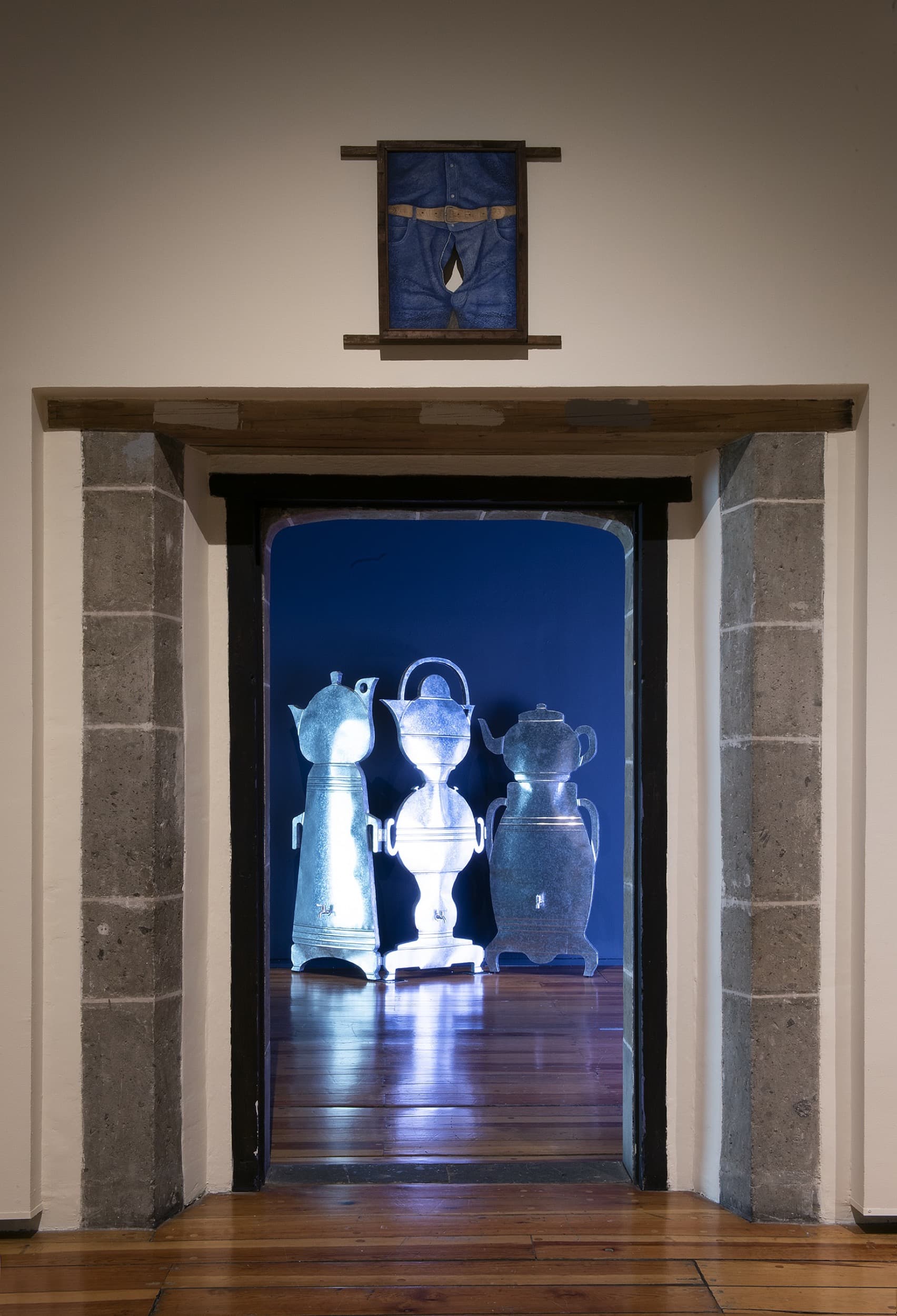
Slavs and Tartars, Samovar Paravent, 2025-26. Mixed media, variable size. Courtesy Columna Rota.

Throughout his career, Paul Sietsema has engaged with the conditions of image-making as historical and contemporary practice. He often uses wildly labor-intensive techniques, constructing intricate visual worlds. 
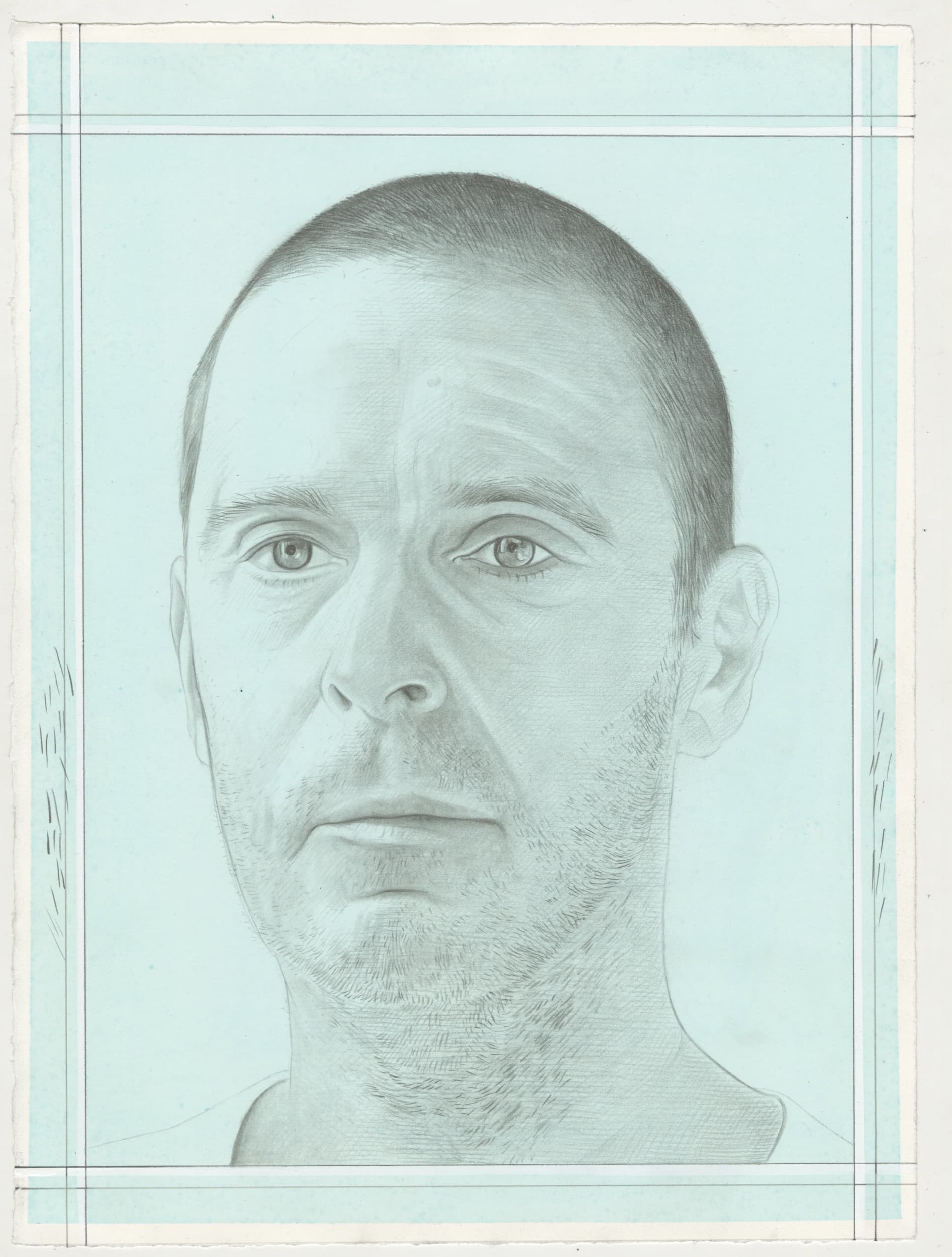
Portrait of Paul Sietsema, pencil on paper by Phong H. Bui.

#34 is Rebecca Morris’s first solo exhibition with Regen Projects, but as befits its numeric designation, the thirty-fourth of her career. In Los Angeles, Morris left the gallery without the walls that typically sub-divide it, her new works (all 2024–25) encircling what became a massive, light-suffused room.

Installation view: Rebecca Morris: #34, Regen Projects, Los Angeles, 2025. Courtesy Regen Projects. Photo: Flying Studio.

Young-Il Ahn: Selected Works 1986–2019, a tight historical survey curated by Jennifer King, (re)acquaints viewers with the gorgeous “Water” paintings for which he is best known. 

Young-Il Ahn, Water SQMW 19, 2019. Oil on canvas, 24 × 20 inches. Courtesy the Estate of Young-Il Ahn and Perrotin. Photo: Evan Bedford.

With a sense of first vague, then specific discomfit, it became clear to me that I had been hiding behind other people’s art. I made an alibi of that art. How presumptuous are the supposed competences that authorize us to interpret the art of others. I picked at the scab. Why the disciplinary fixation on the artist’s intentions—as meaning but also in the opacity of refusal—with comparably little attention paid to our own?

Edith Kramer, Wild Sunflowers in Bucket, 1990. 30 x 24 inches. Courtesy Suzanne Hudson.

In 1953, Jay DeFeo returned to Northern California after a year spent in Europe and North Africa. In a Berkeley studio on Delaware Street, she made a group of nine drawings of trees, characteristic pretexts for formal as well as material experimentation. The Laguna Art Museum owns two of these, prompting an occasion to bring the series back together.

Jay DeFeo, Untitled (Tree series), 1954. Tempera on paper, 15 1/4 × 11 3/4 inches. © 2024 The Jay DeFeo Foundation/Artists Rights Society (ARS), New York. Photo: Ben Blackwell.

On the occasion of the Aspen Art Museum’s forty-fifth anniversary, Allison Katz mounted a transhistorical group show with over a hundred works, inclusive of Katz’s own paintings and fresco fragments from Pompeii.

Allison Katz, Eruption, 2024. Acrylic on canvas, 62 5/8 x 56 3/4 x 1 3/8 inches. Courtesy the artist and Hauser & Wirth © Allison Katz. Photo: Eva Herzog.
Spread across Matthew Marks’s two sites, Sturtevant constellates painting, sculpture, drawing, and video work made by the artist between 1965 and 2004, each piece cherry-picked by the gallery.
Sturtevant, Nine Warhol Flowers, 1965/69. Synthetic polymer silkscreen and acrylic on 9 individual canvases in artist's frame, 66½ × 66½ inches. © Sturtevant Estate. Courtesy Matthew Marks Gallery.
We thus find ourselves in some kind of aftermath, looking ahead but without the consolation of being “after.” The texts and images we have assembled here are, nevertheless, retrospective, insofar as they build upon a project we co-curated in 2022 for the Brooklyn Rail’s New Social Environment, “Looking After: Conversations on Art and Healing.”3 We cultivated intimacies even while connecting virtually, at a distance; on these pages, we similarly embrace the candor of personal experience, and the heterogeneity of voice as a matter of positionality and also form.
Portraits of Tanya Sheehan (left) and Suzanne Hudson (right). Pencil on paper by Phong H. Bui.
Robert Ryman: 1961–1964 is a valentine. It follows a tightly focused 2022 hang of eight paintings, Ryman’s last, uptown (this latter exhibition was the artist’s first show at Zwirner, which announced representation of his estate in 2021), and coincides with a presentation of drawings in London. Curated by Dieter Schwarz, the Chelsea installation, as framed in the press materials, focuses on “a critical moment in Ryman’s development,” which “elucidate[s] many of the fundamental ideas that he would continue to explore throughout his prolific sixty-year career.”
Robert Ryman, Untitled, 1964. © 2023 Robert Ryman/Artists Rights Society (ARS), New York. Courtesy the artist and David Zwirner.
Woven Histories: Textiles and Modern Abstraction is the rare kind of exhibition that comes to feel irrevocable. Its claim is simple: textiles and modern abstraction need to be thought together. But the “and” of the title—a coordinating conjunction—acknowledges a holding relation not an equivalence between its terms.
Ruth Asawa, Untitled (S.027, Hanging, Six-and-a-Half Open Hyperbolic Shapes that Penetrate Each Other), 1954. Los Angeles County Museum of Art, gift of an anonymous donor and the 2018 Collectors Committee with additional funds from The Buddy Taub Foundation, Dennis A. Roach and Jill Roach, Directors, Artwork © 2021 Ruth Asawa Lanier, Inc., photo © Museum Associates/LACMA
For Two Angels, her recent show in Los Angeles, Hanna Hur installed twinned paintings on opposing walls, a pew cleaving but also conjoining the gallery at its midline like a wooden spine. In this, Hur’s installation redoubled the bilateral symmetry of each paired diptych; the panels form discrete mirrors rather than imprints of themselves, acknowledging the obdurately physical seams across which the geometries spread, contiguous but punctuated.
Hanna Hur, Angel ii, 2023. Flashe, color pencil and pigment on canvas over panel. Two panels: 80 x 76 inches each; 80 x 152 1/2 inches overall. Courtesy the artist and Kristina Kite, Los Angeles.
Born in 1934, Rose Wylie recalls in conversation and work alike an early childhood in India and wartime England, skies streaked with buzz bombs. As a teen in art school, Wylie studied figurative painting, a fact perhaps unsurprising given how her works teem with so much life.
Portrait of Rose Wylie. Pencil on paper by Phong H. Bui.
In what is a first for the space, Hollyhock House curator Abbey Chamberlain Brach has organized a site-specific intervention with paintings by Louise Bonnet nestling work into the home’s recesses and ceramics by Adam Silverman set on the dining room table and various plinths uncannily anticipating display.
Installation view: Entanglements: Louise Bonnet and Adam Silverman, Hollyhock House, Los Angeles, 2023. Photo: Joshua White.
Rail critic Suzanne Hudson examines the effects of time and place on two new exhibitions highlighting artists of the Bay Area.
Joan Brown, Self-Portrait, 1970. The Buck Collection. © Estate of Joan Brown. Photo courtesy the Jack and Shanaz Langson Institute and Museum of California Art.
These last works especially bait other kinds of readings, not least in their figuring of semiotic becoming: the shapes suggest a human form seen from behind against a monochrome or gradient ground, with the orb standing in for a head and its base then legible as shoulders.
Installation view: Robert Janitz at the Anahuacalli, 2022. Courtesy Museo Diego Rivera Anahuacalli, 2022.
Roger Cardinal coined the term “outsider” in 1972, using examples of European art, and specifically the work of psychiatric hospital patients collected by the artist Jean Dubuffet under the heading of Art Brut.
On Being Sane
Richard Shiff ends his essay, “Reality By Chance” (2014), on a proposition that concerns precariousness, understood rather more felicitously as the necessary condition for luck’s possible attainment
New approaches to writing are everywhere in evidence across the contemporary art world. In Los Angeles, home of East of Borneo, X–TRA, Les Figues Press, MATERIAL, and the Journal of Aesthetics and Protest, to name a few venues where art meets writing, critical and discursive engagement with art and art writing is especially pronounced.
Portrait of Suzanne Hudson. Pencil on paper by Phong Bui.
In 1967, Agnes Martin left New York City, where she had been living for a decade. She traveled for two years in Canada and the American West before settling on a remote New Mexican mesa, building a house by hand, and living in relative isolation for the remainder of her years.

Close

Home