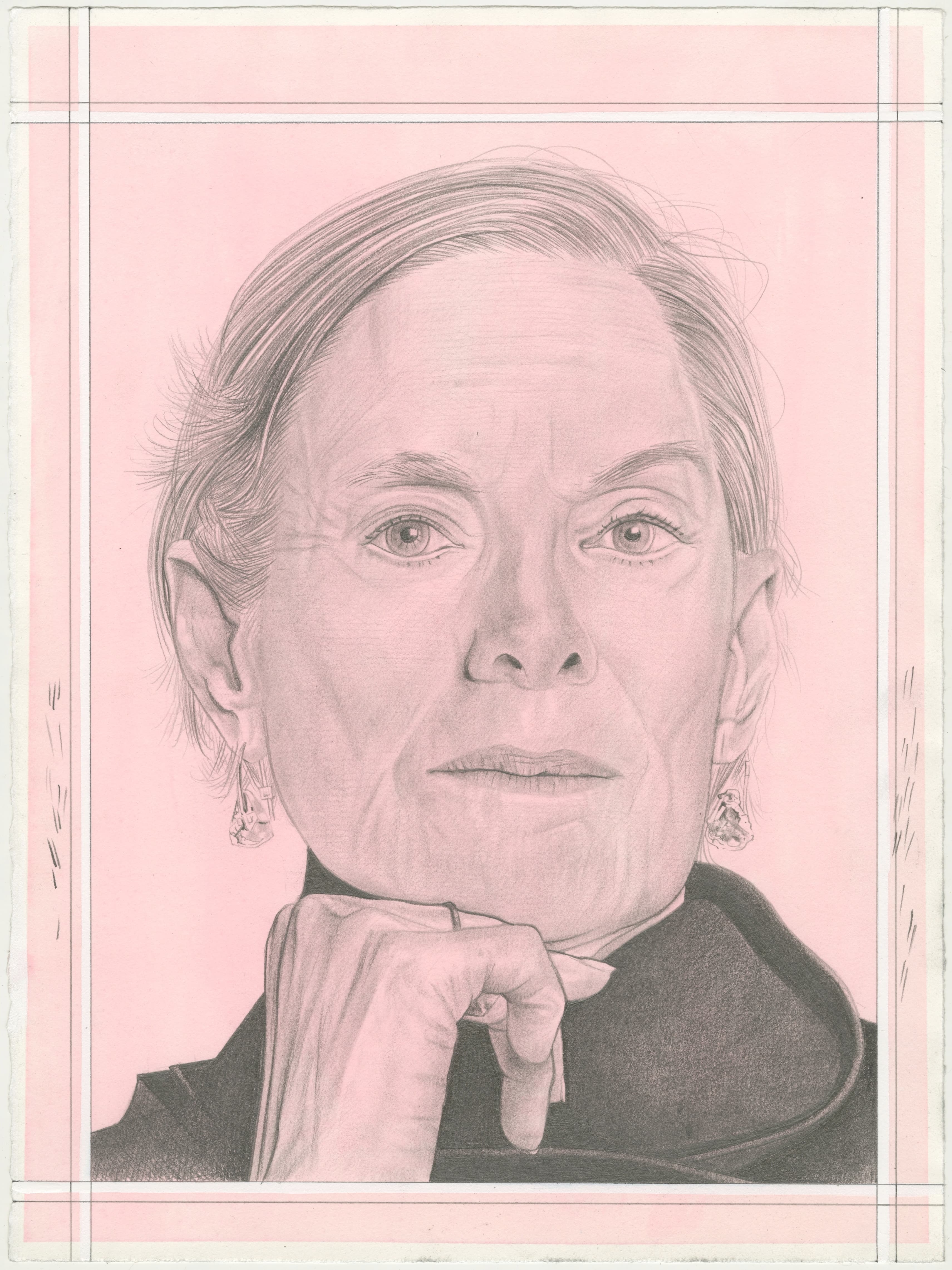
Susan Yung

Susan Yung is based in the Hudson Valley and writes about dance and the arts.

At a time when you can’t email without getting an annoying pop-up offering AI help, be it with writing or summarizing content, Jon Kinzel’s Hudson Terminus mercifully transports us back to a more analog time.

Jon Kinzel and Fabio Tavares. Photo: Adam Netsky.

Sara Mearns, a principal with New York City Ballet, happens to be one of the finest ballerinas of our time. Her every moment onstage pushes the art’s standards and adds underlying depth to even abstract dances. This passion can lead a viewer to doubt her ability to safely complete a difficult passage—will she fall? How can she stay upright?—but by jove, she does it.

Sara Mearns’s Don’t Go Home, New York City Center, 2025. Photo: Julieta Cervantes.

When describing Ruri Mito’s ensemble work Where we were born, I reach for words more commonly used in nature documentaries than dance criticism, such as: oozing, slithering, roiling, and tectonically shifting. This shares a bill with the solo Matou, performed by Mito, which evokes terms such as rock formation, contortion, and hypercontrol.

Ruri Mito in Matou. Photo: Steven Taylor.

Adrienne Edwards curated the Whitney Museum’s exhibition, Edges of Ailey, an immersive installation of ephemera, video, and visual art occupying the museum’s entire fifth floor. In honor of the choreographer’s legacy, the exhibition also features periodic live performances by contemporary dance artists. The Rail’s Susan Yung spoke to Edwards after the exhibition opened.

Adrienne Edwards. Photo: Bryan Derballa.

Since 1933, when founder Ted Shawn and his Men Dancers gave “Tea Lecture Demonstrations,” the summer festival at Jacob’s Pillow has been one of dance’s finest flagships. The 2024 season proved again how this Berkshires oasis thrives even in the wake of the pandemic, and despite the Doris Duke Theatre burning down in 2020.

Camille A. Brown and dancers in I AM, Jacob’s Pillow Dance Festival, 2024. Photo: Becca Marcela Oviatt.
The superb skill of NYCB’s current roster sparkled in premieres by Amy Hall Garner and Justin Peck. The rapid-fire phrasing and bold grand allegro moves felt nearly like an overabundance, although just two dancers—Tiler Peck and Roman Mejia—performed Peck’s Dig the Say, tempering this kinetic bounty. The new works offer lively entries into the repertory, now accreting steadily around the core of Balanchine and Robbins.
Tiler Peck and Roman Mejia in Justin Peck's Dig the Say. Photo: Erin Baiano
Dance Theatre of Harlem, under new Artistic Director Robert Garland, is definitely looking toward the future. The question, though, is how does it remain connected to twentieth-century icons such as George Balanchine while moving forward?
Dance Theatre of Harlem company artist Alexandra Hutchinson in Blake Works IV (The Barre Project). Photo: Theik Smith.
If the pandemic gave us one thing, it might be a reminder to deeply appreciate every in-person gathering. This struck me while watching Jean Butler’s What We Hold, which unites a varied cast of all ages, skilled in a range of dance genres (but all in Irish step on some level).
Jean Butler, Kaitlyn Sardin, and Maren Shanks in Jean Butler's What We Hold, 2024. Photo: Nir Arieli.
In CENTURY, Garner on occasion blends in subtle African dance threads and ballet. In the adrenalized first scene, the dancers wear character/jazz shoes and comport themselves as if in a cabaret, swanning across the stage, long legs scissoring. A fireman carries a woman, who extends one leg like a steeple.
Chalvar Monteiro and Jacquelin Harris in Amy Hall Garner's CENTURY, 2023. Photo: Paul Kolnik.
How do you discover a meaningful purpose in life when it’s not obvious or logical? Michael Keegan-Dolan’s autobiographical dance-theater work, How to Be a Dancer in 72,000 Easy Lessons, traces his labyrinthine route to becoming the artistic director and choreographer of Teaċ Daṁsa, a troupe based in West Kerry Gaeltacht, Ireland. By the show’s end, it’s still not clear exactly how he reached his current level of accomplishment, but he lays out milestones that might have rebuffed him had they not served to fortify his unlikely ambition.
Rachel Poirier and Michael Keegan Dolan in How to Become a Dancer in 72,000 Easy Lessons, 2023. Photo: Teddy Wolff.
If a ballet is remounted eighty-five years later with new choreography, music, costumes, and (obviously) a new cast, but in the same basic setting, is it a revival, or an entirely new production? Matthew Lutz-Kinoy’s Filling Station raised that question in two performances at the Mobil on 8th Avenue and Horatio Street in Greenwich Village, presented by The Kitchen. With his collaborators, Lutz-Kinoy created a new entity connected only by title and rough structure to the 1938 ballet by the same name choreographed by Lew Christensen, with libretto by Virgil Thomson.
Kris Lee in Matthew Lutz-Kinoy's Filling Station, Mobil gas station, 8th Avenue and  Horatio Street, New York, September 15, 2023. Photo: Walter Wlodarcyzk.
The two writers discuss Harss’s forthcoming biography The Boy from Kyiv: Alexei Ratmansky’s Life in Ballet.
Alexei Ratmansky in The Specter of the Rose in 1991, in a photo on Lia Fisenko's coffee table. Photo: Marina Harss.
Christopher Wheeldon enlivens the entire stage when given the chance, as he does in spades with ABT’s Like Water for Chocolate, a grand, new co-production with the Royal Ballet.
Christopher Wheeldon, Like Water for Chocolate, American Ballet Theatre, 2023. Pictured: Catherine Hurlin with company. Photo: Marty Sohl.
Mark Mann captures the complexity of dancers in photos comprising the book Movement at the Still Point: An Ode to Dance
Catherine Hurlin. Photo: Mark Mann.
Engrossing, mysterious characters inhabit Beth Gill’s Nail Biter
Maggie Cloud in Beth Gill's Nail Biter. Photo: Maria Baranova.
Rail Contributor Susan Yung examines two new performances from the New York City Ballet.
Justin Peck, Copland Dance Episodes, 2023. Photo: © 2023 Erin Baiano.
The eight dancers spend most of the hour-long work moving together in lockstep, or in small orbiting groups. When dancers break apart from the cluster, others rush to join them, or assist when another falters.
Vertigo Dance Company at Baryshnikov Art Center. Photo: © Maria Baranova 2023
LOVETRAIN2020 looked like a lot of fun to dance. Emanuel Gat choreographed the work to songs by 1980s British band Tears For Fears (Roland Orzabal and Curt Smith).
LOVETRAIN2020, Brooklyn Academy of Music, 2022. Photo: Ed Lefkowicz.
Kyle Abraham and Jlin shake up Mozart’s mass
A.I.M by Kyle Abraham, ensemble (Gianna Theodore, Catherine Kirk, Donovan Reed, Claude "CJ" Johnson, Dymon Samara, Keerati Jinakunwiphat, Rakeem Hardy, Tamisha A. Guy. Photo: Erin Baiano.
Khan’s production picks snippets from Giselle’s original score, and adds all new choreography. Happily, the English National Ballet’s is a new version of a ballet that delivers emotional punch on par with the original.
English National Ballet's Giselle at BAM. Photo: Julieta Cervantes.
Hudson Hall, built in the 1850s as Hudson’s first city hall, was designed to function as a Columbia County gathering place, with a post office, bank, lecture hall, and gallery. It continues to draw the public, albeit with performances in its splendid hall, recently renovated to incorporate modern amenities such as a/c and an elevator. With a flexible, gymnasium-like floor plus a raised proscenium stage, it hosts forward-looking events which eschew traditional models.
Nearly Stationary, Hudson Hall. Photo: Johannes Courtens.
New York City Ballet placed Jamar Roberts’s premiere, Emanon – In Two Movements, on a program with works by Pam Tanowitz and Kyle Abraham. The context signifies the prominence that Roberts’s choreography has assumed of late, sharing the marquee with two dance makers who are deservedly busy with external commissions and their own stellar companies.
Emma Von Enck and Jovani Furlan. Photo: Erin Baiano.
At the New York City Ballet Fall Fashion Gala, choreographers Sidra Bell and Andrea Miller produced very different works, each possessing moments of interest, but ultimately falling short on choreographic invention.
Sidra Bel’s SUSPENDED ANIMATION. Photo: Erin Baiano.
The current iteration of Paul Taylor Dance Company prominently displayed the change in personnel, seen recently in the bijoux box of the Mahaiwe Theater. Flash back to the company’s last big season in fall 2019 at the Koch Theater, when the wholesale company turnover was already underway in the wake of Michael Trusnovec’s summer farewell during the Bach Festival at Manhattan School of Music.
Alex Clayton and Madelyn Ho in A Field of Grass at Mahaiwe Performing Arts Center. Photo: Ron Thiele.
Dorrance Dance, Mark Morris Dance Group, and ABT performed with and against nature at the Kaatsbaan Spring Festival.
Mark Morris Dance Group at Kaatsbaan Spring Festival, 2021. Photo: Holly Harkin
The all-Ratmansky program leading up to this premiere displayed ABT’s breadth, but also a conundrum—how to remain relevant while keeping the old classics fresh?
Patrick Frenette, Skylar Brandt, and Tyler Maloney in Bernstein in a Bubble. Photo: Christopher Duggan.
The Joyce Theater remounted Molissa Fenley’s landmark solo, State of Darkness to Stravinsky’s The Rite of Spring. Fenley and Joyce Executive Director, Linda Shelton, spoke with Susan Yung about the origins of the piece and staging the demanding choreography in the pandemic.
Cassandra Trenary in State of Darkness, 2020. Photo: Art Davison.
A lot of the time I start with a new phrase, movement, or idea, but I’ll also bring along old material that feels interesting, that could be worked on more, or failed in another piece but I want to bring it forward, because part of the nature of a project-based company is that we don’t have a repertory to rehearse. That always inspires me. We’re not like Mark Morris Dance Group, working on a new piece in the morning, and rehearsing old pieces in the afternoon. What we’re working on is what we’re working on.
Backstage during Bartók Ballet by New York City Ballet. Photo: Nina Westerveldt.
Robbins’ contributions and choreography in the original versions will forever be treasured, but De Keersmaeker has provided powerful, contemporary new dances that shine.
The cast of West Side Story. Photo: Jan Versweyveld
Can medieval art find a niche in the contemporary art world? Gothic Spirit: Medieval Art from Europe organized by London dealer Sam Fogg and now on view at Luhring Augustine embraces this question.
A Standing Virgin, Meuse Valley, c. 1150. Courtesy Luhring Augustine and Sam Fogg.
David Byrne’s American Utopia, on Broadway, is a jukebox musical, yes, but it upends the genre. It’s at once brilliantly simple and subversively revolutionary, kind of like Byrne himself.
American Utopia. Left to right: Daniel Freedman, Bobby Wooten III, Chris Giarmo, David Byrne, Tendayi Kuumba, Angie Swan, Stéphane San Juan, and Karl Mansfield. Photo: Matthew Murphy © 2019.
ABT continues on its path to becoming Alexei Ratmansky’s company.
Misty Copeland and Cory Stearns in Jane Eyre. Credit: Gene Schiavone
Pam Tanowitz has been making compelling dances since 2002, and yet has been passed over until just recently for choice commissions. Now, we can finally stop wondering: why isn’t Tanowitz asked to create work for major companies?
New York City Ballet in the premiere of Pam Tanowitz's Bartók Ballet. Photo: Erin Baiano.
In The Realest MC, the hot button topics of gender expression, assimilation, bullying, and appropriation simmer with the threat of boiling over every now and then. The takeaway is powerful—provocative ideas that linger in the mind long after the show ends.
A.I.M. Live! The Realest MC: Matthew Baker, Claude CJ Johnson, Jeremy Jae Neal Credit: Julien Benhamou
The contents of Lincoln Kirstein's Modern sprawls over a lifetime, with work reflecting Kirstein's myriad interests and varying levels of involvement with cultural institutions. Curators Jodi Hauptman (Senior Curator) and Samantha Friedman (Associate Curator, Department of Drawings and Prints) dissected Kirstein's career and laid out a panoply of artifacts as graphic evidence of his many obsessions.
Paul Cadmus (American, 1904-1999), Ballet Positions, drawing for the primer Ballet Alphabet, 1939. Ink, pencil, colored ink, and gouache on paper, 13 x 8 inches. The Museum of Modern Art, New York. Gift of Lincoln Kirstein © 2019. Estate of Paul Cadmus
After many months under an interim leadership team of dancers who replaced the ousted Peter Martins, the company announced that Wendy Whelan, who retired from the company in 2014 after 30 years, will be associate artistic director, and ex-principal Jonathan Stafford—who had become the de facto leader—will be artistic director.
Taylor Stanley with Tiler Peck, Indiana Woodward, and Brittany Pollack in George Balanchine's Apollo. Photo: Erin Baiano.
New narrative dance productions—as opposed to abstract or “pure dance”—exist in a kind of netherworld these days.
James Whiteside with Cassandra Trenary. Photo by Ian Douglas
ohn Jasperse kicked off the 2018 Quadrille, a series curated by Lar Lubovich in which a temporary square platform bridges the front of the regular Joyce stage and some front orchestra seats; viewers sit onstage on risers and in standard rear house seats.
Beth Gill. Photo: Maria Baranova
With this summer’s dearth of other large venue dance at Lincoln Center, and Morris’s consistency with Mozart festival appearances, suddenly the “enfant terrible” has assumed the role of grand poobah of summer dance at the cultural center.
Mark Morris Dance Group | The Trout. Photo: Stephanie Berger
American Ballet Theatre (ABT) took a gamble on commissioning tap choreographer Michelle Dorrance to create a pièce d’occasion for its 2018 Spring Gala. The wisdom of the choice became apparent in the first moment, when three women struck the floor, one-two-three, with their spotlit pointe shoe toes. How ingenious, and in retrospect natural, to use the toe shoe as a percussion instrument, rather than denying its proclivity to thump and clack with each step—something all ballerinas are trained to avoid. Dorrance allows ballerinas to embrace their physical selves, tethered to earth by gravity just like the rest of us. Her use of tap is not just percussion; it’s overturning a whole aesthetic and artistic dogma
Catherine Hurlin and Patrick Frenette. Choreography by Michelle Dorrance. Photo: Julia Cervantes
Modern dance choreographers have been planning for their legacies in various ways. Some have chosen to disband their companies; others have, at times with the help of their boards, chosen successors. Michael Novak, a distinguished dancer with Paul Taylor Dance Company since 2010, was recently named Artistic Director Designate of the Paul Taylor Dance Foundation. I sat down with him at the Foundation headquarters in lower Manhattan.
Michael Novak in Concertiana. Photo: Paul B. Goode
In Carousel, the stage is often crammed with props such as wooden pallets, lobster pots, and clambake detritus, leaving little space for the dancers. But Peck guides the action vertically by inserting jumps and spins; arms and legs make variegated shapes to add visual interest.
Amar Ramasar and the company of Carousel. Photo: Julieta Cervantes
Jane Comfort and Company’s 40th Anniversary Retrospective demonstrated how the choreographer’s work engages with audiences, while proving its wide-range and resistance to definition.
Heather Christian & David Neumann in Faith Healing. Photo: Robert Altman
New York City Ballet, as an organization, currently exists in a state of suspended animation between the resignation artistic director Peter Martins—accused of emotional and physical abuse of the dancers and cleared by a perhaps less than impartial arbiter—and the appointment of a successor, for whom the search is underway.
Lauren King and Company in Peter Walker’s dance odyssey. Photo: Paul Kolnik
When Mark Morris has the opportunity to choreograph on a large scale, he has historically created some monumental pieces—L’Allegro, il Penseroso ed il Moderato; Grand Duo; The Hard Nut; and Mozart Dances, to name a few.
Mark Morris Dance, Layla and Majnun, Berkeley 2016. (Photo: Susana Millman)
Fall for Dance has been evolving since its inception in 2004, for better or worse becoming a somewhat more serious affair and less of a dance rave.
Honji Wang and Sara Mearns in No. 1. Photo by Stephanie Berger.
Implied in Crossing the Line Festival’s title are several possible interpretations of the phrase—crossing borders, boundaries of the known, even perhaps going too far.
Faustin Linyekula's Banataba at The Metropolitan Musuem of Art. Credit: Stephanie Berger.
George Balanchine’s Jewels (1967) is in the repertory of many of the world’s renowned ballet companies, and the 2017 Lincoln Center Festival presented the iconic work with three of the best troupes, each performing one section.
New York City Ballet's Sara Mearns and Tyler Angle in Diamonds from George Balanchine's Jewels (Photo credit: Paul Kolnik).
Classical ballet is in ascendance, and it’s growing more diverse. Nearly a decade ago the life of classical ballet was in question.
Stella Abrera and David Hallberg in Whipped Cream. (Photo credit: Gene Schiavone)
Generating new movement ideas is difficult for choreographers, particularly when creating full-length dances. It’s so challenging that most of the big ballet companies continue to rely on narrative staples from centuries ago.
Titicut Follies. Photo: Ian Douglas.
The annual three-week Paul Taylor American Modern Dance season is always an impressive physical and mental tour de force for the company. Perennial questions anticipate the run: what premieres will Taylor present and how will they fit into his oeuvre?
Michael Novak in The Open Door. Photo: Paul B. Goode.
The rapid artistic evolution of Justin Peck continues to speed forward. His recent New York City Ballet (NYCB) premiere of The Times Are Racing may harken the pioneering sneaker dances of Jerome Robbins, which are playful, street-wise, and express the pleasures and angst of adolescence.
Justin Peck and Robert Fairchild in Peck's The Times Are Racing. Photo: Paul Kolnik.
Dance can be rewarding for its simple humanity and kineticism, particularly in the hands (and feet, and legs, and torsos) of accomplished companies like the Alvin Ailey American Dance Theater, which had its annual month-long run in December.
Alvin Ailey American Dance Theater in Kyle Abraham’s Untitled America. Photo: Paul Kolnik.
It’s been a surprisingly good year for female ballet choreographers. It could be a side effect of the political climate, or simply numbers—that half the population just might be able to create noteworthy dances as well as the other half, given the chance. In any case, American Ballet Theatre (ABT) commissioned Jessica Lang to create Her Notes, which had its world premiere in the company’s brief fall Koch Theater season.
Stella Abrera and Cory Stearns in “Daphnis and Chloe.” Photo: Rosalie O'Connor.
New York City Ballet (NYCB)’s recent tradition of holding a fall fashion gala has evolved from a somewhat crass leveraging of the influential world of haute couture into a fuller consideration of the conceptual possibilities of fashion as explored through dance. In the recent gala, this shift was brought into high relief by the juxtaposition of the season’s most interesting premiere—Unframed, by Annabelle Lopez Ochoa, with costumes by Rosie Assoulin—with a section from Bal de Couture by Peter Martins, costumed by Valentino, from the first fashion gala in 2012.
New York City Ballet in Annabelle Lopez Ochoa's "Unframed." Photo: Paul Kolnik.
Mozart Dances (2006) is one of Mark Morris’s grandest and most pleasurable artistic achievements. This evening-length work in three sections elucidates the prominent themes in Mozart’s compositions with choreography that holds its own when paired with the music that has intimidated many choreographers.
Mark Morris Dance Group in Mozart Dances by Mark Morris. Photo: Richard Termine.
Good news: the L.A. Dance Project (LADP) is back at full strength, with artistic director Benjamin Millepied able to refocus on the company now that he has left his post at the Paris Opera Ballet.
LA Dance Project dancer Stephanie Amurao in On the Other Side by Benjamin Millepied. Photo: Laurence Phillipe.
There’s a quiet revolution underway at ABT—in its spring season, an impressive half of the repertory is by Alexei Ratmansky. The latest addition is The Golden Cockerel, a full-length spectacle originally created in 2012 for the Royal Danish Ballet, which loaned the lavish costumes and scenery by Richard Hudson (based on early 20th-century designs by Natalia Goncharova).
The Golden Cockerel. Photo: Rosalie O'Connor.
The Mark Morris Dance Group presented two New York premieres as a part of its spring season. Alongside two older pieces, the repertoire showed the range of Morris’s smaller-scale concert performance choreography, encompassing rituals and formalism both ornate and more classical in nature.
Mark Morris's A Forest. Photo: Ani Collier.
Miami City Ballet brings challenging repertory to the Koch Theater stage, a run that includes George Balanchine, Twyla Tharp, Alexei Ratmansky, Justin Peck, and Liam Scarlett, with accompaniment by the New York City Ballet Orchestra (helmed by Gary Sheldon).
Heatscape by Justin Peck. Credit: Gene Schiavone.
It takes a classic ballet with good bones, like Swan Lake, to withstand centuries of interpretations. Tchaikovsky’s timeless score is often the binding agent among variations, and the key dances by Petipa/Ivanov—the pas de deux, the quartet—often remain intact.
Dada Masilo�s Swan Lake. Photo: John Hogg.
In this era of crowd-sourcing, a sharing economy, and a Socialist garnering widespread support as a presidential candidate, BalletCollective makes sense. This ballet troupe is not leaderless—Troy Schumacher is the director and choreographer, and Ellis Ludwig-Leone is composer and music director.
Ashley Laracey, Harrison Coll. Photo: Matthew Murphy.
“On the brink of the end of paper, I was attracted to the idea of a book that can’t forget it has a body,” Jonathan Safran Foer said in a New York Times interview about his art book, Tree of Codes, the inspiration for the dance theater collaboration recently presented at the Park Avenue Armory. Foer’s book reduces and remakes Bruno Schulz’s The Street of Crocodiles (Tree of Codes is a trimmed version of the title) by literally excising words, leaving gaps, and transforming the text’s meaning.
Tree of Codes at Park Avenue Armory. Photo: Stephanie Berger.
Looking at the work of John McDevitt King, the word perfection—or some attempt to achieve it—stubbornly recurs. In the graphite fields of shading that precisely describe volume and light, and yet retain the warmth of the human touch.
John McDevitt King. "From There to Here," 2009. 24" x 36", graphite and colored pencil on paper.
Belgian Sidi Larbi Cherkaoui has choreographed Orbo Novo for Cedar Lake Contemporary Ballet, to be performed at the Joyce Theater from Oct 20-25.
Sidi Larbi Cherkaoui during a rehearsal for Orbo Novo. Photo from www.rantingdetails.com.
Mikhail Baryshnikov has become such a familiar presence in New York’s cultural world that it’s easy to take him for granted.
Book Review: Merce My Way, Photographs by Mikhail Baryshnikov
With spring’s overdue arrival comes the promise of viewing things with fresh eyes.
Reading Dance/Pantheon Books.
Doug Varone founded his New York-based company, Doug Varone and Dancers, in 1986. In addition to choreographing for his own company, which has toured the world, he has directed and choreographed opera, theater, and musical theater. Doug Varone and Dancers will perform at the Joyce Theater from February 24 through March 1.
Doug Varone. Photo by Cylla von Tiedemann.
Trisha Brown Dance Company performs at the Joyce Theater Feb 5 – 10 in a program featuring I love my robots (2007), If you couldn’t see me (1994), and Foray Forêt (1980). Susan Yung recently spoke with Trisha Brown in her Soho loft.
Photo of Trisha Brown by Vincent Pereira.
In this modern world, we conduct our lives through a surprising amount of mediation and simulacrum. We rely on computers for most basic information—time, outside temperature, current headlines.
Ohad Naharin, artistic director of Batsheva Dance Company based in Tel Aviv, was recently in residence at Cedar Lake Contemporary Ballet’s Chelsea studio teaching a training method he developed called “gaga.”
Ohad Naharin rehearsing Cedar Lake Contemporary Ballet company. Photograph by Paul B. Goode.
Michael Trusnovec joined the Paul Taylor Dance Company in 1998, and won a 2006 Bessie Award for his body of work with the company. In the Paul Taylor Dance Company’s March 2007 season at City Center, 32-year-old Trusnovec can be seen in 13 of 18 dances
Photo by Lois Greenfield
What July/October activity in New York takes you on a three-hour sojourn filled with twists and turns, heroes, villains, and colorful minor characters, leading to either triumph or heartbreak?
Of modern dance’s pioneering choreographers, precious few are represented in extant companies.
Michael Trusnovec in Paul Taylor's Banquet of Vultures.

Close

Home