Michael Auping

Michael Auping has been a curator of contemporary art for close to fifty years. He has worked with some of the most important artists of our time, including Lucian Freud, Jenny Holzer, Agnes Martin, Bruce Nauman, Susan Rothenberg, Ed Ruscha and Frank Stella.

On the occasion of Anselm Kiefer’s recent survey at the Saint Louis Art Museum and site-specific installation of monumental paintings in the museum’s 1904 Cass Gilbert-designed grand hall, Michael Auping visited the museum and spoke to Kiefer about the artist's history with the St. Louis museum, the significance of the Rhine river to his oeuvre, and what it means to be an artist “exploring his context and time.”
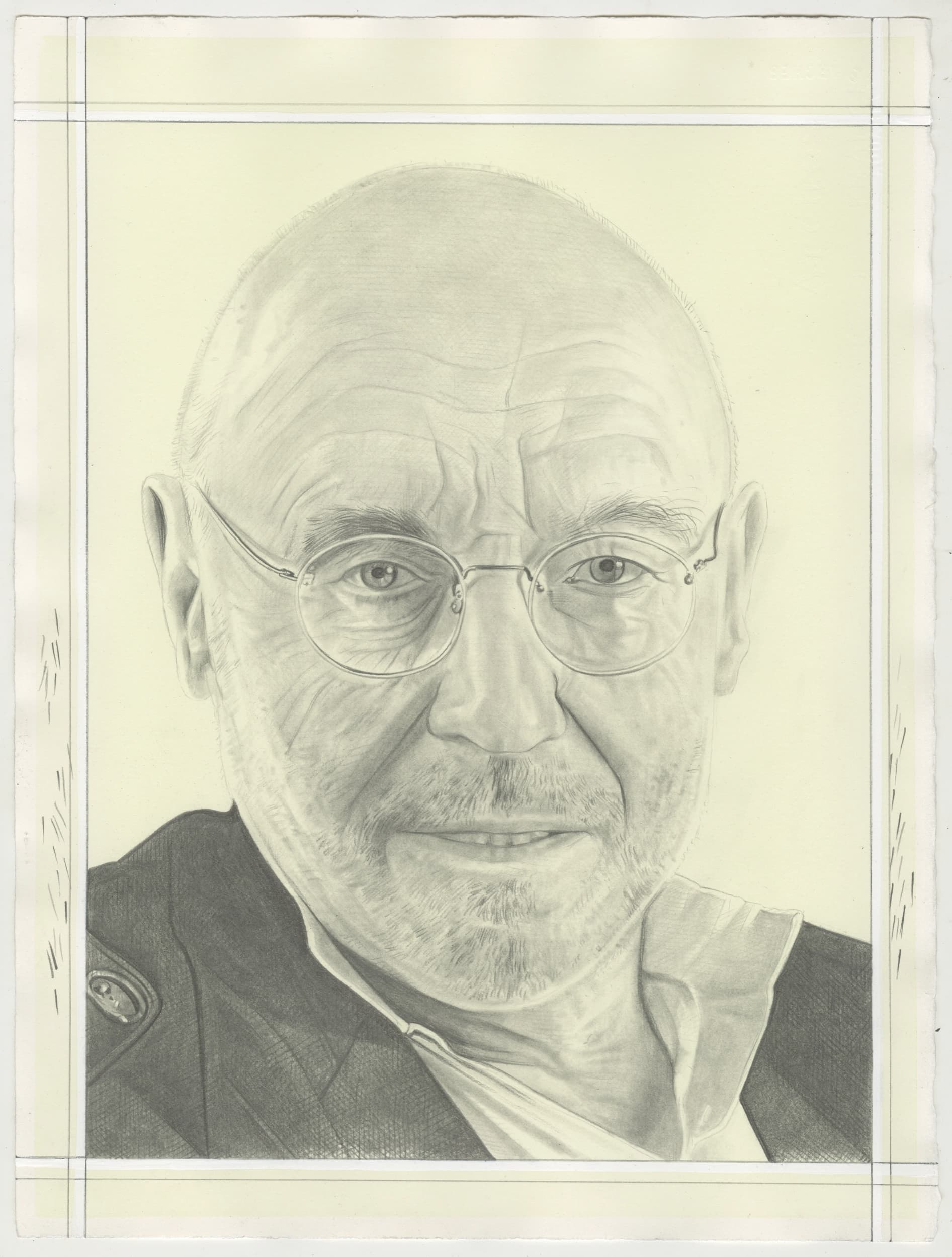
Portrait of Anselm Kiefer, pencil on paper by Phong H. Bui.

On the occasion of Bruce Nauman’s exhibition, Begin Again, the artist spoke with Michael Auping about his new work. Apropos the show’s title, their conversation covered not only the present, but aspects of the artist’s early life and career. Along the way, details and connections enlighten how art and life are intimately woven together in Nauman’s process. His feelings about Rothenberg’s passing are also touched on in a discussion of a series of unusual drawings he made after her death. All in all, it is a wide-ranging and unusually personal interview with the artist.
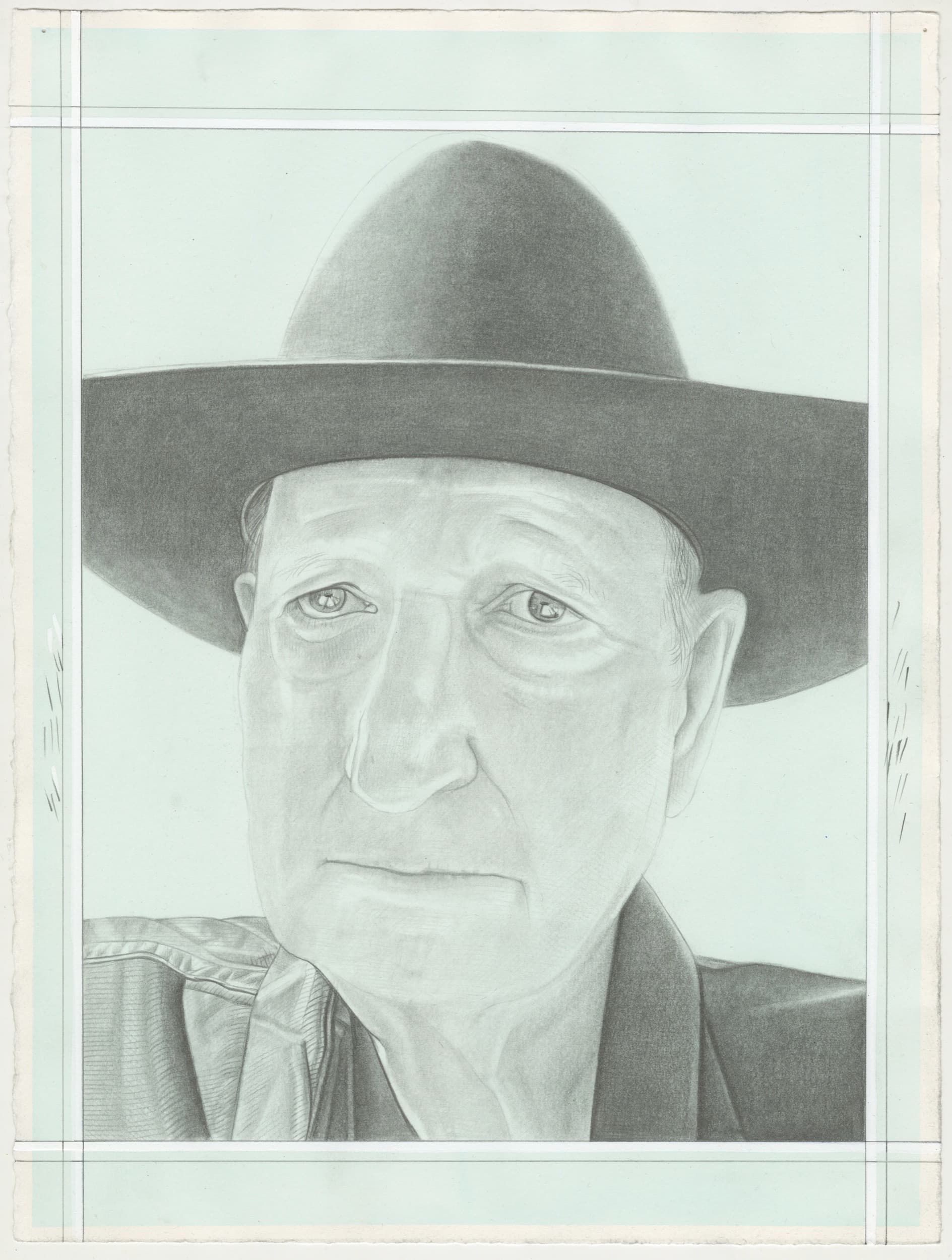
Portrait of Bruce Nauman. Pencil on paper by Phong H. Bui.

It’s easy to think of Richard Serra as a hard-ass with a good education, pushing his radical and strident ideas forward, using an industrial material that weighed tons. A cross between Brancusi and a longshoreman. However, if you were fortunate, or knew him long enough, you could get glimpses of his soft side.

Portrait of Richard Serra, pencil on paper by Phong H. Bui
The Guest Critic is charged with suggesting a topic or theme that can be explored and debated for this special section of the Rail. On the occasion of the re-staging of Jenny Holzer’s 1989, architecturally encompassing piece at the Guggenheim, I have chosen the theme of site-specific Art. To my mind, Holzer’s Guggenheim project is one of the great site-specific works of my generation. It is also part of a larger history that has grown in some very interesting ways.
Portrait of Michael Auping. Pencil on paper by Phong H. Bui.
It has been thirty-five years since Jenny Holzer lit up the Guggenheim Museum with a blazing electronic line of LED messages that curled around the interior of Frank Lloyd Wright’s iconic spiral. For many of us who saw it at the time, it is remembered as one of the most spectacular and insightful site-specific installations of the 1980s. For those who have only seen it reproduced in books or magazines, the opportunity to have a physical encounter with Holzer’s installation is a gift. The work is a transformational intervention of Wright’s famous—and famously difficult—building.
Jenny Holzer, Untitled (Selections from Truisms, Inflammatory Essays, The Living Series, The Survival Series, Under a Rock, Laments, and Child Text), 1989. Extended helical tricolor LED signboard, site-specific dimensions. Solomon R. Guggenheim Museum, New York, Partial gift of the artist, 1989; gift, Jay Chiat, 1995; and purchased with funds contributed by the International Director's Council and Executive Members, 89.3626. Artwork © 1989, Jenny Holzer, member Artists Rights Society (ARS) NY. Photo: David Heald, © 1989 Solomon R. Guggenheim Foundation, New York.
What triggered this piece were the mice. We had a big influx of field mice that summer, in the house and in the studio. They were everywhere and impossible to get rid of. They were so plentiful even the cat was getting bored with them.
Bruce Nauman, MAPPING THE STUDIO II with color shift, flip, flop,& flip/flop (Fat Chance John Cage), 2001. Video, 7 projections, color, sound. 5 hours 45 minutes. dimensions variable. Purchased jointly by Tate, London with funds provided by the American Fund for the Tate Gallery; CentrePompidou, Musée national d'art moderne, Paris withthe support of Mr. and Mrs. William S. Fisher FamilyFoundation and the Georges Pompidou CultureFoundation; and Kunstmuseum Basel, 2004. © 2024 Bruce Nauman / Artists Rights Society (ARS), courtesy Sperone Westwater, New York

Close

Home