Word count: 1212
Paragraphs: 11
In 1990, I had the opportunity to work on a book project with Miles Davis. During the weeks leading up to my first interview with him, I gave myself the exhilarating task of immersing myself in his music. I figured I’d start with the early recordings and work my way forward, but I never made it out of the 1950s. Those ten years of his musical development are so unfathomably rich—he recorded close to thirty albums during that period, many incomparable—that a listener could cycle through the decade seemingly forever and keep finding new angles, colors, and avenues for exploration.
Miles was a phenomenon right from the time of his arrival in New York. In 1944, he left East St. Louis to attend Juilliard and pursue Charlie Parker, before abandoning school to perform on 52nd Street and in Harlem. He was still a teenager when he began playing with Parker, Coleman Hawkins, Thelonious Monk, and other giants. Miles joined Billy Eckstine’s big band in 1946 and Dizzy Gillespie’s in 1947, then turned down the opportunity to join Duke Ellington’s orchestra, probably the most prestigious in jazz, the following year. He had already linked up with arranger Gil Evans and was working on the ideas that would lead to the Birth of the Cool recordings, their unusual voicings, focus on counterpoint, and subdued style a major shift from the bebop that had first drawn him in. He was quickly emerging as a major force in the development of American music.
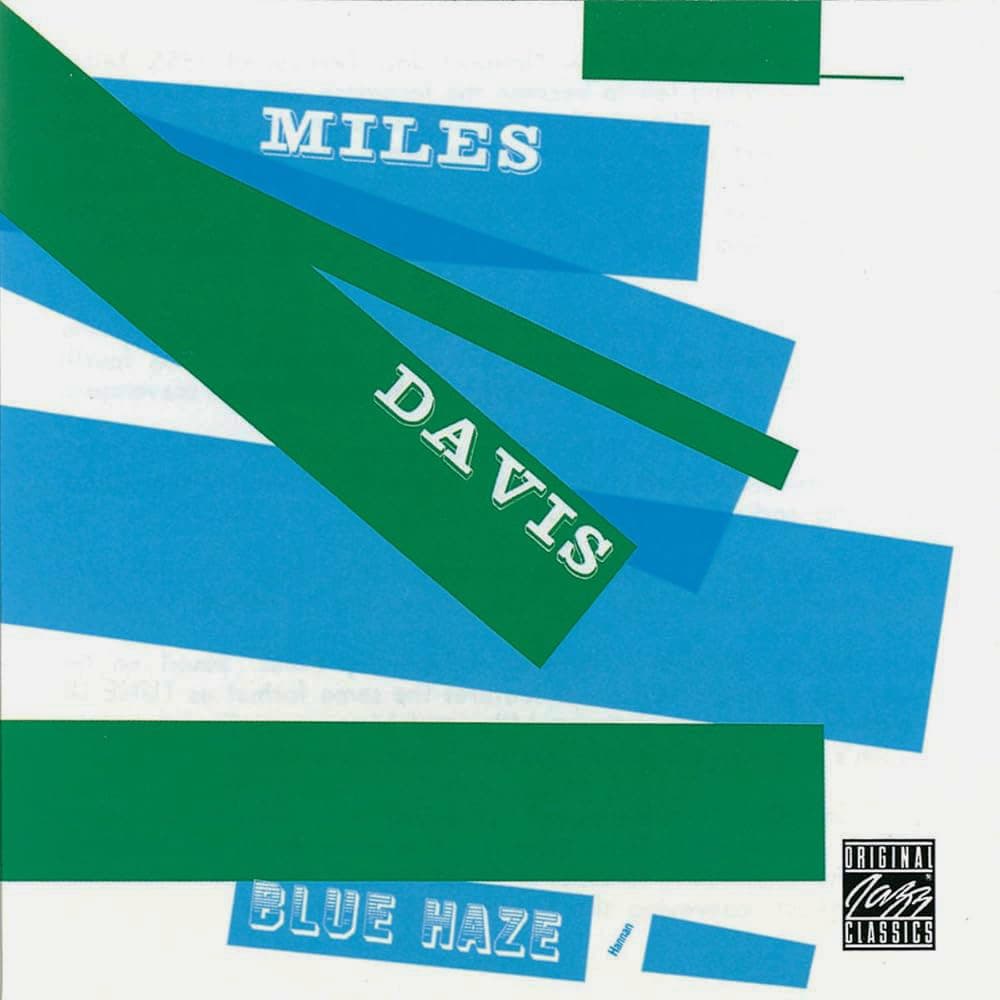
Yet at the dawn of the 1950s, Miles was also in a very dangerous state. The addiction issues that had afflicted Parker were now plaguing him. He was twenty-three years old, with a young daughter and son, when he was arrested for heroin possession. He drifted for a few years, living in Detroit and playing selected studio dates, but not keeping a band together. Yet he still managed to make brilliant recordings during this time. One of my favorites is Blue Haze on Prestige, a compendium of sessions from 1953 and 1954 with several fantastic side players, with Horace Silver and Art Blakey featuring on some tracks, John Lewis and Max Roach on others. This is where the master melodist begins to emerge, with his take on standards like “When Lights Are Low” attaining a newfound gravity.
It wasn’t until the mid-fifties, after managing to quit his habit, that Miles fully returned to the scene. To regain a sense of discipline, he took up boxing, emulating Sugar Ray Robinson. When he played a stellar set at the Newport Jazz Festival in 1955, word got out that Miles was back. He returned with a newfound sense of power and control, and proceeded to reclaim and expand his influence on the music of his time.
Several important developments had occurred in the interim. The standard album format moved from a 10-inch to 12-inch record, allowing for lengthier solos and greater displays of individual and group artistry. Miles also worked on his signature sound, using a Harmon mute to give his playing a thin, reedy, faraway quality. He had always played without vibrato, and when he combined that stripped-down timbre with this new, slightly inward-facing tone, Miles fully established his voice.
He used that voice to shape space in a new way. Miles had learned from predecessors like Louis Armstrong and contemporaries like Fats Navarro how to carve up time in different ways—dragging the beat, floating across bars, bringing unexpected intervals and chromatic shifts into his solos. But Miles took it further by exploring the entirety of the musical space the band was creating. Like a great visual artist, he was as attuned to the negative space around his lead line as to the line itself.
It was at this time that Miles assembled what came to be known as the First Great Quintet. Impressed with the light touch that Ahmad Jamal brought to his music, he brought in the similarly inclined Red Garland as pianist, used the highly expressive Paul Chambers and Philly Joe Jones on bass and drums respectively, as well as Sonny Rollins on tenor sax, soon to be replaced by John Coltrane. The five created a far-reaching ensemble, with Coltrane proving to be the perfect foil for Miles, each with a profound, searching style of his own. In order to fulfill his contract with Prestige and move over to the better-paying Columbia, Miles and the band reeled off a suite of four albums across two recording dates—Workin’, Steamin’, Cookin’, and Relaxin’—that did much to define the hard bop style of the day, one that also set a template for many contemporary bands. The songs range from the rapid-fire take on “Salt Peanuts” to whisper-quiet versions of “My Funny Valentine” and “It Never Entered My Mind” delivered with halting, consummate grace.
Somehow, all this was just Miles getting warmed up. His early recordings on Columbia went even further. Working again with Evans, his confidante, as arranger, he recorded Miles Ahead, playing flugelhorn and surrounded by a nineteen-piece modern orchestra. The musical setting is like a shifting tone poem, with the lustrous lead horn singing out over haunting tunes like “The Maids of Cadiz.” Other exceptional small group recordings from this period, including ‘Round About Midnight and Milestones, only burnished the leader’s reputation, with incisive and memorable readings of “Bye Bye Blackbird” on the former and the title track of the latter. Two further key developments are heard on the 1958 Milestones: the addition of Cannonball Adderley, a swirling alto sax counterpoint to Coltrane’s thunderous tenor, and the shift toward modal playing. This finds Miles moving away from conventional song structure and toward a looser, more impressionistic style that reached its apogee in the landmark 1959 recording Kind of Blue. Here, the spare, block-chord playing of pianist Bill Evans is a central feature, and the balance between all the players and their styles, including that of late-arriving drummer Jimmy Cobb, hits some sort of perfect calibration. The result is a lightning strike, energizing and illuminating everything in its path.
Always a commanding presence, Miles became an iconic figure in the 1950s. Elements of his persona became more established: his strong fashion sense, which at the time made Ivy league-inspired style look hip; his scratchy voice, developed when he ignored a doctor’s orders and got into a yelling match after a throat operation; and his simmering anger toward racism, after he was assaulted by a white police officer outside the club Birdland. These coalesced in his on-stage presentation, where he refused to banter and often turned his back to the audience—he consistently explained this was his way to listen to the band. But rather than make him less popular, this only seemed to enhance his stature as a serious artist.
By the end of the decade, Miles was a bona fide star, a beloved figure at the top of his game. But he was a restless person, never content to repeat himself, and his creativity continued to find new forms of expression. Yet through it all was his unmistakable sound, and the extraordinary musical intelligence in which it was rooted. Miles took the music he had loved growing up and made it entirely his own, opening up a world of possibilities in the process.
Scott Gutterman has written about art and music for Artforum, GQ, the New Yorker, Vogue, and other publications. His most recent book is Sunlight on the River: Poems about Paintings, Paintings about Poems (Prestel, 2015). He is deputy director of Neue Galerie New York and lives in Brooklyn.