John Kapusta’s Self-Realization Nation
Self-realization provided artists with a new sense of freedom, out with rules and structure, in with tuning in and letting go.
Word count: 827
Paragraphs: 7
John Kapusta
University of California Press, 2026
John Kapusta’s Self-Realization Nation focuses on an interconnected group of artists and educators in the post-WWII period united by “an audacious, even inflammatory idea: that they could use their arts to realize their true selves and help others do the same.” This meant “letting go of limiting beliefs, subverting oppressive social norms, and creating a new America where everyone was free to be themselves, together.” Kapusta, an assistant professor of musicology at the Eastman School of Music at the University of Rochester, terms participants in this loose network “the creative counterculture.” In the face of post-WWII PTSD, conformity, and materialism, the practices and ideology of self-realization provided these artists with a new sense of freedom. It was out with rules and structure, in with tuning in and letting go.
Kapusta grounds his argument in a specific lineage by recounting the American tradition of self-realization, touching on the beliefs and practices of the Transcendentalists, John Dewey, W. E. B. Du Bois, Abraham Maslow, and others, as well as the popularity of Paramahansa Yogananda, an Indian yogi and founder of the Self-Realization Fellowship who caused a sensation when he toured the United States in the 1920s. Over two chapters, Kapusta recounts the life stories of educator and broadcaster Kay Ortmans, saxophonist Sonny Rollins, and composers George Rochberg and John Cage, describing the creative and spiritual crises each artist confronted before re-emerging with greater fulfillment by following a path to self-realization. Though Kapusta convincingly argues that the philosophy of self-realization, as embodied by free-flowing creative strategies and a lack of harsh self-judgement, was involved in each artist’s transformation, these sections are marked by an arrangement of anecdotes that prioritizes literary drama over clarity. The story of an important event is often followed by a flashback, other flashbacks, and flash-forwards. These devices result in a confusing chronology, especially with four figures involved.
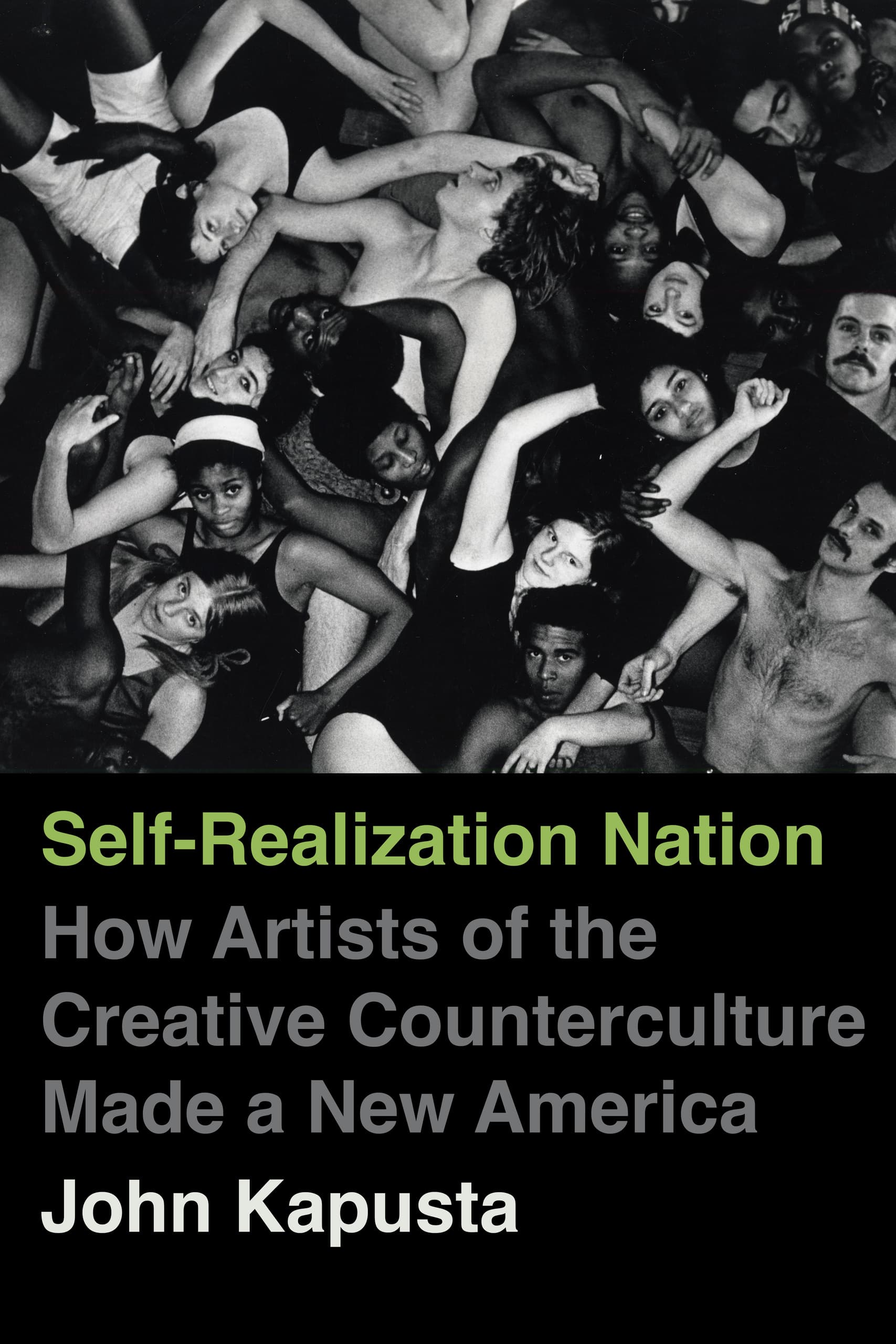
Kapusta’s discussion of the social goals of the self-realization movement in the second half of the book is clearer and more compelling, unearthing little-known collaborations and making connections between diverse musical styles. He touches on the link between self-realization and the Black Arts Movement (through the music and personal stories of John Coltrane and Joseph Jarman), Indian music (Ravi Shankar and Ali Akbar Khan), and improvisation (the Grateful Dead). Pivotally, he recounts a little-known 1969 event called Ceremony of Us at the Dorothy Chandler Pavilion in Los Angeles. Developed through improvisational exercises and games, Ceremony of Us was a collaboration between Studio Watts, a Black arts organization founded by James Woods, and the San Francisco Dancers’ Workshop, a troupe of mostly white dancers established by Anna Halprin. After initial tensions, the two groups developed close relationships and came together in a joyful performance, later continuing their work and taking the show on the road in a successful demonstration of the social relevance of self-realization. In line with his interest in hybrid forms of art, Kapusta also recounts how seminal figures of the creative counterculture developed their own unique modes of artmaking by modifying existing self-realization practices, often from Eastern cultures. Resisting charges that such adoption amounts to insensitive appropriation, Kapusta proposes that the prevailing affinity for meditation and martial arts was premised upon a humanist impulse, rejecting presentism to take a gentler tack and evaluating each artist’s interest in these forms on an individual basis.
Critics of self-realization denounced it as self-centered drivel emblematic of the “me” decade, a moniker coined by author Tom Wolfe in a 1976 New York magazine cover story. Kapusta rebuts this charge in the final chapter by discussing the highly collaborative self-realization practices of composer John Adams, musician Jarman (who also practiced martial arts), and dancers Jasmine and James Xavier Nash. He posits that the mounting crises of the 1970s (the Vietnam War, the oil crisis, Watergate) were the true sources of a malaise that was wrongly blamed on self-realization, arguing that critics didn’t grasp the movement’s collectivist goals or its leadership by prominent Black artists. Instead, they were threatened by the creative counterculture’s disruption of the traditional family structure and the capitalist work ethic. Though these arguments ring true, they fail to explicitly address the fact that, on a societal level, the idealistic, communal aspirations of the 1960s did fade away in favor of the greedy individualism of the 1980s. Perhaps more self-realization was needed, not less, and Kapusta does position the movement as still unfolding.
Though it is sometimes overwhelmed by a proliferation of names and stories, Self-Realization Nation proposes a cogent framework for understanding the liberatory practices and mindset of the postwar era and its aftermath. Kapusta’s musicological perspective and enthusiasm for his subject make the book an absorbing read, and his definition of self-realization as a strategy for creative freedom, ultimately realized in community, is a hopeful vision that resonates during another era of American crisis.
Jennie Waldow is a curator and writer focused on postwar American works on paper, ephemera, and 1960s and 1970s Conceptual Art.