Jennie Waldow

Jennie Waldow is a curator and writer focused on postwar American works on paper, ephemera, and 1960s and 1970s Conceptual Art.

Timed to coincide with the MoMA presentation, this slim but trenchant publication begins with an illuminating essay by Cara Manes and Dominika Tylcz, both of MoMA’s Department of Painting and Sculpture. They convincingly position the Tamarind residency as connected to Asawa’s interdisciplinary ethos, formal interest in figure-ground relationships, and advocacy for arts education.
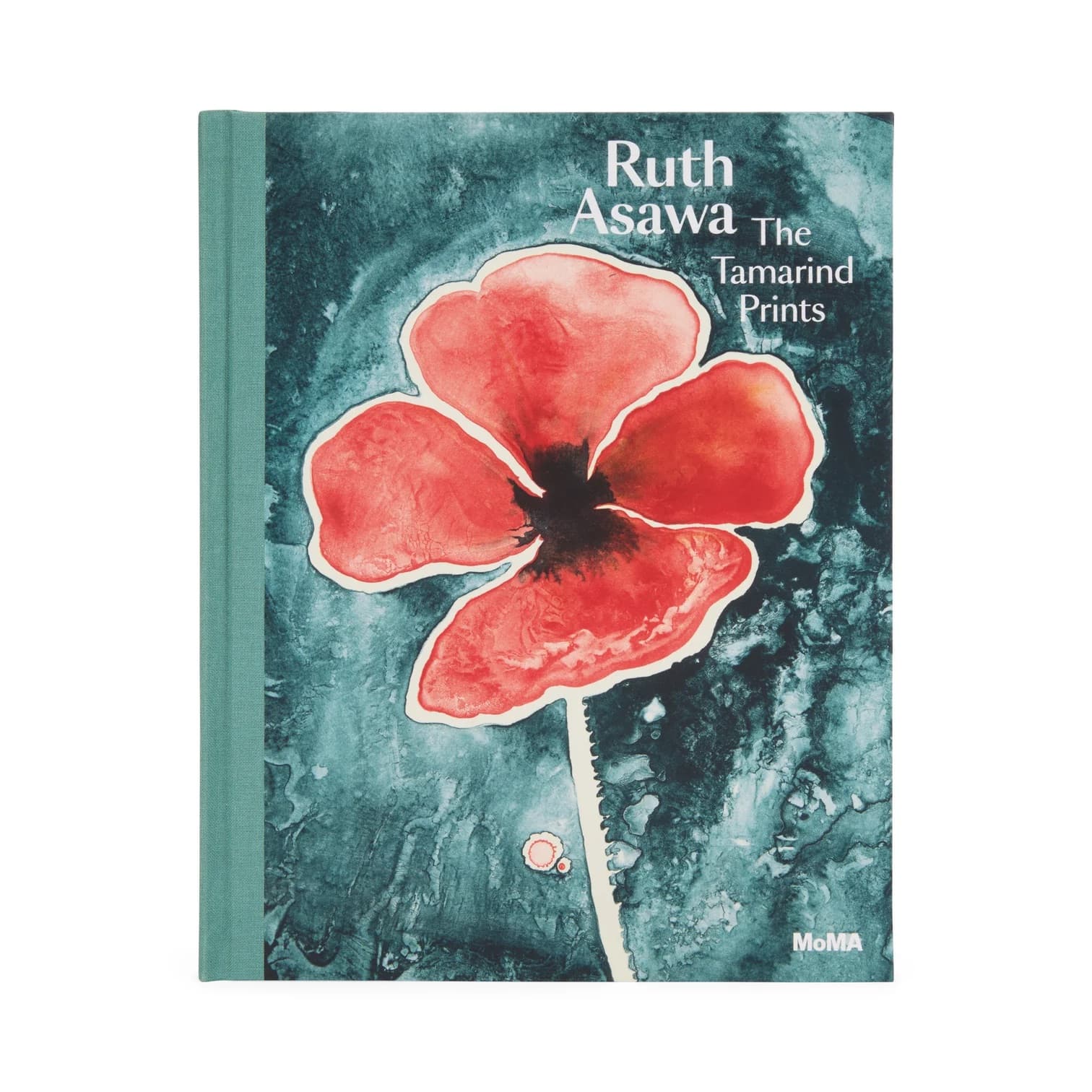
Ruth Asawa: The Tamarind Prints

The biography traces the Yoko Ono's transformation in public regard, covering her lifespan but dwelling on the ridicule she faced as the wife of John Lennon and her critical renaissance in recent decades.

Yoko: A Biography

This re-publication allows contemporary readers to encounter the ambition and innovation of the Fluxus project in an accessible, consolidated format. The Fluxus “style” George Maciunas created is deliberately miscellaneous, incorporating multiple fonts and found images into a pleasing hodgepodge. 


The Fluxus Newspaper
Instead of adhering to a timeline—the organizing yet constraining scaffold of most full-career studies of a single artist—the publication’s thematic, fragmented format allows for connections to branch outwards and through Nevelson’s art.
Louise Nevelson's Sculpture
This book chronicles a purposely disorderly reinvention of Allan Kaprow’s 1962 performance through reflections, historical essays, documents, and photographic collages.
Alex Da Corte: Chicken
The Reader models how contemporary artists and publishers can build on and subvert the communicative forms of the recent past. It collects excerpts from the multifarious output of its namesake press: event scores, concrete poetry, conceptual collages, philosophical essays, and reprints of classic modernist publications.
Dick Higgins’s A Something Else Reader
These scores expand the parameters of the format to incorporate visual elements, lengthy texts, and the paper containing the instructions itself, resulting in scores of great sensitivity and imagination. One method of complicating the event score was to imagine enactors of the scores performing simultaneously, though they would be invisible to one another in their isolated spaces.
Lampo Folio
The publication’s release coincides with Leonard’s 2022 exhibition of the series at Mudam Luxembourg and the Musée d’Art Moderne de Paris, but it stands alone as a unique, multi-voiced analysis of the US-Mexico border, thanks to its intelligent and thoughtful two-volume format. The images and texts are richly complementary, together forming a complex portrait of the river as both physical and symbolic terrain.
Photograph from Al río / To the River, 2016-2022. © Zoe Leonard. Courtesy the artist, Galerie Gisela Capitain, and Hauser & Wirth.
Materially detached from Birnbaum’s finished products, her working documents chart the theoretical motivations behind each piece, along with the novel technical solutions she devised to translate thorny concepts into external space. While this is not a publication for the casual reader, its complexity and resolute physical presence dovetail with the concerns of Birnbaum’s body of work, linking means and ends.
Dara Birnbaum’s Note(s): Work(ing) Process(es) Re: Concerns (That Take On/Deal With)
The seams of the transposition show: colors don’t match, resolutions are out of whack, and scale is distorted, imparting a cartoon-like sense of textured unreality. The tactics create fresh narratives out of overdetermined symbols, personae, and visual paradigms.
Jim Jarmusch’s Some Collages
A “reinterpreted facsimile” of a 1978 book project by the N.E. Thing Co., a corporation that served as the umbrella for the activities of the Vancouver-based artists Iain and Ingrid Baxter, is a fascinating hybrid that succeeds as an informational compendium, a reinterpreted facsimile, and an artistic project in its own right.
Brick Press’s N.E. Thing Co.: Companies Act
The new book collects the illustrated features dedicated to the Museum of Modern Art’s archive and combines them with six freshly commissioned artist’s projects, a foreword by journal editor Tod Lippy, and an introduction by MoMA chief of archives Michelle Elligott. The documents reproduced testify to the erasures, misfires, pivots, and gambles, ingrained in the museum’s history, but kept locked away in its archive.
Esopus's Modern Artifacts
SLANT, published by MACK, alternates between police blotter excerpts from the Amherst Bulletin and black-and-white photographs taken by Schuman within a thirty-mile radius of the town.
Aaron Schuman's SLANT
The collages and silkscreens of John Stezaker contain stutters and elisions, gaps and coverings that pull viewers into “an act of empathetic engagement,” as the artist said in a 2011 interview included in the catalogue for his retrospective at the Whitechapel Gallery.
John Stezaker: Love
Between Summer 1970 and Spring 1971, advertisements appeared in Artforum, Art in America, Arts Magazine, ARTnews, and Avalanche touting exhibitions at the Jean Freeman Gallery in New York.
Christopher Howard's The Jean Freeman Gallery Does Not Exist
In a remembrance in PAJ: A Journal of Performance and Art, Richard Kostelanetz described his fellow artist Dick Higgins as a prolific, unlimited source of creative production: “One principle clear to him from the beginning was that there should be no limits upon a creative person’s activities […] Richard C. Higgins was really at least three people in one big body.”
Intermedia, Fluxus, and the Something Else Press: Selected Writings by Dick Higgins

Close

Home