Word count: 5208
Paragraphs: 51
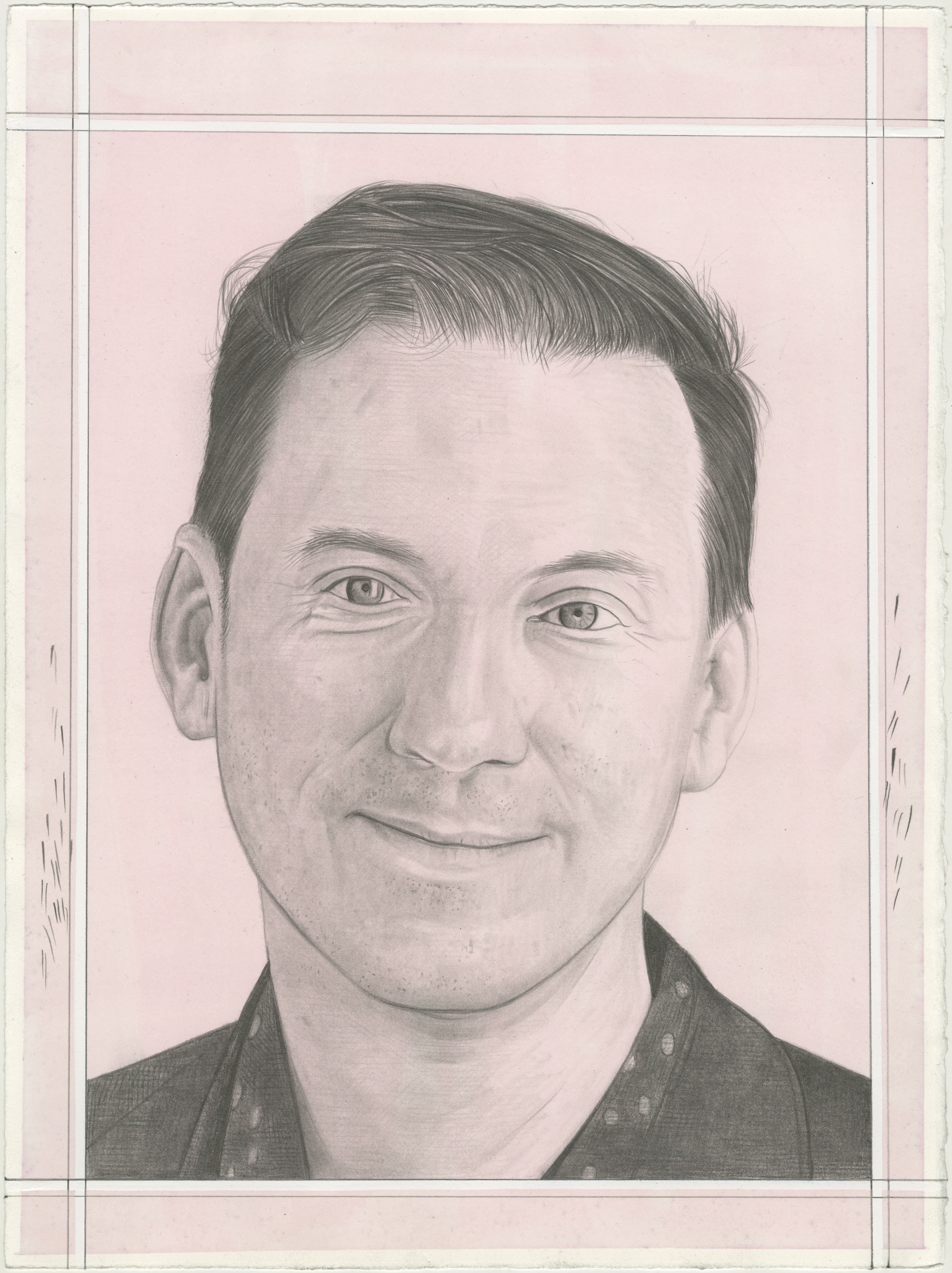
Crystal Bridges Museum of American Art is a nonprofit museum in Bentonville, Arkansas, founded by the philanthropist Alice Walton in 2011. The museum sits on 134 acres of Ozark forest, and in June will open 114,000 square feet of new galleries, studios, and visitor spaces, designed by Safdie Architects. Rod Bigelow has been the Executive Director of Crystal Bridges since 2013. Bigelow joined Guggenheim President Emeritus Jennifer Stockman and Rail Consulting Editor Joachim Pissarro to discuss the importance of public access to the arts, how a museum can act as a disruptor, and the three pillars of Crystal Bridges: art, nature, and architecture.

Crystal Bridges Museum of American Art Campus, Bentonville, AR. © Tim Hursley. Courtesy Crystal Bridges. Photo: Tim Hursley.
Joachim Pissarro: I was first invited to Crystal Bridges by its founder, the wonderful Alice Walton, whom I met at the Museum of Modern Art nearly two decades ago. Alice was waxing on about the uniqueness of this institution. She told me about her interest in crystals. So first of all, Crystal Bridges, the name of the institution, reflects a little brook that feeds the plants, which are beautiful, and this brook was a place where one was able to discover crystals. Do I have that right?
Rod Bigelow: You’re close! [Laughter] It was actually named after Crystal Spring. In the Ozarks we have the benefit of this natural environment where water literally flows out of the earth in the purest form. Right at the headwater of this waterway is Crystal Spring, and this water flows naturally from the ground, feeding all of the ponds that surround the building. But the physical crystals are found in the middle of the state, a little bit further south.
Pissarro: Thank you, Rod! Alice asked me to investigate the position and the function—the place historically—of crystal as a cultural material throughout civilizations. I only knew a few sporadic points, but I threw myself into this project and discovered—lo and behold—that, in fact, crystal can constitute a sort of golden thread throughout religions, cultures, civilizations. Name any civilization you wish, any period, and sure enough you’re going to find that crystal, in some manner, exercised a magical, religious, in some cases mystical role. So we created an exhibition in 2019, Crystals in Art, which was my entry point into Crystal Bridges.
Jennifer Stockman: I love learning the history of the name of your museum—thank you Rod and Joachim! I would like to change topics now because I’m so interested in the idea that democratizing access to American art is in fact one of the main missions of Crystal Bridges. Have you seen this evolve firsthand? How do you measure the success of that objective? Can you tell us about some of your more challenging strategic decisions, including disappointments and major breakthroughs, while trying to achieve this vision?
Bigelow: Thank you, Jennifer. To start, Alice is a true visionary. When she started collecting, it was because she was learning about American history through the eyes of artists. Every time she read about an artist, she would learn about both the artist and the moment, as well as how that artist was viewing and recording American history. And she kept on discovering things that she had not learned in school, and on and on it went.
As she became more passionate about collecting and telling the stories of America, she realized that one of the things she benefited from over her life was access to art, both in terms of learning about the country and the world, but also as a shield, in a way, from moments of stress or pain. For example, Alice had an accident early in her life and went through multiple surgeries. Art was one of those respite spaces that she could dive into and envision a place where she wanted to be, rather than where she was.

New Contemporary American Art Gallery. Courtesy Crystal Bridges Museum of American Art. © Tim Hursley. Photo: Tim Hursley.
Growing up in rural Arkansas, access to art simply wasn’t there. She had the benefit of a mother who was passionate about art, so once in a while they would go to a museum. The idea of creating access to American art became a passion of Alice’s, and I think it very much goes in line with the philosophy that art is not a privilege but a right, and it is something that should be in everyone’s life. So, in that conversation about the democratization of art, it doesn’t need to be presented in one way, it can be presented in multiple ways. Alice’s idea of creating the museum was specifically to create access in this region and in this country. One of the first questions we had was, “Should the museum be free?” And ultimately, the answer was yes, because it would reduce all barriers to coming to a museum.
As we know, oftentimes museums have barriers, and some people feel welcome and some people do not, but putting that message of “free access” out there was a way to signal that everyone could come. There’s no prerequisite. Nothing you have to wear; nothing you must know; nothing you have to do to qualify to walk in the door.
We had no idea how many people would come to the museum early on. When we opened in 2011 we thought maybe 200,000 would come, but ultimately, over 600,000 people came in the first twelve months, and then last year, over 800,000 people came to visit the museum from all over the country. They’re coming from every space in life, and we love to see overalls and suits and kids and seniors all at the same time, connecting through the many ways we share the art.
Stockman: Given the cancel culture movement we’ve experienced over the past five to ten years, how do you balance some of the historical American narratives with contemporary voices that challenge them?
Bigelow: Our objective is to share the stories of those artists, many of which have not been told, and elevate them in a conversation. We want to welcome people into the space to actually have a dialogue. We want to have a conversation about the past and present and acknowledge all the challenges that exist in this space we call America and the space of democracy. What we try to talk about is the American spirit—that the American spirit is a constant drive to something that we want to be, but maybe can never achieve.
We launched a conversation series hosted by our Board Chair, Olivia Walton, called “Building Bridges,” that is about bringing different voices to the table. President Barack Obama was the first guest. Documentary filmmaker Ken Burns just had a conversation about the American Revolution, and Supreme Court Justice Amy Coney Barrett is our next speaker. It runs the gamut of perspectives.

New Bridge Gallery. Courtesy Crystal Bridges Museum of American Art. © Tim Hursley. Photo: Tim Hursley.
Pissarro: I recall about fifteen years ago, shortly after Crystal Bridges opened, Alice met with a few museum directors in New York City, and she talked about what she called the embarrassing statistics of minority representation among museum visitors. You probably heard that story. Basically, the statistics in 1947 in terms of proportional representation of minorities were still accurate around fifty years later. And she asked, “What are we going to do about this?” And, as I was telling Jennifer before you arrived, the diversity at Crystal Bridges is so palpable. I don’t know how you do it, but you obviously have curated programs with the purpose of bringing a number of different groups to the museum.
Bigelow: Well, we are in the middle of the country, and most of our visitors come from the middle of the country. We see hot spots of arts and culture coming from the coasts, but we can have a bit of a different conversation from the middle of the country. And I think we can speak to the constituency differently as well. You do see a more diverse audience coming to the museum than you might find at a “traditional” museum. We continue trying to make sure that we are reaching underserved populations facing economic and educational barriers, because the field tends to go the other direction.
One of the benefits of only being fifteen years old is that we are able to shape the collection a little differently than legacy institutions, with a focus on making sure we are showing work that represents all people. We know people don’t like to go places where they don’t see themselves, so showing works that are broadly representative of communities in the galleries is very much a strategy, and building programming that is relevant to communities is also incredibly important.
The other piece that is unique to Crystal Bridges is that we’re on 134 acres of Ozark forest. We have a different kind of visitor who is attracted to the outdoors, and our work is to cross-pollinate those folks. Our three pillars are art, nature, and architecture. That nature pillar drives a lot of the perspective on how we act as an institution. It lowers the anxiety and invites folks in, and the architecture of the building creates these connections very directly to nature as visitors progress through the collection. Those are respite moments in which you can relax and decompress before entering another gallery. All of those things working together create this magic that I think equals the idea of being welcoming.

Crystal Bridges Museum of American Art, Bentonville, AR, 2025. Courtesy Crystal Bridges.
Stockman: It’s really exciting to learn how you have successfully balanced and merged American art and nature. Having personal involvement with the Guggenheim for many years has given me a certain perspective on what a twenty-first century museum needs to be and how it needs to evolve. The Guggenheim Abu Dhabi, which should be fully installed and opened in a year’s time, has been creating a global collection starting with art made in the 1960s and will focus mostly on exhibitions showing work produced across multiple geographies simultaneously. This vision couldn’t be more different from your own mission at Crystal Bridges. Do you see the future of American art fitting into a global context?
Bigelow: American art is global. There’s no question. It’s very clear to me, even when we’re talking about the earliest moments of colonial America, many artists were in this transition between England and America. And when we think about American art, the definition is quite open. It doesn’t mean you have to be born in America or hold an American passport. It means you made a significant contribution to your body of work or to the field while you were in America. For instance, Diego Rivera is in our collection. Many people would say he’s a Mexican artist, but he spent a year in Detroit, working with Frida Kahlo. So, we embrace him as American. It’s a global context in which we’re thinking about American art, from the very beginning to today.
Pissarro: Economists have come up with this portmanteau, “glocal,” which is a cross between the global and the local. When you come to Crystal Bridges, you really are the crux of these two poles. As you pointed out, local populations are completely energized by the existence of Crystal Bridges, and hundreds of thousands of visitors come from somewhere else. So there’s definitely crossover.
Bigelow: We’re a destination space. And if you look at our statistics, sixty percent of our visitors come from outside of Arkansas. We are an organization that wants to be a resource for our community, while also being responsive to a national and global context. That’s what we try to do, within the context of the collection experience, but also with our temporary exhibition space. In our new expansion, we’re opening an amazing Keith Haring exhibition which explores his work in 3D. It is fun, but also meaningful and surprising. Things will be organized in a way that is new and fresh. We’re trying to create an environment in which people can bring their own perspectives into the space, and everyone has a different lived experience, and they come from all over the world to visit the museum. We’re excited about how visitors contribute to the ongoing story.
Stockman: I didn’t realize that the museum shows artists who weren’t actually born in America, but who have spent time here. I believe the Whitney Museum’s collecting strategy is the same. There’s certainly room for more than one institution that focuses on American art, but how do you differentiate from the Whitney?

Visions of America Gallery. Courtesy Crystal Bridges Museum of American Art. © Tim Hursley. Photo: Tim Hursley.
Bigelow: I admire the Whitney quite a bit. They have created such a meaningful way of expressing Americanism. But I think we’re trying to do different work. Like I said earlier, we can have different conversations being in the middle of the country rather than in New York City. And we are so young. We are fifteen years old! We don’t have all that legacy to look back on and be responsive to. We are trying to make sure that the quality level is as high as those institutions that have important American collections and programs, and we really want to be collaborators and colleagues more than competitors. Of course, the other piece that’s just completely different is our setting. When you come to Crystal Bridges, you will be enveloped in the natural environment, which gives a different context to the work.
Pissarro: Absolutely fascinating. Now, Rod, what can you tell us about the major expansion that is opening in June? It seems to have progressed with incredible speed.
Bigelow: First, I would tell you all of this is intentional, but it continually brings surprises. I think what’s been so exciting is how the community—locally, regionally, and nationally—has embraced what we’re doing and wants to be part of the effort, which is really about creating access. Alice and our board believe deeply that you should not have a collection that sits in a vault or basement. We have approximately four thousand objects, many of those are works on paper, which have to be rotated, but a vast amount of our painting and sculpture are on view, either at the museum or on loan in other places, because of the belief that art is meant to be seen. This is why Alice started Art Bridges Foundation, which shares work across the country. It’s to get that work out of museum storage and on view across the country, especially in communities that wouldn’t otherwise have access.
The project to expand the museum’s footprint came a little earlier than we planned. Moshe Safdie, who designed Crystal Bridges, is a terrific architect who has long-term relationships with his buildings. When Moshe turned eighty, we all said we didn’t want anyone but him touching this building, so we engaged him to think about a forty- or fifty-year plan for the museum. He came back and we did an assessment, looking at what was working and what needed to be changed based on our attendance and our programming, and we made some precision adjustments, like enclosing the lobby and making it bigger, adding a covering over the plaza—we all became excited.

Crystal Bridges founder Alice Walton (left) and architect Moshe Safdie (right) tour the museum’s expanded facilities under construction. Courtesy Crystal Bridges.
Alice, in fact, said to the board, “Let’s move forward so I can see this while I’m still alive,” so we are manifesting a forty- or fifty-year plan in five years or so. That is exciting for us, because we can embrace more stories and more objects in the collection and continue to make that connection to nature, while also disrupting what we think it is to be a museum. We’re adding more entries and exits to the museum to enhance the connection with the forest. We are adding a splash pad for kids and families to come and play. We have taken everything out of the building, reconfigured and moved every object, and reinstalled to create a thematic installation with the backbone of chronology that supports a guests’ understanding of American history and American art through time.
Pissarro: Fascinating.
Bigelow: Turning back to your question, Jennifer—one of the things we looked at was the Whitney Biennial. We were thinking about what they were doing in the Biennial, because we wanted to do something different, but somewhat similar. That resulted in this exhibition we do every five years or so called State of the Art. The first one was in 2014, and it had over one hundred artists. The second iteration in 2020 had about sixty artists. The next is scheduled for 2027. Our curators are out doing this work now. Their mandate was not necessarily to visit every state, but to go to various regions of the country and talk to colleagues and get recommendations from artists. We’re making sure that we’re looking at those places where your barber or your physician or your teacher could be making work in their basements or in their garages. And sometimes it’s amazing work that needs to be elevated and thought through.
Stockman: I remember that when this program was announced, I was very impressed, but also somewhat concerned that your curators wouldn’t be able to identify the highest quality works that we expect to see in museums. On the other hand, I was delighted that incredible artists will undoubtedly be discovered, as in fact they have been, and their art and personal journeys shared with a wide audience. I’m excited finally to be planning my first visit to Crystal Bridges. Please tell me what I should look forward to experiencing, and the most important aspects and stories you and your curators are looking to convey?
Bigelow: Great question. It’s funny, because I think about this often. I have been here for fifteen years, and I wish I could see it for the very first time again! [Laughter] I think, number one, we want you to feel welcome. We want you to feel like you are embraced in a way that is different from other institutions. We want the museum to feel like a place you can explore, either with others or on your own, and discover things that you would have never thought about or seen before. We want you to feel connected with American history in a way that feels new or different.
You will, for sure, discover an artist you’ve never encountered before, and be dazzled by their work. I think you will be challenged. I hope that you see and remember the deep connection to nature, and how nature informs and affects your experience. We are also leaning into the space of well-being, and how your overall experience elevates that personal point of well-being, and that is through the connection between the architecture, the artwork, and the natural environment. I think your expectations will be surpassed, and that you will leave wanting to talk to somebody about your experience. I think it will leave you with more questions that you’ll want to seek answers to, both back at the museum, but also in other places you visit.

The re-installed Foundations of American Art gallery. Courtesy Crystal Bridges Museum of American Art. Photo: Tom McFetridge.
Pissarro: Brilliant answer, Rod, and I can personally attest to the truth of it. Your predecessor, Don Bacigalupi, was the director when I first visited. I actually came with Marina Abramović, and both of us were talking about this concept that blew my mind. I’m talking about how you organize State of the Art. Most institutions put on biennials—there are literally hundreds of biennials globally today, as we speak. MoMA PS1 has one, though it’s not a biennial, called Greater New York. Same concept: every five years, you showcase what you see around the museum. And those institutions usually provide the viewers an exhibition to gauge the state of creativity. You come in and you say, “I discovered ten to twenty artists who I had never heard of before.” In 2014 when I came to the opening of State of the Art, it was one hundred percent artists whom I had never heard of—and I’m not ashamed to say it. I don’t know if it’s still true, but the exhibition showcased artists who have no representation, who have never had a museum show—so basically unknown artists. Now I’m going to use a word that you don’t often use in the field of museum studies: courage. It takes a lot of courage to go against the flow of history, or underneath the current of history, and pick up those who have been missed. I remember being absolutely blown away by that exhibition, and I still continue to see some of these artists, like the African American artist from Pittsburgh—
Bigelow: vanessa german.
Pissarro: Oh, my God, yes. She did that incredible talk with Bill Clinton. I will tell the story—correct me if I get anything wrong. So Clinton spoke after her, and he had prepared his notes, and in front of the public, he put down his notes and said, “Alice has asked me to do a lot of difficult things in my life, but I don’t know if anything’s going to be as hard as following vanessa german.” Can you expand a little bit on this very unusual and courageous way to proceed curatorially, as far as contemporary art is concerned?
Bigelow: The word courage is interesting. What we have thought about at the museum is to be humble, and to do things differently. I think this comes from Alice’s perspective. She decided to do this, and she says she had no idea what it meant when she wanted to start a museum. I think more about being a disruptor than having courage, but I guess it takes courage to be a disruptor. When you have someone with the vision of Alice behind you, it makes it a lot easier. [Laughter]
She encourages us to take risks, as long as the risks have real impact. vanessa german is a perfect example. She was in Homewood, Pennsylvania, where she was working in a space that had some of the highest mortality rates for Black children in the country, which is so tragic, and she created a community center called ArtHouse that welcomed kids in for art making and refuge. She was building this community space for kids while she was creating these objects called “power figures” that she placed across the community—on school buses, on playgrounds, in community parks—which were there to protect them, and then the kids would build confidence through seeing them around town.
She is a powerful human. If you haven’t seen her, you need to go find her, because she has a presence that is beyond anyone’s expectation. And elevating her work has been a real joy. We awarded her the Don Tyson Prize shortly after this, which is a 200,000 dollar unbridled gift. As it turned out, she had to replace the roof on her house, and that’s what she used the money for. It is real practical things that these artists need. And so being able to elevate and share the work that these artists are doing in spaces that people would overlook is a real privilege. It didn’t take much courage, actually, to do that. We wanted to do it, and it was a very natural effort. So, I think the idea of being a bit of a disruptor is more the impetus, rather than being brave.
Pissarro: Thank you, Rod.
Stockman: I actually believe that the word “courageous,” is one of the most important characteristics any artist, curator, museum founder, or director should have. This applies to collectors as well. Coming from New York, where there are so many museums and cultural institutions all competing for attention, visitors, and funding, it sometimes feels that they are choosing the more obvious and safe choices. Rarely do you see a museum taking such a big jump with a totally unknown artist. The Hilma af Klint exhibition at the Guggenheim made the director, Richard Armstrong, a nervous wreck. I remember him fretting that no one even knew Hilma af Klint at the time, or would even care to learn about her, and the show would be a bust. Thus it took great courage and ambition from him and the brilliant curator Tracey Bashkoff to produce this show, which turned out to be one of the most successful exhibitions in the museum’s history. So there is something to be said about disrupting the norm and taking risks. I think what you’re doing with Indigenous artists is fascinating. When you visit a place in southern Utah and the tribal communities there, you learn about such fascinating cultures, and hear about personal stories that are just unbelievable. It is about time that these artists are being recognized—and kudos to you and your team for doing this important job.

Kelly Church, Sustaining Traditions: Basket of Resilience, 2024. Black ash splint, copper, and USB flash drive. 51 x 30 in. © Kelly Church. Courtesy Crystal Bridges Museum of American Art. Photo: Edward C. Robison III.
Bigelow: One of the real drivers of growing the space has been the investment in Indigenous artists and craft, because we think of craft as being a very American thing, and also very resonant with the middle of the country and more rural parts of the country. We have the ability to commission artists to do work that references their family’s histories and generations around their tribal communities. I mean, one great example is Kelly Church, who we commissioned to make a work. Kelly is a fifth-generation basket maker. She uses ash trees to create these baskets, and she’s thinking about the legacy and the trauma to the ash species through the emerald ash borer, and how that species of tree is dying. One of the questions she asks is how can she continue to pass on this legacy if the ash tree is no longer available in America. So she created this monumental basket for us. It’s probably five feet tall. It has a computer chip in the basket to tell the history of her journey and her family and the work, etc. So it is these things that are very resonant with this region. Oklahoma is twenty or so miles to the west; Missouri is maybe ten miles to the north. We’re in a region where Indigenous communities thrive. Our ability to be able to share this work, along with all the craft work that we have, is something of relevance, and we really care about being relevant to the audience.
Stockman: That leads to an important question I have about how and why people support your museum. This is something every museum constantly has to deal with, but because your founder is the visionary and very wealthy Alice Walton, most people assume she can support Crystal Bridges’ acquisitions, building expansions, the creation of a substantial endowment, development of bike paths, etc. No one really knows what’s possible with the Walton family, but people do make that assumption. So how do you approach fundraising? What are your strategies when somebody says, “You don’t need me to donate money or art. I’d rather give it to a struggling institution, of which there are many.” I mean, it’s a good problem for you to have, but it could be an obstacle for bringing in outsiders.
Bigelow: There are a few answers. One is Alice, Olivia, and the Walton family have been incredibly generous. From the very beginning, Alice said—I’m paraphrasing, of course—“I will make the cake. I will build the museum. I will contribute my collection. I will fund an endowment that makes sure that the institution has longevity and is at the highest quality, so no one will ever have to worry about paying the light bill or replacing the roof. So these things will be here forever. On top of cake, I really like icing.” That icing is the programming that happens in this space. It’s exhibitions, educational programming, community engagement activities, etc.
We’ve asked the community to come in and support that—the icing—and they have. We have a gift from a family that supports school tours to the museum. Last year, we had eighty thousand kids come to a completely free field trip program that provides bus transportation, substitute teachers, curriculum development and lunch. We have another family that supported art acquisitions. We have a family that’s supported internships at the museum—it goes on and on. People have funded outdoor exploration, outdoor programming, and restoration of the forest.
One thing that is pretty compelling is that when you give to the museum, you don’t have to worry about a percentage of your gift going to administrative costs. It all goes to your program. But of course, there are limitations on how much the family can give going forward, because we are a 501(c)(3) public charity. We have that IRS status, which means that there has to be a financial match from non-family members to continue to keep that status. So, this is an important thing.
When Alice first founded the museum, she wanted to make sure that the community were owners in the effort. I love it when I hear people around the community saying, “Oh, I saw one of our artworks at the Met.” I love it that they own that work. Fostering that sense of ownership was really, really important from the very beginning. And as far as gifts of art, we always want individuals to be supportive of their home institution. That is where we want them to invest, although there may be works of art which are well-represented in that community or institution, but which may fill a gap for us or tell a story that we can’t tell. So when we’re talking to potential donors about giving their work, it is about how their work will always be on view and be seen, and that it will enhance the experience for all Americans—because we are a truly national museum. We call ourselves “America’s art museum,” so it’s a compelling reason to give.

FreshGrass Festival at the Momentary, Bentonville, AR. Courtesy the Momentary.
Pissarro: How does the Momentary fit into this vision?
Bigelow: Jill Wagar leads the Momentary. It is a decommissioned Kraft cheese factory that’s about a mile away from Crystal Bridges. All of our teams work in both places. The Momentary is a space for music, art, and food. The primary effort is about creating and elevating the music scene in northwest Arkansas. The audience there is a little more regional than the audience at Crystal Bridges. There’s also art there, and we don’t have the same sort of American art constraints in that space. So we have artists coming from all over the world. Lucy Sparrow is a British artist that is coming to do an installation soon. She’s a fascinating felt artist who’s doing sort of a 1980s or ’90s grocery store. Right now, we have a National Geographic photography show at the Momentary, so we try to do things that are accessible and daring and different in that space, wanting it to be a community living room for both adults and kids. It’s got a great outdoor amphitheater and music spaces throughout the building, as well as art spaces.
Pissarro: Amazing. You have the public opening of the expansion coming up. Do you want to say a few words about that?
Bigelow: We have a whole series of opening events. We hope everyone comes out on June 6 and 7. That’s when we will reveal all that we’ve been working on in the last eight years. We believe that no place is truly engaging unless it has both content that is meaningful and relevant, and people to engage.
Joachim Pissarro has been the Bershad Professor of Art History and Director of the Hunter College Galleries, Hunter College, New York, since 2007. He has also held positions at MoMA, the Kimbell Art Museum, and the Yale University Art Gallery. His latest book on Wild Art (with co-author David Carrier) was published in fall 2013 by Phaidon Press.
Jennifer Stockman, film producer and founder of DMINTI and GMSG, is the President Emerita of the Guggenheim museum.