Word count: 5135
Paragraphs: 48
Michael Werner Gallery
May 2–June 27, 2026
Berlin
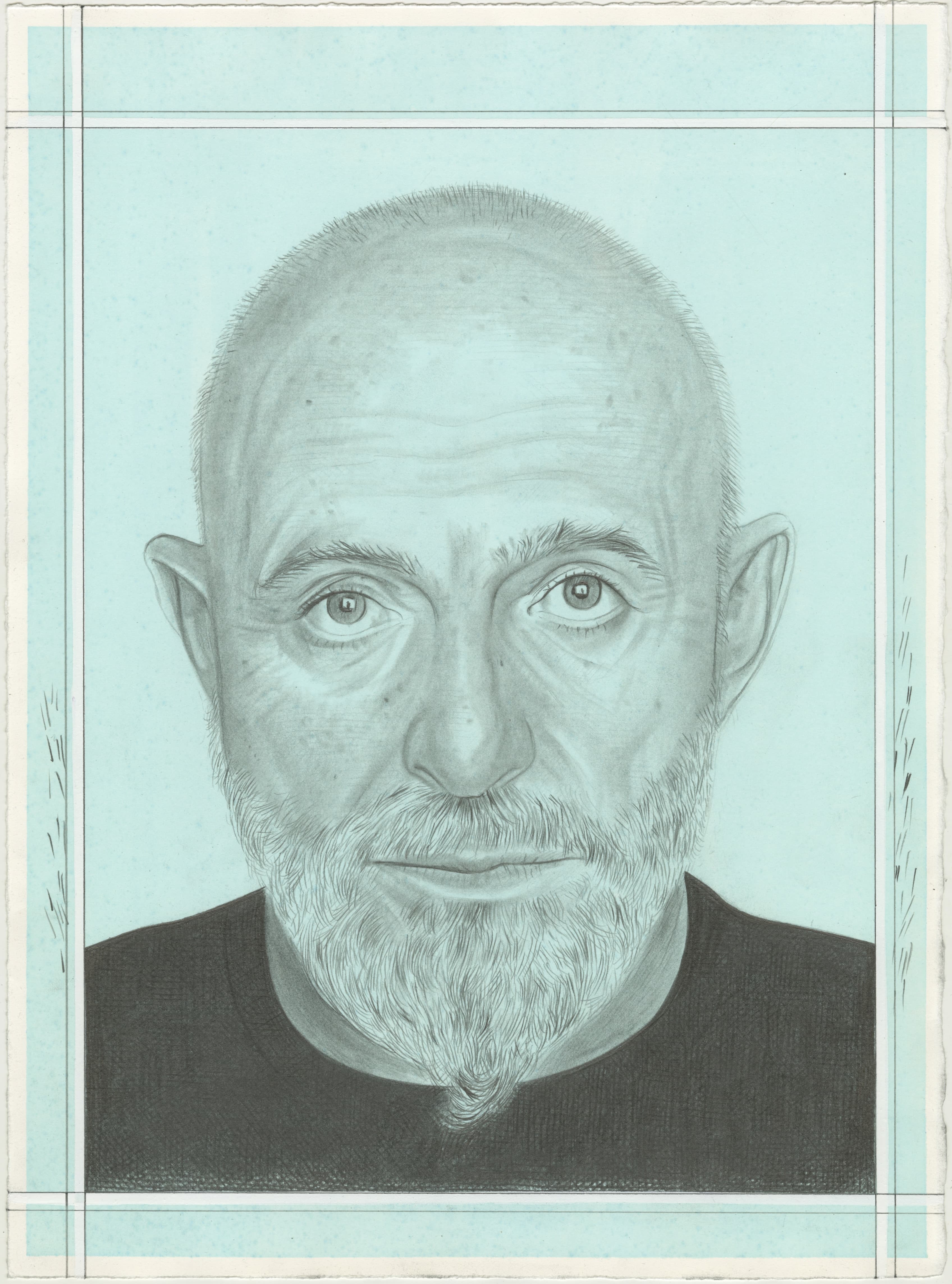
Markus Lüpertz is a legend of German painting. A member of the Neue Wilde [New Wild Ones], Lüpertz was a part of a generation that brought expressionist painting back into global relevance, and his time as rector of the Düsseldorf Art Academy has become its own lore. But it should also be noted what Lüpertz really represents but which hasn’t been articulated. Lüpertz grounded abstraction in what he calls “poetic objects,” invented forms that present themselves with the phenomenology of representational conditions and in so doing, trailblazed a third way within the exhausted binary of representation and abstraction. While Expressionism is often misunderstood and thought of as an antithesis to Conceptualism, his seriality and repetition connected German Expressionist painting to the interests of Andy Warhol and Jasper Johns. In his “Arcadia” paintings, Lüpertz reached back into history with a shadowed hand, populating the verdant hills of antiquity with resurrected forms that are scaled and recontextualized to unsettle the tranquil clichés of the picture. Lüpertz wields Expressionism with a postmodern brush, and turns the direct approach of Expressionist painting into valleys of broken signifiers. Our interview was conducted over several sessions, with the help of our interpreter Christopher Lochmann.

Markus Lüpertz, Amazonenschlacht, 2025–26. Mixed media on canvas, 139 ¾ × 161 ½ inches. Courtesy the artist and Galerie Michael Werner, Berlin. © VG Bild-Kunst, Bonn, 2026. Photo: Jens Ziehe.
Andrew Woolbright (Rail): Markus, it is truly wonderful to speak with you. I have followed your work for many years. I first encountered it as a student, and it is a great honor for me to get to speak with you. Since our last exchange, Georg Baselitz has passed away, who was a dear friend of yours. It happened moments after our last call. The two of you belonged to a generation that was of central importance to German painting, and he was also the person who introduced you to your long-time gallerist Michael Werner.
I’m wondering if we should start by reflecting on this significant moment during the 1970s and ’80s when all of you were starting to be recognized for your work. This moment when you were referred to as Dieie Neuen Wilden, with A.R. Penck and Jörg Immendorff. It was an iconoclastic moment, and it revitalized painting not just for Germany, but also marked the return of Expressionism in America.
Markus Lüpertz: How far this influence extended into America, I cannot say. The term “New Wild Ones” was coined in connection with an exhibition we had in France, where it first appeared. It referred to the painters Penck, Baselitz, Immendorff, and myself. At that time, the press spoke of the “Nouveaux Fauves.” This designation then became established for our group. Later, a movement emerged in Berlin among the student generation of certain professors—Karl Horst Hödicke, for example—calling themselves “Die neuen Heftigen”[The New Fierce Ones]. But for the simplifying German press, the word “fierce” was too complex, too unfamiliar, not catchy enough. Thus, this younger generation was renamed the “Die Neuen Wilden,” and we, the older generation, were the “fathers” to these painters. This is something I strongly reject. We were practicing a form of painting that was post-Expressionist in both form and content, and my friends and I had little to do with this kind of unpoetic painting. The impact our work had in Europe was certainly remarkable, as similar movements later appeared in Italy and France. It was, in fact, something that made art history.
Rail: I would like to begin with something you said a few years ago. At the time, you said that you were thinking about abstraction not in the traditional sense, but as the invention of an absurd object, a “new poetic object.” I was wondering whether you could define more precisely what you mean by this poetic object. I do not find the distinction between representation and abstraction to be a particularly interesting binary opposition. However, it seems to me that there is a consistent impulse in your work that starts from a form of legibility—often even a banal legibility—and that your interest then lies in pushing it beyond its limits and its signified meaning.

Markus Lüpertz, Dithyrambe, 1963. Distemper on canvas, 36 ½ × 40 ¼ inches. Courtesy the artist and Galerie Michael Werner, Köln. © VG Bild-Kunst, Bonn, 2026.
Lüpertz: We were all children of abstraction. But we had the feeling that this abstraction had become too predetermined, too popular, and too dominant. It also had nothing to do with our actual training at the academies, where one was still trained, thankfully, in a craft-based and academic way. Abstraction, to us, felt too given, too widespread, and too overwhelming. As a result, I tried to individualize the longing for images. Into this space, this empty space of abstract painting—a term I have always rejected—I tried to invent and develop very specific, personally conceived forms inspired by the object. From this emerged my idea of an object that I later called the “Dithyramb.” At first, the dithyrambic was an idea for me: something that goes beyond mere representation and gives the image its own presence. But this idea did not remain abstract. It became an object in itself, one that materializes within the painting.
The Dithyramb was initially an idea that emerged from an expressive form of painting. I wanted to call this painting “dithyrambic” in the sense of an intoxicated enthusiasm, as the word is commonly translated. For me, dithyrambic painting is not a style in the narrow sense, but an attitude toward the image. The term comes from the dithyramb, the ancient ecstatic hymn in praise of Dionysus. What interested me was transferring this celebratory quality into painting. In doing so, I did not invent a classical object—perhaps “encountered” is the better word. What emerged could be described as abstract or non-objective, yet at the same time it was an object, because as a form it had its own presence. This object simply did not exist before. From this, the possibility arose to develop further formally related forms, which in turn became the starting point for a whole series of paintings.
Rail: It seems like this “intoxicated enthusiasm” of images is what allowed for you to maintain the interest in images that Pop art and the Conceptual movement shared, while giving you the ability to continue your own expressive subjectivity as a painter. Is the poetical object a kind of anti-meaning, or a way of cancelling the meaning of the object?
Lüpertz: No, it is not about erasing meaning or about emphasizing the object in itself. It is rather about asking the painted object to tell its own story. Everyone connects certain associations with particular things, whether it is a roof tile, a Gugelhupf, or a guitar.
These objects are often overlooked in their obviousness, yet their forms fascinated me. The steel helmet, for example, has never interested me as an object of war, but rather as an astonishing form, and as a kind of extension of the head. That such an object carries its own history is something else entirely.
Rail: The principle of sequence plays a central role in your work, because it reveals a fundamental logic of the image. Many of your works do not emerge as isolated individual paintings, but as series, cycles, or recurring groups of motifs. This repetition is never purely formal, but always also conceptual and temporal. It becomes another opportunity for a poetic object, which can function as a kind of bricolage of an image, or as an animation of something, testing how many forms can be derived from it, depending on our awareness of how far it has been removed from its original form.
You once said: “The definition of my painting is to animate dead forms.” Some of your earliest works were depictions of Donald Duck, which do not resemble Donald Duck at all, and by putting Donald Duck in our mind through the titling of the work, we imagine the animated sequence on our own. It is an interesting way of making the static image of painting into a kind of moving image.

Installation view: Markus Lüpertz oder Die Überwindung der Moderne, Galerie Michael Werner, Berlin, 2026. © VG Bild-Kunst, Bonn, 2026. Courtesy the artist and Galerie Michael Werner, Berlin. Photo: Sebastian Eggler.
Lüpertz: You have offered a wonderful interpretation of my work and my way of thinking. I find this entirely acceptable, and it is not easy for me to respond to it. I will nevertheless try.
The motifs, such as railway tracks, roof tiles, helmets, or other simple things, are not symbols in the classical sense but carriers of time and meaning. They are objects of their epoch that I repeatedly take up and transform. In this way, repetition emerges, which has nothing mechanical about it, but rather a kind of condensation.
There is a beautiful invention, the flipbook: a small booklet or block with many consecutive images that differ only slightly. When you quickly flick through the pages, the impression of movement arises, similar to film. What interested me was the question of how movement can be transferred into painting. If I paint, for example, ten tree trunks that are all more or less the same, but with small differences, can this create a sense of movement within the image?
The railway tracks, on the other hand, are an expression of a sentimental longing that goes back to the Western films I saw in my youth. Those great wide shots, in which an apparently endless line of tracks stretches through the landscape, contained a sense of movement, not because something moves on them, but because the tracks themselves are placed into this vast, endless landscape as something foreign and constructed. That fascinated me. From this idea arose Schiene - dithyrambisch and Westwall (both 1968), all panels in a format of 2 by 12 ½ meters. In relation to reality these dimensions are of course small, but as 12 ½-meter-long paintings they nevertheless suggest a sense of infinity. At that time, there was no painting in Germany, and perhaps even worldwide, that wide.

Markus Lüpertz, Schiene – dithyrambisch, 1969. Distemper on linen, five parts, overall dimensions 75 × 492 inches. MKM Museum Küppersmühle für Moderne Kunst, Duisburg, Ströher collection. © VG Bild-Kunst, Bonn, 2026. Photo: Galerie Michael Werner, Köln.
Rail: Of course. The scale and its endless panorama. It makes sense that that is what is interesting to you. But I am interested in the ambivalence—not as a contradiction, but as a tension—that your paintings carry a clear historical significance on the one hand, while at the same time they reveal a very strong interest in timelessness. In this process, you use the subject almost as a starting material from which form only then develops, more like malleable matter than a finished, representational depiction. At times, it feels as though you are trying to have it both ways: a concern with pure formalism and an engagement with dramatic connotation. You’ve painted the Western anti-tank barricades that were resurrected by Hitler. While it appears as a sobering architecture of fascism, it is also, perhaps, an allegory of how German artists viewed the expressive freedom of American artists with suspicion—a freedom that may have appeared to you as an excessive form of abstraction.
Lüpertz: It is about quality and about the ability to relate oneself to the past. Painting constantly regulates itself, because one is dealing with the entire history one must work through. One can deceive others, but not oneself—in the awareness of the past and the weight of painting and sculpture. New things are worthless. Whoever works in this field is already moving within an existing value system, because it is always also about mastery and its attainment. It is about a longing for critique, and for something that contradicts oneself.
Rail: I like the fact that the field of reference suggests a desire for critique. But when you speak of critique, do you mean criteria? Or do you mean a position that stands outside culture to understand it and move beyond it?
Lüpertz: As Immanuel Kant rightly said, there is no critique of something bad. Critique only arises where one engages seriously with something because one recognizes quality. External criticism controls the artist in his work. If he allows himself to engage with it, he can recognize his weaknesses, understand them, and overcome them. That is why critiques that truly engage with the image and the work are so important.
Rail: You speak of a continuous working in relation to the past, of repetition, cycle, and the painting’s negotiation with its own history. In this context, the question arises of how your relationship to classical antiquity—particularly to Nicolas Poussin, who himself can be read as a kind of re-staging of antiquity through the reactivation of classical pictorial orders—should be understood. In a sense, one could say that this reveals a double movement: a renewed appropriation of forms that are already historically mediated. Walter Benjamin wrote: “Every image of the past that is not recognized by the present as one of its own concerns threatens to disappear irretrievably.” This could be relevant here, as could what Craig Owens described as the allegorical impulse of postmodernism: the layering and doubling of history in order to hold multiple temporalities present at once. Against this background, I would be interested in what this desire for classical antiquity means for you—whether it is a genuine historical longing, or rather another form of pictorial material with which you situate your own position within this history.
Lüpertz: The past is not something that is closed. The artists may be dead, but their paintings remain present. It is a matter of entering into competition with what already exists. For me, the works hung in museums are part of the present. I do not compare myself to the painters, but my paintings to theirs. I relate to the old masters in a somewhat romantic way. I maintain a certain relationship with them, because for me they are not dead as long as their paintings continue to live. That is why there are also discussions about them, and there are criteria. I too critique these paintings and experience critique from them. I find this fascinating, because it is here that a small fraction of eternity in art becomes visible—something we should finally recognize and orient ourselves toward.

Installation view: Markus Lüpertz oder Die Überwindung der Moderne, Galerie Michael Werner, Berlin, 2026. © VG Bild-Kunst, Bonn, 2026. Courtesy the artist and Galerie Michael Werner, Berlin. Photo: Sebastian Eggler.
Rail: I think I am better understanding the timelessness you mean—the eternity of painting you are after. But you are also a sculptor. Do you think of your sculptures in the same way as your painting, as a kind of dialogue with other sculptors or artists? You began working in this medium a little later, in the early 1980s. In 2022, eleven monumental sculptures were installed across the city of Orléans, in France. In the sculpture Athene (2010), the head shows a certain proximity to Pablo Picasso’s Head of a Woman (1932), while the curved form stands in strong contrast to the very strictly constructed garment over the shoulder, which almost functions like a grid element within the composition. This further intensifies the expressiveness of the body. At the same time, everything appears deeply rooted in formal decisions. There is also the sculpture Fragonard (Skulptur) (2018), with his palette, which is integrated into this series of gods and ancient archetypes. I have the impression that your sculptural works require more forethought. I wonder whether the references you draw on play a greater role at the beginning of the process than they do in your paintings.
Lüpertz: In general, the titles of my sculptures are proper nouns. I was at the Louvre and greatly admired the Jean Honoré Fragonard paintings. As a result, I created a sculpture of a painter and simply called it “Fragonard.” It is neither a portrait nor does it aim at resemblance. It is merely an allusion, perhaps even a form of ingratiation towards the painter. I would have very much liked to meet him and speak with him, but that is not possible. I can only encounter him through his paintings. One must understand that I live in a cosmos of art—among artists, painters, sculptors, poets, and musicians. Within this world, I have made my own contributions in order to define my position. That is important to me.
Let me also say this: your question almost answers itself, which puts me in a somewhat difficult position, as I am asked to explain things. I am generally not inclined to speak about the origins or intentions of my works. Nevertheless, I find your interpretations of my work very accurate.
Rail: I don’t want to put you in the position of explaining everything. It’s honestly just my admiration and curiosity. I would also like to address this sense of a timeless present that interests you from a more psychological perspective. My first intensive encounters with your work were your landscapes as well as the frieze-like paintings of the “Arcadia” series. In the past, you have linked them to your interest in cinema—to Jean Cocteau’s Orphée (1950), but also to the staged construction in the films of Jean-Luc Godard. Your “Arcadia” landscapes appear like an apeiron, a zone—to use Cocteau’s term for a quasi-spatial condition—that stands outside of time, where things simply exist and unfold endlessly without shadow. This need to appropriate and fix these “ghostly,” mnemonic images of painting’s history also seems to me to be connected to your biography. You were forced to leave Bohemia for Germany and arrived in a country whose landscape and historical continuity had been severely damaged and erased after the Second World War. I do not think it is accidental that you attempt to make constellations visible in a landscape without air or shadow. Gustave Flaubert once said: “Few will suspect how sad one had to be to undertake the resuscitation of Carthage.” By this he suggests that every return to lost worlds is always inscribed with a moment of mourning. I wonder whether you see a direct connection in your painting to trauma, or to another form of longing that you work through there?

Installation view: Markus Lüpertz oder Die Überwindung der Moderne, Galerie Michael Werner, Berlin, 2026. © VG Bild-Kunst, Bonn, 2026. Courtesy the artist and Galerie Michael Werner, Berlin. Photo: Sebastian Eggler.
Lüpertz: Leaving Bohemia was difficult, even though the family remained together. At that age, however, it felt more like a time of adventure. Still, I am aware of certain traces: when I am alone, I only sleep with a light on. The experience of sitting in a bunker and witnessing the light going out stays with you. I took all of this in without prejudice, and today I see it as something I am aware of, even as something with a certain peculiar quality. It provides material for my work. But it is not trauma.
I am half Polish and half Sicilian, but I come from Czechoslovakia and grew up in Germany. I feel connected to all these parts. Bohemian music moves me immediately. In Palermo I feel at home, just as I do in Germany. These different references are a source of inspiration and continue to drive me forward. At the same time, there remains a certain longing for all these parts of my identity.
Rail: And painting is also a form of belonging. You took an early interest in the works of the Die Brücke artists, but also closely followed what Andy Warhol was doing. I have the impression that you are, in a way, mediating between Conceptualism and Expressionism, a position for which you have so far received little recognition. I think you made a conceptual Expressionism through repetition. From the outside, it seems as if you are constructing a line that begins with the immediate painting of the Expressionists—a hand that attempts to go beyond the ego—while at the same time developing a conceptual practice that questions the romantic notion of authorship through repetition and appropriation. I am interested in how you situate yourself within the work.
Lüpertz: Early on, I had a certain closeness to religion that had a strong influence on me, in a way I cannot clearly define as either positive or negative. Connected to this was a sense of mysticism that runs through my thinking and perception. At times I have the impression that there is something like an inner calling to make these paintings, although I understand this more as an assumption than as certainty. There is no definitive explanation for why I paint. I simply want to paint. At the center of it is the everyday: impressions gathered on the move, things seen over the course of a day, moments that appear briefly and then vanish again. I paint these ordinary perceptions, these fleeting scenes of daily life. The real “why” lies, for me, in the mysticism that arises within the act of painting itself. Sometimes I stand in front of the paintings and am surprised by myself, almost at a loss, without really understanding why I do what I do.
Rail: I respect that need to keep it mysterious and beyond comprehension. Painting deserves that. There are certain recurring patterns in your paintings—a kind of language of discontinuity. This becomes particularly clear in the way you use Rückenfigurs and busts to block and interrupt the landscapes. They intervene in the pictorial space and force the viewer’s gaze to move around them. In this way, there is a sense of being surrounded, or even overlaid, by history. Added to this is another form of disturbance: shifts in physics and scale. Heavy bodies appear to float or to remain in a state of unstable balance, skulls appear larger than the figures themselves, or a helmet hovers above the landscape like an emblematic sign, comparable to the Twentieth Century-Fox logo in the early Dithyramb paintings. These elements consistently break any illusion of a closed pictorial space.
Lüpertz: I have to say again that I find your description of my intentions quite coherent, and I am pleasantly surprised by your sensitivity in already finding an answer within your questions that I can identify with. That puts me in a certain difficulty, because I could almost only agree with it—please understand it that way. At the same time, I will try to give an answer that reinforces these things or perhaps questions them.
These forms carry their own history and meaning within them. Together they create a certain poetry within the image. What interests me is their narrative potential. Take the skull, for example: everyone associates it with certain ideas. But I am not trying to present only my own ideas. Rather, it is up to the viewer to make something of it. There is also an element of chance, and a kind of overarching, almost alien task that I do not fully understand, but which I have nevertheless made my own. It is about developing something autonomous from these things. A skull, grapes, and a glass of water make a still life—the classical means are there. Giorgio Morandi painted exactly such objects. It is about giving things the possibility to tell their own story. The answer lies with the viewer, not with the artist. I remain a mystery to myself.
Rail: You use convention to generate abstraction. I find it interesting the proximity you establish between Morandi and his bottles. Reading earlier interviews, I have loved how precisely you define things. In the current exhibition Markus Lüpertz or The Overcoming of Modernism at the Galerie Michael Werner in Berlin, the concept of modernism and Charles Baudelaire now also seem to appear more strongly as points of reference in your thinking. I am interested in how you define modernism for yourself and what relationship you have to it, and also which aspects of Baudelaire are currently and particularly relevant for you.
Lüpertz: Baudelaire is one of those important daily or weekly reference figures with whom I engage in thought. For me, modernism is a reaction to the fact that painting today has become illustration, something accidental, arbitrary. What I miss in it is atmosphere and mastery, a depth of work that is allowed to include something negative—a certain irritation or unease that is what allows a painting to emerge in the first place. Instead, I have the feeling that what is produced today are products rather than paintings. I consciously try to resist the idea that I must fully understand or explain what I am doing. In my paintings, I am rather asking myself questions. If I could formulate it clearly, I would have become a writer. Perhaps Baudelaire.
Rail: How do you recognize that a painting has truly succeeded? Is there a moment when you feel that it goes beyond mere meaning and develops its own presence, something immediate that no longer needs to be explained, but is simply there and has an effect?
Lüpertz: Each evening, as I leave the studio, everything seems entirely resolved, only to become uncertain again the next morning. Painting is a constant process of questioning and being questioned. I know a painting is finished when it stops appearing in my dreams. At that point, it no longer unsettles me, but instead draws me in completely, in a positive sense.
Rail: For many years you were the rector of the Düsseldorf Art Academy. How do you look back on that period today, and how did it relate to your own artistic practice? How did you understand the teaching of painting? Were there certain fundamental attitudes or principles that were particularly important to you to relay to your students? Do you feel things have changed since then?
Lüpertz: I was rector of the Düsseldorf Art Academy for twenty-three years. I took on this position with the idea of leading an academy in the spirit of Raphael: as a place where artists and masters meet in dialogue with one another. This atmosphere that emerges is, in a sense, the real teaching of the academy—not a form of life coaching, nor instruction in modernism or anti-modernism, but rather a space in which an imagined or achieved form of mastery becomes possible. This idea sustained the Düsseldorf Academy throughout my time in office. Modernity—by which I mean the present—has, after my departure, destroyed and abolished this idea. The institution became politicized, like many others. It has turned into a place of training for correct behavior and is far removed from any notion of artistic practice. Today it is, unfortunately, a kind of amateur university, fulfilling a civic mandate that is in fact the basic requirement of any citizen in this country.
Rail: It is unfortunate, and true of America as well. I would like to return once more to the moment when you stop dreaming about a painting and know that it has “resolved” itself for you, and that religious tone or the mysticism that you bring into your work. But isn’t this at the same time also a form of after-effect or inner persistence—almost a kind of haunting? The helmet, the skull—these motifs can hardly be read without their ghostly, burdened history, as a confrontation with the shadows of history. Your work seems to be political as well. Perhaps there is also a wrestling with the history of painting itself, and with the obligation to continue working within it. There is the impression that guilt, resonance and inheritance play a role in your work. You have said that your interest in Dionysus lies in the fact that, as a “pagan,” he is the god of the state of exception. I would be interested in how you define these figures and gods for yourself. You do not understand them purely in a historical or illustrative sense, but rather in a poetic one—as figures that you transfer into new contexts and charge with other, pictorial and expressive meanings.
Lüpertz: If you provide an interpretation that you sense or infer in my paintings, that is fine. Whether this corresponds to my intention, I cannot tell you. What matters are the results that emerge from the act of viewing the paintings. If they are perceived in the sense described, that is excellent. The reception by the public is also not decisive for me in terms of right or wrong. I stage something that only comes into being in the viewer’s mind through the act of looking. The viewer is a responsible, autonomous observer, and only such a viewer interests me, because they are capable of activating their imagination in this direction. If they see a specific content in it, that is entirely fine. If they simply admire the painting, that is equally fine. If they accept it as a mystery, that is also fine. And if they understand it poetically, as something both incomprehensible and at the same time grand, that is also fine. These things do not serve me as explanations but are a matter of interpretation by the viewer.

Markus Lüpertz, Dithyrambe – schwebend (Dithyramb – hovering), 1964. Distemper on canvas, 78 ¾ x 76 ¾ inches. Courtesy the artist and Galerie Michael Werner. Photo: Lothar Schnepf.
Rail: In some ways what it seems that you are doing by reviving figures into dissociated contexts is similar to how Thomas Pynchon or Don DeLillo play with recognizable figures as forms of fiction. Some of this lends itself more to writing, but what led you to be a painter and a sculptor?
Lüpertz: As far as I can remember, I never wanted to become anything other than a painter. I do not know why, and I also do not know whether this was in any way predetermined. What I am certain of is that I experience painting as a kind of calling, a mandate that comes from wherever it may come, and for which I assume responsibility. I was given a talent that binds me to this task. I find this idea of something mystical—call it the thumb of God, go out into the world and paint—very fascinating. It explains certain mysteries and sensations that can hardly be expressed otherwise.
I have always drawn, I have always painted. Despite all the financial and existential difficulties of my youth, I always made sure that images and paintings were created. What was lost along the way through moves and changes of place is another story, and this disappearance is also part of the existence of an artist, of a bohemian. This is how I have always understood myself: as an outsider, as a painter outside society, and at the same time supported by it. For society has the obligation to sustain the artist, even if it suppresses or excludes him. Between the two there is a necessary correspondence.
Rail: Is there anything that is fundamentally taboo for you? Or, to put it differently, what rules do you set for yourself—if there are any at all?
Lüpertz: Taboo is not important to me. For me, there is only the doctrine of humane behavior. It is about risking everything in order to create something that can enter this discourse. For me, however, this is not something that truly extends beyond time—everything is present, and all these things exist simultaneously. I am part of this present. It is about investing one’s entire life and taking every risk, simply for the chance to gain a place at this table of the present, which will outlast oneself. As a painter, one is never happy. One is always frustrated. And one must bear in mind: only the happy painter throws himself in front of a train out of unhappiness. The unhappy painter has a long life.
Andrew Paul Woolbright is an artist, gallerist, and Editor-at-Large at the Brooklyn Rail, living and working in Brooklyn, NY. Woolbright is an MFA graduate from the Rhode Island School of Design in painting and is the director of the Lower East Side gallery Below Grand. He currently teaches at Pratt and School of Visual Arts in New York.