Word count: 6178
Paragraphs: 119
Painting in Sound
Sunnyside Records, 2026
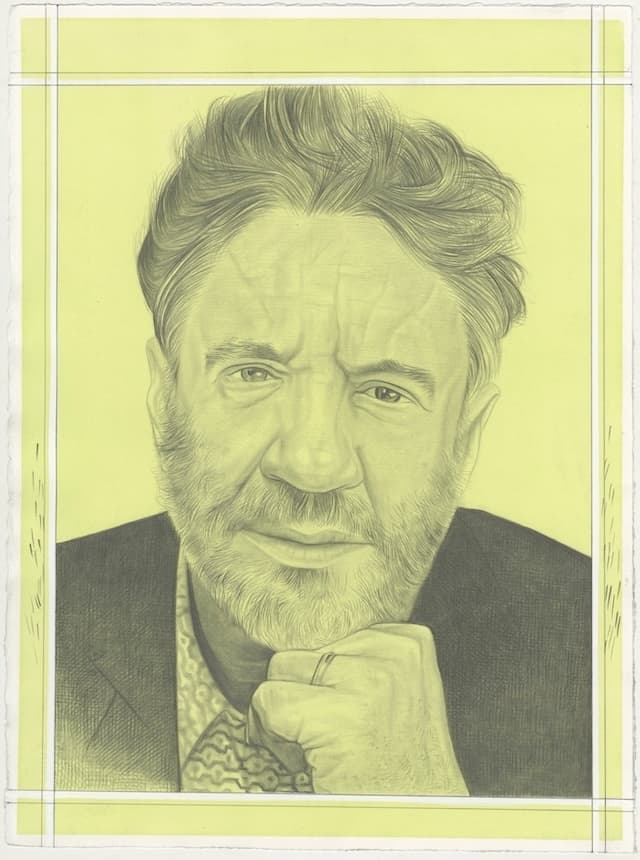
Hayes Greenfield is the one thing I have in common with Roy Lichtenstein—Hayes taught us both to play the saxophone. More importantly, Hayes has been a dear friend for some twenty years, ever since I heard him playing Charlie Parker’s “Donna Lee” on the street at Astor Place and pushed my son’s stroller over to listen. We soon realized we shared interests not just in jazz but in visual art, education, humor, the vicissitudes of life, and the connections between all of the above.
The release of Painting in Sound, Hayes’s beautiful new CD on Sunnyside Records, his first solo outing (and what “solo” means in this case is not obvious, as we will see), provides the occasion for a freely improvised look at Hayes’s life to date in music sound. Sound is indeed the thread he has followed—sound in constant evolution—from his early explorations of his family’s piano to his duets and conversations with Ornette Coleman towards the end of that master’s life. Other themes include dyslexia, electronics, film scoring, working with young people (at the Lenox Hill Neighborhood House, The Door, etc.), and the importance of listening, of practice, of intention, and of honesty. As Hayes simply puts it, “Music never lies. What you put in you get out.”
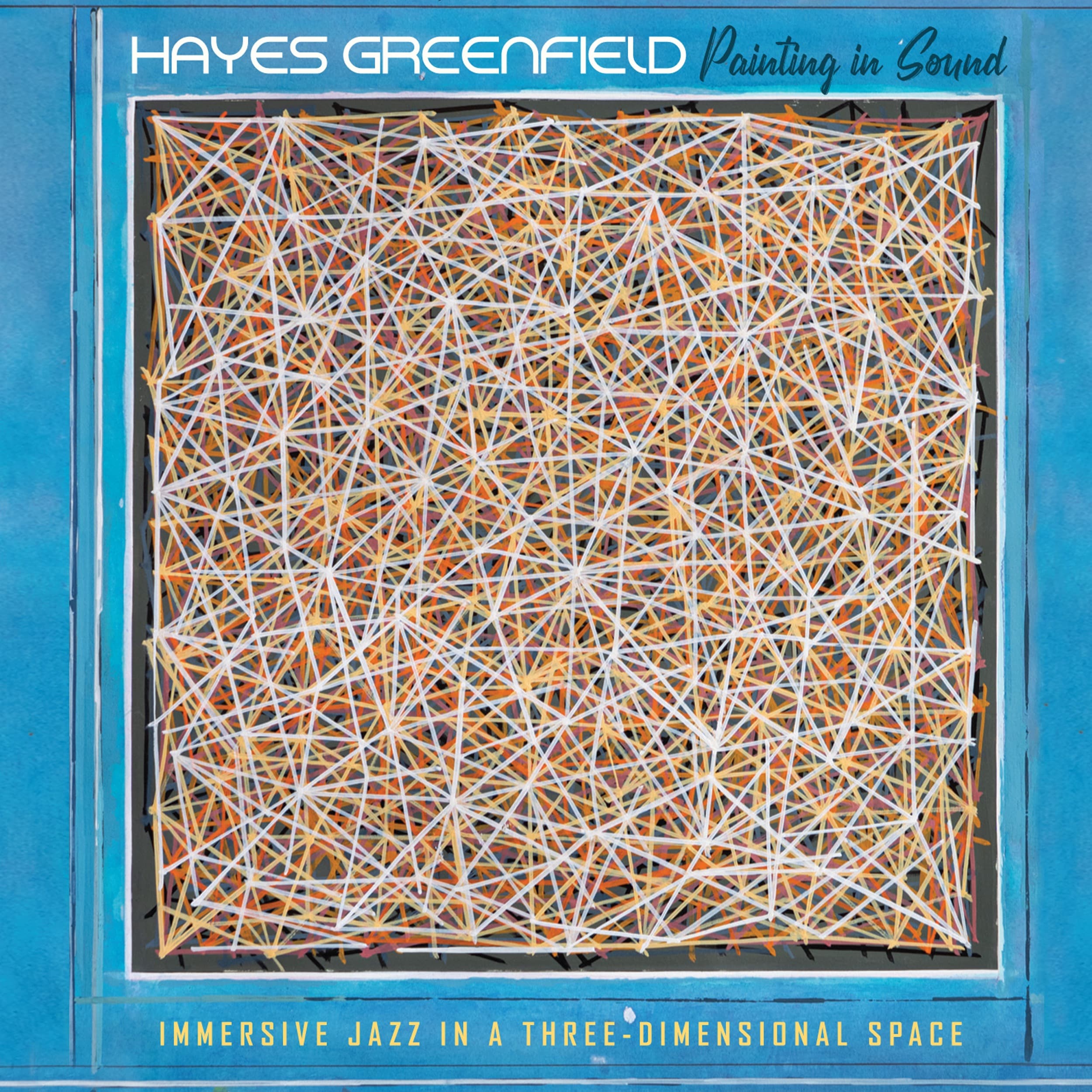
Hayes Greenfield, Painting in Sound, 2026. Album cover with artwork by Phong H. Bui. Courtesy the artist.
Harry Cooper (Rail): Hayes, you have a new CD coming out, which I want to talk about.
Hayes Greenfield: The CD is called Painting in Sound. It’s coming out on May 15 on Sunnyside Records, and the great artist Phong Bui did the cover. He spent a lot of time listening, and it inspired him, which is really the most wonderful thing, to be able to inspire somebody.
Rail: This is really a new direction for you, in that you’re playing with yourself.
Greenfield: It’s old and new. I was working with the Synclavier in the mid-eighties into the nineties.
Rail: So just for those of us who don’t know, including me—this is like a keyboard?
Greenfield: It was a keyboard, a sampler, and an FM synthesizer. It was the most elegant environment to work in, where you could interchange sounds with different tracks by literally pressing a button. I learned how to use it because I was getting into film scoring. It was the first digital audio workstation that had real strings, brass, woodwinds, piano, and bass sounds that you played using a piano keyboard and multi-track sequencer.
Rail: How big is the keyboard? Eighty-eight keys?
Greenfield: No, no. It was like sixty-four maybe. I saw a demo and was amazed. And then I started taking lessons in programming—how to work one of these boxes. The Synclav was so expensive that only studios, rich musicians, or crazy tech people had them, but I found someone who needed a programmer, and during off hours they let me use it to write film scores or my own stuff. One of the first film scores I did was for an animated short called The Little Death, which was the first high-def animation short that Sony participated in. I wrote Five for the City, my second CD, using the Synclav, and then I went into the studio with a band at Record Plant. It was a great band: Tom Harrell on trumpet, Paul Socolow on bass, Ted Lo on keyboards, John Riley on drums, and Wayne Krantz on guitar.
Rail: So the band was just playing straight acoustic music. Were you taking their input into the Synclavier?
Greenfield: No, I only used the Synclavier as the canvas to write the music and create a demo recording. Then I gave everyone brief notated sketches for the music. We listened to the demo to get an idea of what I was going for, and then everyone found their way to make my ideas their own. We recorded four tunes in four hours, and it was released on OWL Timeline Records in 1990.
Rail: What did it take for you to get back into electronics, looping, layering? How and when did you get back into that and produce this new record?
Greenfield: Well, I never stopped working with electronics, because throughout the nineties, I wrote film scores. But it was the early 2000s when I seriously started getting into effects pedals, and I bought a multi-effects box with the three basic functions: delay, modulation, and overdrive. And reverb was included in case you need to wet it up a little bit, so—
Rail: Wet it up?
Greenfield: You know, wet it up, so it softens the sound a little, makes it easier to listen to.
Rail: Like putting varnish on a painting.
Greenfield: That’s more like mastering, because that’s at the end—giving the shine. Reverb is how someone is using shadows to give depth and warmth.

Hayes Greenfield. Photo: Christopher Drukker.
Rail: One thing we should say, just to be clear, is that you are primarily a wind player. You’re playing the saxophone, flutes, and clarinets, and you’re hooking them up to pedals.
Greenfield: Yes. Every sound that I make on this recording is a natural, analog, organic sound that comes from an instrument or my voice, and is then altered. I decided to learn how to play with these pedals because I was looking for a new sound. They provide so many more textures and stretch my ears to hear more.
I used to talk to Roy Lichtenstein about how he found his own voice and whether it was a conscious choice. He told me that when he was doing his Abstract Expressionist stuff early on, it hit him one day that he only wanted to paint paintings that nobody would want to hang on their walls. [Laughs] And so he switched his whole style, which led to Pop. He just said, “I don’t want to do this anymore. I want to find something else.”
Rail: So he started moving to different kinds of effects, really—stencils and other tools that he used. You’re also looking for something new—something else that still has your voice, your touch, but which is mediated through some other equipment that you’re still in control of.
Greenfield: For me, every time I do a project, I want to get on to something different. On Gravity Unplugged, my last album, we were playing straight-ahead tunes, right? But we were moving them around, playing them how we wanted to play them, and I was plugged in with my pedals.
Rail: And you were playing as a trio on that album. It’s got to be very different now, playing alone. Painting in Sound is a solo album. You’re in complete control, which has got to be very different, because jazz is often about interacting with others.
Greenfield: Yes, but I’m interacting in a different way with this. There’s actually a whole lot of non-control, because there’s a lot of chance, and everything is improvised.
Rail: Where does chance come into it?
Greenfield: Well, you know, let’s talk about tempo. There are places where I’m not locking the loops—I’m not necessarily playing every part in time. And it becomes a fabric, it becomes a mesh. Plus, I’m not concerned with following song forms per se, which is why I use the type of looper I use. So I’m using a looper that records from its smallest increment and then loops, as opposed to what most loopers do: record the largest loop first, and then you add parts within that length.
Rail: You can create a very small chunk.
Greenfield: It’s kind of like bricks. It’s like, if a brick is the original length of a loop, everything else can be in proportion to how long that loop is. So you can have one loop being twenty bricks long, another thirteen bricks long, and another seventeen and a third bricks.
Rail: When you ask for a certain loop to start in again, you may not remember exactly what the tempo of that loop is, and it might interact with another loop.
Greenfield: Exactly. I’m planning for that to happen.
Rail: You’re setting up all the materials, but—
Greenfield: How they play can be in sync or not.
Rail: You might be surprised at what happens.
Greenfield: Well. Not only that, but the material is moving around, bending and twisting around you. So you’re hearing the surround sound binaurally.
Rail: So we need to talk about this aspect of it, too—what you just referred to as “binaural”—which has to do with the creation of spatial illusions, so that when you’re listening there’s an illusion that the sound is moving around the room or inside your head.
Greenfield: Usually what happens when you hear music is that you hear a band in front of you, an orchestra. You’re stationary, they’re stationary. But I’m moving sound around the room, or creating the illusion of sound moving around the room. When we talk about reverb and binaural sound, the way we determine where a sound is coming from is because we have two ears, and that sound, whether it’s outdoors or indoors, is reverberating around the environment—the actual physical environment. So this software that I’m using—Max/MSP and SPAT—models all of that, but the only way to hear it properly is by separating our ears with earbuds or headphones.
Rail: I’ve seen you play; you play barefoot.
Greenfield: Yes, it has to be barefoot.
Rail: That way you’re in direct contact with the pedals.
Greenfield: It’s the looper pedals I play with my feet, not the effects pedals; those I have up on a stand so I can control them with my hands because my feet are too busy looping. The loopers are about time and form, which is very tactile. As ridiculous as it sounds, I need to be in human, physical touch with the metal, the equipment.
Rail: On Painting in Sound, is it modulation which gives you the different kinds of instrumental effects?
Greenfield: Well modulation is just one aspect of the sonic field I’m working with. I think of it as color—just the way red can be blood red, cherry, rose, and so on. And then each one of those can be tweaked by adjusting depth, intensity, the shape of the sound wave, just the way a painter might use brushes, sticks, fingers, throwing paint—whatever!
Rail: What are the different instruments that you’re playing on the recording?
Greenfield: I’m on alto and soprano saxophones, C and alto flutes, alto and bass clarinets, kalimba, harmonica, and voice. Those are the instruments that I am most proficient in.
Rail: So when did you get interested in music?
Greenfield: As early as I can remember. We had a piano that I would play when I was home alone. Nobody wanted to hear me messing around. I didn’t get real access to playing music until high school, where I had an amazing music director named Phil Ventre. He took me under his wing and let me express myself. I started playing in the tenth grade and switched to alto in eleventh, then played second alto in the school big band. He hooked me up with a wonderful sax teacher named Ethan Sloane, a classical clarinetist who kicked my ass and taught me an important life lesson: when you ask a master to teach you, it’s best to come as a grasshopper.
Rail: You were, as I recall, brilliant in so-called “free jazz,” more than the tradition of playing—
Greenfield: Brilliant? I wouldn’t dare to say that. But it’s actually pretty funny: free jazz is the hardest to play well. I played a lot of free music in Boston because I couldn’t really play in the tradition yet. Then when I moved to New York City, I literally didn’t play one note of free jazz for ten years; I just practiced my ass off, transcribed solos, and studied with Jaki Byard—an amazing pianist and composer who had played with Eric Dolphy and many others. It was a thrill but also a huge challenge, because a lot of this work involved not just listening and playing, as in free jazz, but reading and writing music, and I am dyslexic—which nobody knew anything about it in the sixties and the seventies when I was coming up. That created some real emotional difficulties for me. Reading was a challenge.
Rail: Reading books, but also reading music.
Greenfield: Reading anything. I would say the mechanics are difficult for me. Spelling, grammar, intervals, harmony, chords—you name it.
Rail: One thing that is interesting coming out of this is that you’ve talked about wanting to extend what you’re doing into new territory. You’ve worked in all these different contexts, and then with the pedals—I always thought of that as this amazing extension. But you’re also saying that it was almost a prosthetic in a way, that the computer helped you.
Greenfield: Yeah, absolutely. Well, the computer helped me in terms of notation. My handwriting is terrible, and it’s difficult. These are attributes of dyslexia. The computer made it possible for me to play and write music on a keyboard instead of with a pencil.
Rail: You’ve accumulated a lot of other mechanisms. That’s a really interesting way to look at that. Everything you have down there in the basement, all those wires—it’s almost like rewiring your brain. I think because it involves sound, that’s the magic element for you. You can deal with it, because it’s all acoustic, it’s all aural.

Hayes Greenfield with students making sounds at different volume levels as part of the Creative Sound Play program.
Greenfield: Yes, and that’s a great segue into Creative Sound Play. Since we’re on the heels of talking about dyslexia, I want to talk about how sound plays into my teaching.
Everything I teach is about sound. It’s not about music; it’s about sound. At a very young age, when I was four or five, I went to a wonderful, progressive school that didn’t put me in a box, and it gave me a strong sense of myself. Even though I had trauma, I still had a sense of self—that was a light.
Rail: This was a Reggio Emilia school. Can you give me a sense of what you remember from that?
Greenfield: It was a matter of being creative and learning at your own speed, without judgment. Later, when I was at a progressive elementary school, a group of theater improvisers came to do an assembly program, and they asked people for an idea and created this incredible story out of it, and improvised it right on the spot. I remember going home, and I said to my mother, “I want to improvise.”
Rail: That’s amazing. That’s not your average elementary school assembly, right? [Laughter] That must have informed your decision to start working with young kids.
Greenfield: No, it was more a combination of being involved with a woman who was working at The Door—an afterschool program in New York City that handles thousands of kids a year and provides health care, GED programs, counseling, music, and art classes—and also writing this song called “For the Children,” which Richie Havens recorded for me. Those two things got me started down this road. So I began really working with kids and teaching and being a teaching artist. I ended up running the music program at The Door and doing an entrepreneurship program where young people got paid to create music and learn how to work with computers.
Rail: It was computer-based?
Greenfield: That part became computer-based, but before that I had a jazz ensemble, and that’s where Roy Lichtenstein—who was my saxophone student—used to come and play music with the kids.
Rail: And you had instruments for the kids?
Greenfield: Well, yes, and some had their own. Roy would come every now and then and jam with the kids. He had a ball because nobody knew who he was, and he could just hang out.
Rail: What were you playing? Were you just conducting?
Greenfield: I was playing whatever we didn’t have: my saxophone, piano, the drums.
Rail: By the way, you can’t just drop the name Roy Lichtenstein. You gotta tell us at some point how you hooked up with him.

Roy Lichtenstein, Ina, and Hayes Greenfield in the music room at The Door. Photo: Joni Miller.
Greenfield: Okay, well, I’ll tell you this. I hooked up with Roy because I was doing a score for Checkerboard’s film about Roy, Reflections, in 1992. So the director said, “Hey, would you like to meet Roy? Maybe he could give you some insight into his character.” So I said, “Sure, that sounds great.” I didn’t really know who Roy was. I mean, I knew a little bit, but I was never a fan of the comic-book stuff, although I did love his drawings. So anyway we went out and had lunch. He would take people to lunch at Florent, and we just had a ball. We had similar humor. It was like that little ironic kind of humor, a little absurdist—
Rail: And you discovered your mutual interest in jazz right away. Was he already hearing what you were scoring for the film?
Greenfield: No, no, no—he didn’t hear it until he saw the whole film put together at a private screening, and he told me he loved the score and my playing. And then I was talking to his wife, Dorothy, and Dorothy said that he always wanted to play alto. So I said, “Well, if I come across one, should I tell you?” She goes, “Yes, why don’t you do that? And if you do, you can give him lessons.” So I said, “Okay.” Then about two months later, I was in the repair guy’s place, and he said, “You know, I have a really beautiful Selmer Mark VI.” And I tried it, and I thought, this is great. I might have a buyer for this. So I called up Dorothy, and Dorothy said, “Yeah, let’s get it.” So we got it.
I started giving Roy lessons every few weeks. I’d go over there, have a wonderful lunch, laugh a lot, then head back to his home which was above his studio, give him a lesson, and get paid very well. At some point, he told me he was going to do some traveling and he wasn’t sure when he would get back. I gave him a bunch of things to practice on his own. Up until then, he had stayed on top of all the material and was developing a beautiful sound and some technique. Plus, he had amazing ears and musical recall. So about six to eight months go by—I don’t hear anything, and figure he got bored and stopped. And then I get a call that Roy wants a lesson. After hearing him play one note, my heart sank. He hadn’t practiced any of what we worked on, and I was so frustrated. I said something like: “Stop, Roy. You sound terrible, and you haven’t done any of the practicing we went over. You just picked up your horn, started to blow, and flapped your fingers. You played nothing with intention.” Of course, he agreed, because music never lies. What you put in you get out. I told him that unless he practiced as regularly as his schedule allowed, “I can’t be the best teacher I can be, and I’m not interested in teaching you. I’m sure there are tons of cats out there who’ll say you sound great and would love to tell everybody they teach Roy Lichtenstein.” At that point he turned to me and said, “No Hayes, you’re the only teacher I want.” From then on, he practiced at least an hour almost every day starting at 5:30 p.m. and grew in leaps and bounds. I can remember jamming with him in my apartment: me on drums and him blowing as hard as he could, his face beet red, one hundred percent present—all in.
As soon as he was ready, I invited him to play with my jazz band at The Door. Nobody knew who he was, which he adored. He loved to talk shop with Ina, an eighteen-year-old alto player. He was free to just be another young musician and soak it all up. When he got even better, I invited him to sit in on a serious gig of mine with bassist Dean Johnson at the Internet Cafe on two occasions, before Roy died on September 29, 1997.
So here I am giving Roy lessons, and I’m back to thinking, “How can I do something different, just like Roy did when he moved from Ab Ex to Pop?” So I made a demo of five children’s tunes with a jazz treatment, just to check out what it would sound like, with singer Miles Griffith, pianist Dave Berkman, bassist Jim Marentic, and me on drums. Then in June, Roy invited me out to the Hamptons to attend an annual jazz fundraiser that Peter Jennings hosted. On the way out, I played the demo in the car, and Roy really dug it. Then he played it for Dorothy and called me up a couple days later, and said, “I’m in. This is really important, and I want to produce this.” He goes, “What do you need?” And I told him what I needed. And that’s the last time I spoke to him. Then he got sick. But Dorothy was wonderful and continued to support my work.
Rail: So he and Dorothy supported this album called Jazz-A-Ma-Tazz.
Greenfield: Yes, they helped me bring four socially oriented projects to fruition: For the Children, Jazz-A-Ma-Tazz, Music for a Green Planet, and Creative Sound Play.

Hayes Greenfield with students who played at a Jazz-A-Ma-Tazz performance. Photo: David Leitner.
Rail: So the point was not just to make this album, but to start reaching an audience.
Greenfield: Yes, and it did. It got five awards from the national press, and between 1998 (when it came out) and 2012, I must have played for close to 300,000 or more kids at schools, festivals, and museums all over the US and in Europe.
Rail: These are concerts where you would hand out the little instruments.
Greenfield: I had kazoos; I played jazz festivals—
Rail: Kids would come up and scat sing.
Greenfield: Kids would scat sing, hula hoop, and dance, and at schools with music programs they would play with my band. One thing that I’m very proud of is that in 2009, I went to Fairhaven, Massachusetts, and the entire community was dealing with the economic crash. We went to this middle school in June, and all of the teachers were really depressed because they had just found out the entire music program in the district had been cancelled and they were losing their jobs. We did a music workshop with the middle school band kids, and then a Jazz-A-Ma-Tazz performance at the elementary school where the band kids played with my band. It was electrifying. About three weeks later, I got an email saying that, in part because the community was so excited and inspired by what they saw at our performance, the district reinstated the whole music program.
It’s actually through Jazz-A-Ma-Tazz that I started doing concerts and then workshops at special-needs schools, which was the inspiration for Creative Sound Play. I did a ten-day workshop with all kinds of high-functioning, neurodiverse high-school students using flutophones and bongos to make quiet, loud, long, and short sounds. The mission was to listen to each other, play sound and silence, lead, follow, and interact as an ensemble. After it ended, I got an email from the teacher that read, “The kids came in today and started improvising with each other, playing their flutophones and bongos and saying, ‘Don’t forget to play silence!’ Doing all of this on their own. Just amazing!”
Then I spent three years with PNC Bank’s “Grow Up Great” initiative, and five years at the Lenox Hill Neighborhood House’s Early Childhood Center working with pre-K teachers and their students to develop and codify Creative Sound Play. I now partner with the National Head Start Association, teaching pre-K teachers how to manage and engage their classrooms better through sound. Here’s a beautiful story a Head Start teacher told me yesterday about when this little girl came to school—
Rail: We’re not talking years ago.
Greenfield: No. This happened yesterday. It ended my class yesterday, so it could not have been more perfect. So this woman was telling me that yesterday morning, this little girl came into school and she didn’t want to leave her dad. She’s crying. And this woman who I was working with at the school was called to come and take her to her classroom. So they’re walking down the hall. She’s holding her hand, and she wants to do something with her, but she doesn’t want to use words. So she starts clucking her tongue, and all of a sudden, the little girl starts clucking her tongue back, and they’re looking at each other and walking down the hall. The teacher is looking at her, and the little girl is looking at her dad leaving, and they’re walking down the hall, and all of a sudden, everything’s cool. She goes into class clucking, and everything’s cool. And what was so beautiful about this story was—here’s this little girl who’s in a traumatic situation, but she’s engaged with making sound, which she knows how to do. She’s in the moment. She’s responding and having a conversation. She’s being heard without words, and somebody else is responding, and it’s calming her. So just making a sound—a simple sound, as simple as that cluck—completely calmed down this girl. Making human connection—making genuine, positive human connection.
Rail: And also changing the whole script, because words could just bring back feelings about that separation.
Greenfield: Exactly. And then you have to compute the words, and you have to have a dialogue. And she’s upset, so she doesn’t want a verbal dialogue. That’s what sound does. So when I’m playing with my pedals, I’m not thinking in terms of words. I’m thinking in terms of sounds.

Hayes Greenfield with students who played at a Jazz-A-Ma-Tazz performance. Photo: David Leitner.
Rail: You’re not even thinking necessarily in terms of keys or notes.
Greenfield: No. I’m thinking in terms of lines and textures: What’s missing here? How do I want to do this? You asked me earlier about what instruments I’m playing. So I’m playing alto and soprano, which are my strongest instruments. Then I’m playing flute, which is my next strongest—if even that. Flute and alto flute, and then clarinets, which I use predominantly just as a texture, because I would never consider myself a real clarinet player, not having put in the time. It’s like what the little girl was doing when she was clucking. I might need to make a pop on the bass clarinet, and play it so it’s clucking. And using tools: the pedals and the loopers, and of course the instruments themselves. You know, the connotation of playing by oneself—which is where you started this interview—is a challenging one for me to get over. A painter is painting by themselves. A writer is writing by themselves.
Rail: If you’re down there practicing with just one horn, then you’re really by yourself; but you’re having a conversation, just with a lot of horns that you happen to be playing, and electronics—it’s a palette. It’s a huge palette.
Greenfield: That’s my canvas. I think part of why people respond to my work as a composer and a writer is that when you listen to something, it creates some kind of visual image—my image may not be what yours is, but that’s not my point. My point is to create something that inspires something else.
Rail: You’ve talked about this album in terms of layering, and Phong’s art is very visibly about layering—even if you can’t necessarily pick apart all the layers, which I think is part of the excitement of it.
Greenfield: You can’t pick apart all the layers of the music, either.
Rail: All the track titles on Painting in Sound have something to do with visual experience.
Greenfield: I think they do. Let’s look at the titles. The titles are “Micasso and Patisse,” which is obviously a play on visual experience. You know about that. “The Murals of Federal One” is the fastest-tempo piece on the tape, but it was also something that, when I closed my eyes, I was recalling memories of these Art Deco workers in a lot of the murals from—
Rail: The Works Progress Administration, in the 1930s.
Greenfield: Right. And then “A Beauty and the Shimmering Sun” reminded me of Gustav Klimt. And then “Finally Free of the Black Lines” is actually about Roy Lichtenstein.
Every time I would give Roy a lesson at his studio, we would walk around the room, and he would show me his new work. This was around 1994, and he died in 1997. And about one painting, he told me, “I’m finally free of the black lines.” If anybody reads this interview and wants to check it out, go to the Lichtenstein Foundation website, and you can see all this stuff in chronological order. You’ll see that from 1994 to ’97, there’s a period where all of a sudden he begins to loosen up and get away from the black lines. And in 1996 to ’97, he was just jamming. I mean, it’s electric. Instead of having a chair that’s outlined with black lines, it’s red, yellow, blue, green—it’s unbelievable. When he said to me, “I’m finally free,” it was like he was liberated. I think this corresponded with his playing music, because I’d have him come to play gigs, and, you know, when you’re playing, if you’re really playing, you’re not thinking about what you’re playing—it’s intuitive. You’re listening to the people who are with you, and you’re having a conversation.
And then there’s “The Wanderer.” That’s for Ikuo Nakamura—who I did that film project with, Minimus 3D Arkestra—who wanders the globe getting this incredible 3D footage. And then there’s “The Sketch Book,” which is for Phong, because it was his sketchbook that I saw that turned me on to him. And then there’s “The Art Historian,” which is for you, Harry. And the last one is “Painting in Sound,” which is the one that’s got the alto clarinet and the soprano.
Rail: “Painting in Sound.” And that’s the name of the album. That brings us to Ornette Coleman. Did you know that in Ornette’s Skies of America composition that he did for the London Symphony Orchestra in 1972, there’s a movement called “Sounds Of Sculpture”?
Greenfield: No, I didn’t. Wow. That reminds me of something I talk about in my book: sound sculpture, which is basically a road map where a child can conduct his or her peers to create a composition with clapping, instruments, voices, narration, movement—the palette is unlimited as long as everyone is being intentional and listening.

Rail: Tell me a little about your book, which was published by Routledge in 2024, called Creative Sound Play for Young Learners: A Teacher’s Guide to Enhancing Transition Times, Classroom Communities, SEL, and Executive Function Skills. I remember reading the manuscripts. What made you, the dyslexic for whom language is traumatic, decide to write a book?
Greenfield: I didn’t have a choice. I felt like I had to write the book. I felt like it was time. I had been working on the “Grow Up Great” initiative with PNC Bank, and I got back, and I really wanted to put this to the test—to see if it was worth it for me to go down the rabbit hole. So I met Clancy Blair, a developmental neuroscientist at NYU, and he mentored me and connected me with the Head Start Program at Lenox Hill Neighborhood House’s Early Childhood Center, where I spent five years developing what became Creative Sound Play.
Rail: Developing a curriculum.
Greenfield: Well, it’s more of a method that works with any curriculum. It’s really about waking up the world, which is sound asleep. This book was written to be the definitive book on sound in education, and it’s about how anyone can easily engage children with the one activity they love doing: making sound. And then, when children are provided the license and opportunity to make all kinds of intentional sounds in deliberate ways and then discuss them, teachers tell me that their students as young as three will walk into the classroom, and say, “It’s too loud in here. Can we quiet down?” Imagine a three-year-old has that kind of reflective perception, to actually walk into a room, feel uncomfortable, identify that they feel uncomfortable, and then figure out why and express it—that’s profound.
Rail: Right. Instead of teachers, for ages, telling kids to be quiet, which never works.
Greenfield: Right. But it’s also about enabling teachers to say to a child that comes in to the classroom really loud, instead of shouting, “Stop, stop,” to say, “Whoa, whoa, I bet you can’t make that same sound quiet… and then make it louder… make it quiet… make it really loud… now quiet.” And what they don’t realize is that, once they do, they’re providing their students the opportunity to realize that what they do matters. And all of a sudden they can internalize that. When you teach up as opposed to teaching down, it changes the whole equation. It enhances executive functioning skills, social-emotional learning, and mindfulness. One of my developmental neuroscience mentors is the renowned Adele Diamond. Her data has shown that children with enhanced executive functioning skills do better in school and go on to lead successful lives.
Rail: I also want to get back to Ornette, because it’s extraordinary that you hung out with him and played with him, and I have a feeling that he resonates with a lot of what we’ve been talking about.

Hayes Greenfield with Ornette Coleman.
Greenfield: Yes, absolutely. One of the things that was so beautiful about Ornette is that he was really honest. When we played together, what was so beautiful was that there was nothing in between us but air. We had a ball. When I first met him, I said, “I have a piece I wrote for you.” I wrote a tune called “Ornettism.” I was playing this line and it sounded like an Ornette line. I thought, “Oh shit, man. I’m not going to call it anything else but ‘Ornette.’” Because I’m stealing it, right? And what better way to honor somebody? He really enjoyed the tune. And when I told him I wrote this, I said, “Can I come play?” He said, “Yeah, come by anytime.” And I didn’t go because I was scared. And then I saw him at a Gagosian event, and we were going down the elevator, and I said, “So, can I come over?” and he said “Anytime.” So I said, “Okay, I’ll come over tonight.” It was already midnight. And the woman he was with just said, “No, you will not.” [Laughter] So then I went maybe a couple days later, and I brought him this CD, and he really dug it.
Rail: You said Ornette was really honest—in terms of what he was playing? What he was saying?
Greenfield: Anything. There was a naïve quality about him. There was no ulterior motive. There was just pure, childlike love. He was one of the most gentle people. He was extremely generous.
Rail: And he was not afraid to do things that people might not understand. He didn’t fit into existing theory or discipline.
Greenfield: And he wasn’t judgmental.
Rail: Even though he knew his tradition, he could play the changes. There’s a lot of Ornette in your playing.
Greenfield: Oh, there should be. I hope so. I mean, I’m not going for Ornette’s sound—but Ornette just has a sound that you know is his. I don’t know if I have a sound that you know is mine. I would know it’s mine, but I don’t know if my sound is that definable—maybe that’s why I’m searching with the pedals, or doing this other stuff. Maybe it’s taken me this long to finally figure out—you know —“how to hear the song I’m singing,” as Abbey Lincoln put it so beautifully. There’s a wonderful story that the saxophonist Bob Mover tells about his time with Chet Baker. Bob’s having dinner with Chet at like four in the morning after a gig. At this point Bob’s a young guy coming up. He’s practicing all day long and then going on the gig and practicing all of his stuff on the gig. And Chet says to him, “Most people can only hear three things about the way someone plays: how loud, how high, and how fast. And I’m sure if you wanted to put your energy in that direction, Bob, you could be one of loudest, highest, fastest cats out there. But if you did that, I would be disappointed, because I would have hoped that you would have opted for beauty.”
Rail: So elegantly phrased.
Greenfield: I would hope that you would opt for beauty.
Harry Cooper is the Bunny Mellon Curator of Modern Art at the National Gallery in Washington, DC. After working at the Harvard Art Museums for a decade, he joined the National Gallery in 2008 as head of the modern and contemporary art department. He has organized or co-organized exhibitions and written essays on the work of Piet Mondrian, Medardo Rosso, Frank Stella, Stuart Davis, Oliver Lee Jackson, Philip Guston, and others. On the academic side, he has taught at Harvard, Columbia, NYU, and Johns Hopkins, and he edited The Cubism Seminars in 2017 for the Center for Advanced Study in the Visual Arts. His current project is a Helen Frankenthaler retrospective.