Word count: 4010
Paragraphs: 43
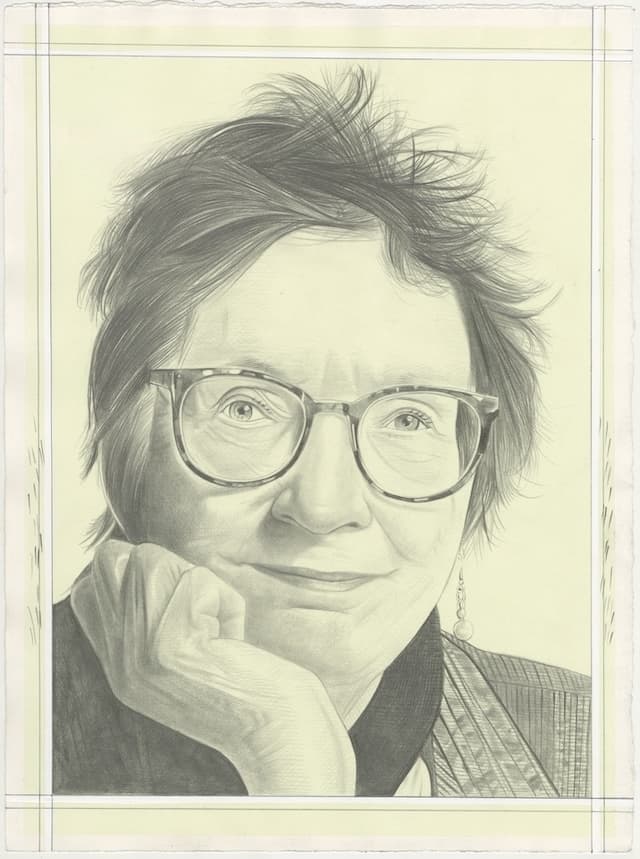
Six-time Obie Awards–winner JoAnne Akalaitis has made it her work to reshape the syntax of the stage. She is the recipient of a Guggenheim Fellowship, the Edwin Booth Award, and a Rosamund Gilder Award for Outstanding Achievement in Theatre. Akalaitis is a former Artistic Director of The Public Theater. She has staged works by Samuel Beckett, María Irene Fornés, Franz Xaver Kroetz, Euripides, William Shakespeare, August Strindberg, Philip Glass, Jean Genet, Tennessee Williams, and Harold Pinter, in addition to her own work. As a founding member of Mabou Mines, she has persistently challenged the boundary between the experimental and the canonical, staging works that question scale, sound, narrative, and, perhaps most importantly, the given notions audiences bring to dramatic performance. In January 2026, Mabou Mines presented a radical new production of All That Fall, originally written as a radio play by Samuel Beckett, and directed by Akalaitis. Prompted by the occasion of this latest production, I spoke with Akalaitis about her development and approach to the theatrical process, returning to Beckett, and the subtle resonance of “the inward yes.”

Set of the Mabou Mines production of Samuel Beckett’s All that Fall, 2026. Photo: Ross Louis Klein.
Tom McGlynn (Rail): You grew up in Cicero, Illinois, in a tight-knit Lithuanian American community. Some of your earliest theater experiences were actually in your local school, St Anthony’s.
JoAnne Akalaitis: There I felt like I was growing up in fourteenth century Lithuania, where the only people I knew were Catholic Lithuanians, and the only Jewish person I knew was Mr. Miller, who sold his fish to us on Friday. Yet I’m actually incredibly grateful for my education. In my grammar school there were just a lot of pageants, a lot of theatrical events, religious theatrical events. Yet what I took from it were the images. Like statues of the bloody Christ. I always start work from an image.
Rail: It’s not that unusual for an immigrant community to be so insular, but I’m interested in how that environment may have shaped your aesthetic awareness. In an interview in the Rail in 2002, the playwright María Irene Fornés said, “Theater is a service where the god keeps changing.”
Akalaitis: I was lucky enough to go to an amazing high school, a Catholic girl’s high school, Providence High on the west side of Chicago, and I am so grateful for the nuns in my life. I was educated by intelligent, idealistic women. And it was Sister Edith, who was my freshman art teacher, who introduced me to so much, like Paul Cezanne, Pablo Picasso—fantastic. I knew none of that before. I wanted to be a visual artist. Sister Edith encouraged me to the extent that she gave me a wall of the school with one of my classmates who I remember, Mary Ann King, and said that we could do a mural. And we graphed it out, and we did this big thing called “Providence Girls at Work and Play.” And, like many, many people in theater I had a great drama teacher, Miss Cluny. You know, in my own teaching, so many—I would say the majority of students—come from being inspired by a teacher. So, it was a combination of that and of Sister Edith introducing me to whatever modernism, cross–modernism, and the arts in general. My high school was also academically rigorous, incredibly serious, a fabulous education. We had to write a senior paper, and my paper was “Cezanne: Father of Modern Art.” I also went to the Art Institute of Chicago by myself every Saturday. I was getting away from my family, and it was sort of great. And all this time, you know, doing theater, and being in theater later in college; theater was always there in my life.
Rail: You later went to the University of Chicago to study pre-med, then changing to philosophy and afterwards being awarded a fellowship in philosophy at Stanford where you spent one year.
Akalaitis: I was in pre-med in Chicago, and then the door blew open one day when I went to an eighteenth-century philosophy class, and the teacher said, “René Descartes said, ‘I think, therefore I am’.” And it was like a thermonuclear blast! When I eventually got to San Francisco after Stanford it was a very exciting time. I really wanted to be an actor on the stage, and I did an audition for the Actor’s Workshop there, which was run by Herb Blau and Jules Irving—you know, very seminal, important people in the theater. The work then was very political and progressive. I never got to do anything with the company, but I had a job selling orange juice in the lobby. And the San Francisco Mime Troupe was important. I got an enormous education from that time and met Ruth Maleczech and Lee Breuer then. We were doing things together and we were in the West Coast Happenings. Among other things I was in a Stan Brakhage film, and I remember us working on Antigone. I initially met Philip Glass there and two years later when I got to New York we saw productions such as The Brig, The Connection, and Bertolt Brecht’s Man is Man by the Living Theater at their venue on 14th Street. And Joe Chaikin’s Open Theater was very important. Then Phil and I went to Paris together because he had a Fulbright. And there was a kind of American theater there, and I learned a lot because I saw so much film. I went to the cinema three times a day because we lived in a very small garage/atelier. It had a cement floor, freezing cold, and there was one room. Phil was studying with Nadia Boulanger, and he’d play on an old upright piano. During breaks he and I drove and hitchhiked all over Europe to look at art and take in theater. I wanted to see all of Le Corbusier’s buildings, for instance, and we saw the Living Theater’s production of Frankenstein at an outdoor amphitheater in Southern France, which was thrilling. There was a full moon that night and Julian Beck came out and sat in a lotus position saying that the performance would begin when he began to levitate. The uniqueness of the event was in large part what made Phil and I ask Judith Malina if we could join the Living Theater, but she turned us down. I remember Jonas Mekas filming that production. Then Ruth and Lee came to Paris. We did our first production at the American Center, which was Beckett’s Play. And what became very clear was that David Warrilow, Phil, me, Ruth, and Lee, we all wanted to stay together. And I give Phil a lot of credit in this, because he said, “You should be doing your own work. You should not be working for a theater. You should be equally collaborating.” When he and I got to Cape Breton later on in 1970—he had bought some property up there with Rudy Wurlitzer—we named the collective Mabou Mines after a location nearby. From June to October that year we rehearsed The Red Horse Animation in an old boathouse on the property where Phil and the painter Power Boothe had built a stage for us.

Mabou Mines production of Samuel Beckett’s Play, 1971. (L–R): JoAnne Akalaitis, David Warrilow, Ruth Maleczech. Photo: Tony Kent.
Rail: A collective endeavor. And an intentional community of sorts.
Akalaitis: Not just collective, I would say socialist, because everyone was equal. There was no artistic director. In Mabou Mines everyone got paid the same amount of money, whether they were working or not. And there was a commitment to family in that a line in the budget of every production was for babysitters. And when we went on tour, we paid babysitters to come with us so that we could take the children. So, there was a kind of idealism about it, which was not based on any theory. It was really a negotiation of egos and common sense.
Rail: After Paris you eventually returned to New York at a very pivotal time.
Akalaitis: When we got back to New York it was amazing. Everything was happening. The Judson Church, Happenings, everything, that was simply a great time. Yvonne Rainer’s performance of Trio A at the Anderson Theater on Second Avenue made a big impact, for instance. I saw Joan Jonas’s Mirror Piece work at that time too. It was a lot of fun because it was easy. It was easy in a way to be poor then, yet I have no nostalgia for poverty.
Rail: Poverty’s present is quite enough. What was your eventual response to that roiling downtown milieu?
Akalaitis: We said to Lee, Ruth, and David in Paris, “Come, come to New York. It’s all happening.” Then we all moved into the same place. We rented two floors of a place on 23rd Street and 10th Avenue for seventy-five dollars a month. It was an old, run-down rooming house that we made into a studio for Phil, and a studio for us. Phil was working as a plumber, basically supporting us. Then Ellen Stewart of La Mama gave us our first paid theater stipend which we nicknamed “the meatloaf stipend.” We got fifty dollars a week which made so much possible. Ellen and Joseph Papp were my greatest mentors. Both of them said something similar like, “Oh baby I’m just going to go with my instinct.” That feeling went on for quite a while in New York—just going with one’s instinct. At the time I worked at Food restaurant, a genius idea that came from Gordon Matta-Clark—it was Gordon’s instinct. I even wrote a cookbook called Food for Food. And just down the street was 112 Greene Street, a wrecked place in SoHo that Jeffrey Lew, Gordon’s friend, bought as an alternative art space.
Rail: Artists and performers such as Alan Saret, Richard Nonas, Tina Girouard, Suzanne Harris, Jene Highstein, Larry Miller, and Richard Serra were all associated with the space. The painter Mary Heilmann too.
Akalaitis: Yes, and there was a lot of performance. And all the worlds were mixed. One didn’t even think about categories. We were just all sort of making art. And no one used the word career, which is a word that is the concept now because people go to graduate school and expect careers. And it’s really important to them, as opposed to what we were all doing—“oh, let’s, let’s do this, and let’s just, let’s just work on it, right? Let’s just work, yeah.” The whole financial scene was different. There were no producers and a lot of in-kind support. For example, Alanna Heiss invited us to rehearse at the Clocktower for free.

Set of the Mabou Mines production of Samuel Beckett’s All that Fall, 2026. Photo: Ross Louis Klein.
Rail: Yes. The collaborative milieu. The idea that you could go between worlds, the as yet codified interdisciplinary aspect. I know that, for instance, you’ve previously incorporated visual artists into your set design. I believe you once said you used Philip Pearlstein’s paintings in a production. In the past you’ve also invoked Rembrandt’s The Night Watch (1642)—in particular the artist’s choice of the foregrounded dog as a compositional device.
Akalaitis: I did use Pearlstein’s work once in rehearsal, and that Rembrandt I’ve used as an example of composition with my students. I also developed some acting exercises inspired by the seventeenth century Spanish painter Francisco de Zurbarán, who has long been an inspiration.
Rail: What was it about Zurbarán?
Akalaitis: I have this kind of Western rip-off of what are called mudras from the Kathakali theater in India. You see these also in Buddhist images. So, I was very involved in these gestural things. When we were working on the María Irene Fornés play Mud there were fifteen scenes with interludes, and in each interlude was a mudra composition.
Rail: So, they’re highly stylized allegorical gestures. In Kathakali tradition performers use twenty-four hand gestures, nine head motions, and specialized eye movements to convey complex emotions.
Akalaitis: The way I use them isn’t strictly allegorical. They’re tools for rehearsal, for actors to develop their own movements—they’re inspirational.
Rail: I meant allegorical in the sense of the vocabulary of gesture as used in Zurbarán paintings, not necessarily that you were using them as theatrical allegory. Looking at Zurbarán’s biblical genre works you see his figures orchestrated via these religiously loaded gestures, like the typical “blessing” gesture of Jesus holding up the index and middle finger of his right hand.
Akalaitis: Yes, and I’ve also used American Sign Language. For instance, the sign for dreaming, which is a wiggling finger gesture outward from the forehead. All very interesting. There are certain things like that.
Rail: Mel Gussow has written about Samuel Beckett’s relation to gesture in his work as anti-symbolic and more akin to the very physical comedy movement of slapstick. He mentions Stan Laurel and Oliver Hardy. Beckett worked on his Film with Buster Keaton in 1965.
Akalaitis: Beckett was so exacting in his stage direction that the actors did exactly what he wanted them to do—the gestures that he wanted. Same with his production design. What’s important is that this brings up the very key question, “What do directors and designers do?” One encounters a script. You buy the Samuel French edition of a play, and if it says there’s a pink couch. Do you actually go buy a pink couch? Who really does that?
Rail: Another point that I thought you might be interested to talk about is the inter-permeability of a script, its not being, you know, chapter and verse, and how the artists interpret the script, allowing the actors to project their subjectivity into the performance. Is that something you learned with the Polish director Jerzy Grotowski? His was a concept of “poor theater” and with it a rejection of conventional stage set-ups which would put the focus more on the actors.
Akalaitis: I studied theater with Grotowski for a month in Aix-en-Provence with Ruth. She was pregnant at the time and I had a small child. What I learned from him is that you don’t develop character. Of course, actors must think about character, but what they do belongs to them, right? I learned a lot about bravery because the physical exercises were so hard. But I can’t say that I was ever strongly influenced by any theater director. Some of my biggest influences in performance are from Rainer Werner Fassbinder, and avant-garde cinema. The playing field is, I would say, the collective unconscious, a Jungian idea that the production, especially the actors, but also the entire work—lighting, scenery, costumes—is sending messages that are non-intellectual, non-verbal, out to the audience which creates a profound, mutual event. The effect is that of a flow of “insta-moments” that arise and then, boom, are gone.
Rail: Can you describe one rehearsal exercise you subsequently developed for actors yourself?
Akalaitis: One is called “stopping and starting,” which has to do with: I’m in one place, then I’m in another place. It involves feeling how solidly profound stopping is and how thrilling attacking starting is. I do it to the same piece of music, an Ethiopian piece that’s got a really very powerful Afro beat, and the actors just walk/stop. They’re moving around the room, and they stop; there’s no understanding why one stops, and they feel what it looks like to stop. And then they start with an “attack.” So, there’s the question; aggression is very powerful, very important. I call it an attack. You can’t just slide into a beat. You have to attack it. It isn’t theoretical.

Mabou Mines production of María Irene Fornes’s Drowning, 2020. (L–R): Gregory Purnham, Peter Stewart, Brandon Hynum. Photo: Julieta Cervantes.
Rail: I completely agree with that. As a painter I can’t just simply think my paintings into being. You mentioned the playwright María Irene Fornés earlier. I saw your presentation of a reading of an excerpt from her play Mud at the Inverness County Centre for the Arts in Cape Breton in 2019. Later you staged a full production of Mud/Drowning with Mabou Mines, with Phil composing new music, in New York, in 2020. That full production included a narrator character, akin to a stage manager, who reads out stage directions and at times actually interacts with the other players. What is it about Fornés’s work that interests you? I’ve noted that she once studied painting with Hans Hofmann!
Akalaitis: Yes, with Hans Hofmann, and his, “push and pull.” It’s so clear in Irene’s work. It probably doesn’t help any actor to look at a Hans Hofmann painting, but it helped me. There are some places in the performance that are push, and some that are pull. It’s the force of the performer—where the performer knows when it’s easier to push and it’s harder to know exactly when to pull. But a pull is a more generous gesture in the sense of the actors giving space. For me, the center of theater is emotion—feeling—the thrill of actors opening their hearts; it is fundamentally human. Fornés was a profoundly progressive American female director. I guess she always had a problem calling herself a feminist. She’s in the pantheon with the big guys for me, with Beckett and Pinter. She’s way up there, but people simply don’t know her as well. She won nine Obies and was apparently a wonderful teacher, teaching so many important playwrights.
Rail: You’ve been a very impactful teacher in your own right. First at Juilliard and then at Bard for fourteen years. But let’s discuss some of your other significant influences and related productions.
Akalaitis: Jean Genet has been of major significance. He is always interested in the one who betrays, the criminal. At the center of my work is his statement that each scene and each section within the scene should be played as if it were an entire play without any smudges, without any notion that there’s something that came before or something that’s going to come after. Now that is not the way theater is usually practiced. Theater is about a sort of story where there are things called transitions, right? When I did Genet’s play The Screens, it was very hard. There were practically no Arab actors available at the time. I did cast one Palestinian actor, Joseph Haj, who is now the only Palestinian artistic director of a theater in America, the Guthrie Theater in Minneapolis. I gave him his first job, and when we were sitting around during that production he said, “Why don’t we go to Palestine?” I said, “Okay, we’ll do it.” And because Edward Said came to see our production of The Screens there, we became friends. Said got the funding for us to go to the occupied territories and I wrote an article for the New York Times about the experience.

Cast of the Mabou Mines production of Samuel Beckett’s All that Fall, 2026. (L–R/T–B): Randy Danson, Wendy vanden Heuvel, Tęmidayo Amay, Tony Torn, Jesse Lenat, Steven Rattazzi. Photo: Jeri Coppola.
Rail: That’s an amazing sequence of events. Let’s turn to your most recent Mabou Mines production, Beckett’s All That Fall, which originally was written as a radio play. The work was staged in January of this year.
Akalaitis: It was so different than anything I’ve ever done, really. There were no actors on the stage. Wow. It was one of the most complicated sound installations and stagings I’ve done, period. Thomas Dunn, who is a lighting designer, did this as a scenic designer. It was one of the hardest sets ever, and it was brilliant, it was a brilliant set. Jeri Coppola, who you know, also contributed beautiful imagery from her photographic works.
Rail: The set presented like a diorama of an imaginary rural village. And the audience was seated from a relatively elevated position. These wardrobe development shots of the actors involved which you’ve shared with me—in period clothes and wallpaper backgrounds—could share a chronology with older Cape Breton as well as Ireland, where the play is originally set.
Akalaitis: The play was written in 1957, so the period is roughly the 1940s or 1950s. Of course, in a rural society then there was typically a time lag.
Rail: I imagine you could still have felt that kind of time lag in the Cape Breton you first encountered in 1970. You chose to use Cape Breton accents in this production.
Akalaitis: The play is set in this village in Ireland. I did not want to hear American actors doing an Irish accent, because no matter how they’re trained, they can’t do it. And I thought, oh, the Cape Breton accent is really interesting because there’s so many different versions. So, the audience is being emotionally pulled in by these brilliant actors speaking in their varying Nova Scotian accents, in which they were coached by a Peter MacInnis, who lives in West Mabou. He’s a farmer, actor, musician, and a music teacher in Port Hawkesbury on the island. He worked on Zoom with each actor coaching them on their various accents.
With regards to the set development, I usually know the landscape I like. I sort of see what I see at first. I was originally going in a different direction: much more abstract, and then I thought, oh, I want to go in a kind of middle school-like way, like the old technology of the slides that Jeri put together. These were presented on an old carousel slide projector that makes that noise and on a screen that is like a middle school screen on a tripod. All very low tech. It’s like let’s see if we can do this. Because we don’t know what we’re doing. For instance, since no actors are actually present, how do you know where these voices are coming from? I worked with Bruce Odland, who is a genius sound designer. The sound installation was amazing because the sound came from all over the room including under the audience’s seats. There’s a big train thing. The train scared the shit out of everyone in the audience. And there’s a rainstorm at the end, which is the greatest rainstorm ever. There are 114 sound cues in a play that’s an hour and ten minutes long. And I worked with Jennifer Tipton, the great lighting designer. We work together all the time, yet this was really challenging for her, because when she lights, she typically lights people. So, the question becomes how do you stage a play where the actors aren’t physically present? And then how are you going to record it, right? We have to somehow rehearse it so that actors know something about their character. I decided to rehearse it like a real play. And I didn’t want to go into a sound studio, so we made a studio. It was so complicated, creatively, intellectually, psychologically. What I wanted was to sort of figure out what Beckett’s code was in this piece, and then for the audience to be invited with us into that landscape: the set, the sound, and the lighting, to lean in, look, and listen. It was so beautiful working with Peter MacInnis on the actors’ accents. And it was a beautiful experience for them to work with him, because if we hired a traditional dialect coach—and they’re usually very good—the dialect coach would study it, and they would all come out sounding the same.
Rail: Yes, I recall how, in my own first experiences in talking with people in Cape Breton, I was struck by this gasp of air some would often interject almost as a breathless punctuation. I’ve since learned it’s a real thing in Nordic and Gaelic cultures in particular—linguistically termed “the pulmonic ingressive.” Another, much more poetic term for it is “the inward yes.”
Akalaitis: I had one character who appeared at the very beginning who was almost incomprehensible on purpose. I thought there, that’s going to fuck the audience up because there were a lot of silences and pauses in that part that Beckett wrote, but then I thought, let the audience know at the outset that they’re going to have to work really hard. The project was not only about a company of actors decoding Beckett, but to a large extent my increasing exasperation with New York audiences whose noisy and anticipatory reaction to every breath or pause betrays a blocking of “leaning in”—really looking and listening, taking in, feeling and thinking. Grotowski emphasized the sacred in theater and Genet its healing power.
Tom McGlynn is an artist, writer, and independent curator based in the NYC area. His work is represented in the permanent collections of the Whitney Museum, the Museum of Modern Art, and the Cooper Hewitt National Design Museum of the Smithsonian. He is currently Adjunct Assistant Professor at Parsons/ The New School.