A Tribute to Asher Remy-Toledo
Mattia Casalegno
Word count: 586
Paragraphs: 10

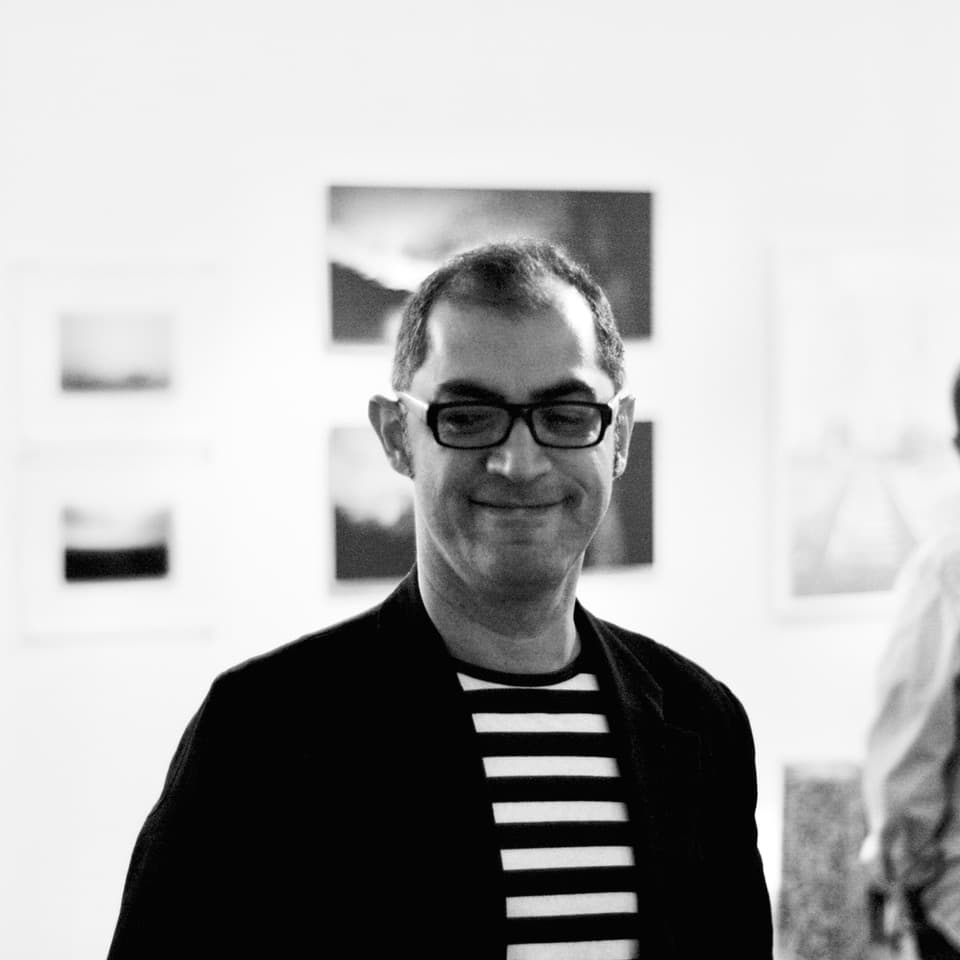
Photo: Mattia Casalegno.
One evening this past fall, Asher and I went for a beer—a ritual we kept up whenever he came to New York, after he moved back to Colombia.
It started the way those evenings always did, easy and open-ended, and then something shifted. He began talking about his younger years in Medellín, about the kidnappings, the years when fear was part of daily life. Tragic events that had marked him in profound and indelible ways. We talked for hours — about human violence, intimacy, power, desire. I had known Asher for almost eight years, and that was the first time he had ever opened like that with me.
That night I went home with his words still in me—trauma, vulnerability, the strength it takes to radically accept yourself. I thought, with quiet honor, of the trust we had built over the years, and of how our friendship felt that night like something still full of time. I didn't know it was the last time I got to spend with him.
Asher was so complex and multifaceted. Once he told me: “Each close friend I have is like a bento box compartment; they only know one or two compartments of me, while I am the entire big bento box!” For some people, he was a thoughtful colleague, or an indefatigable socialite. For others, a trustworthy confidante. And he was also a father, a loved partner, and more.

Photo: Mattia Casalegno.
In our first studio visits, we connected around my body of work “TWINS”— a series of installations referencing rope-work in the style of Kinbaku, the Japanese art of binding. We talked about Michel Serres, Donna Haraway, the body and technology, and the darkest (leathered) sides of human nature. But also about how hard it is to make the business side of things work—the business side that he wrestled with constantly, never quite willing to let it temper his excitement. He had an unbounded drive to enable art and artists in every form, and practical considerations rarely stood a chance against it.
Since those first days, I came to know Asher more and more deeply. In Covid times, we would often end up on the balcony of the historic Eagle club in Chelsea—a thin consolation, the balcony being the only open-air refuge the city allowed. But for him it was enough. That was one of his communities, and he needed to be near it. His salons—a second family for so many of us. The dream he turned into reality with Journey, his restaurant, a space that carried so much of who he was. Excursions to MUTEK in Montreal. And more recently, the Medellín Biennale, where I watched him move through his own city with something close to pride and relief—what felt to him like a renaissance, a city reborn, and him reborn alongside it.

I'll miss talking with Asher about current shows and future projects, big dreams and the small things of life—the regular birds showing up on the balcony every morning, the hospital check-ups, the new spot that opened around the corner, the last friend he made.
Asher contained multitudes. Whether he was running from his monsters or toward his dreams, he had a thirst for life that kept him searching until the very end. He knew — or was learning, as we all are—that the only way through is radical acceptance: of the tender and the fierce, the wounded and the joyful, the bright and the dark.
Mattia Casalegno is an Italian artist whose work spans video, performance, immersive installation, and mixed reality. Born in Naples, he explores the sensory and physical dimensions of perception, often drawing on anthropology, ecology, neuroscience, and emerging technologies. His work has been exhibited internationally at institutions including the Superblue Museum, ISEA, Ars Electronica and the Museum of Contemporary Art (MACRO) in Rome, among many others. He has been an artist-in-residence at Eyebeam, fellow at Onassis' ONX, NEW INC, and the Elizabeth Foundation for the Arts.