A Tribute to Asher Remy-Toledo
Juan Cortés
Word count: 684
Paragraphs: 11

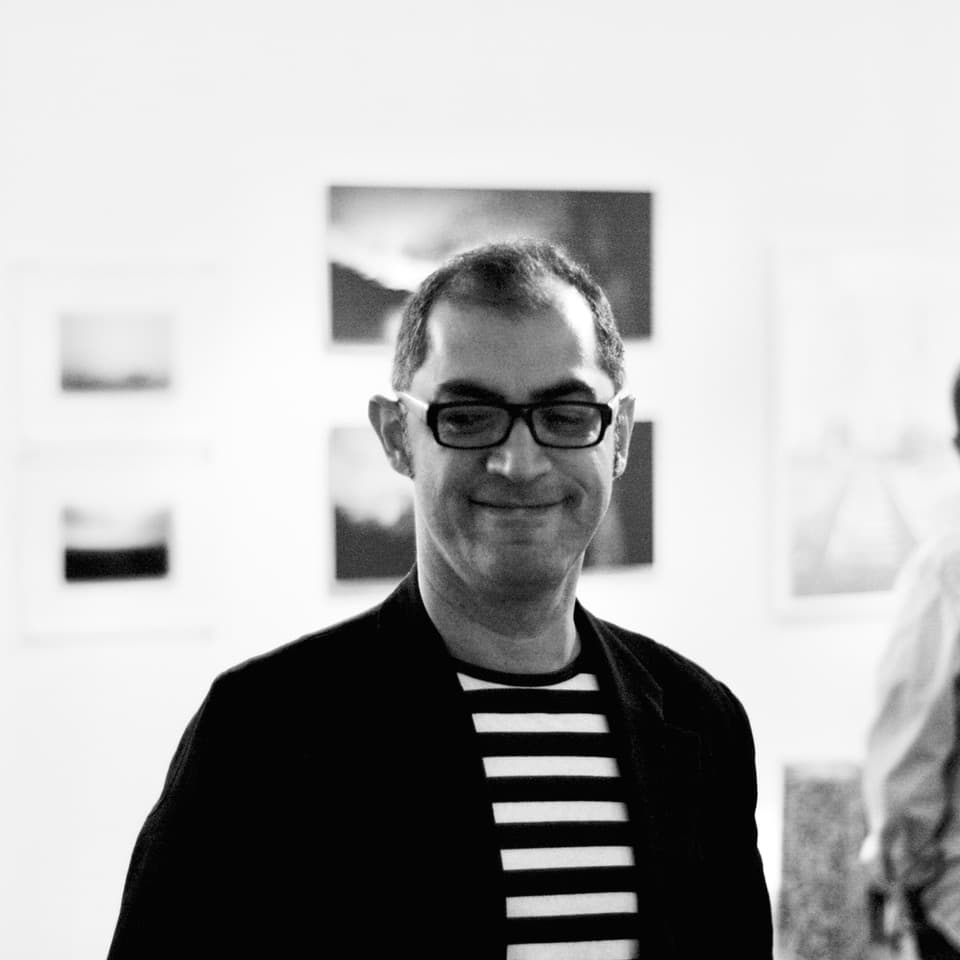
David Sheinkopf, Juan Cortés, and Asher Remy-Toledo at the Red Door. Photo: Mark Bolotin.
I met Asher almost by accident. A Colombian friend invited me to perform at Fridman Gallery, and throughout the evening people kept mentioning him as someone deeply engaged with the arts, someone who worked closely with artists and genuinely cared about what they were doing. Before the night was over, I went over to introduce myself. He was in a hurry, but he handed me a card for Hyphen Hub with an address on it. I was not entirely sure what kind of place it was, but the next morning I went to see it.
Only when I rang the bell did I realize it was Asher’s apartment, and that I had no particular reason to be there. I had just left university, had little experience, and knew almost no one in the art world. Still, he welcomed me in and listened. He spent hours talking with me about my work, trying to understand it and, more importantly, treating it as if it mattered. Not long afterwards, he invited me to do an event at the Red Door, Giorgio Gomelsky’s legendary space, full of stories, old equipment, and an extraordinary spirit. From that moment on, I never stopped working with Asher.
Asher was a visionary, but more than that, he was a person of rare sensitivity and generosity. He gave artists an unusual kind of attention. He listened carefully, tried to understand each process from within, and gave it the dignity it deserved. Before events, he would go over texts again and again because he was anxious about getting things wrong, about misrepresenting what we were trying to say. That kind of care was simply part of who he was.
The salons he created in New York became milestones for many of us. They were spaces where people could speak, share, experiment, and create with a real sense of openness, without pretense. That spirit came from Asher. His curiosity, his warmth, and his instinct for bringing people together shaped the atmosphere of those gatherings. So many friendships, conversations, and collaborations began through him.
Like many Colombians, Asher was forced to leave his country, and his relationship with Colombia was never a simple one. Yet in recent years, through the Festival de la Imagen and through his renewed encounters with Colombian artists, including projects that would later grow into biennials, I felt that some of those broken ties were slowly being woven together again. His commitment to South American art and technology leaves a powerful legacy, one with deep and lasting resonance.
Our own collaboration was only one example of what Asher made possible. There were many exhibitions, performances, and recognitions. But what feels most meaningful to me now are the personal moments: the long train journeys across Europe with Barbara London, full of stories and laughter; the long nights with Jakob Steensen at Barcade; the dinners with Marc and the children at the apartment; the beers at the Irish pub with Stif; the Eagle; all those broken, brilliant New York nights, full of his mischief and his true gift for friendship.
I keep returning to the memory of the first event at the Red Door. Along with Daniel Neumann, we did a performance pulling out all the old amplifiers and machines that had been sitting there for years, half-broken relics from another era, some of them once used by bands like the Rolling Stones and Jeff Buckley. One by one, we turned them on. The room filled with hiss, hum, feedback, and interference, the electrical soul of the place waking up around us. As more and more of them came alive, the sound grew into a vast drone, rough and unstable, as if the building itself had begun to speak. Then, slowly, we started turning them off one by one.
In the end, only an old tape player remained, looping a fragment of Get Back by The Beatles: “get back… get back to where you once belonged…”
Asher, my dearest friend: you will be deeply missed. So many of us belonged because of you.
Con toda mi gratitud y mi amor,
Juan
Juan Cortés
Juan Cortés is a Colombian artist, developer, and researcher working across art, technology, and memory. His practice spans immersive media, sound, archives, and experimental forms. He currently leads the Virtual Museum of Memory of Colombia at CNMH, bringing together artistic research, digital culture, and historical memory.