Paul Mattick
Paul Mattick’s most recent book, The Return of Inflation, was published by Reaktion in December.
I have read Marx’s Capital, in particular the first volume, quite a few times, in different translations and also in German (though not, as Adolphe Menjou is said to have assured the House Un-American Activities Committee he had, “in the original Russian”). On each occasion I have newly noticed some idea or way of putting things that provoked fresh understanding. Reading Paul Reitter’s new translation of Volume I provided this pleasure once again.

Despite its clear-eyed grasp of capitalism’s ongoing decline, Sharma’s book joins the long tradition of well-meant but ignored advice from political economists.

Field Notes came into existence ten years ago this month.
Walking in the street today I saw a father on the sidewalk holding his child’s hand. Involuntarily my mind’s eye formed an image, taken from the daily series in the news, of a parent holding a child, wrapped in white cloth, taken from the rubble of a bombed building in Gaza.
I don’t know if it is still true, but the last I heard the official US war-fighting doctrine held that the nation must be prepared to engage two enemies at the same time.
Despite constant assurances from officials that the economy is going just great, signs of trouble abound. To take a random sampling: it was just estimated that some 160,000 people are about to be evicted from their apartments in New York; defaults on junk bonds—which provide critical financing for many companies—are surging above 2021 and 2022 levels in response to rising interest rates; New York, San Francisco, Chicago, and other business centers are facing a likely collapse of the commercial real estate market, imperiling mortgage-holding regional banks while destroying local economies dependent on downtowns filled with office workers, many of whom are now working from home or recently fired; arcane indicators like the market for RVs, sensitive to downturns as an expensive discretionary purchase, are falling as before earlier recessions; while unemployment is rising significantly in over a dozen states. And that’s just the United States.
In France, the feeling that the public services are being gradually destroyed has driven a growing part of society to revolt. What is called the “social state”—what the workers think of as a guarantor and protector of their general conditions of life inside the present social system—is collapsing. From the postal service to health care, from schools to transportation, all are falling apart, one after another.

By Paul Mattick
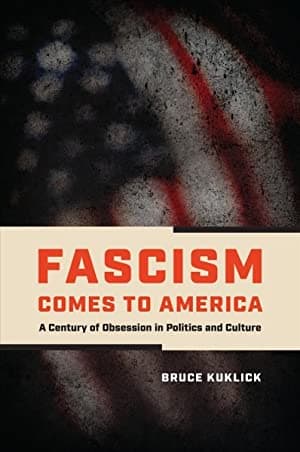
As part of an early stage of these developments, fascism still seems useful to learn about, though Kuklick may be right to urge us to commit the F-word to the historical dustbin. Even he seems to understand why his advice is unlikely to be taken.
What is the non-economist to make of the economic analysis and policy discussion? It’s genuinely confusing. The official story is that inflation, caused by an imbalance between government-stimulated demand and supply limited by “supply-chain shocks” and the war in Ukraine, is “hurting the economy” and squeezing wage-earners.
It’s not going so well, is it? In Ukraine, Biden is prepared, it seems, to fight to the last Ukrainian, while preparing for the next war with China. Half the population of Afghanistan is facing starvation, especially since the US government has seized the billions of Afghan state assets, eked together out of opium sales and American aid, held in US banks.
For 10 years, economists wondered: why is inflation so low? Suddenly, in the last few months, they wonder: why so high? In the words of the Los Angeles Times, “Economists are getting a dose of humility on forecasting inflation” as prices rise “well beyond the expectations of Wall Street and policymakers.”

Occupy’s most significant lasting effects, according to the general opinion, were the production of political awareness and energy that could be “harnessed by political organizations like that promoting a 15 dollar minimum wage or the Bernie Sanders campaign for the presidency.

Despite the visual echoes of the fall of Saigon in the photographs of Afghans clinging to departing American aircraft, the inevitable defeat of the United States in Afghanistan is not just a replay of the Vietnam debacle.

It turned out that relatively few people were actually in the gig economy, though almost all work is indeed precarious.
On an occasion engraved in my memory, the Dean of Arts and Sciences at Brandeis University (himself an architect of the “Strategic Hamlet” program in Vietnam for the US Army) reproached Professor Herbert Marcuse at a faculty meeting for having spoken at an anti-war rally: It is an intellectual and academic duty, he argued, to acknowledge both sides of disputed issues. Marcuse rose. “What,” he asked, “is the other side of the argument about Auschwitz?”

The various Biden plans represent only the latest form of the cleft in which American capitalism (and indeed global capitalism) has been stuck for some time.
One might have thought that Trump’s departure from the White House would put an end to the constant worry—and not just on the part of left-leaning pundits—that he represented a rebirth of fascism.
Over the past four years, I have occasionally used this space to argue that Donald Trump’s presidency did not, as many worried, represent the advent of fascism in the United States. Trump was uninterested in building a strong state, in preparing America for a dynamic imperialist part in world affairs, in harnessing patriotism and racism for the suppression of the working class in the interest of economic growth. Far from building a mass paramilitary force, he was content to inspire pathetic “militias”—all beer hall and no putsch—unable, for instance, even to kidnap the governor of Michigan.
That the feasibility of using the ongoing depression to further drive down wages, cut benefits, and worsen working conditions is being discussed via a social-scientific dispute—whether a short-term relief measure is a disincentive to work at a time when 30 million jobs have vanished—tells us more about the nature of economics than about the motivation for employment. It provides further support, if any is needed, for historian of science Jerome Ravetz’s description of economics as a “folk science,” “a body of accepted knowledge whose function is not to provide the basis for further advance but to offer comfort and reassurance to some body of believers.”2
As I write this, it has been eight days since the killing of George Floyd in Minneapolis set off non-stop, and growing, demonstrations of anger throughout the United States and abroad. Surprisingly many city and state officials, and even some police chiefs, have endeavored to moderate the growing movement by expressing disapproval of Floyd’s murder.
The new virus, easier for the rich to guard against and to treat when stricken, illuminates the depth of social inequality and the general subordination of everyday life, including the requirements of human and animal health, to “the economy,” as we call the system subordinating the production of goods and services to the need of capitalist investors to accumulate profits.

Politics may, as Karl Marx suggested, be an epiphenomenon resting on the “economic foundation” of society, but still have interesting things to tell us. The Democratic Party seems—I write this in the aftermath of Super Tuesday—to have successfully eliminated Bernie Sanders as a candidate. This was the work not just of party officials, who made no secret of their intention to control the nomination, but also of the voters, who in most places stuck with the old political machinery.
By and large, it has to be admitted, things aren’t looking good: the German economy is stalling, Chinese growth has slowed, U.S. manufacturing is down. The world’s central banks are taking the situation seriously enough to pour scads of newly printed dollars, euros, and renminbi into financial circuits in an effort to stimulate lending, investment, and so a resumption of growth.
It has been fifty years since the events of May and June 1968 in France. During this half century, dominated by the “end of communism,” “neoliberalism,” and “globalization,” “May ’68” has faded into a folkloric reference, remembered largely for the barricades in the Latin Quarter and the Situationist slogans that enlivened the walls of Paris.
This month brings the publication of Phil Neel’s Hinterland, the first in the Field Notes series of books published by Reaktion Books in association with the Brooklyn Rail, to provide in-depth analyses of today’s global turmoil as it unfolds.

One of the most moving documents from the history of the left is Karl Liebknecht’s article, Trotz alledem!, “Despite It All!”, published in Berlin in the newspaper of the Spartacist League on January 15, 1919—the very day on which Liebknecht was murdered by rightwing soldiers acting in support of the Social-Democratic government of Germany.
By a curious coincidence, 2017 marks a pair of anniversaries: that of the publication of the first volume of Karl Marx’s Capital 150 years ago, and that of the October Revolution which in 1917 ushered in the USSR.
Perhaps it is not surprising that the Age of Celebrity, having produced a celebrity president, should focus discussion of the political situation thus created on the personality quirks and attention-seeking antics of the TV Personality-in-Chief himself.

No one could call globalization a failure: To the succession of the hottest years ever must now be added the achievement of a distribution of wealth in which eight men (six of them Americans) own the same wealth as the 3.6 billion people who make up the poorer half of humanity.

No slight challenge, but the stakes are very high: literally, survival of organized human society in any decent form.
“In the model country of the democratic swindle this election time is full of contingencies that may give the logic of events ... a quite unexpected smack in the face.” —Karl Marx to Friedrich Engels, September 7, 1864.
These days, critics of electoral politics can sit smugly and enjoy the deepening disarray of the political parties; the worries of the 1%, who really want little more from their governments than low taxes, high subsidies, social peace and quiet, and just enough military action to keep the world safe for democracy; and the panicked musings of the political pundits trying to make sense of it all and reclaim their lost function of predictors and explainers.

This issue marks the start of the third year of Field Notes. I’m very happy to say “thank you” to Publisher Phong Bui, Managing Editor Laila Pedro, Lead Art Director Maggie Barrett, Webmaster Don Leistman, and everyone else who makes the Rail take physical form each month—and especially to the writers who are responsible for making this section of the Rail a continually exciting locus for discussion of contemporary politics.
Dec/Jan 14–15Field Notes
THE REVOLUTION IS BEING TELEVISED BRANDON JOURDAN OF GLOBAL UPRISINGS with Paul Mattick
Since 2011, Brandon Jourdan and Marianne Maeckebergh have been making a series of videos available on the web under the name Global Uprisings. Their latest production, “After Gezi: Erdogan and Political Struggle in Turkey,” was made available in late October. On a recent visit to Brooklyn, Brandon Jourdan made time for an interview with Field Notes Editor Paul Mattick.

I grew up around adults who had made it through the Second World War—by leaving Europe in time, evading or refusing the draft in the United States, or by being among the lucky ones to survive a spell in a concentration camp.

No doubt it was not by accident that the above-the-fold story in the June 28th issue of the New York Times, about the latest twist in the Greek debt drama, was accompanied below the fold (along with a photo of a smiling García Padilla) by “Puerto Rico’s Governor Says Island’s Debts Are ‘Not Payable.’”
In 2007 the group that calls itself The Invisible Committee published The Coming Insurrection, which was widely discussed across the range of leftwing media (and Fox News to boot). The Committee has now brought out To Our Friends, published in the United States by Semiotext(e).
Everyone I know says that things are just moving faster, but I was still shocked to discover that this month begins the second year of Field Notes. Taking stock before rushing on, I must say it has been a great adventure so far.
As the Last Days of Mankind—already diagnosed by Karl Kraus while the First World War was underway—march on, apparently endlessly (despite the dispiriting hints of a Final Last Day suggested by the weather), they seem to have brought with them an increasing flabbiness of discourse.
It’s hard to know what to deal with first—not only is the world continuing to go to hell in a handbasket, but the speed of descent seems to have increased.measures of income re-distribution at a moment when, with the Republican victory in the midterm elections, such things have become practically impossible.
In the old days of the historical Left the most-widely read piece of Marxist writing was probably Friedrich Engels’s Socialism: Utopian and Scientific. In this short text, Engels sketched the history of capitalism and the development of socialist ideas and movements as part of that history.
Michael Brown will not be going back to school. Angry people in Ferguson, Missouri have been helping us remember that as we return to our jobs after Labor Day, to the search for work or other pursuits if we are unemployed, to school as teachers or students.
Gabriel Kolko died in Amsterdam on May 19, 2014, at 81. As long as I knew him—and I met him around 1960, when I was a teenager and he was a graduate student in history at Harvard—he was motivated by three passions: a hatred of capitalism; a devotion to detailed empirical research; and the enjoyment of life with his wife, Joyce, and their many friends.
People are pretty impressed with Thomas Piketty, author of Capital in the Twenty-First Century—if we leave aside right-wing pundits and congressmen who have denounced him for Marxism (in fact, his book has nothing in common with the one by Marx except the first word of its title).
New York has never seemed more like the supposedly future world portrayed in Ridley Scott’s 1982 film Blade Runner than in the last few months—not just the noodle stands tucked in around the towering high-rises, but above all the endless cold, grey drizzle that mocked the persistent hope that winter was about over. So it’s hard not simply to be happy to see the sun again, along with the seasonal pleasures of blooming trees, flowers, people enjoying the streets.
The Rail has something to contribute to creating the conditions for coherent thinking about what’s happening to us. FIELD NOTES intends to gather information about life in our age of austerity, and to think about it as clearly as possible.
March’s civic strife in Wisconsin, with citizens and workers in the hundred-thousands protesting anti-union legislation passed by the Republican-dominated state government, suggests that, at long last, the spirit of rebellion may be migrating even to our politically somnolent shores.
It’s hard to imagine a more stunning demonstration of the theoretical bankruptcy of economics as a putative science than the ongoing discussion of the current economic situation.

The current worldwide economic slump represents the return of the capitalist economy to the dark side of its pre-World War II history.

The current neo-Keynesian critiques fail to confront the actual state of affairs facing global capitalism.

As recently as early September we were being reassured, not only by politicians but by experts everywhere, from the halls of academe to newspaper financial pages, that—serious though things might be—comparisons to the Great Depression were uncalled for. By the official end of summer, as I am writing this, that comparison is everywhere, if only as background for insistence that this time the downward spiral can be controlled—provided that the government does the right thing, and does it fast.

How did World War I come to an end? Nobody I ask knows the answer to this question. This isn’t surprising—people aren’t taught much history, and anyway it happened long ago.
In 1962 Andy Warhol made a portrait of Robert Rauschenberg, titled Let Us Now Praise Famous Men.

Among the millions who marched in the world’s streets before the American assault on Iraq and the hundreds of thousands who demonstrated against the war while the Republicans met in New York to reannoint G.W. Bush, I was not, I am sure, the only one to have felt a curious sensation of political energy coexisting with the assumption of failure.
Rainer Ganahl, born in Austria, studied art in Vienna, Paris, and Düsseldorf; since 1990 he has been living predominantly in the United States. His recent exhibition at the Museum of Modern Art in Vienna, Road to War, was devoted to the post-9/11 wars in Afghanistan and Iraq; Spring Publications has just issued Counting the Last Days of the Sigmund Freud Banknote, containing reproductions of a series of text drawings made in 2001-02. An exhibition, “‘Please, teach me …’ Rainer Ganahl and the Politics of Learning,” will be on view at the Wallach Art Gallery at Columbia University from 28 September to 10 December. This show, which is a sort of mini-retrospective, provided the occasion for this interview.

Quite often these days I’m stopped on the street by a young person with a clipboard who asks me if I want help defeat George W. Bush. When I answer, as I always do, that "I am for the violent overthrow of the United States government and therefore not a big voter," I get a blank stare.

Robert Bergman is a photographer who extends out of the tradition of Walt Whitman and William Carlos Williams, poets who possessed a bottomless empathy for their subjects. And, like a poet, his work can be found in a book, rather than in a gallery.

At first sight, the works by James Castle in this beautifully installed exhibition look like fragments from a lost civilization. Assembled from bits and pieces of paper and cardboard, their ragged edges and worn surfaces bearing signs of the passage of time, they seem relics of some pre-industrial civilization (perhaps the kind of culture now more politely called "tribal").
Although visitors troop dutifully in and out of museums in Venice, as in every site of touristic pilgrimage, it’s really impossible for even the best art works to hold their own against the city outside. Venice itself is the most beautiful thing one can imagine. It is a survivor from a time when painting and sculpture was not set apart from the rest of life in special places but decorated houses and churches, and not just the interiors: every turning of a street leads to some pleasurable sight and it is only the wish for the next one that keeps one moving.

The very idea of art’s exaltedness led ambitious artists to aspire to a public importance, at some odds with their actual position, as producers for the luxury trade.
