Zach Ritter

Zach Ritter is a writer based in Brooklyn, New York. His writing has appeared in American Suburb X, the Brooklyn Rail, Dear Dave, Hyperallergic, and Photograph magazine, among other publications.

Techniques of distortion, collage, and multiple exposure describe the changes taking place across Makharda, where evidence of industrial blight and environmental decay is increasingly more visible. Sikka’s eye for the sculptural quality of form is ever-present, and there is a sense that each picture is as much a concept as it is a directive to look.
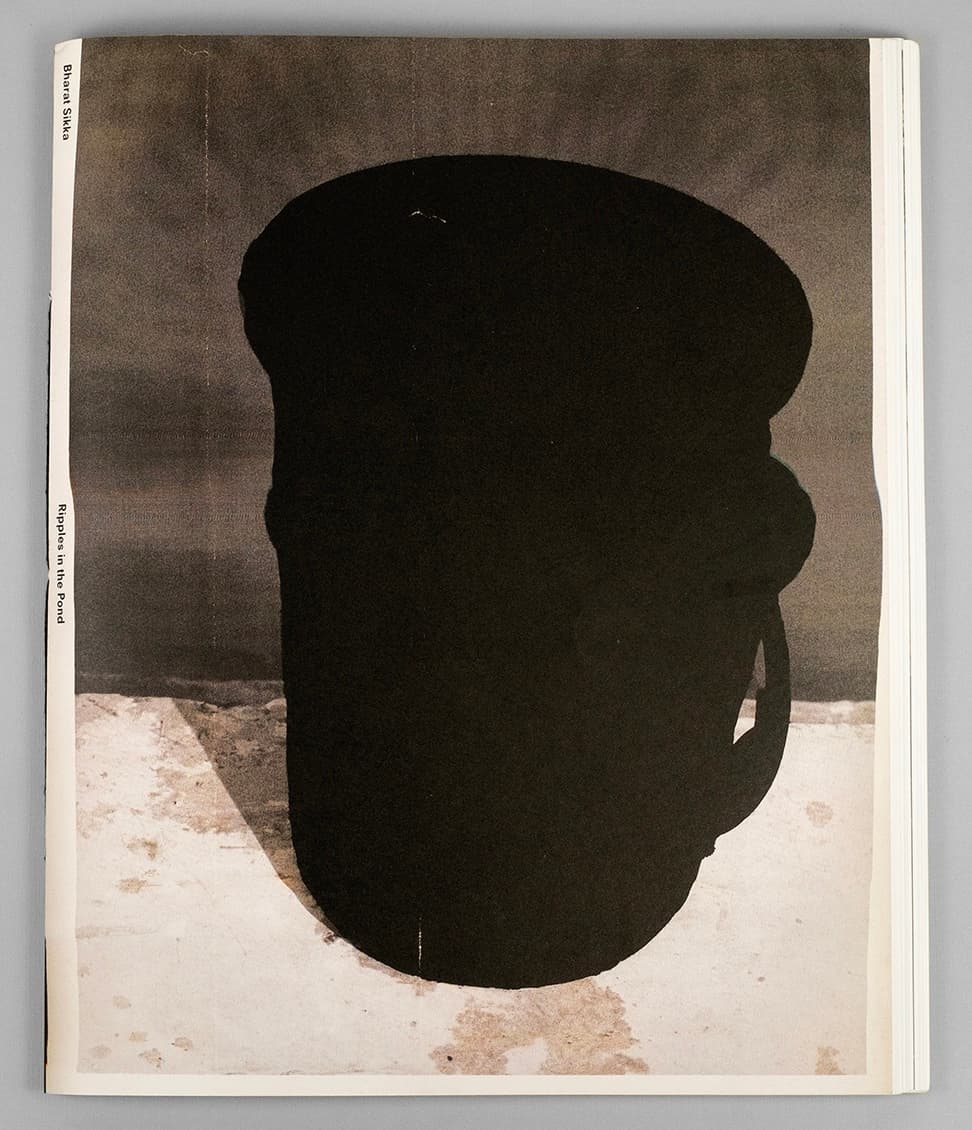
Bharat Sikka’s Ripples in the Pond

The images originated as photographs that TR Ericsson culled from his mother’s family photo albums. This is a deeply poetic book about love, pain, longing and hopefulness, and about how memory can deliver these experiences to us while misleading us along the way.

TR Ericsson’s Nicotine

In Corrections, Jesse Krimes considers the role that photography has historically played in allowing states to simplify their respective populations to better classify and control them.

Jesse Krimes, Purgatory (detail), 2009. Soap, ink, playing cards, variable dimensions. Courtesy The Metropolitan Museum of Art, New York. © Jesse Krimes.

This survey is the logical result of the ever-increasing attention being paid to Japanese photography that has developed over the past twenty-five or so years. It opens up countless new directions for research, appreciation, and comparison.

I’m So Happy You Are Here: Japanese Women Photographers from the 1950s to Now

The type of vision that Mark Armijo McKnight’s photographs provide, where that very landscape is no longer called upon to signify our mastery over nature, and where instead it might still be the site of something elemental, primordial even—is perhaps beyond us entirely.

Mark Armijo McKnight, Without a Song (solo ii), 2024. 16mm film transferred to video, black and white, sound; 11:19 minutes. Courtesy the artist. © Mark Armijo McKnight.
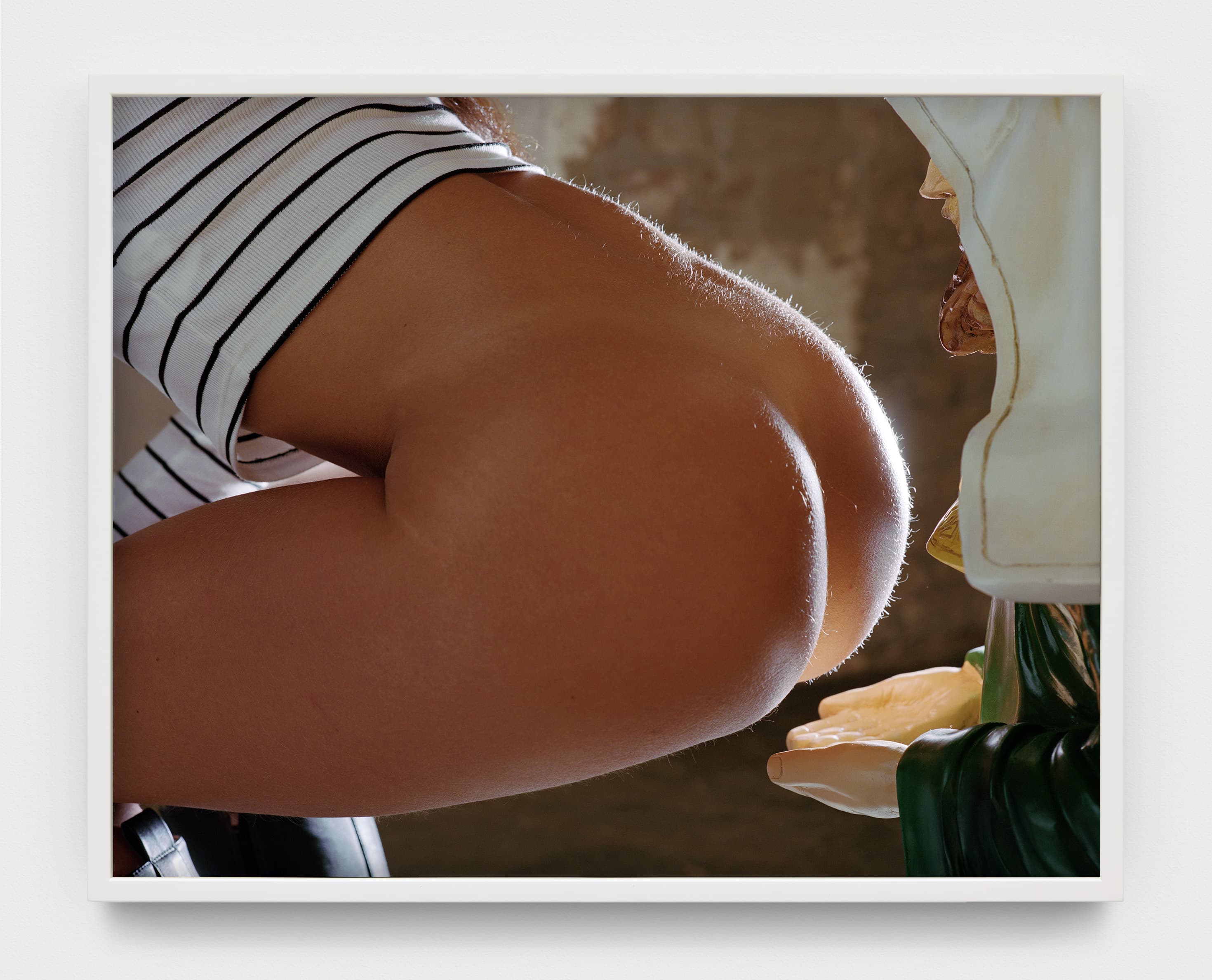
In these fashion photographs, brand, commodity, celebrity, and the human body are used as pretexts to explore their collective exaggeration.
Paul Kooiker’s Fashion
Though the sample size is still small, their output thus far demonstrates a holistic approach to photobook publishing, where the images and their sequencing are amplified and expanded upon by inventive and creative design choices, with each element neatly and evocatively tying together.
groana melendez, West 176 Street, Matarile Ediciones, 2021.
“Don’t want to go out in the rain. I kind of like it. / If this is dying, I guess I kind of enjoy it. I shouldn’t / But the light is just too good at the end of the world.” These lines from Elle Pérez’s poem ask us to consider how we might continue finding beauty, pleasure, and meaning with the specter of civilizational ruin lurking behind us. The poem accompanies guabancex, Pérez’s new exhibition of photographs and collages, and the new work seems poised to provide us with something that is, if not an outright answer, then perhaps an example of how we might respond.
Elle Pérez, john shadowboxing I, 2023. Digital silver gelatin print, 39 × 26 inches. Edition of 5 plus II AP. Image courtesy the artist and 47 Canal, New York. Photo: Joerg Lohse
Eschewing the familiar genres of Americana or social documentary, Jung narrowed the scope of his project down to the surfaces and interiors of cars still in use and visible on the street. These photographs capture the feeling of looking into a self-contained world.
Phil Jung’s Windscreen
The thirty-eight pictures in Participation, Jordan Weitzman’s debut photobook, tell us much about the world of their making.
Jordan Weitzman's Participation
For over fifty years John Divola has made photographs which live in the conventional boundary separating the photograph’s function as a document of fact and a producer of fictions. In countless series, the majority of them site-specific, Divola intervenes into the found conditions of his environment, adding both text and graphic elements which provide subtle accents and, in some cases, completely transform the atmosphere of a space.
John Divola, Zuma #3, 1977. Archival pigment print, 44 1/4 x 54 3/8 inches. © John Divola. Courtesy of the artist and Yancey Richardson, New York.
Andrea McGinty’s work has been consistently focused on exploring the aesthetic possibilities inherent in what we consume. Whether it be food or clothing, appliances or cat litter, she draws our attention to the myriad ways in which such objects maintain expressive capacities of their own.
Andrea McGinty, Growing heavy for the vintage, 2021. 13.5 x 2 x 2 inches, patinated cast bronze. © Andrea McGinty, courtesy SUNNY NY, New York.
Drawn almost entirely from his remarkable monograph Heaven Is a Prison (2020), the photographs in Hunger for the Absolute dramatically expand, and forcefully concentrate, McKnight’s previous explorations of the landscape as a transmogrified space of sexual resonance and desire.
Mark McKnight, Untitled (Tree Void II), 2021. Gelatin silver print, 20 x 24 inches. Courtesy Klaus Von Nichtssagend Gallery, New York.
Density 1947 (2020) brings together in a neat grid six pieces of gelatin silver paper drawn from the same box, each exhibiting different levels of oxidation and loss of light sensitivity. The almost uniform copper and gold silhouetting at the edges of five sheets, which frames the nearly bleach-white quality of the papers after Rossiter processes them, is contrasted with the more advanced oxidation of the sixth and topmost sheet from the box, which absorbed the brunt of time’s weathering effect. The result seems an almost organic abstraction, a static-like ripple of gold and white shimmering across the paper.  
Alison Rossiter, Density 1947, 2020. Six Gelatin Silver Prints, 15 5/16 x 17 7/16 inches. Courtesy Yossi Milo, New York.
In Become Gift, Sky Become Shadow a surreal atmosphere of anticipation connects two works that examine cultural myth and personal trauma. Through a combination of theatricality and subtle detail, Bradford Kessler contrasts the generic and fictitious nature of popular history with the textures and temporalities of subjective memory.
Installation view: Bradford Kessler: Become Gift, Sky Become Shadow, Interstate Projects, New York, 2019. Courtesy Interstate Projects.

Close

Home