Michael Shorris

Michael Shorris is a writer in New York working in documentary film.

About a third of the way through A Day Like Any Other Schuyler’s poems begin to dot the pages, and Nathan Kernan hits his stride. He’s wonderful in walking us through a work, piecing together a line, and breaking a fourth wall in the process.
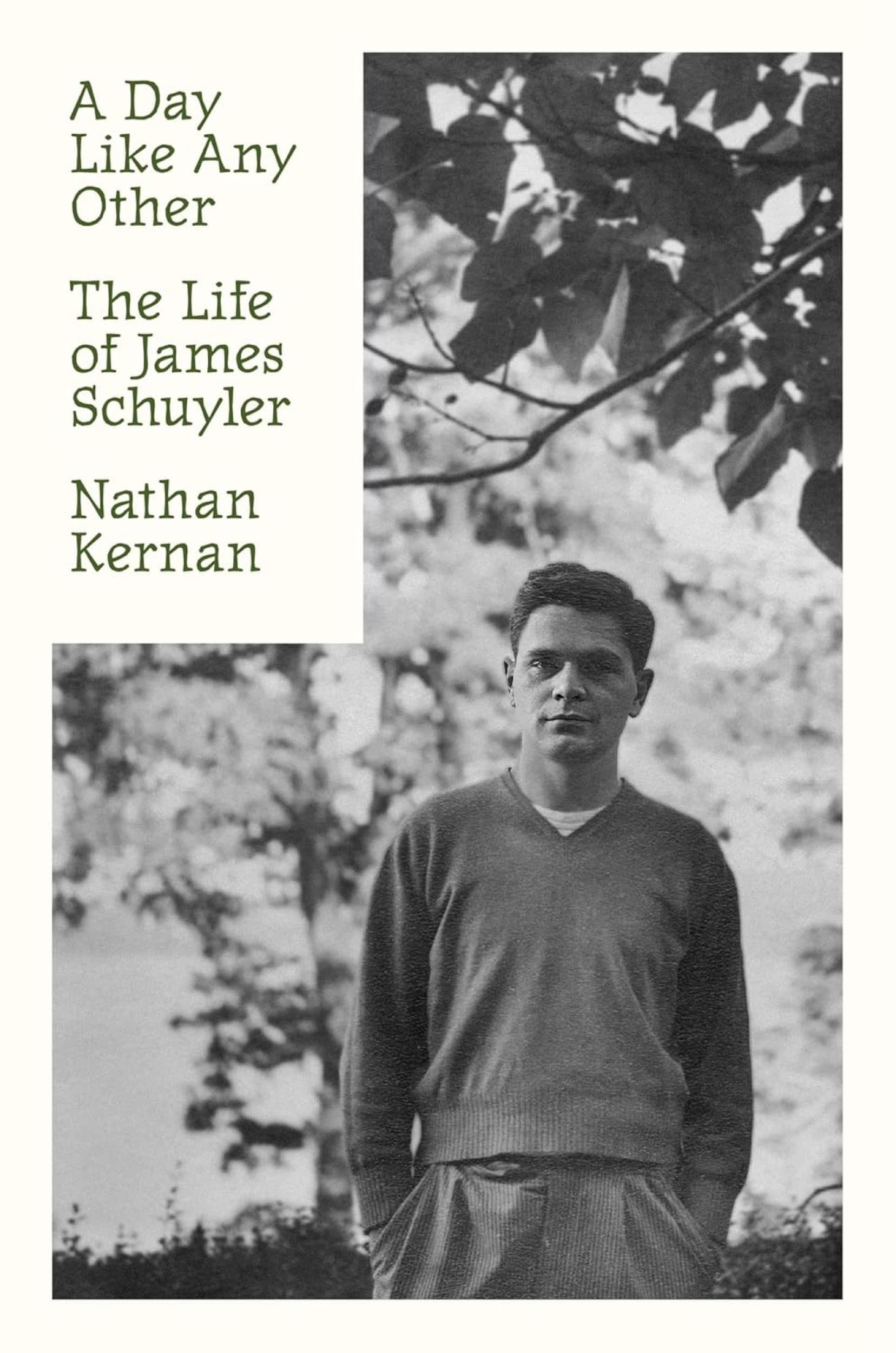
Nathan Kernan’s A Day Like Any Other

What more worthy challenge than to conjure a humanity far from one’s own, at odds with one’s convictions and values, and still to empathize? Every writer should look at the world with openness, not surety, striving “to be one of the people,” as Henry James famously put it, “on whom nothing is lost.” This is one of Zadie Smith’s specialties. But it sure can get her in trouble.

Zadie Smith’s Dead and Alive

At many moments in V13, the experience is that of watching a master magician, wondering how he might possibly pull off his next act. How, one wonders, will Carrère bring us through so much terror and suffering, make meaning out of misery, and wring coherence from the incomprehensible?

Emmanuel Carrère’s V13

What will become of the COVID-era couple, face-masked and train-delayed, whose first date is forever commemorated in the opening and closing moments of Claire Read’s offbeat new short, Penn F—ing Station? It’s hard to be too hopeful: the deck is stacked against them. Theirs is a Love in the Time of Intractable Municipal Policy Failure.

Remnants of the old Penn Station in Newark. Photo: Lina McGinn.
Daylight reflects a moment of mourning—not a death, in this case, but a romance, during the period of incomprehension which marks a relationship’s demise. The poem’s stunned narrator confronts the reality that “Our love might end,” as an infinite, infallible love reveals itself to be fallible and finite.
Joan Mitchell, Daylight, with poem by James Schuyler, ca. 1975. Pastel and typewriter ink on paper, 14 x 9 inches. Collection of Nathan Kernan. © Estate of Joan Mitchell, New York.
This is an ambitious new photobook documenting Studio Rex, a photography studio in France that primarily served new immigrants. Studio Rex became a haven of sorts, producing portraits for thousands of immigrant men and women—but mostly men—who arrived wearing fresh haircuts, clean mustaches, and their finest clothes.
​​Jean-Marie Donat’s Ne m’oublie pas
It’s not hard, gazing at the photographs James Welling has assembled in Thought Objects, to picture their creator holding a paintbrush rather than a camera. The show’s standout work is a striking combination of seascape, lithographic overlay, and abstract coloration whose stippled, almost woody texture defies formal categorization.
Installation view: James Welling: Thought Objects, David Zwirner, New York, 2024. Courtesy David Zwirner.
Leiter, who died ten years ago, would have been one hundred last December: Centennial marks the occasion by assembling a mixture of old favorites and lesser-seen portraits.
Saul Leiter, Canopy, New York, 1958. Chromogenic print; printed later, image size: 19 1/2 x 12 3/4 inches; paper size: 20 x 16 inches. © Saul Leiter Foundation. Courtesy Howard Greenberg Gallery, New York.
Writers and Missionaries (Verso, May 2023), Adam Shatz’s new collection of essays, chronicles a diverse group of writers frustrated by the narrow prisms of ideology and identity. Shatz examines novelists and playwrights who have tested the lines of literature and advocacy, artists and critics who have grown frustrated by moral simplification and political binary.
Adam Shatz’s Writers and Missionaries
For the German writer Thomas Melle, suffering and creation are inexorably intertwined. Melle, a celebrated novelist and playwright, suffers from a severe case of bipolar disorder. In The World at My Back, his English language debut (Biblioasis, May 2023), Melle grapples with his condition directly, striving to “write [him]self free.”
Thomas Melle’s The World at My Back
Jamel Shabazz likes to say that his photographs capture people “at their best.” His language is deliberate, and his words sit in their own shadow, leaving implicit and unsaid the dark question of the converse. His lively portraits are stalked by their own context, so many artifacts of a period in which, he admits, “people were witnessing a lot of suffering.’ It’s in spite of this, or perhaps because of this, that Shabazz’s images are incandescent with joy.
Jamel Shabazz, Man and dog. Lower East Side, Manhattan, 1980. C-Print, 16 x 20 inches. Courtesy the artist.
Late morning on East Houston, a trucker leans from his cab to look, and a young mother twists from her stroller to stare. The onlookers are studying Taxi: Journey Through My Windows 1977–1987, Joseph Rodriguez’s hard-to-miss new show along the chain link fences of First Street Green.
Joseph Rodriguez, After-hours Club, 1984.

Close

Home