Ginevra de Blasio
Ginevra de Blasio is a Rome-born curator and writer, currently based in New York City. Her practice bridges institutional and independent projects, with professional experience at the Drawing Center, Performa, Fondazione Corsini, 99 Canal, and Paula Cooper Gallery. She collaborates with professionals, including Adam Weinberg, Director Emeritus of the Whitney Museum of American Art, and Joachim Pissarro, founding member of the Global Museum Strategy Group. She was recently awarded a grant from the Italian Council to support her curatorial research on textile art, a project that includes lectures and public programs at leading museums internationally. In parallel, she serves as curatorial assistant for the forthcoming retrospective of Isabella Ducrot, travelling from MADRE (Naples), to Astrup Fearnley (Oslo), and MoMA PS1 (New York).
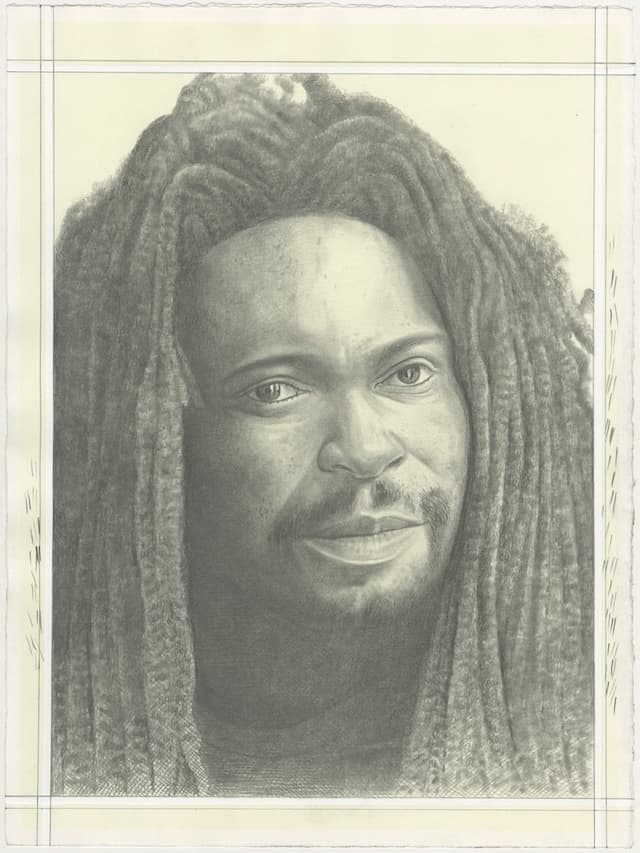
While many artists borrow from the past, very few collapse historical timelines with the raw, unsettling energy of Sedrick Chisom. He merges the iconography of the American Civil War, medieval mythology, and speculative sci-fi into a single, distorted world-building project. His canvases function as an ongoing catastrophe where history returns like a persistent ghost, blending a deep, daunting seriousness with a neurotic, unhinged humor.
On the occasion of his new exhibition at Matthew Brown, Chisom spoke with curator and writer Ginevra de Blasio. They delve into a practice that treats the canvas as a physical skin, exploring how the “Russian doll” layering of the past simultaneously produces and constrains our present agency. The dialogue touches upon his latest body of work, exploring how a recent shift to London and the spatial constraints of the theater have informed his newly staged, apocalyptic compositions.
This seemingly straightforward question opens into a larger project—not to pin the term down with a definition, but to let it unfold. What fascinated us was its ambivalence: its uses, misuses, histories, politicization, trends, and the ways it has been claimed to hold power—or to hold on to a dream, often defining positions that came to capture the zeitgeist of their era.

In conversation around his debut solo exhibition at Almine Rech, Dustin Yellin describes his work as an inquiry into the unresolvable.

A central voice in the Italian Transavanguardia, Enzo Cucchi has spent decades crafting a visual language that evades fixed definitions. His work is radically intuitive, mythological, and defiant of context. Instead, it unfolds like a dream: layered, fragmentary, and permeated by a metaphysical current that resists resolution. This spring marks his return to New York with Mostra Coagula, a solo exhibition at Vito Schnabel Gallery—his first major US show since his landmark exhibition at the Guggenheim in 1986.

Kai Althoff’s exhibition, di costole, held in the historic port city of Genoa in northern Italy, resisted demands for interpretation by shifting the focus from contextualization to the work’s emotional impact.

In Lorenzo Amos’s solo show, No Regrets Because You’re My Sunshine, at Gratin Gallery, the artist’s studio transcends theme, concept, or setting, becoming a portal into the intimate rhythms of the creative process.


