Shannon Sanders’s The Great Wherever
Word count: 1001
Paragraphs: 10
The Great Wherever
Henry Holt & Co., 2026
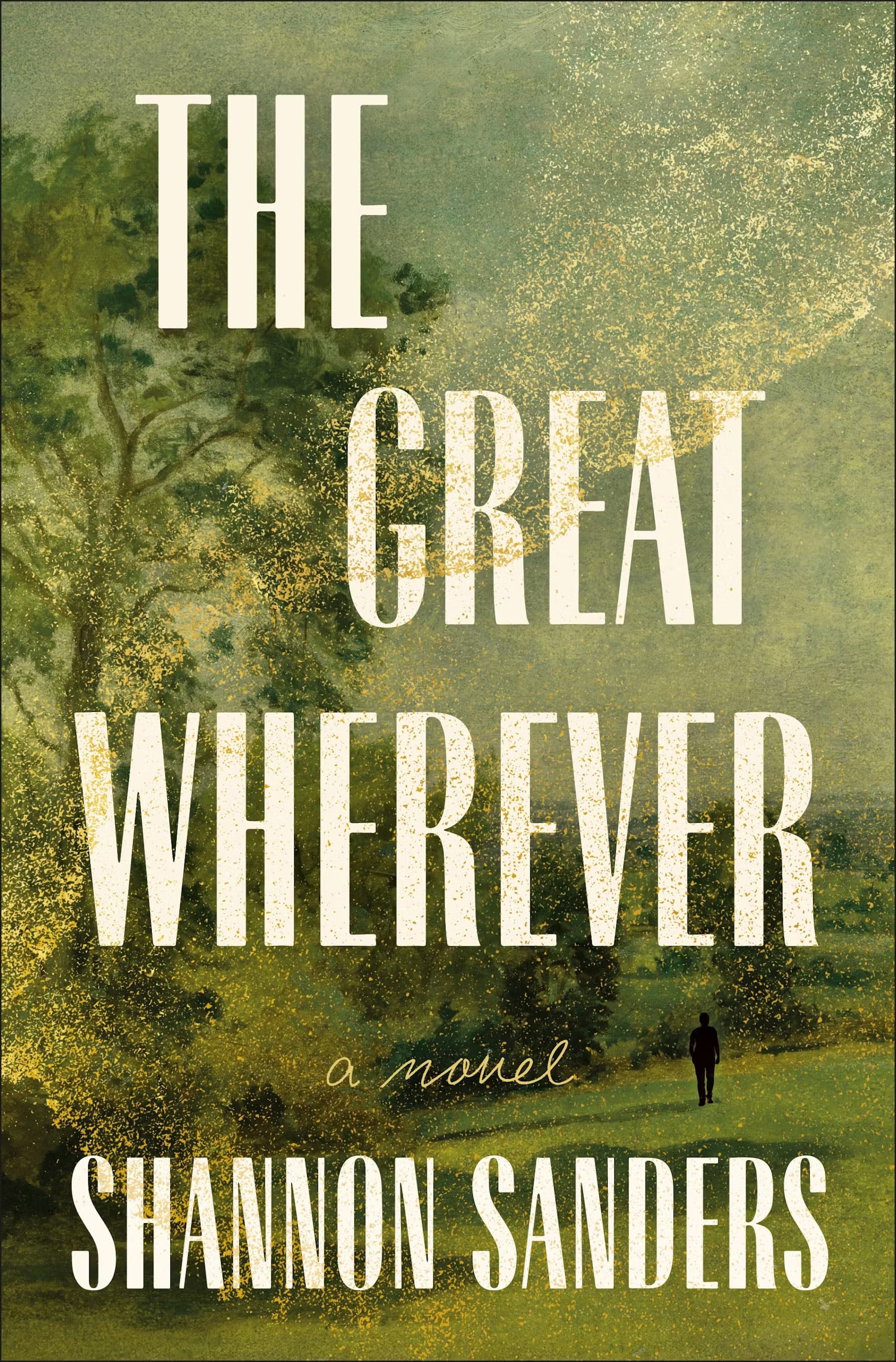
When we meet Aubrey, the protagonist in Shannon Sanders’s debut novel, The Great Wherever, she is falling apart. Reeling from a heavy and unexpected break-up and still mourning the loss of her father, Aubrey—to her surprise—finds herself departing from her group house in DC in sleepwalking pursuit of the ancestral home in rural Tennessee that has been willed to her. Accompanied by previously unknown relatives and the ghosts of her lineage’s past, Aubrey’s pilgrimage soon becomes something not quite otherworldly, but rather liminal. Aubrey’s trip is a homecoming, of sorts—a return to a home that she never quite knew, but that all along knew her. The haunting begins.
Upon her arrival, it becomes clear that ghosts and sorrow are not the only things present here. An offer has been made to the family. Aubrey is not the only descendant circling this plot; the descendants of those who once presided over the land, and who maintained a grip on the captives and forced laborers enslaved there, would like the land back and are offering a large sum—a sum accumulated first by the labor undertaken by Aubrey’s ancestors—for it. Herein lies the central tension in The Great Wherever. As Aubrey and her cousins consider the offer, each approaching it with their own individual hesitations or excitements, the story’s true question is revealed: what is worth passing down?
In The Great Wherever, Sanders asks the reader to consider value and wealth—whether or not they are the same thing, the spaces where they may overlap or diverge, and most importantly, which one is worth holding onto. There is capital, and there is spirit. The land offers so much to Aubrey and its contemporary holders: reminders of lineage, a monument to survival, a place to come home to. However, as one character points out, spirit cannot pay rent.
The Great Wherever follows behind Company, Sanders’s 2023 short-story collection that similarly tackles family and inheritance across generations. The collection of stories sets Sanders up well in approaching her debut novel, and an anecdotal approach is certainly present in The Great Wherever. The central narrative weaves across time, whisking the reader away from the present and delivering us to the front stoop of Tennessee homes, to ponds stuffed away within Southern forests, to the confines of an overstuffed office, and more. We meet a sprawling cast of characters—grandparents, great-grandparents, great-great-grandparents, and so on, with each new time period opening Aubrey’s world up wider and wider to include a cross-tangled web of stories. In the ghostly haze, Sanders effectively blurs the veil between yesterday and today (and tomorrow, for that matter). Through Aubrey’s eyes, things are difficult to place. The novel’s central farmhouse appears old, although ageless to her. It isn’t only the land itself that permeates across time. The same is true for the contours of lives lived by ancestor and descendant alike. Sanders’ characters are colored by shared heartbreak, complicated family, and financial strain.
It makes the question of value, and Aubrey’s relationship to the land, that much more urgent. In seeing those who’ve come before her grapple with similar anxieties and parallel choices regarding what to hold on to and what to pass down, we are brought into the searching. As readers, we are forced to look for signs of survival. Sanders’ question of value and inheritance is not abstract, but rather, quite literal. How did those before Aubrey manage? How might she?
This lineage serves multiple purposes—extending beyond the story’s need for a driving question. In handing over Aubrey’s dilemma to her portrayed ancestors, Sanders creates fuller characters. It’s a feat that is particularly impressive in considering the novel’s emphasis on generational inheritance. The family tree is winding, but it is not lost. The family in The Great Wherever do not come off as an odd gang of mismatched relics from their times. Instead, they read as what they are: cousins and nieces, sisters and sons, grandfathers and great-aunts twice removed, all in colorful uproar with one another around the dinner table. The dead in this novel are not all-knowing, nor are they unnamed. They are insecure, petty, and in search of understanding, just as the inheritors whom they watch over. Sanders resists flattening these characters into abstract “ancestors,” or turning them into mythology. It’s refreshing. The story told here is not ethereal or pedestaled. It’s grounded, planted firmly atop the soil, which allows Sanders’s questions to meet the reader with even more urgency.
In reading The Great Wherever, I found my mind often wandering to the Southern soil that I myself call home. Where, in that often-fabled land, might my own inheritance be? What has been passed down? Or rather, what hasn’t? The browned photo, framed and hung on my wall, depicts those whose names I cannot know, though whose lithe touch is felt through the years; their stare on me held as particularly catching while I read from across the room. It’s a question that is not new: one of the weight of sentimental value, or of drawing material from the abstract. It’s a question with particular relevance today, as so much of what is tangible continues to be torn away from Black Americans. When our community is denied the tangible, or when we face attack—a cycle that is also inherited—what can we hold onto? And what might it offer us?
Sanders’s debut novel sings, joining a choir of voices alongside Toni Morrison and August Wilson in conjuring memory with contemporary urgency. She fills in archival gaps with mosaics and mirrors, resisting the label of historical fiction, and instead, finding a home for The Great Wherever somewhere within the resting place of remembrance. Sanders urges her readers to return home, not because it is comfortable, but because there is something to be found in the clutter—something buried away in a box condemned to the attic or hidden among the pages of a photo album: something that might save us.
Henry Hicks IV (he/him) is a Washington, DC-based writer and organizer. A graduate of Oberlin College and a Harry S. Truman Scholar, his work has appeared in The Guardian, Mother Jones, The Drift, In These Times, and more.