Word count: 1094
Paragraphs: 13
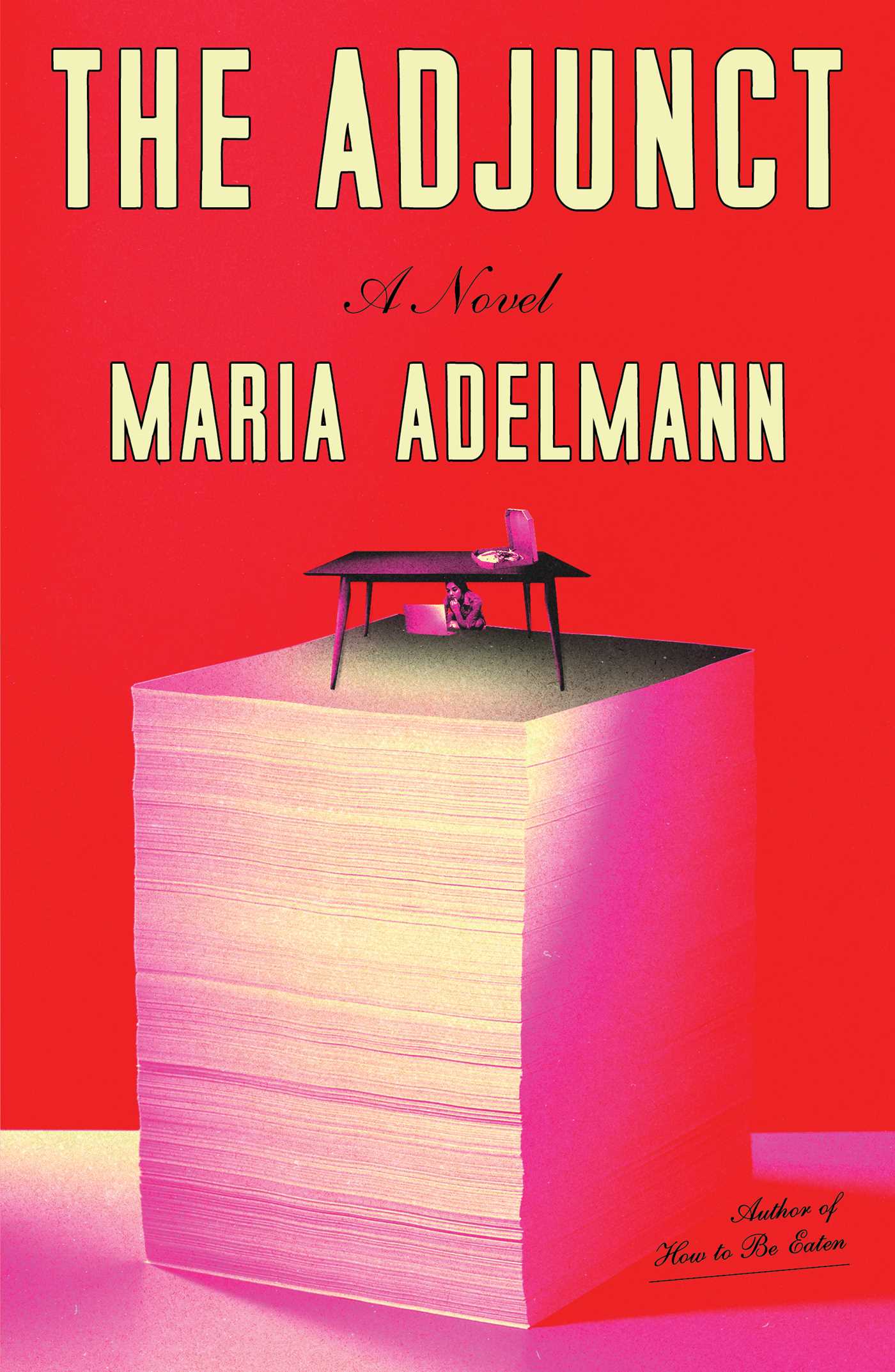
The Adjunct
Scribner, 2026
Knowledge is power, goes an old saying. Power corrupts, goes another. Somewhere in that tension there must be at least a partial explanation for what happened to American higher education in the first two decades of the twenty-first century. College costs and student debt skyrocketed amidst an endless cycle of culture wars, many of them suggesting that educated rich kids (and adults) may not be ideal “allies” for the poor and marginalized. Administrators, meanwhile, who’d spent years touting their schools’ exclusivity, saw nothing at all “problematic” in a parallel commitment to equity and inclusion. Next came COVID. Then the rise of technologies that performed tasks once reserved for well-compensated professors. Finally, there were the scorched-earth policies of the second Trump administration. “It’s impossible to exaggerate the degree of shock moves like these caused in American élite higher education,” Nicholas Lemann wrote recently in The New Yorker. And yet, as Lemann added: “How did universities not see the assault coming?”
Readers of Maria Adelmann’s entertaining, provocative new novel will find it hard to disagree with such sentiments. The Adjunct is a ripped-from-the-headlines dispatch from the front lines of the campus wars. “Our president is an orange billionaire,” declares Sam, Adelmann’s titular narrator, “and academia isn’t any less absurd.” Is Adelmann suggesting that these fierce adversaries—enlightened educators and MAGA reactionaries—are actually more similar than different? The Adjunct, for better and for worse, is not quite that radical a novel.
That is, until its final pages.
For most of the book, Adelmann dabbles in proper, lefty critiques, and even some right-adjacent rage amidst Sam’s more personal struggles—money and family, love and sex, dental surgery and bedbugs. Indeed, the series of unfortunate events outlined in The Adjunct is both satirically absurd and sadly realistic. “Scholars often said the campus in an academic novel was a ‘microcosm,’ ” Sam declares, in one of many interior lectures, “but I was beginning to see it more as a biodome, less a reflection of the real world than a curated exemption from it.”
Sam herself is proof of that, with her decade-plus spent on various campuses, and deep well of high- and lowbrow allusions that only academic folk can really appreciate. She cracks John Ashberry jokes and looks after a dog named “Cheever.” There are copy-machine clashes and parking-sticker shenanigans. Other name-drops include David Foster Wallace, Denis Johnson, Kate Bush, and Emily Brontë’s Heathcliff—as well as the comic cat. Set in and around two fictional Baltimore colleges, The Adjunct unfolds in the long, painful shadow cast by the #MeToo movement. As a grad student, Sam had a messy, possibly-sexual relationship with a charismatic English professor named Tom, who wrote a best-selling novel, but also changed jobs amidst whispers of inappropriate behavior. Tom is about to release a long-awaited new book that may or may not have been inspired by Sam—who just so happens to have been hired as a part-timer by Tom’s new college.
When we first meet Sam, she is spending nights in the college’s adjunct office, having apparently run out of money—even though she has endless work to do. With an estimated hundred students, Sam calculates she’ll have “2000 pages of written work” to grade, even as she is paid a fraction of what full-time professors make, and “is chained to [student loan] payments of $500 a month” for more than two decades.
At the heart of Adelmann’s story is the caste system that reigns on campus—and also in America. Whatever happened between Sam and Tom is infused with twenty-first century generational and gender dynamics. But what seems more important (at least to Adelmann) are old-fashioned conflicts rooted in class and social capital. Adelmann’s book arrives, interestingly, just as Netflix has released an adaption of Julia May Jonas’s bestseller, Vladimir, which covers some of the same ground.
Jonas’s characters are the older gods of academe that Sam looks up to—with both reverence and rage. They are represented in The Adjunct by Tom, and various other tenured, bourgeois bohemians who live a cosseted life of the mind, even as Sam and her fellow part-timers struggle mightily. Sam’s teeth keep falling out, for one thing, and she ends up on the wrong end of a pistol. And yet, these are not the most unpleasant elements of Adelmann’s plot. Neither The Adjunct nor Vladimir bother trotting out right-wing boogeymen to serve as easy antagonists. The manipulative wizards behind the curtains are the high-minded academics themselves: beneficiaries of a rigid, rigged class structure. “The disappointing big reveal,” Sam intones, “is that … capitalism did it, and suddenly you realize that you aren't in a mystery novel. … There is a twist beyond the twist: It’s just real life.”
Sam is a mostly sympathetic figure—a young reader and dreamer from the hinterlands (well, working-class New Jersey), the kind of lost soul for whom college should have been a utopia. Instead, what Sam and so many others got were established, somewhat-charming, often-insinuating male teachers nearing sixty, and stuck in the 1960s.
It’s important to note that The Adjunct as well as Vladimir are narrated by women, and are about female desire, although in very different ways. Two decades older than Sam, Jonas’s unnamed narrator still emits the frenetic energy of a Philip Roth character. Sam, on the other hand, is terminally exhausted, already pitying undergrads who believe that “being capable of flying is the same as flying.” Powerfully written passages like that one make up for Adelmann’s occasional lapse into Wikipedian prose more befitting a bland op-ed (e.g., “the essence of my discomfort with where #MeToo had led us”). Some readers may also grow weary of The Adjunct’s meta-ness, what with Sam (naturally) teaching a course on “The Campus Novel,” and Tom’s (fictional) fiction helping Sam understand her “own plotline.”
More often than not, though, Sam—and Adelmann—are blunt. “I am trying to tell you something not just about my life, but America. About how the fracturing of labor fractures lives,” she declares near the end of the book, even if most readers will have sensed this by now. That’s why The Adjunct’s quite-shocking final pages are so welcome, whatever they might actually mean. What is clear is that the future of higher ed is likely to get worse before it gets better, and that too many folks who believed they were part of the solution were actually part of the problem. Consider the narrator of Vladimir, and how she comforts a student upset by a professor’s low grade. “She’s not a professor. She’s an adjunct.”
Tom Deignan is a columnist for Irish America magazine, and has written about books for the Irish Independent, New York Times, and Washington Post. He teaches at CUNY and is working on a book about religious violence in the 1920s.