Word count: 984
Paragraphs: 8
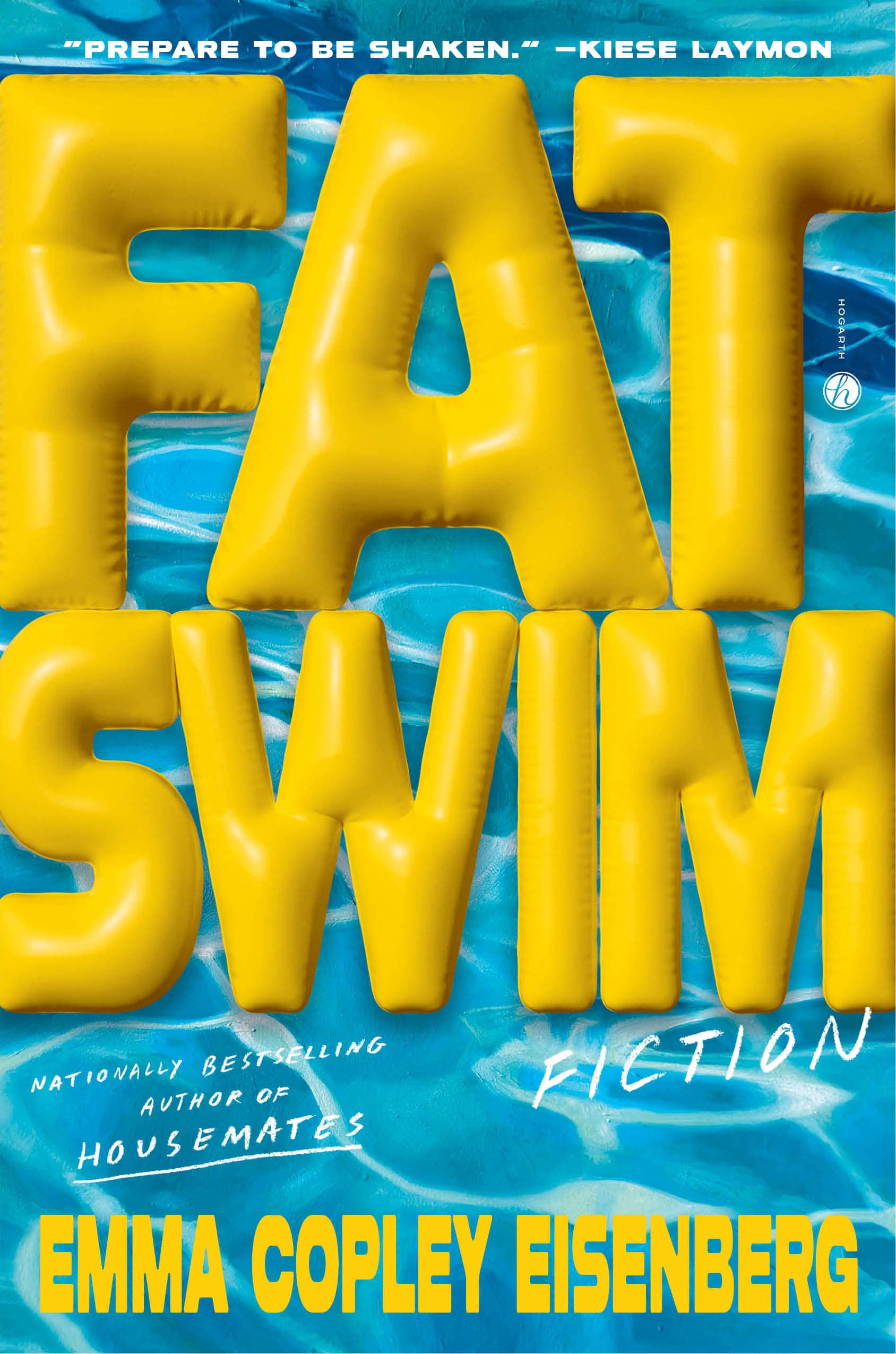
Fat Swim
Hogarth, 2026
Fat characters, written with dignity, should not be novel. But we live in a world in which thin, beautiful protagonists rule literary fiction—where the highest praise for a contemporary, white female author is a comparison to any given press cycle’s fatphobic “literary it girl” du jour. Color me refreshed then to have just read a collection in which fat people exist as something other than monstrous harbingers of horrors to come or targets of skinny people’s contempt. Throughout Emma Copley Eisenberg’s debut story collection, Fat Swim, other “minorities” are likewise humanized—and bravely embodied!—challenging Big Fiction’s trend of only allowing writers to imagine what they already know. In Eisenberg’s care, Black bodies, trans bodies, old bodies, thin bodies, brown bodies, and fat bodies are all miracles worthy of honor: for their engagement with the five senses, their desire to orgasm, and their ability to form meaningful human connection.
The term “linked stories” here is loose. While one can go back in the text and make connections if one so chooses, one could also read the entire collection without linking a thing until the final story, “Camp Sensation,” which brings many of the stories’ characters together for a fantastically strange healing retreat, where residents are encouraged to revive their senses of sight, taste, smell, hearing, and touch. It is through Eisenberg’s deft dropping of clues that we piece things together: Michael/Hearing shows a picture of his daughter to the other residents, one of whom zooms in and says “Oh!” The recognition comes from Bree/Taste, the fat Black woman in the collection’s first and titular story, with whom Michael/Hearing’s daughter loved to swim. Another clue is the mention of Beatrice/Smell’s beauty company, from which Marion, a co-founder from the story “Beauty” was excluded. Once the company, Lavender, was acquired, the new strategists had deemed Marion’s appearance “unbefitting” to represent the brand. We realize also that we’d met Lou in “Beauty,” then as a plump, genderqueer child who found Marion’s body contouring videos online. The Lou of “Camp Sensation,” it clicks, is the grown-up version of that child, drugging camp residents in their grandmother’s sauna to encourage psychological change. Cara/Touch, the protagonist of “Camp Sensation,” appears most throughout the collection: in “Mama” as a lover of the protagonist’s child, set on seeing ponies at the beach; in “The Dan Graves Situation” as the sculpture student who notifies campus authorities of a cohort member’s erratic behavior; in “Lanternfly”—my personal favorite story in Eisenberg’s collection—as the friend of protagonist Jewels, who is hired by Cara’s writing professor for a strange beachside assistantship.
The way Eisenberg’s characters pass through each other’s lives, oftentimes as tertiary characters, is both authentic and generous. Because the stories transpire over decades, we see characters at different stages of their lives. The child who was ghosted by an influential video artist and subsequently lashed out at her in an incel-like manner, might grow up to help depressed people through a magical sauna in which an Amish man once sang. The father who thinks horrible thoughts about his daughter’s body might join Sex and Love Addicts Anonymous and seek help. An exclusionary beauty brand entrepreneur might go on to have children she despises and confess to strangers at a wellness camp to drinking a bottle of wine every day. Through Fat Swim’s traversal of time, its insistence on meeting its inhabitants where they are, and its willingness to view a person from all sides, Eisenberg offers her characters a rare, godlike grace.
Something I’ve long admired in Eisenberg’s work is the permission she gives her characters to say and do that which we are conditioned not to. In “Camp Sensation,” during a casual hookup at their retreat, Gin/Sight says to Cara/Touch: “I don’t want to be here, like right now, with you.” She assures Cara of her beauty but goes on to admit to a near stranger that this is a pattern of hers, allowing beautiful women to touch her as if she has no will. The problematic Dan Graves tells a young Cara that she “can’t be gay” because of how badly he wants her. Rob, the eighty-four-year-old writer whom Jules assists in “Lanternfly,” tells his twenty-something employee that there is one other thing he needs to write: “Sex, he said finally. I’ll need to have some. A lot, actually. Sometimes several times a day. A necessary ingredient.” After a full paragraph of description, Rob finally adds: “Not with you, obviously,” allowing readers a great sigh of relief.
After the thinner participants drop out of Camp Sensation, Lou notes, in front of everyone, that only the fat ones remain. Anne, the camp’s owner, is astonished by their grandchild’s boldness, chastising them by saying “We don’t comment on people’s bodies here.” But the remaining participants aren’t idiots. They’ve noticed it too. As such, Cara quietly considers the possibility that the commonality of their fatness might not be coincidence, but cause, that “their flesh provided another layer of emotional protection.”
It is this image—fat bodies as the last ones standing, their flesh recast not as burden but as armor—that encapsulates what makes Fat Swim such a quietly radical collection. Eisenberg knows that dignity on the page is not a matter of protection—of shielding characters from hardship or moral complexity—but of rendering them with enough interiority that they become irreducible. She does not sentimentalize her characters, nor does she punish them. They are not symbols of their marginalization or privilege; they are people whose positionality is one fact among many. Eisenberg simply allows her characters to endure, to notice things, to say the unsayable, to be desired and difficult and unresolved. That this feels transgressive is an indictment of the literary world she is writing against. That it also feels, by the last page, completely natural, is a testament to how thoroughly Eisenberg has built her own.
Shy Watson is a current Ph.D. candidate in Creative Writing and Literature at the University of Southern California. Her work has been published in Volume 0, Joyland, Southwest Review, Fence, and elsewhere.