Word count: 1052
Paragraphs: 12
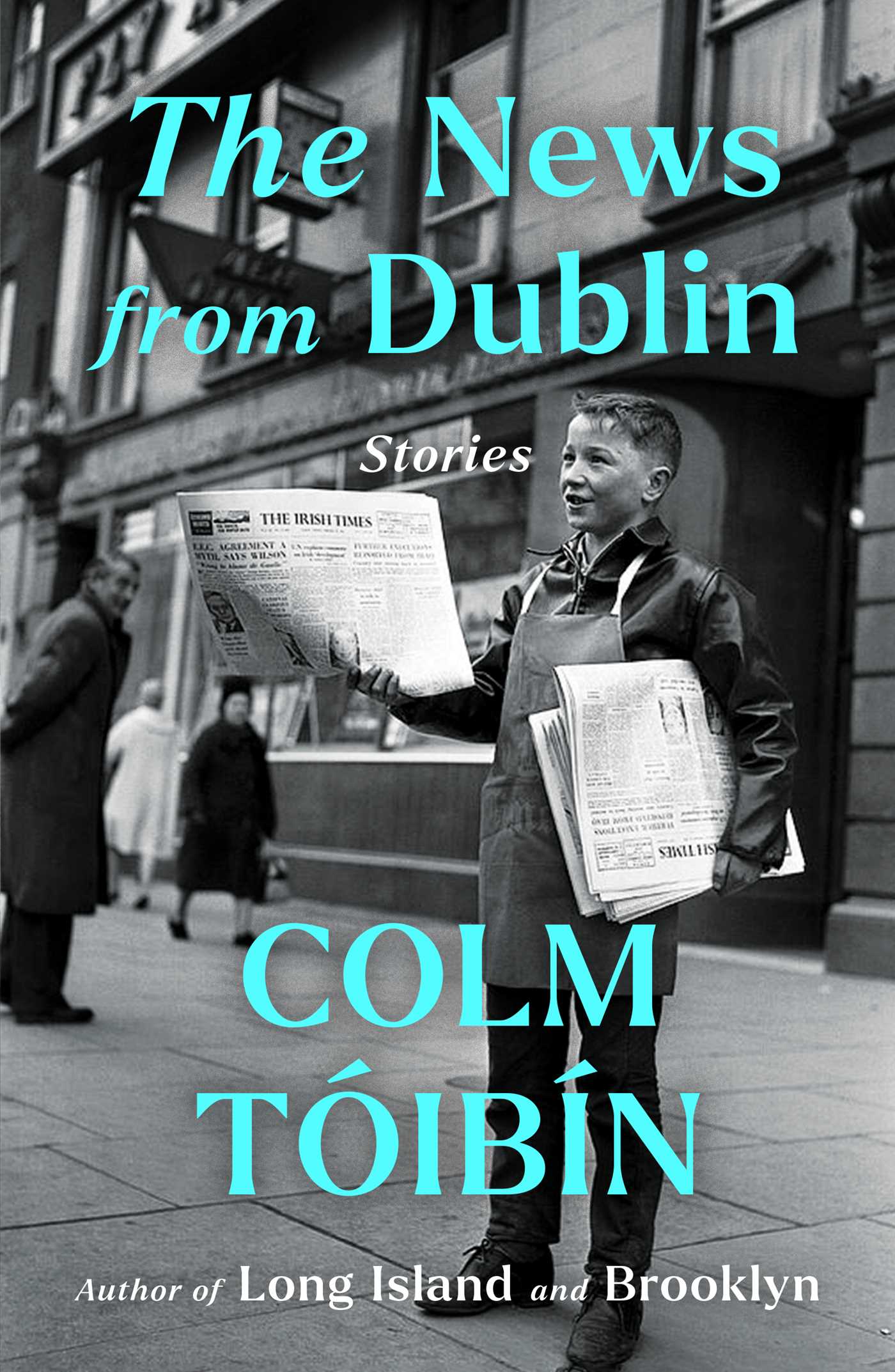
The News From Dublin
Scribner, 2026
Colm Tóibín has done some serious time traveling in his recent novels. House of Names (2017) reimagines the dysfunctional family sagas of Agamemnon and Clytemnestra, which were first conjured 2500 years ago by the ancient Greek tragedian Aeschylus. Tóibín followed House of Names with The Magician (2022), a fictional rendering of the life, literature, and secrets of German novelist and Nobel laureate Thomas Mann (1875–1955). The Magician turned out to be something of a companion read, or perhaps spiritual sequel, to Tóibín’s earlier novel The Master (2005), about Henry James—another brilliant yet inscrutable aesthete who seemed more comfortable with characters on the written page than people in the real world.
But don’t go thinking Tóibín is some kind of cloistered Irish priest worshiping at the altar of difficult art and old souls. Tóibín’s recent novel Long Island (2025) was an Oprah’s Book Club selection, and a sequel to his earlier best-seller Brooklyn (2009), which was later adapted into a popular Oscar-nominated film.
All of which tells you what you need to know about the depth and breadth of Tóibín’s many talents, which are on display once again in his latest collection of eight stories and one novella. The News from Dublin takes readers from twentieth century Europe to North as well as South America. If there is an overarching theme in The News from Dublin—not unlike the entirety of Tóibín’s career—it’s that much of our lives are shaped by forces unleashed long ago and far away: family, famine, war, oppressive cultural norms and traditions. “He had died in a British uniform, a uniform that had seemed more and more the uniform of another country,” recalls a grieving Irish mother in “The Journey to Galway,” set at a time when Ireland finally began to separate from its centuries-long colonial ruler. This change is jarring enough. Then comes the most unwelcome “news” imaginable, which sends this mother off on the emotional quest to which the story’s title refers. “She wondered now if (her son) and … the others who had died for this dream of empire, this large and abstract conflict between nations, would belong to the past,” Tóibín writes, “if they would not be shadows fading into further and deeper shadows.”
“The Journey to Galway” is one of several stories in this collection about trips that are literal as well as metaphorical—but above all else existential. “A Free Man,” is an unsettlingly even-handed account of a terrible crime and its aftermath, in which a former prisoner named Joe has little choice but to leave his native Ireland for Spain. “A Free Man” (the title is painfully ironic) is one of several stories that touch upon deeply provocative social issues and topics, especially for Irish readers—abusive clergy, the weight of history, crimes and punishments, the lives of gay men and women in a deeply Catholic culture.
Tóibín has long explored such topics, in a non-fiction oeuvre that is nearly as impressive as his fictional one, and includes books about James Baldwin, Elizabeth Bishop, Love in a Dark Time: Gay Lives from Wilde to Almodovar, and even the fathers of rebellious outsiders like James Joyce and William Butler Yeats. The cultural or political matters that animate Tóibín’s fiction, however, are woven into his intimate narratives with the finest of threads. “A Free Man” concludes with Joe feeling his past is about to be exposed. And as his exposers are “deciding what to do,” all Joe can try is “to become invisible.” In “Sleep,” meanwhile, an older Irish narrator and his younger lover conduct what at first seems a care-free romance, high above Manhattan’s Upper West Side:
It is strange how much unwitting effort it has taken to bring us here. The engineers and software designers could never have guessed, as they laid out their strategies and sought investment, that the thing they were making—the internet—would cause two strangers to meet and then, after a time, to lie in the half-light of morning, holding each other. Were it not for them, we would never have been together in this place.
Like the world war in “The Journey to Galway,” global technology has conspired to bring the two (somewhat mismatched) souls of “Sleep” together. Fissures eventually emerge, especially as the story approaches its conclusion, in the office of an analyst who deploys hypnosis to excavate painful memories. Another journey is at the center of Tóibín’s title story, in which a teacher in Wexford (Tóibín’s native village of Enniscorthy, in fact) sets out to meet a local political representative about a tuberculosis outbreak. The story hints at our own dark, recent memories of COVID, and the incessant rumors of an effective vaccine, as well Tóibín’s family history, which is deeply entangled with the broader sweep of recent Irish history. His grandfather participated in the 1916 Easter Rising against the British in Dublin, and other family members were later active in local politics.
The longest work in Tóibín’s new collection is “The Catalan Girls.” It is the most ambitious, but also uneven. Set in Spain and Argentina, “The Catalan Girls” follows a group of women across the decades, as they don various identities for a variety of complex reasons. Here Tóibín explores strategies of deception and perseverance, and the ties of family and friendship that can bind, but also choke. Tóibín deftly handles the chronology in this story with time passages that border on magic realism. The actual scenes and set pieces, however, don’t always justify the story’s length.
Next year marks the fortieth anniversary of Tóibín’s first published book—Walking Along the Border, about the bloody line separating Northern Ireland from the Republic in the south. Ever since—and once again in The News from Dublin—Tóibín has been examining all kinds of perilous divisions, approaching dangerous edges, peering over cliffs, to discern what it is that hurts as well as heals us, and the often fine line between the two.
“We swagger, we are full of pretense that there is no real danger coming towards us,” the narrator of “The Journey to Galway” muses. “We talk as though the enemy is in flight, or under control. As time moves, however, it drags us with it until the time for pretending ends and the body lies spent.”
Tom Deignan is a columnist for Irish America magazine, and has written about books for the Irish Independent, New York Times, and Washington Post. He teaches at CUNY and is working on a book about religious violence in the 1920s.