Ruth Lauer Manenti’s 4 Sides of the Table
These minimalist photographs of a small space deal with loss, grief, and the absence of loved ones.
Word count: 916
Paragraphs: 10
Ruth Lauer
Manenti RM, 2026
Photographer Ruth Lauer Manenti’s photobook, 4 Sides of the Table, opens to an image of two rulers photographed against a white background, which beg the question as to what we are measuring. Is it time? Is it the size of something? Of someone? Measuring someone's meaning in our life? The next image shows an empty kitchen chair draped in a finely striped cloth followed by a series of photographs inside a minimalist, if not empty, house. Together, these images evoke the absence of people, of someone.
Manenti’s 2024 book, I Imagined it Empty, includes photographs of her mother in their house in the weeks running up to her death in 2017, creating a silent and moving portrait of her mother and life before death. Knowing what the artist explored in her first extremely successful book brings an eerie quality to the photographs in 4 Sides. Without an introductory text to provide context, readers are left to wonder if 4 Sides is a memory of her mother or another lost connection.
The black-and-white photographs throughout 4 Sides present fragments from a sparse home. Images taken through doorways into empty rooms, plates and bowls stacked on shelves, a rattan chair at a wooden table. This single small space setting provides a sense of exploring a place despite the restriction of the four walls of the home. A human presence is added with a series of images of a woman who never returns the photographer’s gaze. Instead, we are presented with snapshots of her, from close ups of her elderly, delicate hands, resting in her lap against the backdrop of her white cotton gown, to her legs resting on a bed of white sheets.

The final text of the book reveals that the elderly woman in 4 Sides is Manenti’s late mother’s best friend, June. Manenti asked to photograph June between 2022 to 2024 to find a way to connect with her mother and engage with her own grief and sense of belonging. The project ended up being one of connection and loss for both women, when June’s daughter unexpectedly passed away during that time. She chose to continue being photographed by Manenti and the images vibrate with a sense of searching and longing.
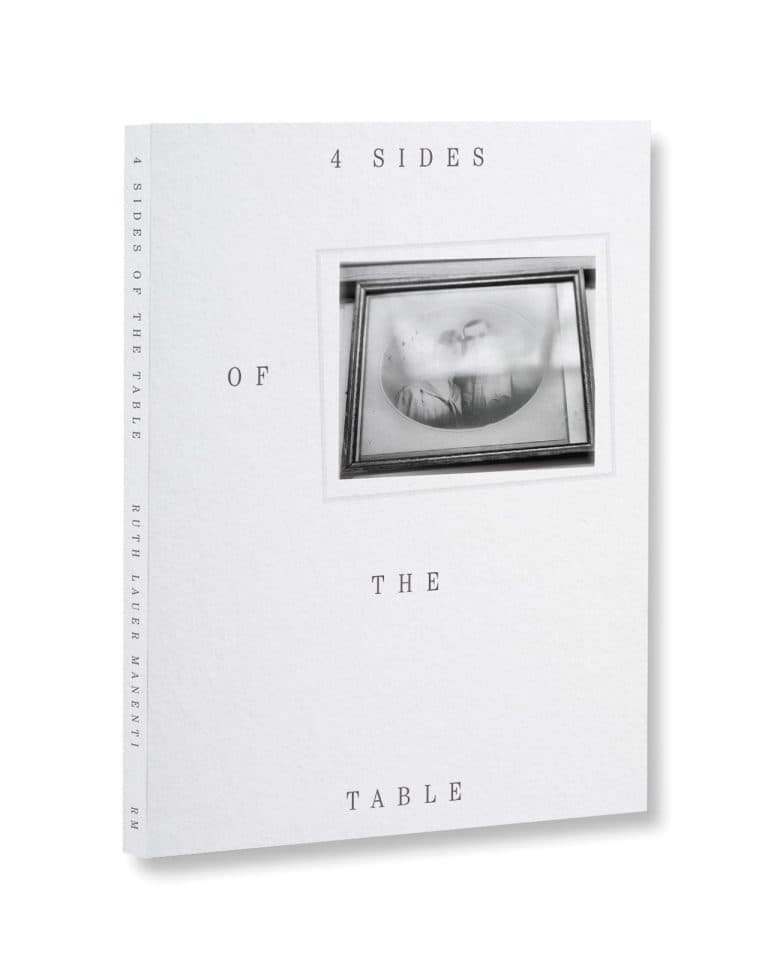
The book is beautifully bound with an elegant and minimalist format. One photograph is printed per double page, creating space for the images to settle and breathe. The cover photograph of 4 Sides shows a vintage framed photograph of a couple, their faces blurred by the glare of the camera. The glare stops the viewer from getting a sense of the couple, instead left with a feeling that perhaps the couple is personal to the photographer. The photograph appears early in the book and seeing a framed photograph in a near empty house, instead of a portrait of the couple themselves, implies a loss and an absence.

In the final pages of the book, the address “226 Harrogate Road” appears on a singular page, presumably the address where the photographs were taken, but also the title of one of two poems by Manenti towards the end of the book. “226 Harrogate Road“ evokes dreams of parents, a house filled with writing and letters and the passing of time through memories and dreams: “the day falling, the moon rising.” The reference to parents also makes a connection to the cover photograph of the couple whose faces seem to appear in a blurred dream state: “She felt disorientated never sleeping / in the afternoon nor downstairs / turned the light on / trying to remember something / about her mother and father.” Other lines evoke the house: “A letter, a death, a dream, a house / a death dreamhouse / raining, rolling, wrapping.”
Both poems, like the preceding photographs, stem from pauses and fragments in the everyday, encouraging us to go back and reread the photographs with the words of the author in mind. Two photographs stand out in which we see the women brushing each other’s hair. Both wearing linen, their faces not in the shot, but a peacefulness and kindness ensue the image. The poems, like these images, evoke the dual nature of the project: the author’s inner world, personal memories and inner processing combined with her presence and relationship with June.

The second poem, “Pearls,” does not contain the dreamlike disorientated qualities of the first, instead it is a direct look at June. “I want to say something / to slow the moment down / break the quiet of her day / suspend her from her thoughts.” In Manenti’s photographs of June, as well as her images of empty rooms filled only by shadow and light, she does slow the moment down and offers the reader a pause in their day, if not necessarily in June’s. The human emotions entangled with loss, grief, and the passage of time, such as regret, missed opportunities, and a longing for what is no longer there, are also present in Manenti’s final words: “I put the chair back / as a way of saying / I wish I had brought a flower.” The chair, frequent throughout the photographs in 4 Sides, takes on new meaning. A symbol of place, presence, care, and thought, all elements imbued in Manenti’s photographs and words, elements that do help us deal with loss, grief, and the absence of loved ones.
Sarah Heather Brown is a curator working and living in London, England.