Steve Turtell’s Portraits and Places
This book calls for a rethinking of some of the well-worn narratives about art and work in 1970s New York.
Word count: 848
Paragraphs: 8
Steve Turtell
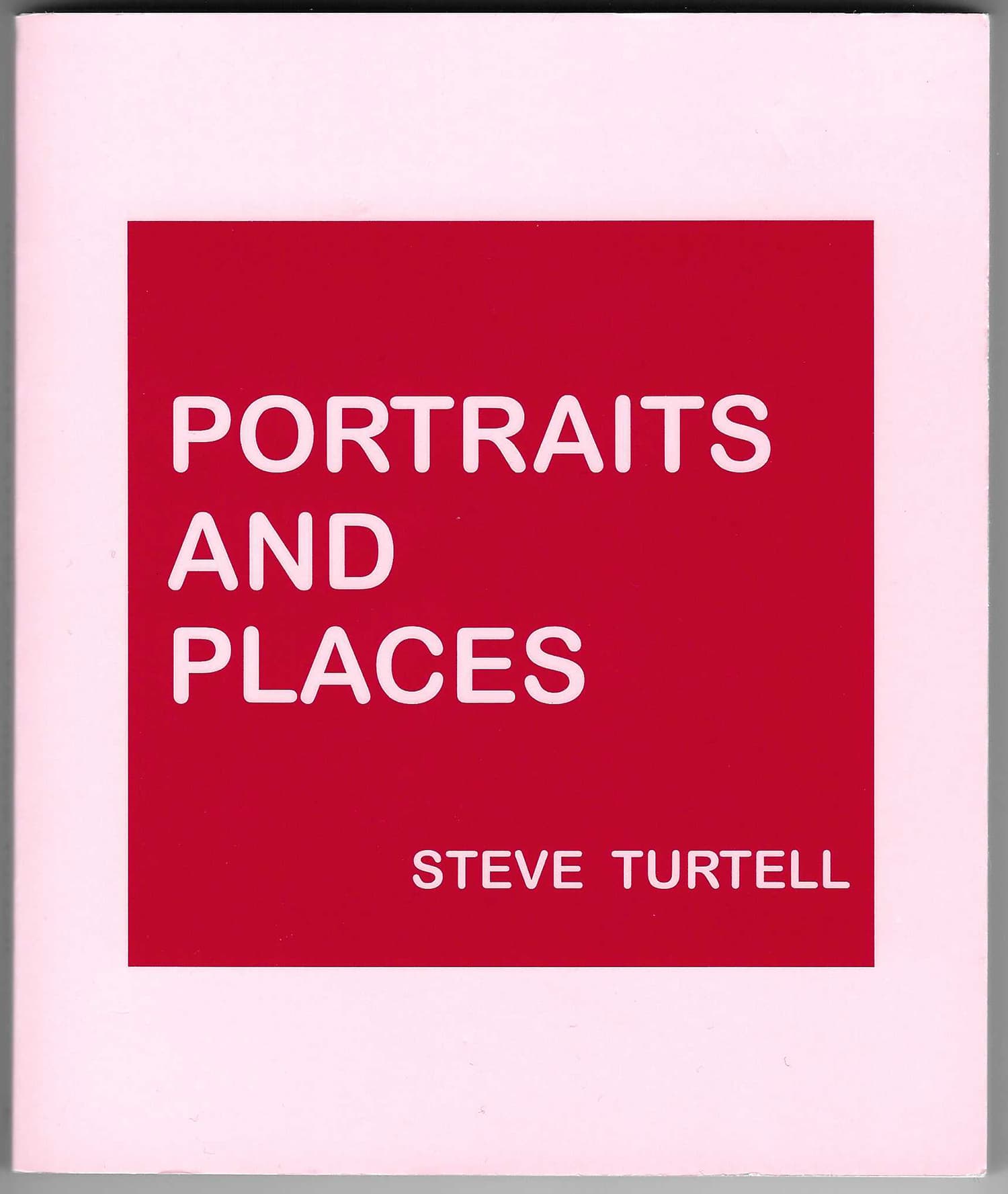
Photographs by Peter Hujar Palermo Publishing, 2025
In the 1970s, as New York found itself in a state of bankruptcy and decay, life was inexpensive, and cultural production flourished because artists could experiment, push aesthetic boundaries, and dedicate themselves fully to their crafts. Despite sometimes having or choosing to live in veritable destitution, many individuals, liberated by the fact that their art only had monetary value in the rarest of situations, were able to work relatively little to support themselves by other means. For contemporary cultural practitioners navigating monotonous day jobs and chaotic freelance gigs, struggling to find time and space to make their own work in the wake of the gentrified city, the cultural and economic conditions of the 1970s are either the stuff of fantasy or the basis of an unspoken generational tension.
But surely this picture of the past is wanting in depth. Poet and writer Steve Turtell’s book Portraits and Places calls for a rethinking of some of the well-worn narratives about art and work in 1970s New York. In six captivating essays, sequenced chronologically according to the order of events, this collection charts the young aspirational poet’s shifting queer social and artistic milieu. From the inaugural Christopher Street Liberation Day March, to The Cockettes’ disastrous opening night performance at the Anderson Theater, to the hippie parties in the hidden avant-garde settlement of Oakleyville on Fire Island, Turtell recounts the whirlwind that was his early adulthood. For the impoverished yet fiery teenager, it was a period of constant motion and pingponging from one shit job to another, an era when different worlds collided with such ease that both underground stars and actual celebrities were somehow within his reach. Attentive to the material realities of surviving in the gritty city, Turtell paints a self-portrait of the artist as a young man (albeit one who appears in occasional drag), demonstrating that forms of labor and unemployment played an outsized role in how queer people connected and produced culture.
Within these pages, Turtell shuffles through a concatenation of jobs, including street messenger, librarian, broadsheet hawker, baker, dishwasher, nude model, lighting technician, house cleaner, restaurant kitchen designer, and costume sewer—in addition to his side hustle of freelancing as a critic for The Advocate and Gaysweek. Yet not all gigs were grim and soul-crushing; many had their social benefits, bringing Turtell into the orbit of a marvelous array of characters who were stirring up new forms of culture. Turtell says, for example, that prior to doing the lights for the dazzling experimental theater and drag troupe The Palm Casino Revue, “it had never occurred to me to think that work could be fun.”

Peter Hujar, Sheyla Asleep Backstage at the Palm Casino Revue, 1974. © 2025 The Peter Hujar Archive / Artists Rights Society (ARS), New York.
As the title indicates, the book presents sketches of such colorful individuals as Peter Hujar, Sheyla Baykal, Charles Ludlam, Steve Lawrence, Sam Green, and Morton Gottlieb. The book’s grand finale, “Peter Hujar in New Orleans,” details the breakdown of a close friendship of almost a decade’s duration with devastating precision. (Turtell met the talented photographer, seventeen years his elder, in 1971.) Revolving around their fateful week-long trip to the Carnival festivities in 1980, the essay bounces between temporalities, expertly capturing the non-linear qualities of memory and friendship itself. Notwithstanding its singularity, the delicate and uneven relationship described by Turtell feels incredibly familiar in terms of not only how a younger person puts up with the difficulties of an older person they admire, but also how time undoes this type of unsustainable dynamic. Interestingly, one point of contention between the men was their divergent orientations toward work. As Turtell writes:
“Jobs are unnecessary,” [Hujar] once pronounced, when I said that it was hard to work in a bakery all day—lifting hundred-pound sacks of flour, eighty-quart mixing bowls, huge blocks of butter, ten trays of chocolate cake, each of which had close to twenty pounds of a dense torte, not counting the cake pans or tray—and try to be a writer on the side.
Portraits and Places joins an ensemble of recent cultural works that portray Hujar as both brilliant photographer and imperfect friend. These include Paul Thek and Peter Hujar: Stay away from nothing (2025), Gary Schneider’s Peter Hujar Behind the Camera and in the Darkroom (2024), and Linda Rosenkrantz’s Peter Hujar’s Day (2022), which Ira Sachs just turned into a feature film starring Ben Whishaw and Rebecca Hall. Though it sometimes seems that Hujar’s complicated persona has upstaged his work in this spate of projects, Turtell nonetheless seeks to refocus attention on his beautiful photographs. Punctuating the text is a selection of eleven lesser-known Hujar portraits of luminaries who drift in and out of the narrative, such as Baykal, Ludlam, Mario Montez, Alexis Del Lago, and John Edward Heys. And lastly, there’s Hujar’s picture of Turtell in drag, curiously taken in 1981, the year after their breakup. Seated on a parlor chair backstage, he has an inscrutable, unsmiling expression that prompts speculation. Besides nuancing our understanding of queer art and life in 1970s New York, Turtell’s book continues his conversation with Hujar.