ArtSeenDecember/January 2025–26
Jack Howard-Potter: Body Part Bouquets
Word count: 1084
Paragraphs: 14
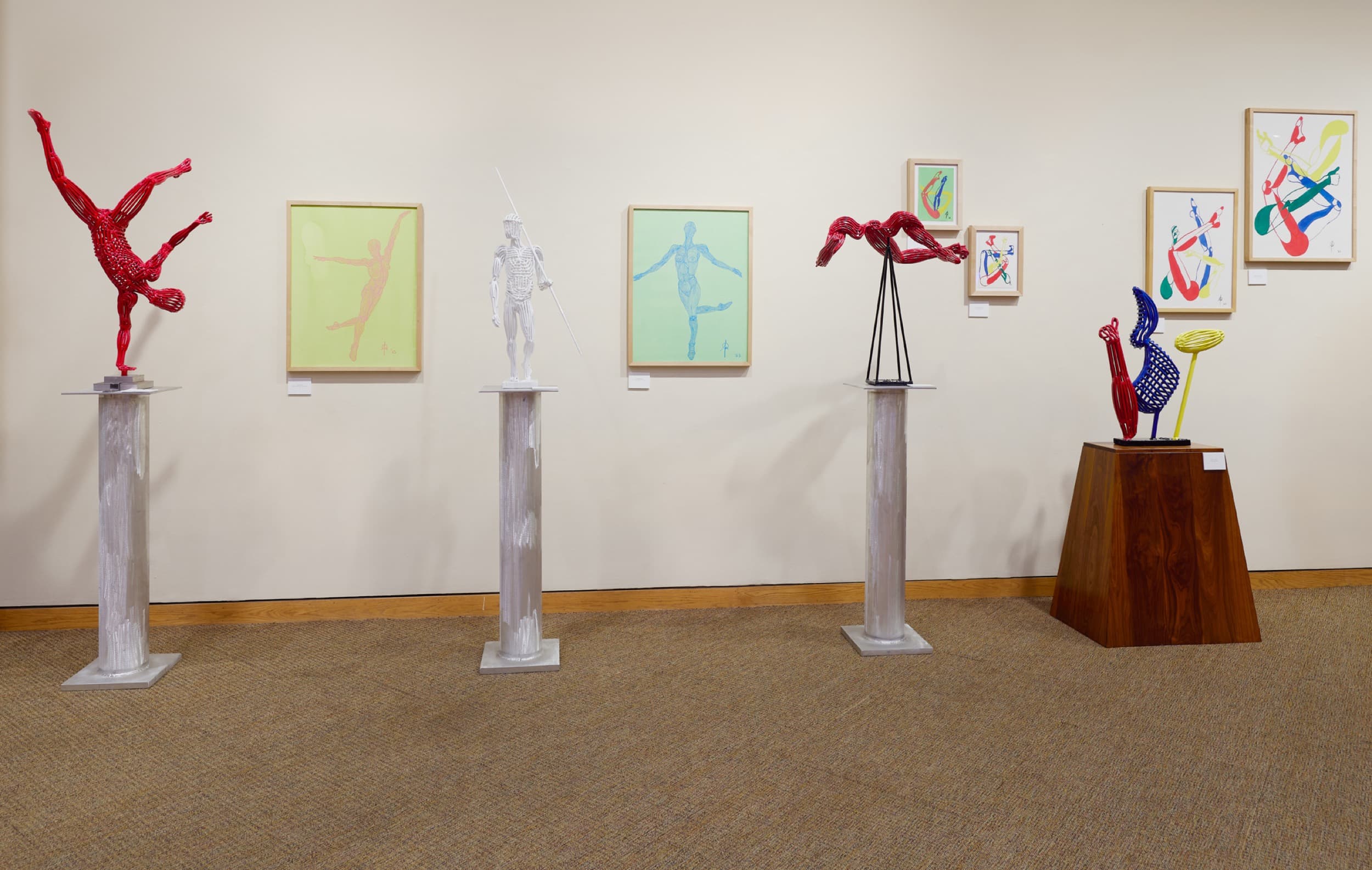
Installation view, Jack Howard-Potter: Body Part Bouquets, Nevelson Chapel, 2025–2026, New York. Courtesy the artist. Photo: Tom Powel Imaging.
Nevelson Chapel
September 3, 2025–January 31, 2026
New York
We live in a culture that has forgotten what a body is. Somewhere between the fitness tracker and the macros spreadsheet, between the mirror selfie and the optimization protocol, we learned to treat bodies the way Philip Pullman’s Magisterium treated dæmons in “His Dark Materials”: as inconvenient attachments to be managed, measured, and eventually severed from the souls they’re meant to embody. The difference is that we’ve done this to ourselves, willingly, one tracked step at a time. We have become our own Magisterium, quietly performing the surgery that splits flesh from spirit.
Stepping into Nevelson Chapel for Jack Howard-Potter’s exhibition Body Part Bouquets felt like a corrective shock. Here, the body is restored to its oldest meanings: a cosmology, a spiritual architecture, a living site of transformation. The sculptures and drawings do not ask us to perfect the body; they ask us to recognize it and then transcend it. They explore the organic bond between body and soul at a moment when contemporary culture seems determined to dissolve it.
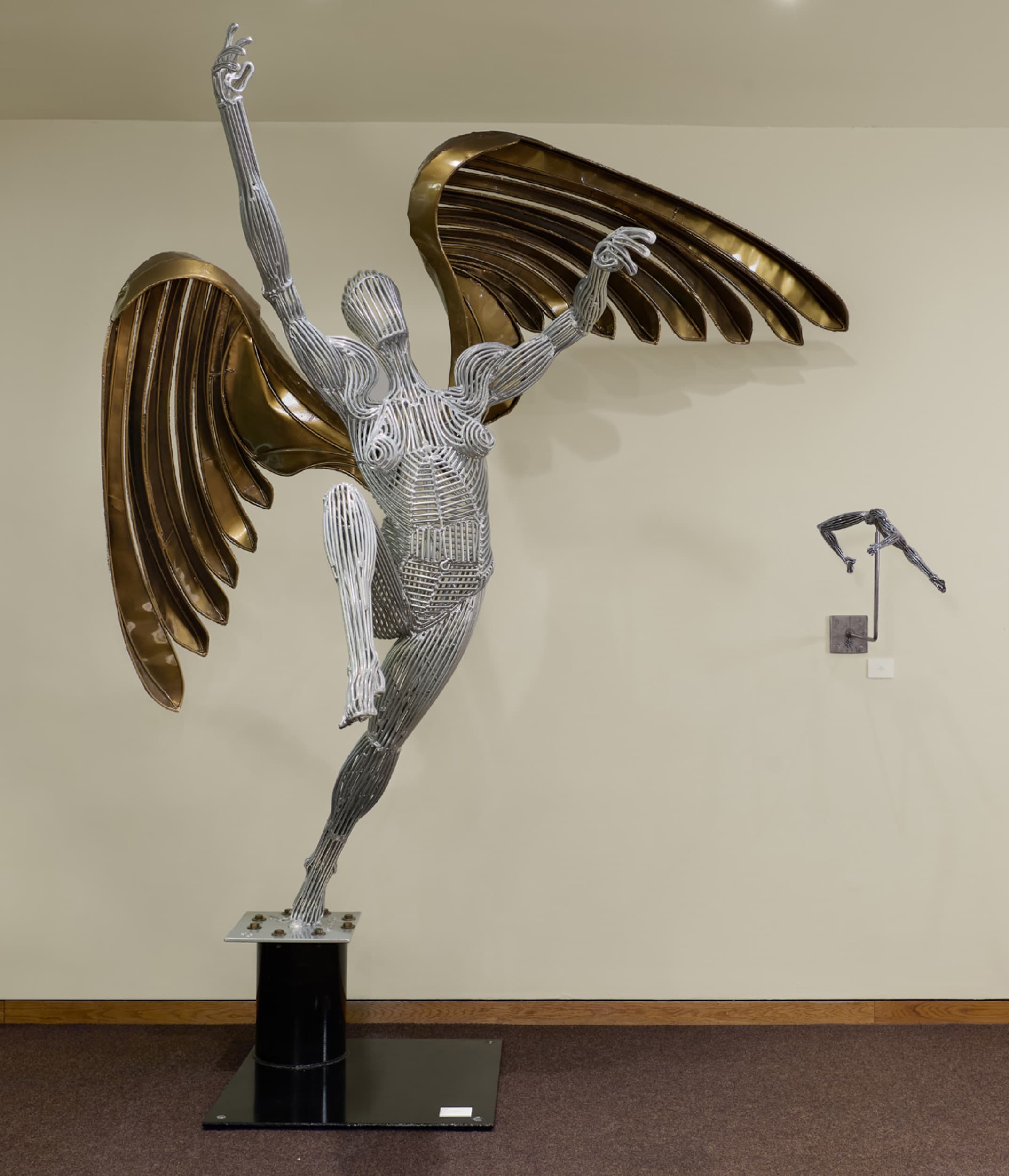
Jack Howard-Potter, Fully Realized, 2022. Galvanized and powder coated steel. Courtesy the artist. Photo: Tom Powel Imaging.
While Louise Nevelson’s chapel has always been a space of shadow-radiance, a breathing vessel that absorbs and releases light, Howard-Potter’s sculptural bouquets seem to amplify what Christopher Rothko once described as a “womb for the soul.” Nevelson’s sculptural environment understands the body as porous, capable of holding atmosphere, mystery, and spiritual charge. To place Howard-Potter’s work within that chamber is not merely situational—it is synergistic. The chapel becomes a lung. The sculptures become breath.
Howard-Potter’s bouquets—composed of powder-coated steel limbs, torsos, and arcs—shimmer in the chapel’s shifting light. The steel doesn’t simply reflect; it eats light and returns it as a soft, muscular glow, as if the metal were metabolizing illumination. This sensation is most vivid in Body Part Bouquet 1 (2025), where red, yellow, green, and blue limbs cascade and spiral upward like prismatic musculature. The bouquet form becomes a revelation: anatomy re-arranged into offering, gesture reconfigured into bloom. Howard-Potter is a cartographer of the body’s mythic possibilities, mapping not the anatomy of muscles but the anatomy of transcendence.
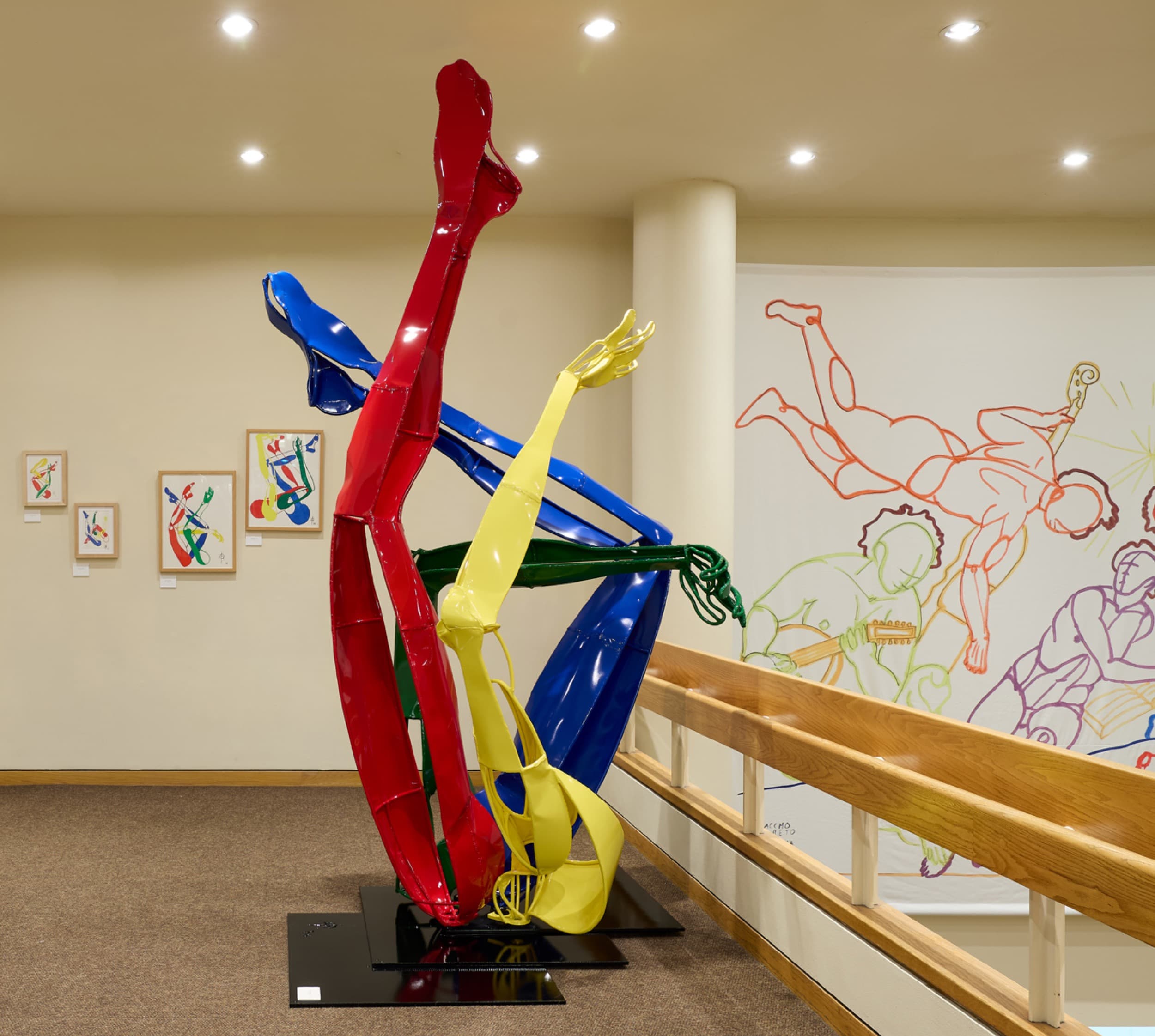
Jack Howard-Potter, Body Part Bouquet *1, 2025. Powder coated steel. Courtesy the artist. Photo: Tom Powel Imaging.
The work operates within what one might call the science of yoga—not the wellness-industrial complex’s version, but the older, deeper understanding—in which poses transcend physiology and shape neurology, psychology, and the energetic body. These sculptures behave like poses beyond anatomy: gestures that change the psyche, arcs that shape the breath, forms that reorganize consciousness. They carry the charge of asanas that have outgrown the limits of the flesh.
This quality is visible in Roundabout Proposal Sketch (2021), a graphite drawing that shows a figure bent dramatically forward, one leg curving overhead while rainbow-colored strands pour from the torso like secret radiances. The figure looks both disciplined and liberated, an embodiment of a body that has stepped beyond its own rules. It echoes a yogic inversion—not simply physical, but metaphysical—suggesting that illumination comes when one steps outside the known arrangement of limbs.
Nearby, in Body Part Bouquet #9 (2025), limbs knot together in a tangle of primary colors, each hue behaving like a different frequency. The body becomes a constellation of energetic pathways. The bouquet suggests mutating gender—forms that cannot be reduced to a singular biological destiny. These limbs exist in a state of becoming. A red leg intersects a blue arm; a yellow bend floats alongside a green curve. The body is plural. The body is unfixed. The body is multiple.
Even the drawings, which might seem quieter, pulse with this metamorphic intelligence. Dancer Pink (2023), with its luminous lime-green ground and its salmon-lined figure, reads like anatomy in ecstatic translation. The body is neither masculine nor feminine; it is a series of muscular rhymes. The lines wrap the figure like glyphs of breath. The pose is mid-flight, neither arrival nor departure—a suspension that feels almost mythic. There is something slippery beneath the poetry, a haunting that reminds me of Ovid’s Metamorphoses. Not the literal transformations—nymph to tree, boy to flower—but the deeper principle: the body as a site of constant becoming, a form always on the verge of its next narrative. In Dancer Pink, the figure seems caught in that dynamic threshold.

Jack Howard-Potter, Iaccmo Tentore in Venitia, 2025. Sublimation printing on fabric. Courtesy the artist. Photo: Tom Powel Imaging.
Howard-Potter understands that gesture precedes anatomy, that motion is the first language of being. His work insists that the body is not diminished unless we diminish it—that even the fragment can hold transcendence. In Body Part Bouquets, fragmentation does not lead to loss. It leads to revelation. A limb becomes a petal. A joint becomes punctuation. A torso becomes a bouquet of vectors. Howard-Potter’s fragments glow with agency, not absence. They argue for an expanded body—one capable of holding memory, intention, myth.
Nevelson Chapel amplifies this argument. The space pulls the sculptures into a kind of liturgical resonance. The steel arches read like votives; the limbs like suspended prayers. The chapel’s atmosphere—hushed, reverberant, almost breathing—turns each sculpture into a spiritual proposition. These are not bodies posed; these are bodies contemplated. In this setting, the bouquets behave like constellations. They transform the body into a map of experience where we survey the limits and expansions of embodiment. Each limb becomes an aperture, each arc a hypothesis, each curvature a form of knowledge. In this way, the exhibition extends beyond the physical into a phenomenology of embodiment. It suggests that the body is not merely the site where life happens—it is the site where meaning forms.
This epistemology of the body becomes even more profound when considered alongside the chapel’s lineage. Nevelson built her environment around absorption, shadow, and illumination. Howard-Potter answers her vocabulary with steel that gleams instead of absorbs, limbs that radiate instead of retreat. The dialogue becomes a duet between shadow and shine, contemplation and expansion. The chapel hums. The sculptures glimmer. And between them, the body grows.
Howard-Potter’s greatest proposition may be this: that the body—even in parts, even in pieces, even in transformation—is already whole. That our limbs are never merely limbs, but sacred extensions of spirit. In Nevelson Chapel, bathed in glimmering color and shadow, the body reclaims its radiance. And perhaps that is the deepest promise of Body Part Bouquets: That the body, when restored to reverence rather than control, outgrows its limits—and lives within the soul. That we can reverse the surgery we’ve performed on ourselves. That dæmon and human can be reunited. That the body, recognized as cosmology rather than commodity, can breathe again.
Killian Wright-Jackson is a contributor to the Brooklyn Rail.