Hearne Pardee

Hearne Pardee is an artist and writer based in New York and California. He is Professor Emeritus at UC Davis.

Hearne Pardee talks with painter April Gornik about her latest show at Miles McEnery Gallery. Under the title Liminal States, her new work generates clouds and skies that viscerally engage viewers in cosmic turning points—an eclipse or the Annunciation—rooted intuitively in the scale of her body.
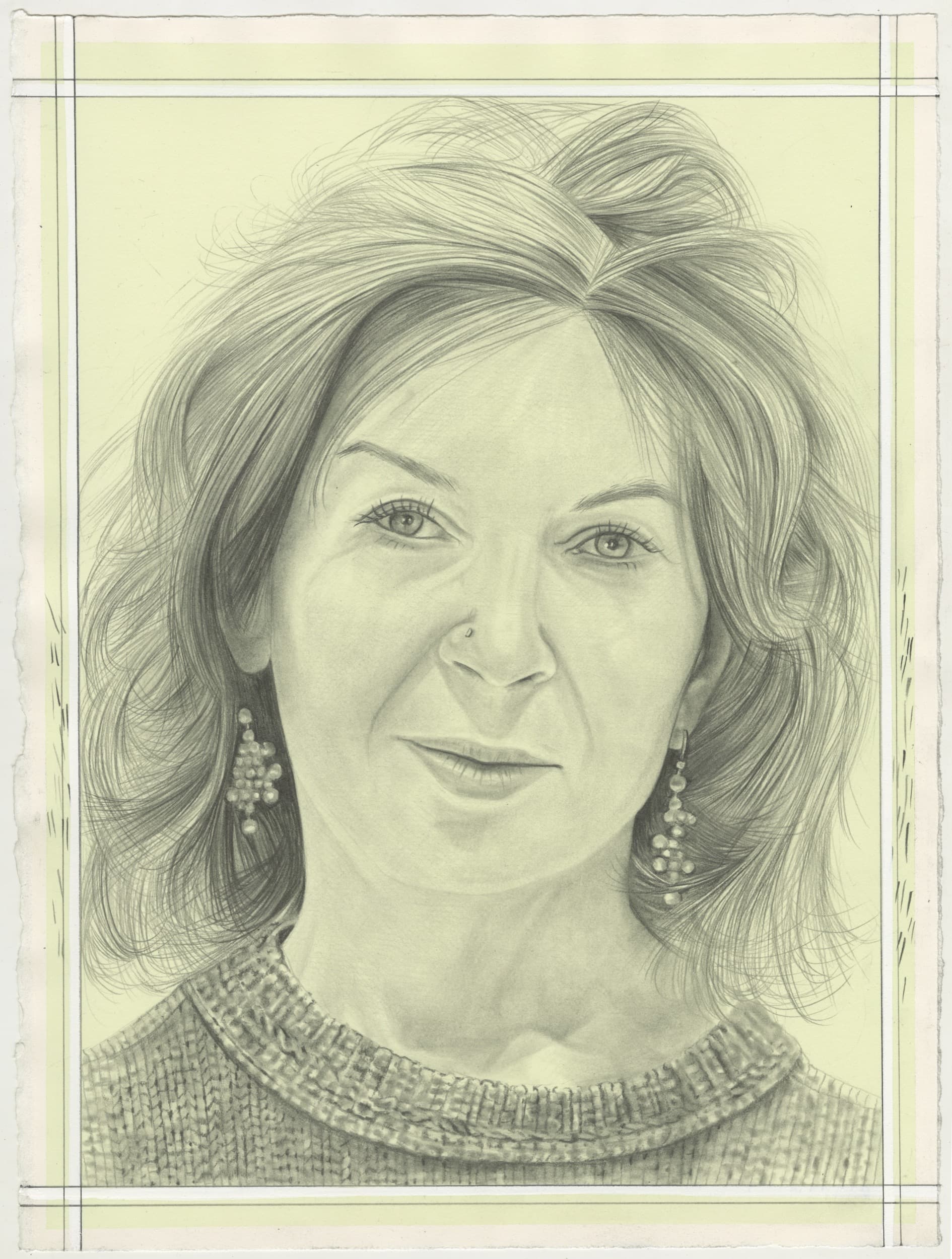
Portrait of April Gornik, pencil on paper by Phong H. Bui.

Study of avant-garde art combined with scientific curiosity about Brazilian flowering plants, once regarded as weeds, nurtured Burle Marx’s exceptional visual imagination and sustained both the expansive compositions of his gardens and the inwardly meditative construction of his oil paintings, of which Roberto Burle Marx: Works, 1940–1993, provides a broad sampling.
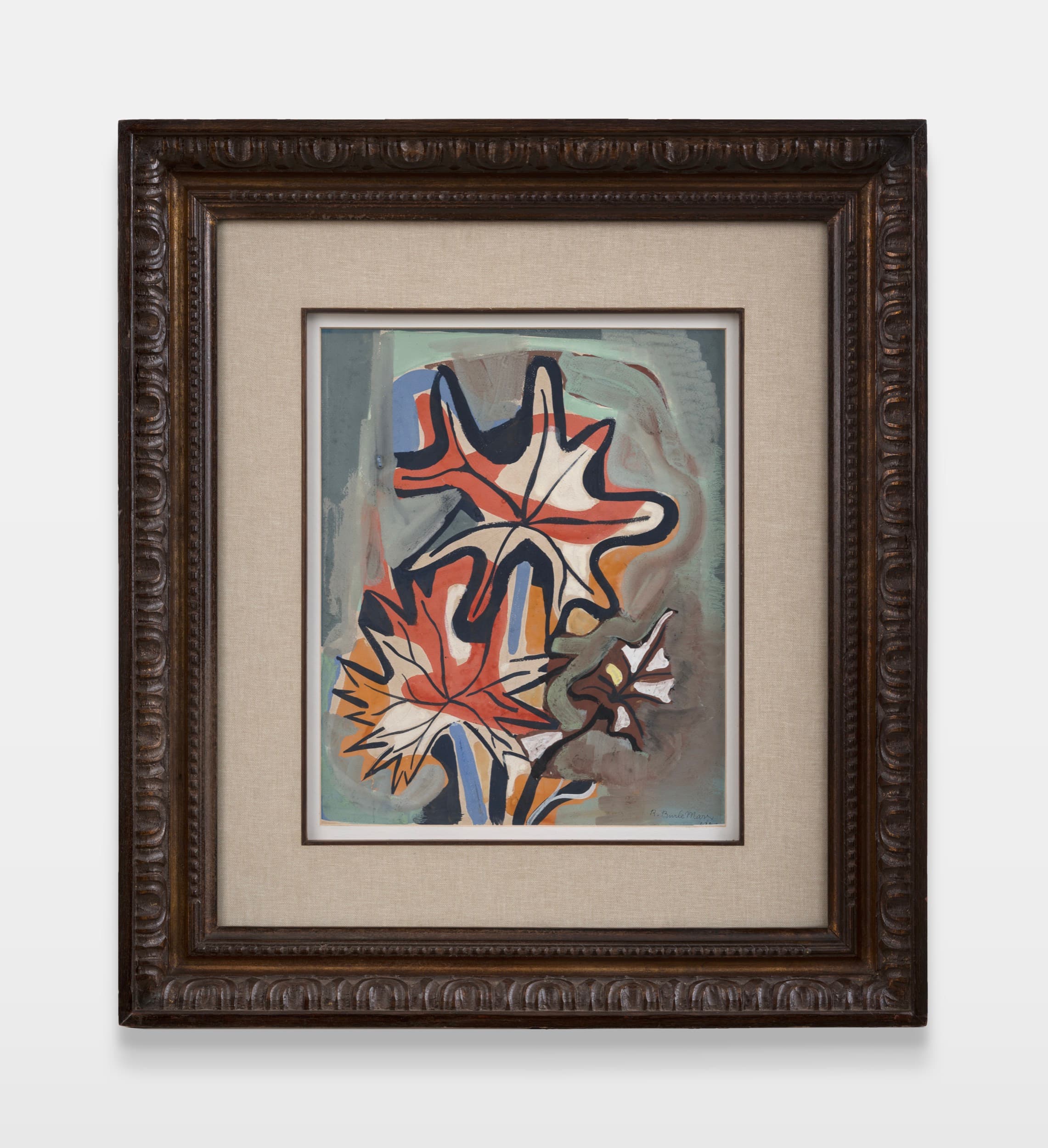
Roberto Burle Marx, Begônias, 1950. Gouache on paper, 17 × 13 ⅗ inches. Courtesy Andrew Kreps Gallery.

In Gabriel Orozco’s exhibition, Partituras [scores], traditional music notation is endowed with restless dynamism.

Gabriel Orozco, Untitled, 2025. Ink and gouache on printed paper, framed: 23 x 18 ¼ x 1 ⅜ inches. Courtesy the artist and Marian Goodman Gallery. Photo: Alex Yudzon.

Wayne Thiebaud: Art Comes from Art, a survey combining Thiebaud’s paintings with copies and interpretations of other artists’ works, conveys his connection of everyday visual experience to the works he loved in museums.

Wayne Thiebaud, 35 Cent Masterworks, 1970–72. Oil on canvas, 36 × 24 inches. © Wayne Thiebaud Foundation / Licensed by VAGA at Artists Rights Society (ARS), NY. Courtesy Acquavella Galleries.

Timed to coincide with the reopening of the Rockefeller Wing at the Metropolitan Museum, Urhobo + Abstraction juxtaposes monumental African figures with contemporary works by African and African American artists.

Urhobo Male Figure, Southern Nigeria, Mid- XIX / Early XX. Carved wood, natural pigments, metal; Height: 57 ⅛ in (145 cm). Private Collection. Courtesy Venus Over Manhattan, New York, and Bernard de Grunne, Brussels.

The title of Francine Tint’s current show, Symbolic of the Whole, could refer to the overarching ambitions of Abstract Expressionism, which Tint extends through her bodily engagement with color. The show, which inaugurates 68 Prince Street’s spacious new gallery in Kingston, offers a sample of Tint’s five decades of painting, focusing on work from the past two years.

Francine Tint, Wild Fireworks, 2025. Acrylic on canvas, 59 x 44 inches. Courtesy the artist and 68 Prince Street Gallery.

A Walk with D. Ann, Jilaine Jones’s expansive exhibition at 15 Orient, seems materially continuous with the steel and plaster of the gallery’s three-story industrial staircase that opens onto six spacious rooms with large windows and partially finished walls, welcoming visitors with an abundance of light and air.

Jilaine Jones, MacDowell Woods, 2014. Paper, 11 x 10 x 2 1/2 inches. Courtesy the artist and 15 Orient. Photo: Sebastian Bach.

In her current show, Petal Storm Memory, Chie Fueki infuses her work with Marcel Proust’s intoxication with colored light—stained glass windows and magic lanterns—along with the graphic energy of Keith Haring, and the “organized delirium” of Hélio Oiticica. 

Chie Fueki, Sunrise Sunset, 2023. Acrylic and colored pencil on mulberry paper on wood, 60 x 48 inches. Courtesy the artist and KinoSaito. Photo: Chika Kobari.

Cubist Juan Gris defined painting as “flat colored architecture.” In the digital prints now on view at Sargent’s Daughters, architect Erin O’Keefe provides an opportunity to reflect on this proposition. Her title, I saw the man with a telescope, hints at the spatial compression and the role of a lens in these highly mediated photographs of studio set-ups, flattened through the eye of the camera. What could be seen as abstractly generated shapes, virtual products of Photoshop, are actually the surfaces of solid wooden blocks, cut with a bandsaw, painted in vivid hues, and posed on colored tabletops against colored backdrops. These set-ups are made to be flattened through the camera’s “surrogate eye.”

Erin O'Keefe, This Way, 2024, 40 x 30 inches. Courtesy the artist and Sargent's Daughters.

‘T’ Space in Rhinebeck has inaugurated its Archive Gallery with an exhibition of three new sculptures by James Casebere. The gallery, an extension of architect Steven Holl’s archive of architectural models, is a venue appropriate for Casebere, who has long based his work on building and photographing such models.

James Casebere, Shou Sugi Ban #1, 2024. Burnt bamboo plywood 134 x 75 x 41 inches. Courtesy ‘T’ Space.
What if the hand and sense of touch were accorded the same prominence in our daily experience as the eye? At Marian Goodman, Giuseppe Penone pursues this question across a variety of media in works spanning his fifty-year career, during which he’s developed a practice in sculpture based on casting and excavation, and in painting on rubbings and prints.
Giuseppe Penone, Trattenere 6, 8, 12, 16 anni di crescita (Continuerà a crescere tranne che in quel punto), 2004–20. 4 elements; bronze, 143 3/4 x 157 1/2 x 31 1/2 inches (overall). Courtesy the artist and Marian Goodman Gallery. Photo: Alex Yudzon.
In the catalogue for Roy Dowell’s current show at Miles McEnery, a photo from the artist’s studio shows a work table populated by ethnographic objects, ceramics, books, reproductions, and stacks of brilliantly colored jars of Flashe—resources for the modest but vibrant works on view.
Installation view: Roy Dowell, Miles McEnery Gallery, New York, 2024. Courtesy Miles McEnery Gallery.
Leaving Earth, Mary Lucier’s immersive video installation at Cristin Tierney, tests the limits of attention with its Whitmanesque expanse. Nine screens, set on individual poles around the room, like a grove of monitors, feature unsynchronized video loops, some with sounds.
Installation view: Mary Lucier: Leaving Earth, Cristin Tierney Gallery, New York, 2024. Courtesy the artist and Cristin Tierney Gallery, New York. Photo: Adam Reich.
Jessica Segall, a self-described “artist that needs discipline,” infuses the darkened space of Smack Mellon with sexual tension and suggestions of menace. With transgressive defiance, her multichannel video installation Human Energy confronts the spectacle of petroleum extraction, appropriating and subverting its masculine iconography.
Jessica Segall, Human Energy (2023). Courtesy Smack Mellon. Photo: Etienne Frossard.
With the installation of her sculpture Close, Close, Closer (Bird and Lava) (2023), situated at the crossing of the ‘T’, Torkwase Dyson brings the entire building into focus, elucidating her concept of Black Compositional Thought—a bodily balance of space, scale, and power relations.
Torkwase Dyson, Close, Close, Closer (Bird and Lava), 2023. Wood, steel, acrylic, 105 x 145 x 47 inches. © Susan Wides. Courtesy 'T' Space Rhinebeck.
Although he resists the term “nomadic,” Gabriel Orozco has woven an international career through a network of objects, installations, and interventions linked by contingency and contiguity. His use of photography, collage, and found objects has enlarged the scope of sculpture.
Portrait of Gabriel Orozco. Pencil on paper by Phong H. Bui.
Enrique Chagoya applies subversive wit to intimately crafted revisions of Aztec codices—cartoon-like, fold-out books made on panels of traditional Amate paper. His vocabulary of politicized, graphic imagery also extends into his large paintings on Amate panels, mounted on canvas, of which four are included in Borderless, his new show at George Adams Gallery.
Enrique Chagoya, The New Codex Ytrebil, 2023. Acrylic on handmade Amate paper mounted on canvas, 60 x 80 inches. Courtesy George Adams Gallery.
At Cristin Tierney, two of peter campus’s darkly introspective Polaroid portraits from the 1970s, installed in the office, remind us of the brooding romanticism of his early black-and-white landscape photographs. In an interview, campus calls landscape “a face inside out,” emphasizing his emotional projection into the scenes he records.
peter campus, strafe, 2022. Videograph, 11:57 minutes, looped. Courtesy the artist and Cristin Tierney.
To investigate the world’s formation and future, Julian Charrière explores landscapes through the lens of geological history and discovers poetry in material processes that connect us to the natural world. In his vision, science verges on the uncanny, a mystical fusion of light and materials. His installation at SFMOMA, Erratic, combines landscapes from the Arctic, Antarctica, and his native Switzerland in projects that span the past decade.
Portrait of Julian Charrière, pencil on paper by Phong H. Bui.
Brown doesn’t pursue social satire. Rather she envisions her social mission as education through public art.
Joan Brown, The Bride, 1970. Oil, enamel paint, and glitter on canvas, 91 x 55 inches. University of California, Berkeley Art Museum and Pacific Film Archive, bequest of Earl David Peugh III.
The appeal of Photopath’s conceptual layering lies in this “reality effect” in what Burgin later called “the condition of pure virtuality.
Installation view: Victor Burgin: Photopath, Cristin Tierney Gallery, New York, 2023. Courtesy the Artist and Cristin Tierney Gallery. Photo: Elisabeth Bernstein.
Orozco attends not so much to botanical morphology as to the effects of touch, to how colors drip and seep through the porous papers, heightening our attention to these everyday effects, and to the bright red chop marks that punctuate the stains and tangles.
Gabriel Orozco, Lobster, 2022. Tempera and gold leaf on linen canvas 78 3/4 x 78 3/4 inches. © Gabriel Orozco. Photo © White Cube (Gerardo Landa Rojanol).
Arlene Shechet expands and deepens both her “embodied, intuitive” making of objects and her masterful organization of installations in architect Steven Holl’s ‘T’ Space.
Arlene Shechet, Iron Twins (For 'T' Space), 2022. Cast iron. 49 x 29.5 x 38 inches. Courtesy 'T' Space. Photo: Susan Wides.
In reaction to what she calls our “soft-apocalypse,” Klea McKenna brings fresh urgency to her techniques of camera-less photography, greatly expanding its range in twenty-two analog prints and twenty NFTs. Her exhibition title, Rainbow Bruise, aptly conveys the photographs’ sensory fusion of bodily and optical experience, achieved with her process of embossing fabrics and other source materials onto photographic fiber paper.
Klea McKenna, Blue Mirror, 2021. Photographic relief: unique gelatin silver photogram, embossed impression of a vintage oil painting, fabric dye, 50 x 41 inches. Courtesy EUQINOM Gallery.
Inaugurating Alexandre Gallery’s new space on the Lower East Side, this exhibition of twenty-seven paintings spans the imposing length and breadth of Lois Dodd’s career.
Lois Dodd, Queen Anne's Lace, Backview of Head, 2018. Oil on Masonite, 11 x 12 inches. Courtesy Alexandre Gallery.
The 12 modest paintings on view at Mother Gallery take on the ambitious challenge of Asian landscape painting. They are accompanied by five small but richly worked graphite drawings that hark back to Marsh’s 2016 residency at a garden north of Tokyo, where he experienced an autonomous realm of design based in nature.
Joshua Marsh, Shiii..., 2021. Acrylic on canvas over panel, 22 x 17 inches. Courtesy Mother Gallery, Beacon.
These are process paintings with existential weight: the five large paintings and related smaller works shown here are grounded in life’s basics, with modulations in the density and spacing of their stacked arrays of repeated brushstrokes, made with a pulsing motion that is derived from the artist’s own heartbeat.
Juan Uslé, Soñé que revelabas (Bravo), 2020. Vinyl dispersion and dry pigment on canvas 120 x 89 3/4 inches. © Juan Uslé. Courtesy Galerie Lelong & Co.
At a time when paintings are projected on walls or traded as digital tokens, Dona Nelson continues to engage viewers in close interaction with painting’s materials: fabric, liquid, and wooden supports.
Dona Nelson: Stretchers Strung Out On Space
Visitors seeking comfort in paintings of desserts will find old favorites like Pies, Pies, Pies (1961), but the larger body of Thiebaud’s works challenges us with levels of visual invention and expressive depth that link the visionary potential of comics to his disciplined investigation of the image and its material field.
Wayne Thiebaud, Betty Jean Thiebaud and Book, 1965–1969. Oil on canvas, 36 x 30 in. Crocker Art Museum, gift of Mr. and Mrs. Wayne Thiebaud, 1969.21. © 2020 Wayne Thiebaud / Licensed by VAGA at Artists Rights Society (ARS), NY.
The 20 hand-colored etchings of Erik Olson’s Through the States, an online exhibition hosted by Luis de Jesus Gallery in Los Angeles, document a motorcycle trip, but as the virtual gallery interweaves text and images, they assume the guise of an animated scrapbook or graphic novel.
Erik Olson, Los Angeles, 2020. Oil pastel on copper plate etching, 12 3/4 x 16 3/4 inches. Courtesy Luis de Jesus, Los Angeles.
The pairing of the works in the online gallery—Muchalski with 23 photographs and Rhodes with six paintings and four works on paper—brings out a common luminosity, like a recollection of lived experience, as the refined tones of Muchalski’s black-and-white photos coax echoes of tonality from Rhodes’s closely spaced bands of black.
David Rhodes, Untitled 20.5.20, 2020. Acrylic on canvas, 25 x 27 inches.
Originally intended for Frieze New York, the works went online due to current events, but one can’t escape the sense that the digital format, while denying us the materiality so vital in Fishman’s work, enhances our experience in other ways, enlarging the paintings’ scope as if to compensate for their physical absence.
Louise Fishman, Untitled, 1971. Acrylic on canvas, 48 x 94 inches. Courtesy the artist and Vielmetter Los Angeles. Photo: Genevieve Hanson.
Deeply involved with materials, Whitten is well known for having devised novel tools to make massive paintings. Here, he shows himself equally at home on a modest scale and with a range of new mediums.
Jack Whitten, Broken Grid VIII, 1996. Sumi ink and acrylic on paper collage, 11 1/4 x 15 inches. © Jack Whitten Estate. Courtesy the Jack Whitten Estate and Hauser & Wirth. Photo: Genevieve Hanson.
A general mood of melancholy isolation prevails. Dynamic exuberance is replaced by methodical composition, as though fastidious fabrication could generate visions.
Giorgio de Chirico, Interno metafisico con piccola officina (Metaphysical Interior with Small Factory), 1917, Oil on canvas, 46 x 36 cm, Fondation Mattioli Rossi, Switzerland © 2019 Artists Rights Society (ARS), New York / SIAE, Rome.
At age 98, Thiebaud still paints and plays tennis daily; spanning more than 50 years and a range of themes, his works reflect his commitment to the material and tradition of painting. His selections from the museum's collection exhibit the wide range of his enthusiasms, leavened with wit and intelligence.
Portrait of Wayne Thiebaud, pencil on paper by Phong Bui.
Using a combination of casting, 3D printing, and hand modeling, Pondick has refined her methods of fabrication in pigmented resin and cast acrylic, which she combines in constantly changing relationships.
Rona Pondick, Magenta Swimming in Yellow, 2015–17. Pigmented resin and acrylic, 14 x 17 x 17 inches. Courtesy Zevitas Markus.
Restored after they were damaged in World War II, these works, once condemned as monotonous and without structure, suddenly found an audience of young American abstract painters taken by their radiant, horizonless cycles of sunrise and sunset attuned to the expansive mood of postwar America.
Claude Monet, Les Nymphéas, Musée de l’Orangerie. Photo © Musée de l’Orangerie, Dist. RMN-Grand Palais / Sophie Crépy Boegly.
A distillation of pure color and dramatic light effects, Wayne Thiebaud’s Pastel Scatter (1972) seems to be a spontaneous gesture, yet it’s evident that it is rendered in the methodical technique Thiebaud developed in his 1960s paintings of pies and ice cream cones.
Wayne Thiebaud, Pastel Scatter, 1972. Pastel. Thiebaud Family Collection. © Wayne Thiebaud/Licensed by VAGA, New York, NY.
Like an athlete bent on extreme challenges, Spencer Finch tests the limits of visibility. Here, in works on paper from the past ten years, he applies his observational powers to the colors of the Pacific Ocean or California darkness.
Spencer Finch, Reflection Study #1 (Kenrokuen), 2017. Archival Inkjet Photograph, 32 x 30 1/2 inches. Photo: Ian Reeves. Courtesy Berggruen Gallery.
In iconic works from the Bay Area Figurative Movement, Richard Diebenkorn and Wayne Thiebaud defined a California vernacular in the early 1960s—Diebenkorn with suburban views of figures at windows and Thiebaud with arrays of desserts.
Wayne Thiebaud, Ripley Ridge, 1977. Oil on linen, 48 x 36 inches. Private Collection. © Wayne Thiebaud/Licensed by VAGA, New York, NY
Just as Impressionists brought viewers into contact with the reception of light in the eye, Susan Wides immerses them in the more active process of focus.
Susan Wides, February 22, 2015_4:01:53, dye sublimation on aluminum, 60 x 40 in. Courtesy of Kim Foster Gallery.
While her earlier paintings consisted mainly of close-up renderings of man-made surfaces, her concern here is with measurement.
Josephine Halvorson, Jagged, 2017. Oil on linen, 23 x 20 inches. Courtesy Sikkema Jenkins.
In her impressive debut exhibition at Pace Gallery’s recently opened space in Palo Alto, Loie Hollowell compresses powerful, evocative images into highly crafted objects.
Loie Hollowell. Red Pendulum, 2017. Oil paint, acrylic medium, sawdust, and high-density foam on linen mounted on panel 28" x 61" x 3" (71.1 cm x 154.9 cm x 7.6 cm), overall installed. 28" x 21" x 3" (71.1 cm x 53.3 cm x 7.6 cm), 3 panels, each. © Loie Hollowell. Photograph by Kerry Ryan McFate and Tom Barratt, courtesy Pace Gallery.
Just as Matisse once commented that he was fascinated by window views because they allowed distant things to share the space of objects in his studio, the relationship between these two artists rests on surprising connections across space and time.
Henri Matisse, The Blue Window, 1913; oil on canvas; the Museum of Modern Art, New York, Abby Aldrich Rockefeller Fund; ©Succession H. Matisse/Artists Rights Society (ARS), New York
As video ergo sum, a new retrospective at the Jeu de Paume in Paris, tracks Campus’s investigation of the self from early interactive installations into recent “videographs” of landscapes, key mid-career works are concurrently featured in circa 1987 at Cristin Tierney Gallery in New York.
Peter Campus, affect, 1987. Digital photo projection. Courtesy the artist and Cristin Tierney Gallery. © Peter Campus 2017.
Inspired by Nietzsche and Malevich in his precocious development as a geometric abstractionist, Hélio Oiticica also absorbed some of his entomologist father’s scientific precision.
Installation view: Hélio Oiticia: To Organize Delirium. Carnegie Museum of Art, October 1, 2016 – January 2, 2017, Pittsburgh, PA. Photo: Bryan Conley.
In the late 1980s, Elena Sisto made a series of paintings of empty picture frames, directing attention to the conventional moldings and materials that normally surround an image.
Elena Sisto, Black Jacket, 2013 – 14. Oil on canvas. 30 x 40 inches. Photo: Etienne Frossard. Courtesy the artist and Lori Bookstein Fine Art, New York.
Enticing us with liquid surfaces of turquoise and pink, Bradford casts an ironic eye on conventional beach scenes, as water threatens to overflow and submerge us.
Katherine Bradford, Swim Team Miami, 2015. Acrylic on canvas, 44 x 48 inches (111.76 x 121.92 cm). Courtesy the artist and Canada Gallery.
Perceptual psychologists have long dismissed the notion that our brain records images like a camera; seeing is an interactive process of grazing, in a visual field that extends around us on all sides, rather than a series of flat images projected to a single point. Yet photographic images retain special authority as records of visual experience. In his current exhibition, James Hyde undertakes to dislodge this persistent prejudice.
James Hyde, TRACK, 2015. Acrylic dispersion on archival inkjet print mounted on linen and board, 22.25 x 38 inches. Courtesy Luis De Jesus Gallery.
Poet Charles Olson advised his colleagues to think in terms of millennia, setting their local coordinates of place and history in the proper perspective. Photographer Meridel Rubenstein goes one better with her embrace of geological “deep time” embedded in Indonesian volcanoes. Part of a larger project, Eden Turned on its Side, the imposing digital photo works from The Volcano Cycle at Brian Gross unite science, religion, and art.
Meridel Rubenstein, Ring of Fire, 2011-13. Dye sublimation on aluminum, edition 1/3, 45 1/4 x 57 inches.
A poster in the Paris Métro this summer features a recreation of Delacroix’s famous Liberty Leading the People, only in place of Delacroix’s statuesque woman, the World Wildlife Fund’s giant panda carries the French flag.
Mona Hatoum, Light Sentence, 1992. 36 wire mesh compartments, electric motor, light bulb, 1.98 × 1.85 × 4.90 m. ©Centre Pompidou, Musée national d'art moderne, Paris. Photo: Centre Pompidou, Mnam-CCI / Dist RMN-GP.
The recent re-installation of paintings at the new Whitney Museum provides a natural context for Alex Katz’s show of thirteen large landscape paintings at Gavin Brown’s Enterprise, and inspires reflection on the combination of European modernism with indigenous tendencies ranging from regionalism to the sublime in American landscape painting.
Alex Katz, Black Brook 18, 2014. Oil on linen,
96 x 120 in. Courtesy the artist and Gavin Brown's
Enterprise. Photo: Thomas Müller.
Willem de Kooning once dismissively described the Oriental idea of beauty as “it isn’t here.” De Kooning preferred objects “in relation to man,” with “no souls of their own.”
Bill Jensen, "DOUBLE SORROW +1 (GREY SCALE)" (2014 – 15). Triptych, oil on linen, 58 × 129˝. Courtesy of Cheim & Read.
A fantasy city on the far side of the world, Singapore combines modern planning with intimations of tropical escape. It acknowledges our jaded taste for luxury while arousing utopian dreams.
Milenko Prvacki, "Departure" (2014). Acrylic on linen, 136 1/4 x 122". Courtesy of the artist.
After years as a landscape painter, Stuart Shils has assembled a wide-ranging show at Steven Harvey, integrating painting, photography, and sculpture, often in the same piece.
Stuart Shils, "interior on germantown avenue, near washington lane," 2014. Archival ink jet photograph, 7 × 7˝. Courtesy of the artist.
I recently visited with Wayne Thiebaud as he prepared to travel to New York for his current exhibition at Aquavella Galleries; our conversation turned to public projects, and he asked if I knew of his 1957 mural on the headquarters of the Sacramento Municipal Utilities District (SMUD) building.
Wayne Thiebaud, "Water City." Mosaic, 250×15 ́, Sacramento Municipal Utilities Headquarters, Sacramento, CA, completed 1959.
Clint Jukkala’s new paintings call to mind René Magritte’s “False Mirror” (1928): a close-up look into an eye that opens out into clouds and sky. Jukkala’s circular shapes, outlined in bright colors, also become both eyes and windows, and pose similar perceptual conundrums.
Clint Jukkala, "Elevation," 2013 oil on canvas, 14 × 12 ̋ Courtesy BravinLee programs.
In Metaphors on Vision, filmmaker Stan Brakhage records a 1963 visit to poet Charles Olson in Gloucester, Massachusetts, the hometown that Olson mined geographically and poetically for the final decades of his life.
Rackstraw Downes, "At the Confluence of Two Ditches Bordering a Field with Four Radio Towers," 1995. Oil on canvas, 46 × 48 ̋. Collection of Louis-Dreyfus Family. Courtesy of the artist and Betty Cuningham Gallery, New York.
Kanak, l’Art est une Parole, which has been on view in the museum’s Jardin Gallery since October, extends a long-standing dialogue with New Caledonia—a French island territory with a rich Melanesian heritage, where the drama of colonialism is still unfolding.
Door Post, Pouebo region, late 19th century, 189x109x35 cm., collected in 1911 by anthropologist Fritz Sarasin, Museum der Kulturen, Basel, Switzerland. Photo: Derek Li Wan Po.
The sort of self-examination Susanna Coffey has practiced over the past three decades is far from the passive self-absorption often criticized in contemporary media.
Susanna Coffey, "Oh Day, Verge and Bow," 2013. Acrylic on panel, 13 × 12 ̋.
Wayne Thiebaud’s Memory Mountains, a survey of 48 paintings and drawings going back to 1962, calls to mind an old song, “The Big Rock Candy Mountain,” partly because the mountains’ confectionary colors and stratified pigments recall those of the artist’s well known paintings of cakes and pies, but also because the cartoonish imagery of many of the paintings evoke, like the song, a fantastic never-never land—an ironic take on the American sublime.
Wayne Thiebaud, "Big Rock Mountain," 2004–2012. Oil on canvas, 54 x 54". Image: Ira Schrank, Sixth Street Studio, San Francisco.
Breaking boundaries is basic to our notion of creativity.
Stanley Whitney, "Nigerian Smile," 2012. Oil on linen, 72 x 72". Image courtesy of the artist and Team Gallery, New York.

Close

Home