Donatien Grau

Dr. Donatien Grau is a scholar of 19th and early 20th century art, literature, and culture. He is the author, editor and translator of a number of publications on these and other topics.

It has been decades since Giuseppe Ducrot began making religious sculptures—in bronze and ceramics, in the tradition of master sculptors. Living in Rome, of Neapolitan descent, Ducrot makes portraits of saints and other religious figures with the same precision and expression as some would have done 500 years ago.
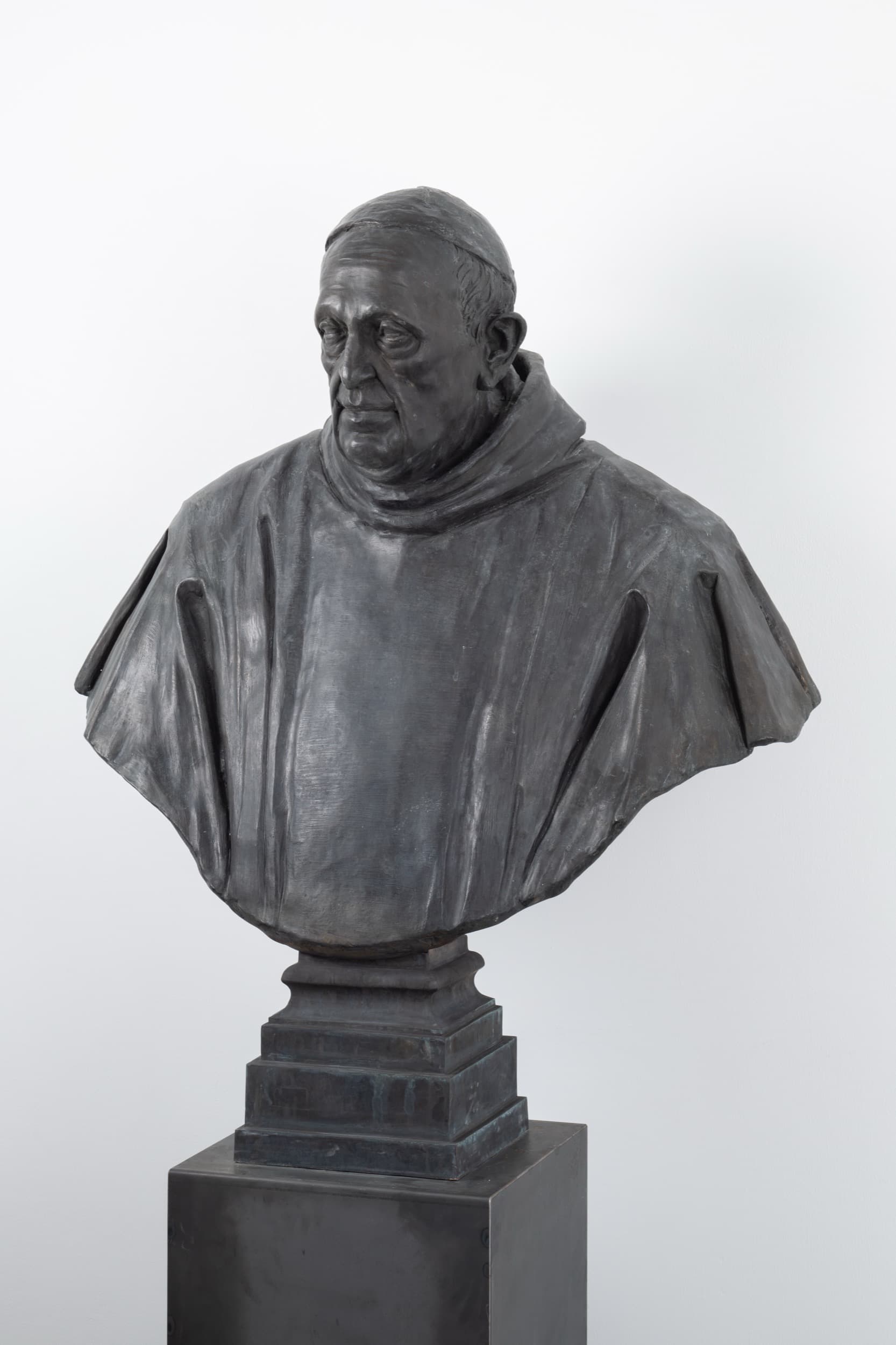
Giuseppe Ducrot, Papa Francesco Primo, 2016. Bronze ,132 x 106 x 63.5 cm. Courtesy Galleria Lorcan O'Neill.

For his new exhibition at David Zwirner, first in New York then in Los Angeles, Luc Tuymans wanted to confront a challenge: how can a painter address the fact that we are now all used to experiencing backlit frames? This question is a pictorial one: it speaks to the relation between painting and the world of images. 
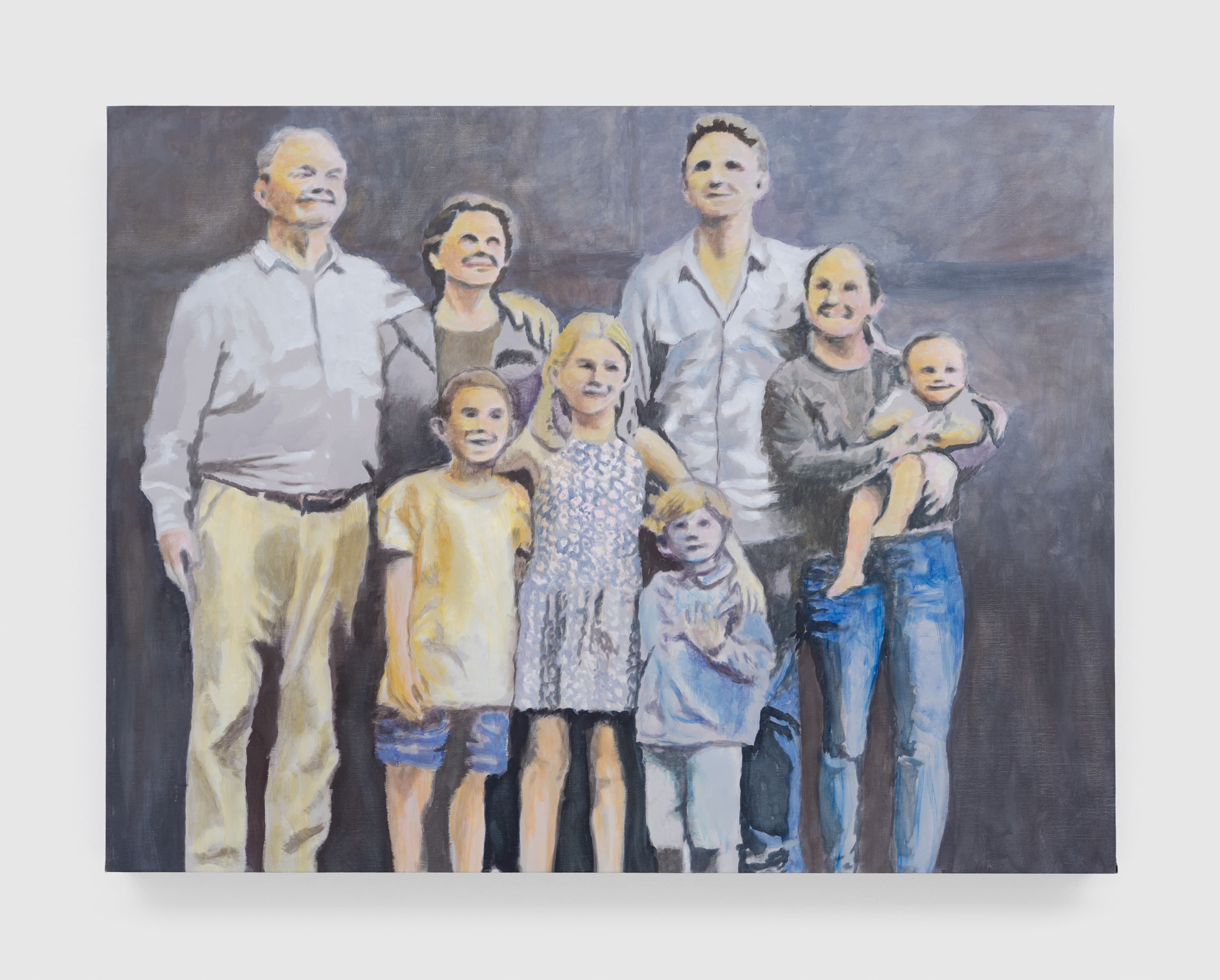
Luc Tuymans, The Family, 2025. Oil on canvas, 45 ⅜ × 59 ¾ inches. © Luc Tuymans. Courtesy Studio Luc Tuymans, Antwerp, and David Zwirner.
It is rare to meet a writer whose work is so striking that nothing can be edited, nothing can be changed, for the vision is so precise. When this writer is twenty nine years old, it is even more striking. Then, you see them develop, embark on new adventures, expand their vision, participate in their medium, and you are always more struck.
Portrait of the Théo Casciani. Photo: Joseph Kadow.
The current exhibition at the Musée d’Orsay participates in this dynamic of rewriting history. Dedicated to the 1874 Impressionist exhibition in its 150th anniversary year, it aims to explore the many sides of this historic event—often doomed the founding moment of a new movement.
Claude Monet, Boulevard des Capucines, 1873-1874. Oil on canvas, 31 3/5 × 23 3/4 inches. Kansas City, Nelson-Atkins Museum of Art, purchase of acquisition fund of Kenneth A. and Helen F. Spencer Foundation, 1972. Courtesy Nelson-Atkins Media Services and Musée d'Orsay.
I Always Knew: A Memoir (Princeton University Press, 2022) is the intimate, profound introduction to a life constantly driven by intelligence, creativity, restless at times, always thoughtful.
Barbara Chase-Riboud’s I Always Knew: A Memoir
The series of performances titled A&E was the first half of a European program that brought McCarthy and Lilith Stangenberg first to the SchauSpielHaus in Hamburg for five nights in a row and then to the Volkstheater in Vienna for four nights.
Performance stills from A&E / Adolf and Eva / Adam and Eve / Hamburg Day 3, 2022, at the Deutsches SchauSpielHaus, Hamburg, Germany. Directed by Damon McCarthy. © Paul McCarthy. Courtesy the artist and Hauser & Wirth. Photos: Alex Stevens.
History as we know it is an inquiry into establishing facts in order to create a common space. Décolonisations, Pierre Singaravélou’s recent French television project, offers an attempt to bridge the gap between contradicting views.
Marc Ball, Karim Miské and Pierre Singaravélou’s Décolonisations. Courtesy of ARTE.
French Theory is no theory. It is a well-known fact that “Theory,” as in “French Theory,” is neither a theoretical endeavor nor a theoretical manifestation of thought. “Theory” as in “French Theory” has evidently little to do with Plato’s apex of human evolution: contemplation of the ideal form as such. In the Platonic sense, theory is the ultimate abstraction.
Portrait of Donatien Grau. Pencil on paper by Phong Bui. From a photo by Azzedine Alaïa.
In his conversations with Emile Bernard, Paul Cézanne had very violent words about his fellow painter—someone who had actually been his friend for a while: Paul Gauguin.
Paul Gauguin, "Portrait de femme à la nature morte de Cézanne," 1890. Oil on canvas, 25.6 × 21.7 ̋.

Close

Home