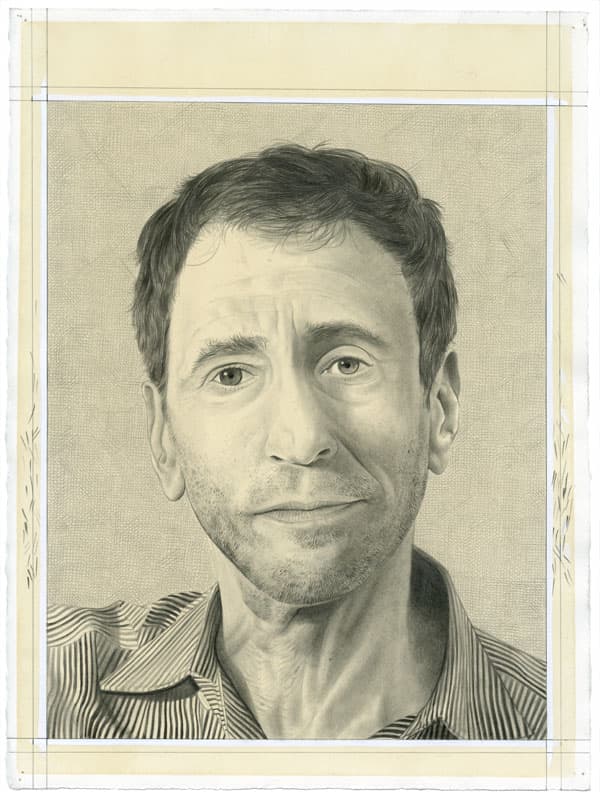
Darragh McNicholas
In a photograph from 1899, a twenty-five-year-old Houdini looks toward the camera with a calm but teasing smile. He is naked save for a loincloth, and his body is trussed with chains weighted by padlocks.
In the mid-’50s, Lee Krasner walked into a studio hung floor to ceiling with drawings. In a decisive moment of self-criticism, she tore her works from the walls until the floor was covered in fragments.

In 1962, the American film critic and painter Manny Farber remarked that the idea of a painting as an “expensive hunk of well-regulated area both logical and magical, sits heavily over the talent of every modern painter.” In the half century since Farber’s critique, the grip of this idea has hardly loosened.

One might expect an exhibit about fear, gun culture, and violence by an artist who attended Sandy Hook Elementary School to be a meditation on trauma and mourning.

Art and capital have a long and complicated history, but rarely do they combine so problematically as in the figure of Aby Rosen. In 2005, the controversial art collector and co-founder of RFR Holdings told the New York Times that life is about “melting art and commerce all together.”

In “Politics and the English Language,” Orwell claimed that cliché and “stale imagery” not only marred writing, but the very capacity for clear thought.

With the advantage of being mounted, the 6-foot-tall Untitled (pdn63) (1976) dwarfs me. It’s a dark and unyielding expanse of blue-green, with thousands of miniscule dots horizontally positioned along an invisible grid, each dot the amber color of a sun setting behind viscous pollution. I stand for a minute in alienated silence before I have any verbal thoughts at all about the work. The scale speaks of grandiosity, the form of objectivity and restraint.

Two decades ago, the artist Steven Rand founded apexart as an experimental space for independent curators as an alternative to New York’s commercial galleries.