Valerie Mindlin
Valerie Mindlin is an art historian, critic, and curator based in Madrid.
With nearly seventy years between their birth dates, Marion Baruch and Leonardo Meoni broach a markedly similar set of concerns with the aid of a comparable set of artistic media, and the temptation is very high to look for some sort of instructively revealing assemblage of contrasts within the outcomes of their investigations. Should one?
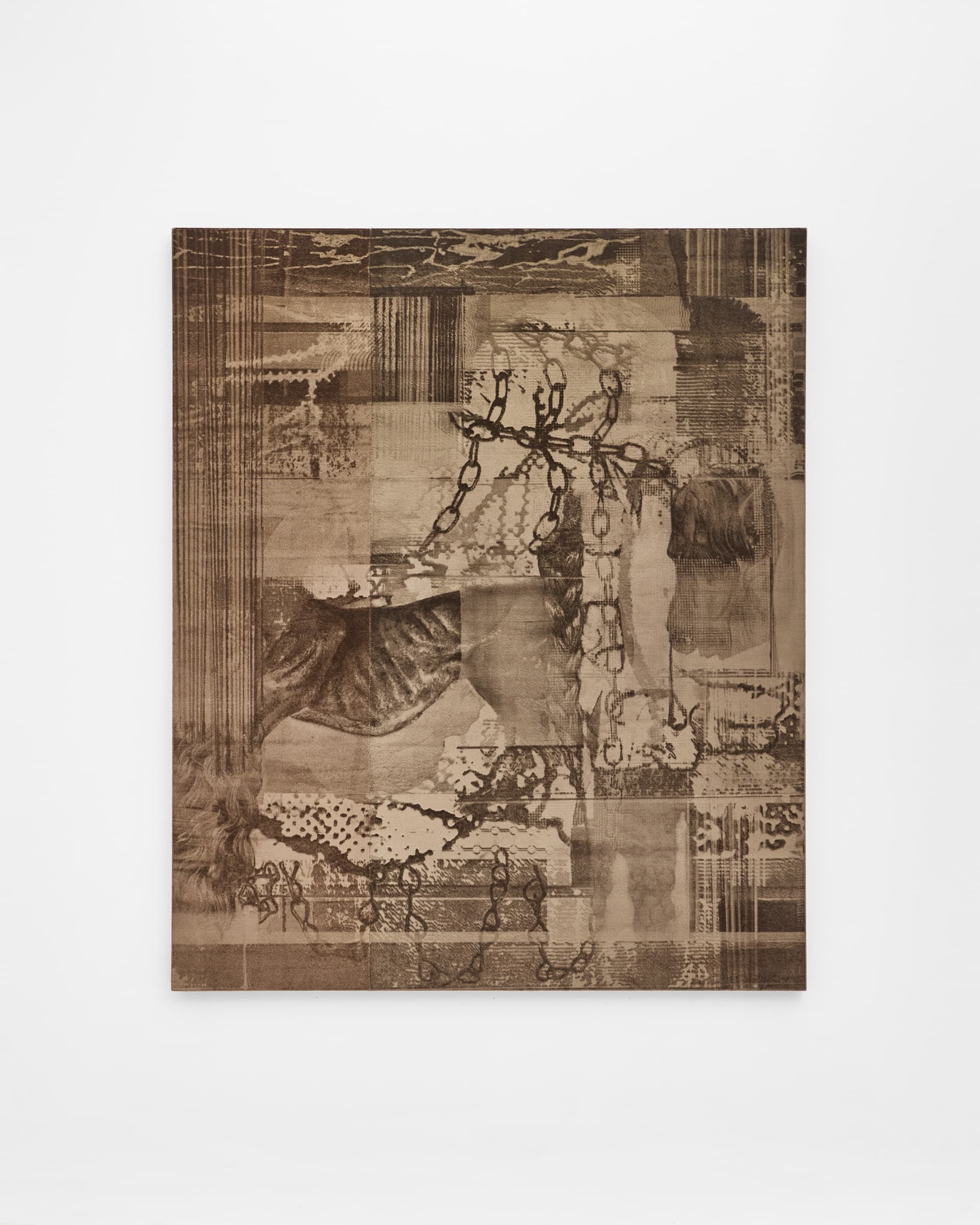
Jannis Kounellis’s maritime works are not as cinematic and in-your-face viscerally assertive as everyone’s favorite horses, which accounts for their lesser recognition—and yet, more than perhaps any other within Kounellis’s oeuvre, they stand apart for tapping into the one archetypal thematic that is among the most quintessentially central of history’s running currents
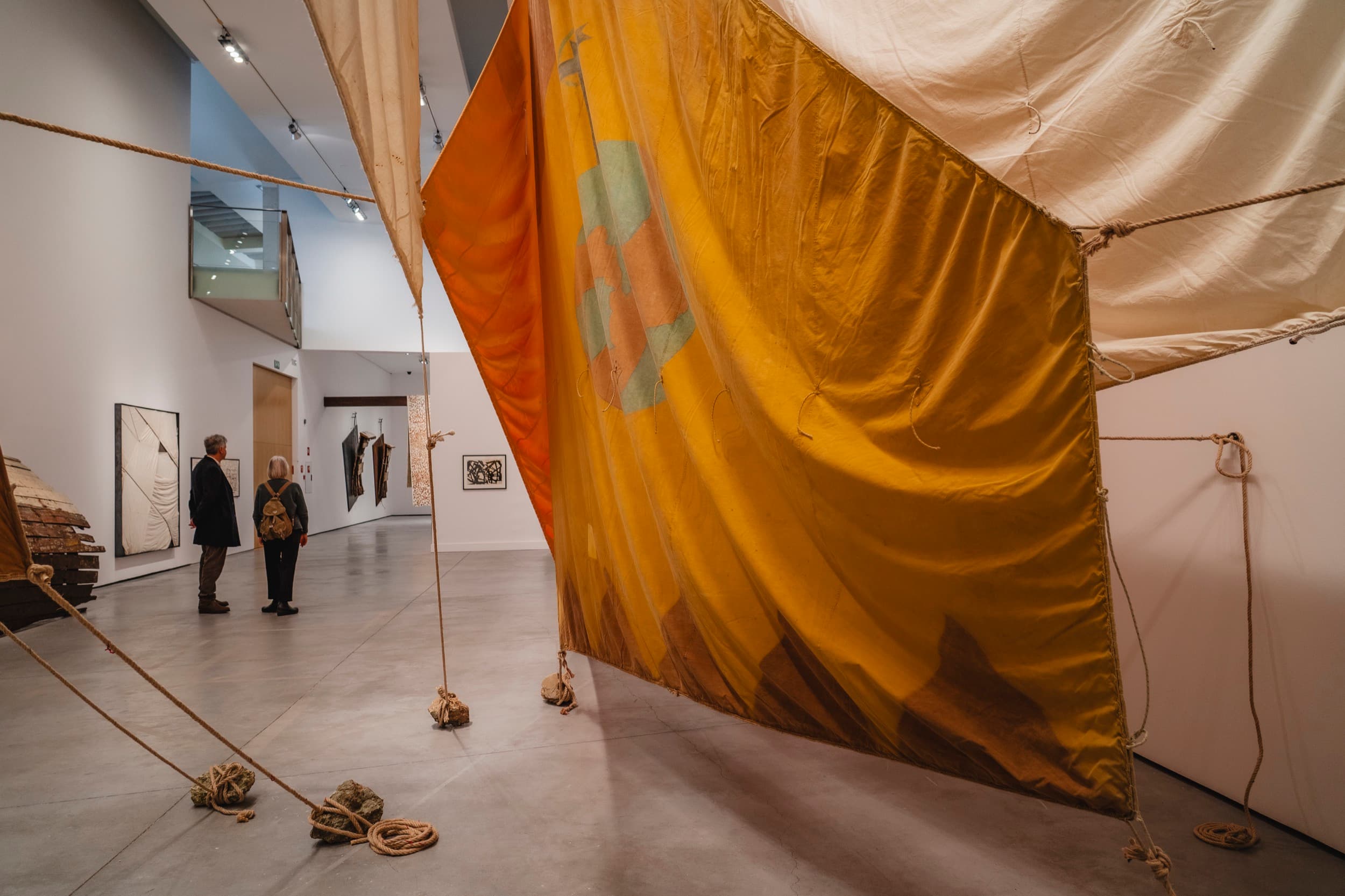
It was fitting for Jorge Pardo’s latest show at Elba Benítez to have opened the same week as ARCOmadrid, the city’s banner international art fair. There’s nothing quite like an art fair to efficiently strip one of any straggling illusion of Kantian disinterestedness when it comes to art consumption—an apposite action for what is unambiguously turned by an art fair’s intrinsic structure into a usable, tradable, and shippable luxury commodity product.

June Crespo’s latest show at Galería Ehrhardt Flórez comes in the form of four pairs of materially and aesthetically twinned pieces. Of those, two, The dancing column (I) (all works 2025) and The dancing column (II), took the shape of asymmetrical, quasi-biomorphic pillars of raw concrete.

GfZK’s comprehensive survey of the Maria Pinińska-Bereś’s body of work—the first of its kind in Germany—is an effective showcase of the artist’s instrumentalization of decorative surface and strategic passivity as tactics to communicate a specifically feminine sensibility of experience.

Soledad Sevilla’s retrospective at the Reina Sofia Museum opens with a series of abstract paintings and drawings under the collective title “Mondrian” (1973). A self-explanatory nod to the Dutch Neoplasticist, the works do not so much resemble any Mondrian painting in particular as adopt his modular approach to leave the viewer confronted by the grid—in this case, an oblique polygonal one—as pure shape.


