Nick Bennett
Nick Bennett studies art history at Hunter College. He recently served as the Director of Programming at the Brooklyn Rail, and was the Curatorial Assistant for exhibitions at the 58th Venice Biennale, Colby Museum, and Mana Contemporary.
This screenplay carves the artist’s own use of blue into the canon. It is an endless performance that one can step into at any moment.

The convergence of demon and deity is the basis of Tamar Ettun’s Texts from Lilit: 31 Cards to Connect to Your Inner Demon. The thirty-one cards share stories, advice, and pose questions such as: “Tonight, are you a trapped demon or a tethered divinity?”

Absence has definitely made the heart grow fonder, as this year’s fair embodies all of the sensory and intellectual stimulation of the pre-pandemic years.

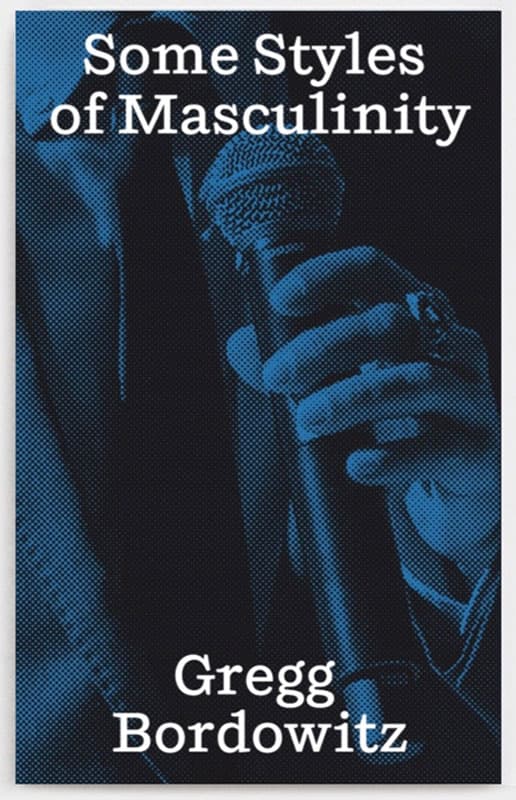
A complex arrangement of memories, intellect, postulations, jokes, and insights that attempt to capture a performance, on- and off-stage. It is a combination of many similar yet not exact performances; improvisation and chance are ever-present, it is not a record of anything that actually happened, but rather a presentation of what the artist and publishers want you to have.
To enter Petzel’s 18th Street gallery is to enter Joyceland, Joyce Pensato’s self-described twisted and beautiful version of Disneyland, where Mickey Mouse, Cartman, Bozo the Clown, Batman, and others greet you in Pensato’s paint-splattered world.

By Nick Bennett
Deia Schlosberg's documentary The Story of Plastic discusses the dismal reality of the plastics' industry and its impact on the world, hoping to create change with a grassroots release.

Nick Bennett speaks with performance artist, writer, poet, and experimental theater maker Penny Arcade about artistic lineage, individuation, and the future of New York.

Saul Fletcher’s first monograph, published by Inventory Press last December, begins with a quote from The Rings of Saturn by W. G. Sebald: “The seasons and the years came and went … and always … one lost more and more of one’s qualities, became less comprehensible to oneself, increasingly abstract.”

On a recent fall day we spoke for a few hours about Gibson’s incredible and diverse body of work, and in the edited conversation that follows we touch on the deep and shifting influence of one’s identity, and for Gibson, what it means to reimagine the objects and rituals surrounding powwows within Native history, indulging in kitsch and camp as strategies of protection for queer people, and allowing the complications of reality to be present and to confront binary systems.

His Name Was Master is a collection of five texts by P-Orridge from 1977 – 2017, including a “C.I.A. File” biography s/he wrote about Gysin’s career for h/er 1977 book Contemporary Artists (Gysin’s response: “Even the C.I.A. don’t know this much about me!”), a text written upon Gysin’s death in 1986, and others detailing the “magickal” processes and methods of Burroughs and Gysin.

Ugly Duckling Presse celebrates this centennial with a new facsimile edition of 1,000 of The Blind Man’s two issues, plus its successor, Rongwrong, along with other alluring ephemera.

Like many others, I came to know Felix Bernstein through his videos on YouTube, his book of essays Notes on Post-Conceptual Poetry (Insert Blanc Press, 2015), and his book of poetry Burn Book (Nightboat Books, 2016).

In 1915, as a newly admitted member of the Italian Futurist movement, Fortunato Depero along with Giacomo Balla set out to “reconstruct the universe, cheering it up and recreating it entirely.” For Depero, this meant a lifelong output typifying a truly modern life.
