Joel Danilewitz

Joel Danilewitz is an art writer who lives in New York.

At Bortolami, Burr tugs on his objects as though stress-testing their suppleness. Burr spins out self-reflexive threads that he uses to stitch together fragments of autobiography, yielding the “Journal Works,” a series of bulletins coextensive with the intimate, perambulatory staging of his archives in the Torrington Project (2021–2024).
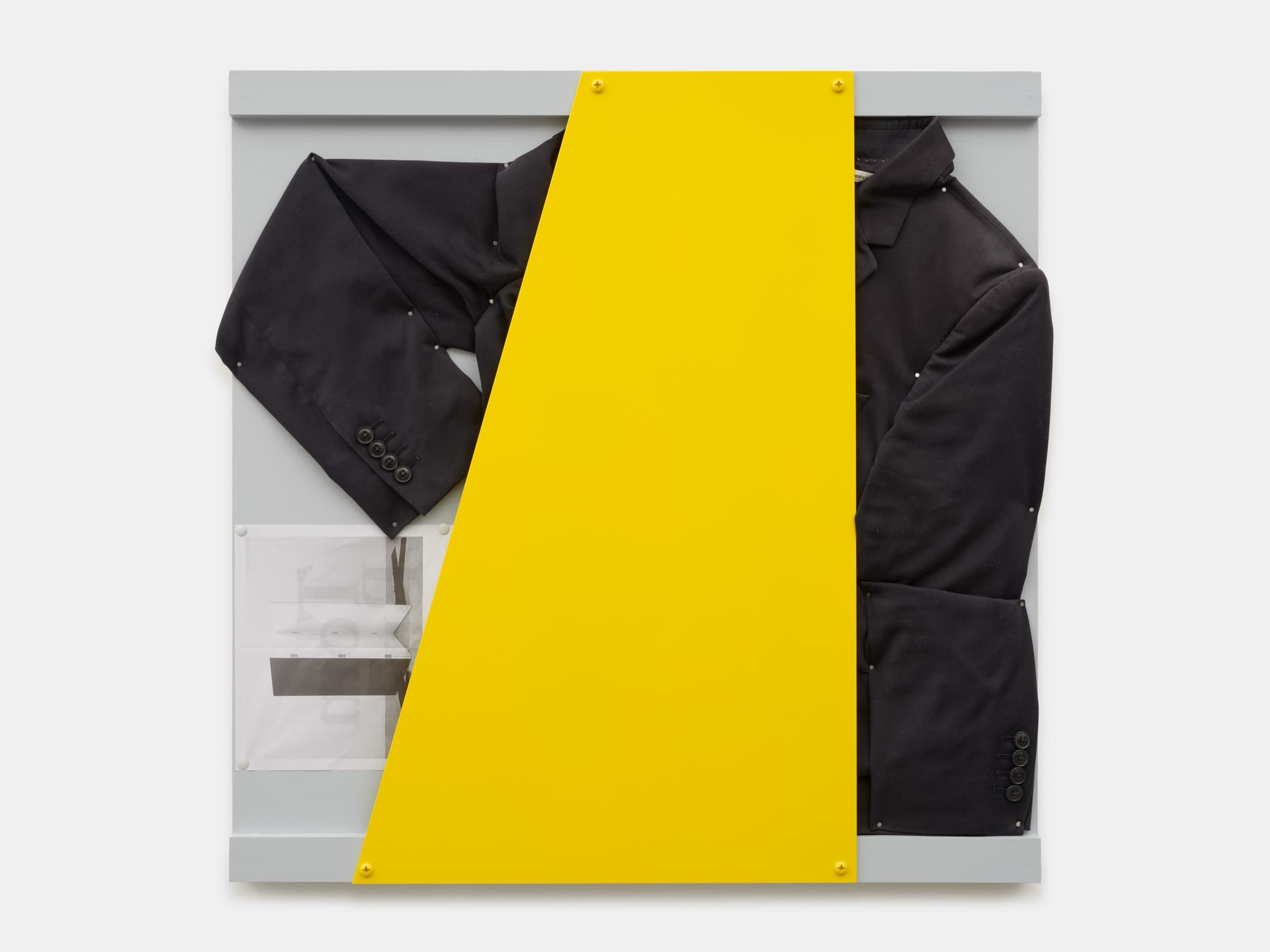
Tom Burr: Journal Works

In Charlie Porter’s stunning debut novel Nova Scotia House, the author strips away any excess to closely examine the possibilities of queer love and joy amidst the ongoing AIDS crisis.

Charlie Porter’s Nova Scotia House

The site of the archive is where the state reifies its authority, where policy consolidates history, and, in the process, indexes a margin that is both inimical to the state’s goals and inseparable from its production of power.

Kandis Williams: A Surface

Initially published in 2001, Joe Westmoreland’s first and only novel, Tramps Like Us, captures the rapidly transforming cultural landscape of the mid-seventies and eighties through protagonist Joe’s road adventures. The vinyls, clothes, books, and porn magazines that Joe accumulates and disposes of on his travels are more than just sumptuous details—they coalesce and pulsate, forming a web of charged memories that ensnare him and his social circle.

Joe Westmoreland’s Tramps Like Us
Monsieur Zohore’s newest show at Magenta Plains, Get Well Soon, is staged like a play mid-climax. Given the artist’s background in performance, it’s an apt choice. At one opening, Zohore presided over the audience in a coffin that he transformed into a kissing booth.
Installation view: Monsieur Zohore: Get Well Soon, Magenta Plains, New York, 2024. Courtesy of Magenta Plains.
It’s 1977, about five years after Bettina Grossman moved into the Chelsea Hotel and eleven years since a devastating studio fire in Brooklyn Heights reduced much of her work to ashes. Sitting in her room on the fifth floor, she looks out on 23rd Street with her camera, continuing her ritual as the city’s oblique witness.
Bettina, Urban Energy Strategies (from "Phenomenological New York"), 1976–77. 8 mm film, 58 min., 42 sec. Courtesy Ulrik, New York.
Across essays and short stories, animating details provoke consternation—a father receives a heart transplant from a pig, a friend gets facial implants that illuminate beneath her skin. In our conversation, we touched on a number of topics in Stagg’s new and previous books, discussing what currently informs her work.
Natasha Stagg with Joel Danilewitz
At Tiger Strikes Asteroid’s Bushwick location, Krueger strings a loose narrative of tragedy around the room with their collages and sculptures.
Installation view: Ryan Patrick Krueger: Documents from the Closet, Tiger Strikes Asteroid, Brooklyn, New York, 2023. Courtesy Tiger Strikes Asteroid New York.
Whether through his art or his fashion label, A-COLD-WALL*, Samuel Ross’s approach to design and craft reflects a self-conscious attitude towards post-industrial social relations. In COARSE, his second solo show at Friedman Benda, the UK-artist and cultish fashion designer presented a selection of brutalist sculptures meant to inspire tension within pre-ordained notions of globalist manufacturing.
Installation View: Samuel Ross: COARSE, Friedman Benda, New York, 2023. Courtesy of Friedman Benda and Samuel Ross. Photo: Timothy Doyon.
Walking through Wardell Milan’s new show at Sikkema Jenkins, I felt among his fleeting figures. In his exhibit, Bluets & 2 Years of Magical Thinking, the collages, sculptures, and paintings produce an intimate atmosphere. The audience forms a loose communion as they wander the three large rooms of the gallery, apprehending his vast paintings upon entrance.
Installation View: Wardell Milan: Bluets & 2 Years of Magical Thinking, Sikkema Jenkins & Co., New York, 2023. © Wardell Milan. Courtesy Sikkema Jenkins & Co., New York. Photo: Jason Wyche.

Close

Home