Editor’s Note
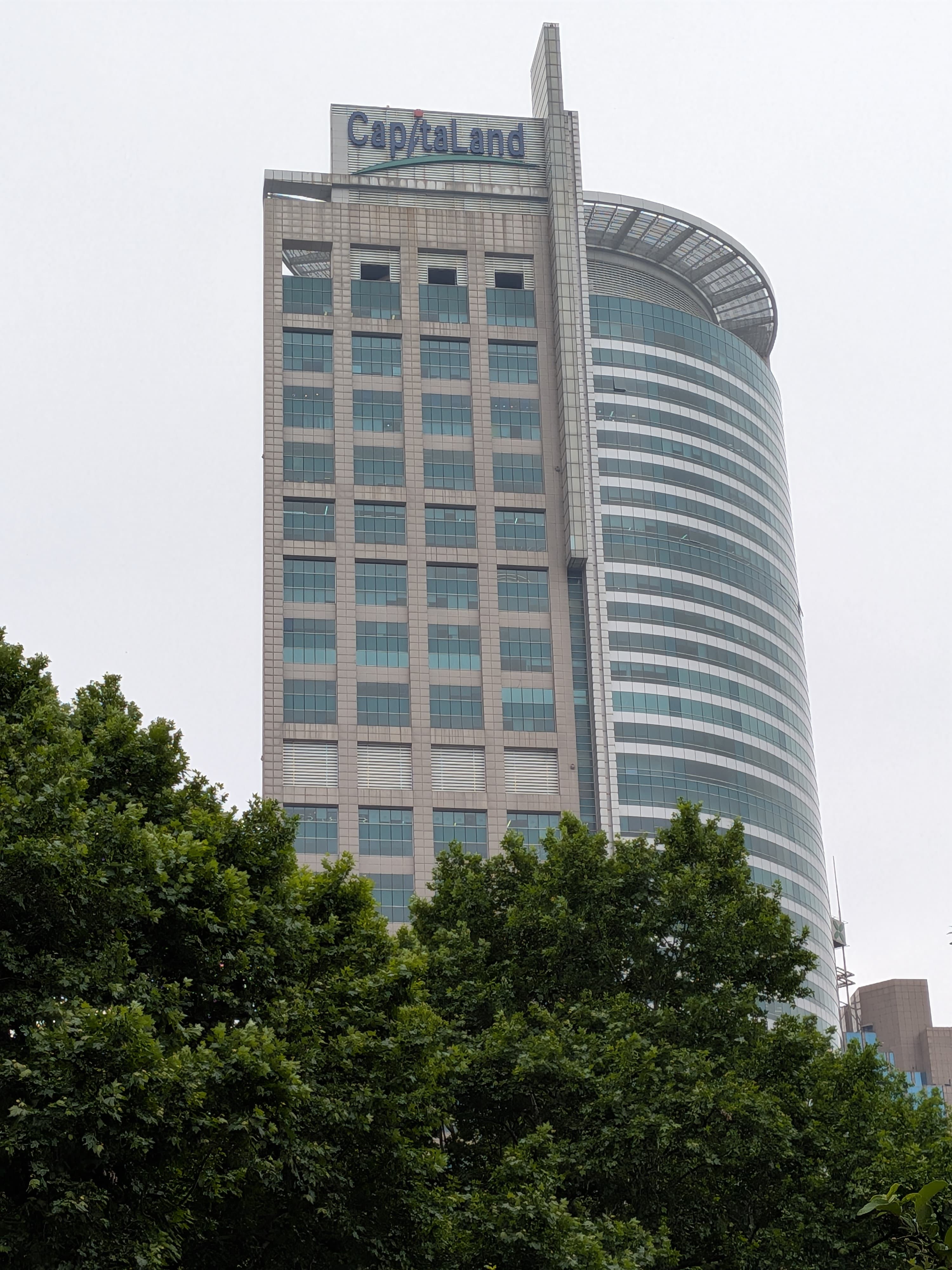
Shanghai in 2026. Photo: Paul Mattick.
Word count: 1272
Paragraphs: 8
Like everyone else who has just returned from ten days in China, I feel compelled, if not authorized, to hold forth on the place. Unlike New York Times opinionizers and world-class pundits, I was not taken to see the robotized factories in Shenzhen, the universities leading the world in the production of scientists, engineers, and programmers, or the labs mass-producing medical patents, cheap AI, and other inventions. But the modernist energy of China today is palpable: bullet trains race across the country; spotless, fast subways actually arrive every three to five minutes (especially impressive to a visitor from the crumbling infrastructure of New York); and cities reverberate with the marvelous silence produced by electric cars, buses, and scooters. As impressive were the surviving vestiges of premodern life: great parks filled with people in singing groups, drinking tea and chatting, playing dominoes, trying to marry off their children, doing t’ai chi; neighbors gossiping across the Beijing hutong at night; family groups and crowds of teenagers strolling along the Shanghai Bund in the evening; generally, masses of people, at work and at leisure, filling the streets and public places with human liveliness seemingly uncrushed by nonstop work and life in the endless ranks of highrises outside every city center, homes to hundreds of millions.
Both forms of energy present a sharp contrast with American stagnation and decay. The efficiency and the sociality alike seem to confirm current assessments of world capitalism that chart China rising and the United States declining. Like Japan before it, China was once seen as an imitator of Western methods and a producer of cheap, shoddy goods: a field for Western investment, to be granted a place in the world system under the American thumb. But the displacement of Chevrolets and Fords by Hondas and Toyotas was merely a warmup for China’s rise to the world’s leading manufacturing nation, as the US shifted from making things to producing money for billionaires. There has, in fact, never been a period of economic growth as rapid and great as that which produced today’s China.
A current, much-discussed explanation for this credits China’s political leadership by engineers, while the US is run by lawyers. This fits nicely with the recent liberal idea—long championed by Reagan Republicans—that what holds American business back is “excessive regulation,” with entrepreneurs hamstrung by environmental and zoning restrictions preventing them from fulfilling their desire to create abundance for the American people. A less admiring explanation points to a supposed “theft of jobs” from the US, as if American capital had not been automating jobs away and relocating others to low-wage areas to reduce manufacturing costs, particularly after the postwar prosperity came to an end in the mid-seventies.
What is actually surprising is that China’s emergence as a major economic power seems mysterious in any way. After all, the history of capitalism since the seventeenth century is a history of rises and falls across a series of nations. Following the decline of the Dutch economy, British supremacy, based on the Industrial Revolution, led to challenges from France and Germany and, above all, the United States. Despite national mythology, the sun did indeed set on the British Empire, as the US achieved economic, military, and political hegemony in the course of two world wars. For a while some imagined that the USSR posed a threat to that hegemony, but the Soviet state, suffering enormous material losses in World War II and then, especially in the 1970s, hampered by an institutional lack of focus on profit maximization, proved unequal to the task. The rise of Japan in the 1980s led to consternation in the US, but it is China that has truly become the next great economic power: the workshop of the world (as Britain once was), building railways while America blows the bank on corporate handouts and fruitless wars and its dams and bridges collapse; spreading a net of influence around the world as the US retreats from foreign “entanglements.”
This simple picture of rises and falls is deceptive, as all such schemas are. From its beginning, capitalism has been a world system as well as one organized into nation-states, and its global character has only become more pronounced. Not only have the goods required by the world’s peoples increasingly been produced internationally, but capital travels the world in search of profit or interest. As British profit rates declined in the course of the nineteenth century, British investors moved their money to the Americas and elsewhere seeking higher returns. In the twenty-first century, China, its growth rate slowing from its peak in the mid-eighties, is investing all over the world. The chief example proffered by a recent Financial Times article explaining “Why it is so hard to revive US manufacturing” is GE Appliances, not only dependent on Australian equipment to make its refrigerators but itself a subsidiary of the Chinese Haier group.
China’s mighty growth, that is, belongs to global growth—it’s the part of the world economy where the existence of a vast labor force available for transformation from peasants into wage-workers, together with great natural resources, made possible a period of rapid expansion, achieved by combining the most advanced technology with long working hours and low wages (already the secret of the Dutch Republic’s success in the seventeenth century). But like growth, economic crises and slowdowns have become increasingly global since the late nineteenth century. The years of recession suffered from 2023 on by Germany, Europe’s largest economy, are not independent of falling growth in China (an important market for German production goods and cars), or of the fact that American domestic capital investment is basically flat except for bubble-fueled AI data centers and government-money dependencies like SpaceX. The Chinese “overcapacity” decried by European and American economists is a measure of the slowdown of investment in the world as a whole, spelling decreasing worker consumption and demand for industrial equipment. It is the stagnation of the global economy that has made China’s growth—like that of all other nations—increasingly dependent on the expansion of debt, taken on by state-owned enterprises, local governments, the central government, and households, to about three-hundred percent of GDP (about the same as the current US debt-to-GDP ratio). Having attempted to stimulate the economy with a gigantic credit-fueled property bubble (following, though not learning from, the examples set by Japan in 1986–91 and the US in the mid–aughts), China is now returning to a more nineteenth-century style strategy of technological advance and deflationary price competition. Meanwhile, China shares with the rest of the global economy the phenomena of expanding youth unemployment, growing income and wealth inequality, and inadequate health and pension financing.
Chinese capitalism is far from exhausted; hence the visible contrast with the relatively stagnant economies of the West. But its fate is linked to the rest of the world system, including its predecessors in the history of rises and declines—not to mention the ongoing catastrophe of climate change. The timing of China’s surge to modernity may have a particular consequence: Its working class, only recently thrust en masse into wage labor, is coming late to the forces of economic conditions and state repression which have over centuries shaped the response of workers in earlier-developed capitalist nations. Notable for decades for its high level of labor struggle, China is seeing a surge of worker unrest in response to current conditions (blamed by the Ministry of State Security on “malicious foreigner forces”). It may well be that the energy and will to enjoy life of Chinese workers will prove more fundamental in shaping the world’s future than the robots and bullet trains they produce and operate.
Paul Mattick is the Field Notes editor. His most recent book, The Return of Inflation (Reaktion, 2023), has been translated into French, German, and Chinese.