Constance Jaeggi: Escaramuza
Word count: 735
Paragraphs: 10
Constance Jaeggi
GOST Books, 2025
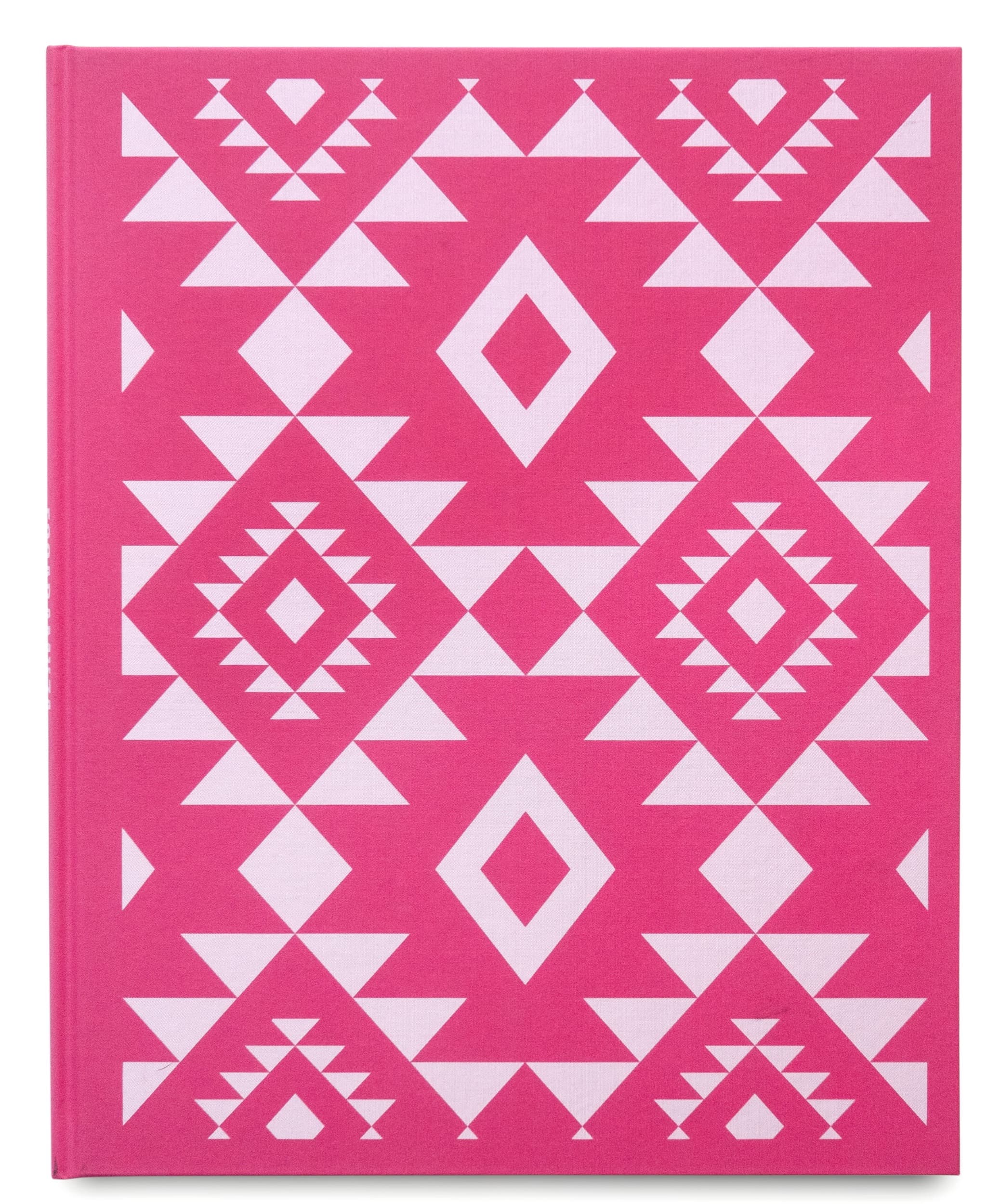
Constance Jaeggi is a cowgirl. She is a renowned cutting horse rider. And she is an award-winning photographer. Her new monograph, Escaramuza (GOST, 2025), a collection of color portraits of Mexican American charras—cowgirls—combines her passions. It also includes poems by Angelina Sáenz, a UCLA Writing Project Fellow, and ire’ne lara silva, the 2023 poet laureate of Texas. Escaramuza offers singular perspectives of a decades-old tradition, and is the first book on the subject to enter the contemporary photography canon.

Constance Jaeggi, Alejandra, Escaramuza Esquetzalli, Des Moines, Iowa, 2023. Courtesy the artist.
Born and raised in Geneva, Switzerland, Jaeggi began riding when she was thirteen. She practiced Western horsemanship and, through cinema and music, developed a deep interest in American Western culture. In 2009, Jaeggi moved to Forth Worth, Texas to attend college and to pursue a career in the equestrian sport of cutting. Cutting is the act of isolating a cow from and preventing it from rejoining its herd. Once the cow is separated, the rider drops the reins and relies on non-verbal communication and the horse’s ability to anticipate and block the cow’s movements as it seeks to return to the herd.
Then, in 2014, Jaeggi picked up a camera and began photographing horses in her studio. The black-and-white portraits reveal the power, dignity, and beauty of her subjects as well as Jaeggi’s reverence for the animals. Between 2019 and 2021, while pursuing a Masters degree in Art History and Art World Practice at Christie’s in London, Jaeggi photographed daily life at The Devil’s Horsemen in Buckinghamshire, the leading film industry horse supplier. In 2023, back in Fort Worth, she was commissioned by the National Cowgirl Museum & Hall of Fame to photograph escaramuzas.
Escaramuzas—part of the charrería, the Mexican rodeo tradition—are all-female precision horse riding teams. In groups of eight, donned in elaborate dresses and sombreros, they execute choreographed routines—crosses, spins, fans—while riding sidesaddle. The sport relies on strength, precision, teamwork, horsemanship, and the skills Jaeggi has long cultivated as a cutter. She travelled to ten states, including California, Washington, and Idaho to interview and photograph the women. The interviews informed Jaeggi’s photographic approach and became the basis for Saenz and silva’s poetry, which is integrated in English and Spanish throughout the monograph. The poetry amplifies the experience of the images by offering insight into the escaramuzas’ heritage, and the psyches, personalities, and lives of Jaeggi’s subjects.

Constance Jaeggi, Gabriela, Escaramuza Rayenari, Scottsdale, Arizona, 2024. Courtesy the artist.
Most of the images in Escaramuza show the women posed, gazing at the camera, either alone against colorful backdrops, on horseback or in groups in the landscape. Gabriela, Escaramuza Rayenari, Scottsdale, Arizona (2024) for example, is a portrait of a woman in a lavender shirt and a purple and orange paisley skirt standing in a field with cacti. Jaeggi’s compositions and use of natural light and shadow draw inspiration from the directness and sensitivity in Mary Ellen Mark’s American Odyssey, Richard Avedon’s In the American West, Arnold Newman’s Americans, and Susan Meiselas’s Carnival Strippers.
Gabriela, like all of the photographs in the monograph, conveys Jaeggi’s precision and attention.These portraits are collaborations and, as such, the women respond to one another. Their regard is mutual.
Occasionally, Jaeggi chooses a vantage point that does not reveal the escaramuza’s identity. Rather, the subject becomes the elaborate costumes themselves. Patricia, Dinastia Campiraña, Bennett, Colorado (2023) shows the back view of a woman under a sombrero, her braid adorned with a large bow made from the same fabric that ties her dress. She stands against a blue sky and tall grasses. Here, as in Alejandra, Escaramuza Esquetzalli, Des Moines, Iowa (2023) a three-quarter back view of a woman dressed in red standing in front of a green backdrop, Jaeggi pays homage not just to the escaramuzas, but to the Mexican seamstresses who created their ensembles.

Constance Jaeggi, Patricia, Dinastia Campiraña, Bennett, Colorado, 2023. Courtesy the artist.
Noteworthy is Perla (2023), also from Dinastia Campiraña an image made with a wide-angle lens of an escaramuza and her horse—cropped—in silhouette. Backlit by the setting sun, the escaramuza’s identity is obscured in shadow. Overhead, under the darkening violet sky, migrating birds form a V-shape. On the left side, one bird flies adjacent to—not in line with—the others. Here, Jaeggi’s documentary stance perhaps becomes more personal. In Escaramuza, she—and Saenz and silva—have succeeded in honoring the escaramuzas, horses, seamstresses, and the century-old traditions they follow. With Perla, Jaeggi may also—and deservedly—be gesturing toward herself, flying her own path.
Janelle Lynch is an artist, educator, and writer. Her work has been exhibited widely, including the Victoria and Albert Museum, Museo Archivo de la Fotografía, and the Shanghai Center of Photography. It is included in numerous collections, such as The Metropolitan Museum of Art, International Center of Photography, and Denver Art Museum.