Word count: 779
Paragraphs: 14
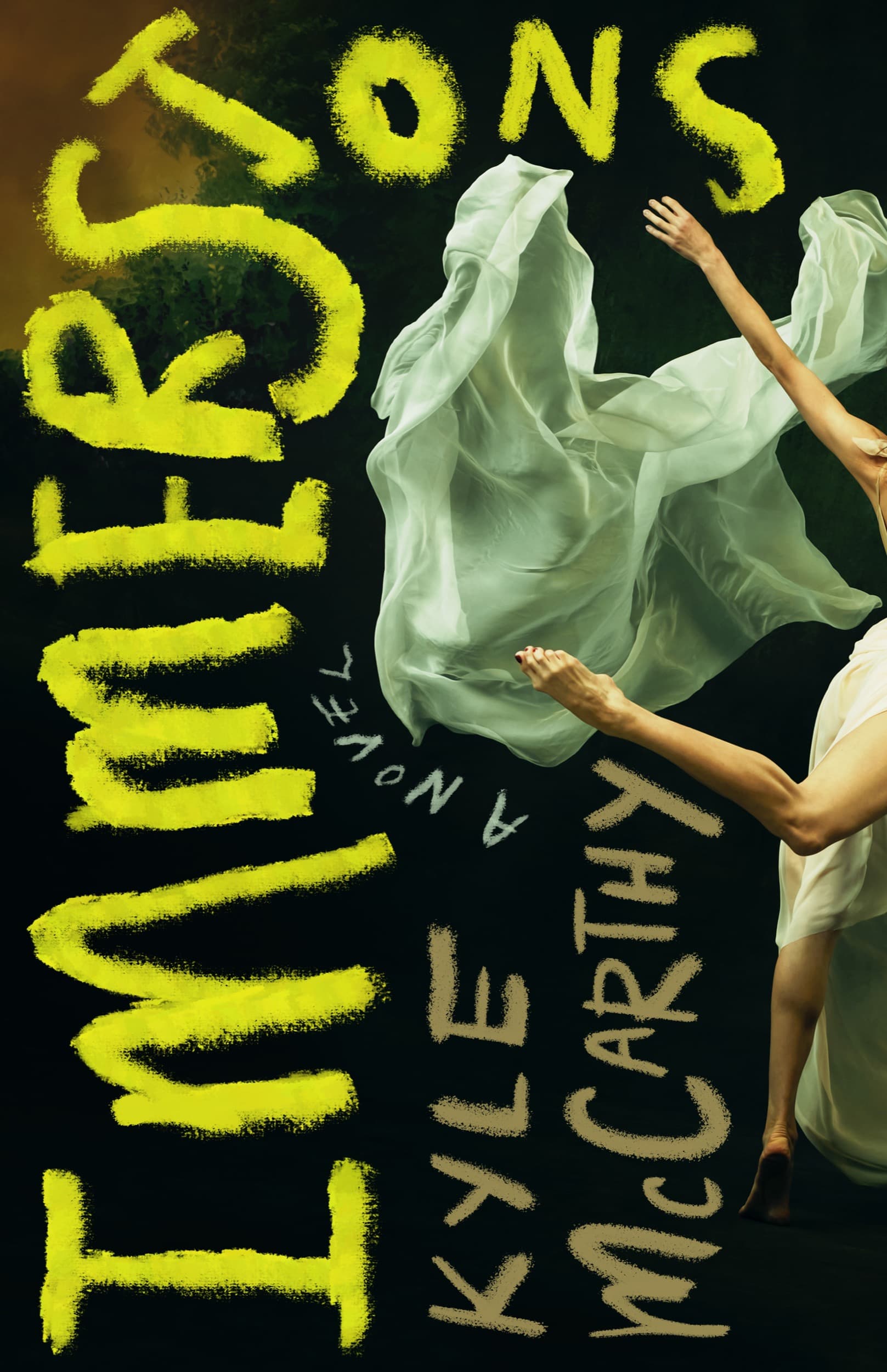
Immersions
Tin House, 2026
Kyle McCarthy’s dreamy novel Immersions reimagines Charles Perrault’s Bluebeard, the French folktale about a wealthy man with an alarming habit of murdering his wives. But Immersions isn’t a simple retelling; it’s a nesting doll of a book, a coming-of-age story within a gothic romance, holding at its core the strength of a bond between two sisters.
Frances is attending college in New York City, quietly passing time between the end of adolescence and adulthood. Just a few years earlier, she and her glamorous older sister Charley had been ballerinas; Charley was a rising star in the dance world, until she abruptly divorced her rich older husband Johnny and became a nun. Now unmoored from her sister, Frances grieves the loss of their relationship. Her sister is now everyone’s sister at her French convent.
Although Charley doesn’t speak ill of Johnny (she cannot; she’s living in an enclosed convent, where contact with the outside world is limited), Frances refuses to believe her brighter-than-the-sun sister would let her light be dimmed by anything other than a catastrophic event. What traumatized her so badly that she escaped into a life of constant religious contemplation?
Searching for answers, Frances becomes determined to reconnect with Johnny. As she tells her best friend, she feels Johnny is her only link to her sister. Her friend retorts, “You’re the link. She’s your sister,” to which Frances replies, “It doesn’t feel that way.”
When Frances runs into Johnny, she describes her former brother-in-law as someone who “moved like a fox, stealthy and low and quick, and his woman, graceful and nervous as a doe.” McCarthy is so precise with language, and Frances referring to Johnny’s companion as “his woman” isn’t an accident. Nor is the description of Johnny as a predator or his date as certain prey—a deer caught in headlights on a busy city street.
Frances and Johnny go on to form an awkward friendship that soon tips into an erotic romance. She is hungry for any kernel of truth he may hold about her sister. And she is still young and vulnerable, exactly as Bluebeard’s wives had been. Exactly as her own sister had been.
No relationship between two sisters is perfect under the best of circumstances. The circumstances in Immersions include competition, trauma, a pathological manipulator, and an ocean of space separating the two young women. And yet, Immersions is, in many ways, a love letter from one sister to another, with Charley the “you” to whom Frances always speaks. Although Frances becomes enthralled by Johnny, there is a piece of Charley still lodged in her. As she says about her sister, “[When] you looked at me I didn’t want to be anywhere else.”
As much as Immersions succeeds at laying out the rich texture of Frances’s inner world, it is also packed with sensuality. Frances and Johnny romp on the shores of a remote island; Johnny feeds Frances oysters freshly shucked, right out of the sea. After living a relatively lonely life in New York, we observe Frances’s body awakening to Johnny’s touch in his creaky New England mansion. She says, “Every night at dinner Johnny told me how much he believed in me, saying I was sensitive, beautifully aware, and every night in bed he manipulated that sensitivity until my body buzzed.”
Despite this sexual high, Frances’s mind is never far from her now-silent sibling. The gothic scenery around Johnny’s mansion is haunting, mirroring how much the memory of Charley haunts Frances: “The sound was filled with misty fog. Somewhere, the ghostly peal of a buoy. Beneath my feet, water slapping the pilings. Charley, I whispered. Charley.” When Frances writes to her sister from the island, she tells her, “We were never that close, not really. But I feel close to you now.”
McCarthy’s elegant and lyrical prose expertly weaves together the strands of the story, from Frances’s burgeoning sexuality, to the chaos and glamour of the New York dance world, to the invisible string that may be frayed but never cut between Frances and Charley.
Before Frances reencounters Johnny, she shares the emotions that come up during a dance performance she sees, reflecting, “I thought about being a woman, how it so often amounted to performing the rites of womanhood again and again, with joy and abandon, and then with weariness, with deadening … we are all alike, we must repeat this dance.”
So is Frances doomed to repeat the pas de deux Charley danced with Johnny? Immersions’s epigraph, from Duke Bluebeard’s Castle—Béla Balázs and Béla Bartók’s 1911 opera based on the Bluebeard legend—may be a clue: “Ev’ry door must open, open!”
Liz DeGregorio (she/her) is a New York-based poet, writer, and editor.