Word count: 1084
Paragraphs: 13
Girl Gone Wild
Triohouse Press, 2026
The bus pulls into the empty lot. The bar patrons swarm—the drunk dads desperate for a hat, the intoxicated girls screaming for a moment of fame. This image is a cultural sensation on late-night television of the late nineties. This is not spring break, but a quiet bar in the type of small town Courtney Kocak left behind. By this point in her memoir, we know her as the world prefers: as a young, aspiring actress, maneuvered by an industry that feeds on her naivety. But here, she is working for the bus, a participant in the system. By selling Girls Gone Wild T-shirts, she’s helping sell the bodies of the girls she empathizes with—who flash the camera crew, too drunk to read the waivers they sign, who Kocak later coins “girls done wrong.” This image of Kocak on the bus resists the moral clarity we can often demand. At a moment when we track the commodification of young women’s sexuality—through the resurfacing of the Epstein files, the legal fallout of Sean Combs, the consecration of films like Anora—the girls are usually nameless defendants or silent victims, let alone girls with sexual curiosity. We are more comfortable with indicting systems than with the women moving within them.
Kocak’s debut memoir Girl Gone Wild follows her movement within an exploitative economy as both victim and agent, reading these dynamics as mutually constitutive. By using the singular “girl” rather than the pluralized trope, Kocak subtly signals dissent from the cultural construct while also claiming to be part of it. Kocak arrives as a performer and teacher, with an established voice through her podcast Private Parts Unknown. As an author, she lets readers behind the scenes of her younger years chasing her dreams on casting couches and photoshoots, all while holding a mirror to how Hollywood portrays itself to kids like her growing up in Jackson, Minnesota. She revisits how she used and uses her sexual power as a bargaining chip, framing her present-day OnlyFans work and the writing of this memoir as fully-formed adult choices. Setting her own price for being seen, she hints, might be her north star for her healing.
By structuring her story as a series of discrete episodes, Kocak traces her shift from being captured by the camera to taking it into her own hands. Through self-contained chapters, the book explores the way dreams and performance intersect with supporting oneself financially. Kocak recounts her decision-making process, in both pivotal and ordinary moments, refusing to reduce them to “either/or” situations. She does not itemize coercion from consent. Instead, she offers a “both, and.” Each chapter can be read almost as its own, modern-day fable, allowing readers to think through their own thresholds. The result is a persistent doubleness: the self as both participant and observer. She destabilizes preconceived notions readers might project onto the very trope she is watching herself embody.
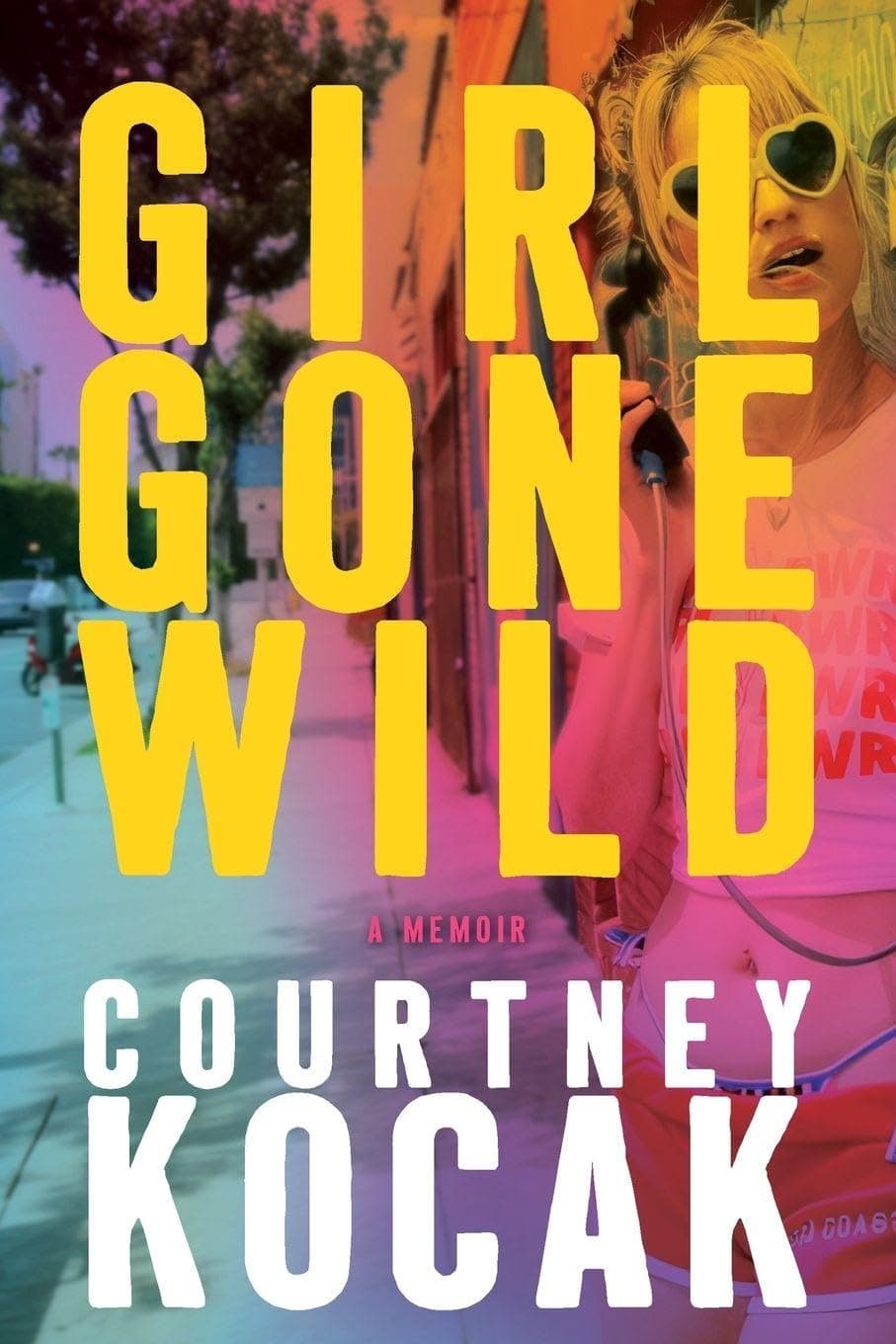
Through her accessible narrative voice, she shows how to both inhabit and revise a culturally manufactured role. She has created the guidebook she never had. The book’s architecture is as straightforward as Kocak’s own brand. Like other books from industry insiders, Kocak writes in a funny, almost shamelessly open style, the voice of a friend who inspires similar disclosure. Those who have moved to Los Angeles to make it and scanned Craigslist ads might recognize themselves in a moment. Kocak makes confession seem strangely easy while resisting sensationalism. Even her cover art—her on a payphone in her underwear—insists on fun, beckoning her audience to join her. But once inside, she lets the unease emerge on its own.
With a journalistic eye in the title chapter, “Girl Gone Wild,” Kocak assesses the abusive franchise she quit with remarkable neutrality.
When girls really go wild, it’s not in ways that can be easily manipulated or monetized by others. When girls really go wild, it’s not spring break or a cross-country party bus tour—it’s a homecoming. They return to themselves, and they are done with the system that oppresses them. They are done with the rules, done with the lies, done with the bullshit … and it threatens the patriarchy.
She reorients her confessions; she documents without whistleblowing. Particularly insightful is the way she frames decisions through the lens of financial strain; she offers her younger self compassion, without ever asking for it.
Kocak came of age with the confessional liberation of The Vagina Monologues as a backdrop. Much of her narrative precedes the publication of books such as Whip Smart and the emergence of writers like Melissa Febos who don’t view transactional intimacy as a binary of victimhood and empowerment. She straddles a moment when the performance of sexual agency no longer resists the system—it sustains it. In 2004, responding to a Craigslist ad soliciting a “massage” might have been viewed as transgressive, while in 2026, such transactions are increasingly normalized by sugar daddy economies.
There is something terribly complicated about being an attractive young woman under the watchful eye of every man you meet. Leering from professors, bank managers, even doctors. The constant attention is intoxicating and gross … I had to use it. The game was fucked up through no fault of my own. I still had to play it.
Here, Kocak articulates what the culture needed before it had the language to name it. For those who entered the Los Angeles film industry prior to the Me Too movement, there was no shared terminology for the conditions that governed advancement, no institutional acknowledgment of the precarious situations young women were expected to navigate. To report misconduct was to risk one’s own professional viability; to remain silent was to internalize the industry terms.
Kocak aligns with current feminist discourse on sexual autonomy and labor. She leaves us with this doubleness: the self as both participant and observer, subject and product. The Girls Gone Wild franchise Kocak disavows could be viewed as scaffolding for women’s ability to profit from sexuality in the digital age, paving the way for the OnlyFans work Kocak endorses. By refusing to connect the two businesses, Kocak sidesteps a tidy resolution, leaving the reader with the discomfort of a girl who went wild on her own terms. What happens when women don’t just participate but run the system? Does control equal liberation? Would it be different if the system were owned by women, or would it reproduce the same structure, simply under new management?
Emily Jace McLaughlin is a writer of fiction, essays, and screenplays based in Santa Fe, New Mexico. Her work has appeared in The Cut, the Washington Post, VICE, Catapult, and elsewhere. She is working on a Y2K novel about girls in Hollywood who survive by enacting the stories American culture tells about them.