Melvin Gibbs’s How Black Music Took Over the World
Word count: 793
Paragraphs: 8
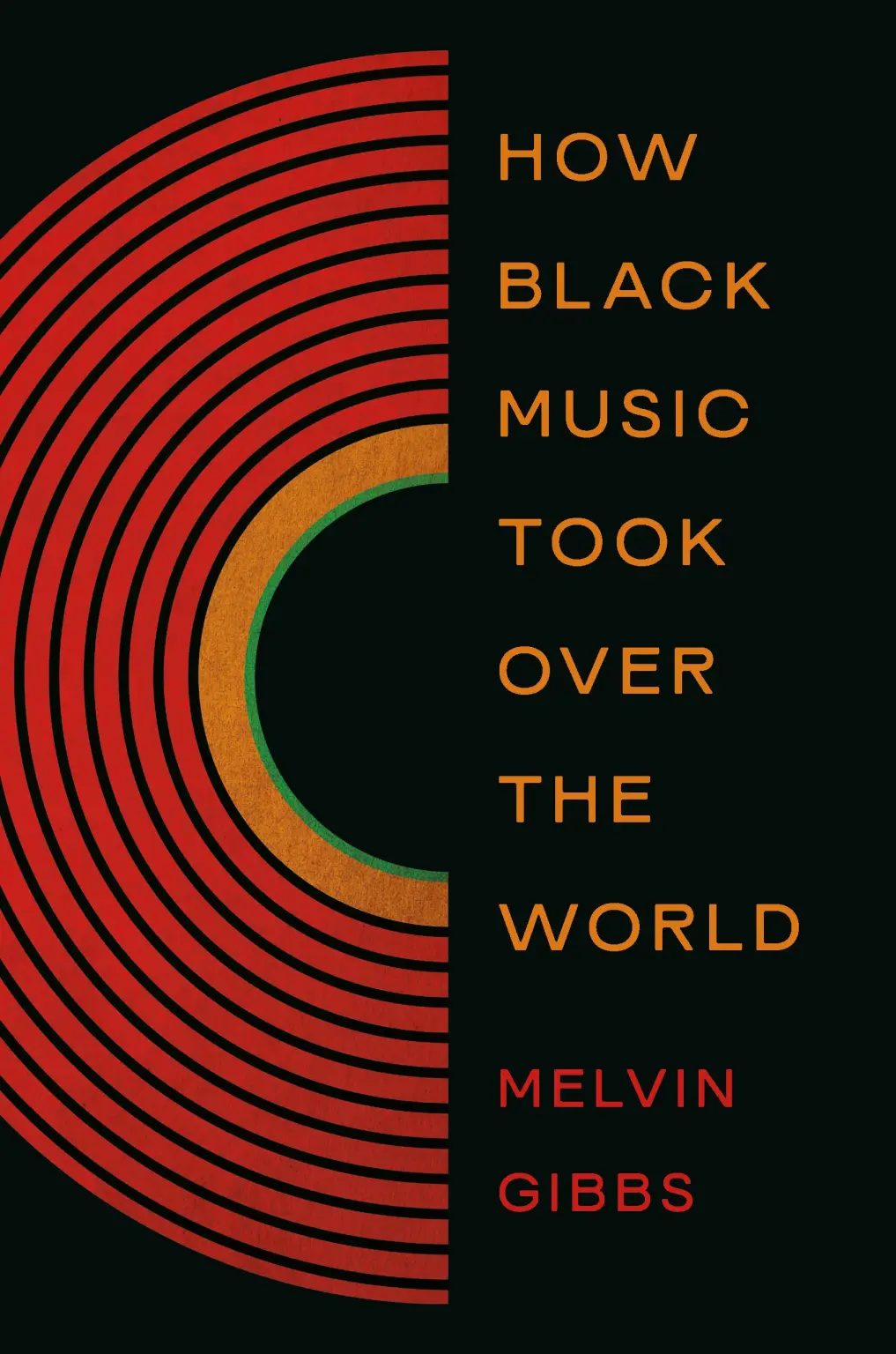
How Black Music Took Over the World
Basic Books, 2026
That Black music has long ago conquered the world is self-evident. Considering the blues and some of its descendants—jazz, rock, soul, reggae, hip-hop, house—makes that beyond clear. The paradox of something so ubiquitous is that it often goes without explanation. But something that is frankly so wonderful and beneficial to civilization—that is indeed an example of civilization against barbarism—deserves serious critical study. And while there is plenty of biographical and culturally analytical writing about Black music and musicians in (at least) American society and history, there’s been far, far less in terms of musicology—which means explaining how music works, why, and how it came to be. There’s even less for the general, non-specialist reader. Melvin Gibbs’s new book fills this hole. It’s not the last story on this complex subject, and in music there’s at least several answers for most questions, but it is an illuminating and comprehensive story. It is great Black musicology.
For a relatively short (three-hundred pages) book on an enormous subject, it may seem impossible to be comprehensive. But Gibbs has the advantage of being one of music’s great inside-men, and he discerningly and wisely spins out the particular—and the personal—into the universal. Playing bass, he has been at the core (and in the producer’s chair) of almost the entire post-punk movement in rock, jazz, funk, and so much more. He played in the Rollins Band, with Ronald Shannon Jackson’s post-harmolodic units, with Sonny Sharrock, Arto Lindsay, Defunkt, John Zorn, and more, and that barely scratches the surface of his music making. The past several years, he’s been part of the deep, uncanny post-rock collective Body Meπa; worked in cross-media collaborations with filmmaker Arthur Jafa and theoretical cosmologist Stephon Alexander; and played on Circuit Des Yeux’s (Haley Fohr) 2025 album, Halo on the Inside.
Long inside the halo of music, Gibbs builds his analysis from the ground up in both musical and autobiographical contexts. He starts with rhythm and childhood; early adolescence adds both baselines and an important and wholistic discussion of frequency, decibels, instrument technology like the Roland TR-808 drum machine, and more; all in the greater context of how he personally discovered these details through his own nerddom and his father’s hearing loss. Riding the subway leads him to record stores and crate-digging, which leads to greater understanding of different cultural styles—how landing a job at the Greenwich Village’s Tower Records opens up the features of Brazilian music. The personal becomes the musical becomes the universal.
As much as he grounds rhythm as the first musical and social (because it gets people moving together and keeps them together in time) principle, it’s the bass that seems to be the glue. The image is of Gibbs, serenely laying out the foundation in any performance, soaking in all the details of what the musicians around him are doing and figuring out how they all work, so he can return the sweetest, most perfectly timed note here, or here. Even in the most frenetic and dense contexts, Gibbs’s playing always has a certainty and even serenity about it, and that’s the legato rise of this book in elucidation and explication.
In the larger picture, or the deeper one, Gibbs ties everything into physical and biological principles. This is essential to understanding music, yet there’s almost no attention paid to it inside musicology. There are geometric descriptions of rhythm, a brilliant innovation pioneered by Godfried T. Toussaint; frequency, which not only identifies pitches but describes the sound waves that bring the physical touch of music to the body; where they influence biological functions, just as they are the product of those functions. And the biology of life is a metaphor for how music is made with, within, and for communities, and how music can bring people into those, and has been doing so for over fifty thousand years.
That is the fundamental point of this book, which Gibbs carefully and, in a low-key way, movingly assembles. Music can be described in abstract terms—pitches and tunings are abstract concepts, so is meter—and there’s plenty of music that’s abstract in the sense it’s about nothing other than how events fit together in time. But even in a room, with just one other person, listening to something like Tristan Perich’s 1-Bit Symphony, there’s a social experience happening, no matter what the intent of the music. And by seeing this, no matter how abstract it might be—from the Pentecostal and Gullah traditions Gibbs covers, diasporic styles in Brazil, dub and minstrelsy, from punk to funk to his own abstract electronic pieces—Black music expands across racial, ethnic, and economic divisions and brings people into the community of Black artists, and civilization.
How Black Music Took Over the World is available April 14. The new Harriet Tubman (Brandon Ross/Melvin Gibbs/JT Lewis, with Georgia Anne Muldrow) album, Electrical Field of Love, is available March 27 on Pi Recordings.
George Grella is the Rail’s music editor.