That’s How Criticism (Or Poetry) Goes: Celebrating Michael Fried
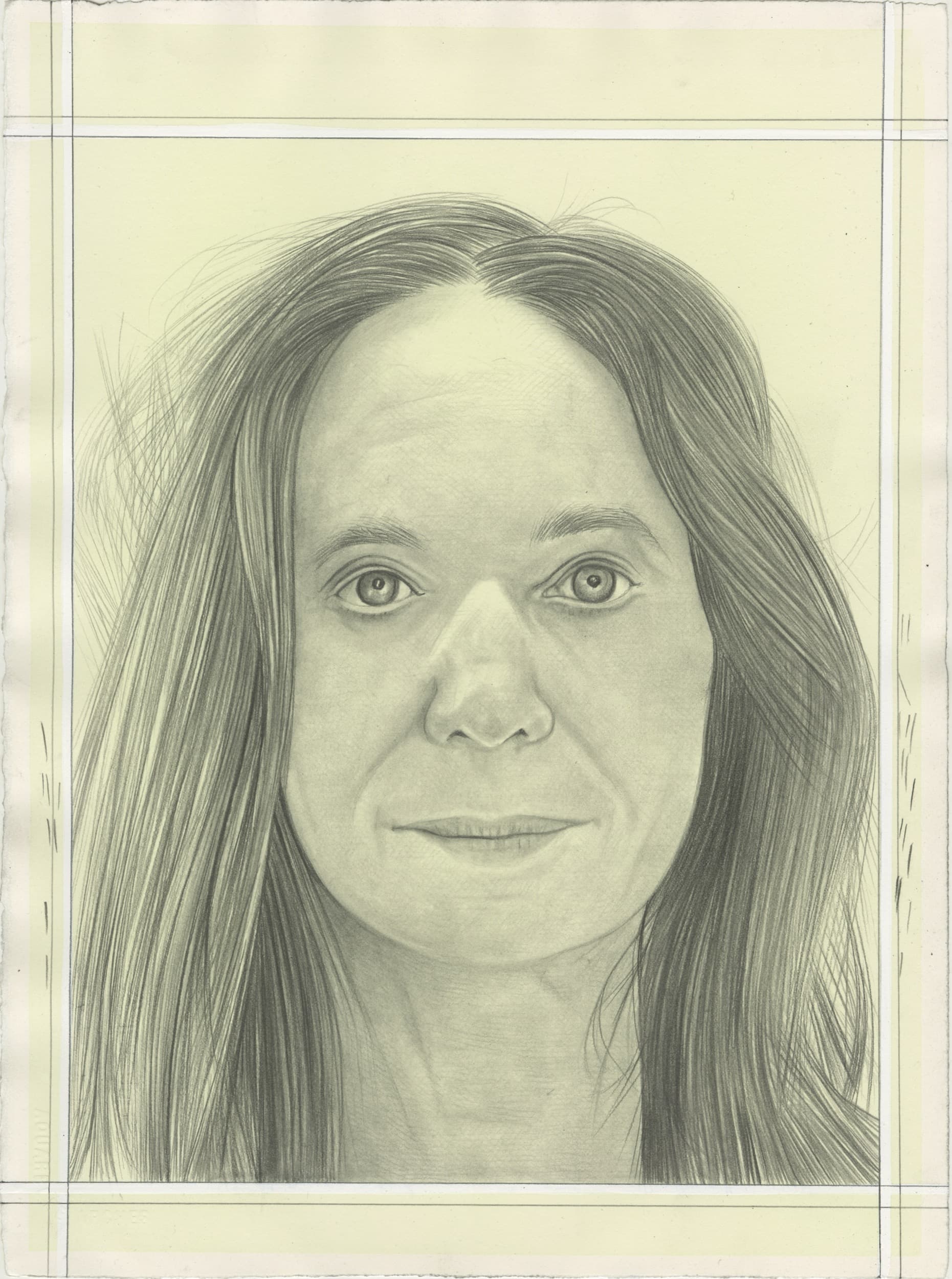
Portrait of Patricia L Lewy, pencil on paper by Phong H. Bui.
Word count: 489
Paragraphs: 4
Rather than a topic or theme, I would propose an occasion—an occasion of celebration and taking stock. Michael Fried has been at the forefront of art-critical and art-historical discourse for sixty years and counting; this Critics Page reflects on the wide swath he has plowed through artistic and literary studies from the sixteenth century to the twenty-first. His bracing, rigorous, and provocative writing has jolted artists and art historians into choruses of both approbation and rebuke. He’s now in his ninth decade and nothing has changed. A set of three new publications forthcoming in early spring, from Eris Press in the United Kingdom and Columbia University Press in the United States, will doubtless further electrify readers. These new books comprise a collection of previously published essays, a group of interviews that includes one—titled Exit Interview—in which Fried interviews himself, and, for the first time, a book of his prose poems, more than two hundred of them, all written in the last several years. Fried is now in the process of compiling his entire body of poetry for future publication. All of which is to say—as he did recently in an email to me—he is “getting [his] legacy in order.”
Fried’s legacy is the prompt to which the artists, art historians, philosophers, and literary scholars below respond. Their comments are as rich and varied, as driven and intense, as Fried’s own passionate writings. I want only to note here (as I have before in my own publications) that everything I know about art—how to look, how to think about what I see, and how to mine the relay between object and beholder—I learned from Michael Fried. The grand idea may come if the right questions of a work are asked.
I was never Michael’s student; I began to study art too late for that, after a full life as a professional orchestral musician, a doctorate in musicology, and a second doctorate in art history (though on a subject—the artist Friedel Dzubas—that Michael had suggested to me). I spent these years trying to “read everything,” as he had advised. My compulsive marginalia in his books caused pages to become unglued and then literally fall out, such that multiple copies of many of those books now fill my shelves. I have spent little time in the same room with him; we have mainly talked by email, in a correspondence that I can only describe as generous, supportive, and stimulating. Twenty years on, I feel the same: awed, deeply affected, and startlingly aware of Michael’s standards—the keen critical looking, the extraordinarily close examination of a chosen object, and the intense, concentrated contextualizing of that object’s place in historical time. It would be impossible to imagine the course of art-critical and art-historical thought in this century without Michael Fried. And like his writing on art, his poetry thrills through cadence, lyric, and the force of intention—an expressive valence as convincing as it is moving.
Patricia L Lewy is an independent art writer, curator, and artists’ estate manager living in New York City.