Madeline Cash’s Lost Lambs
Word count: 928
Paragraphs: 7
Lost Lambs
Farrar, Straus and Giroux, 2026
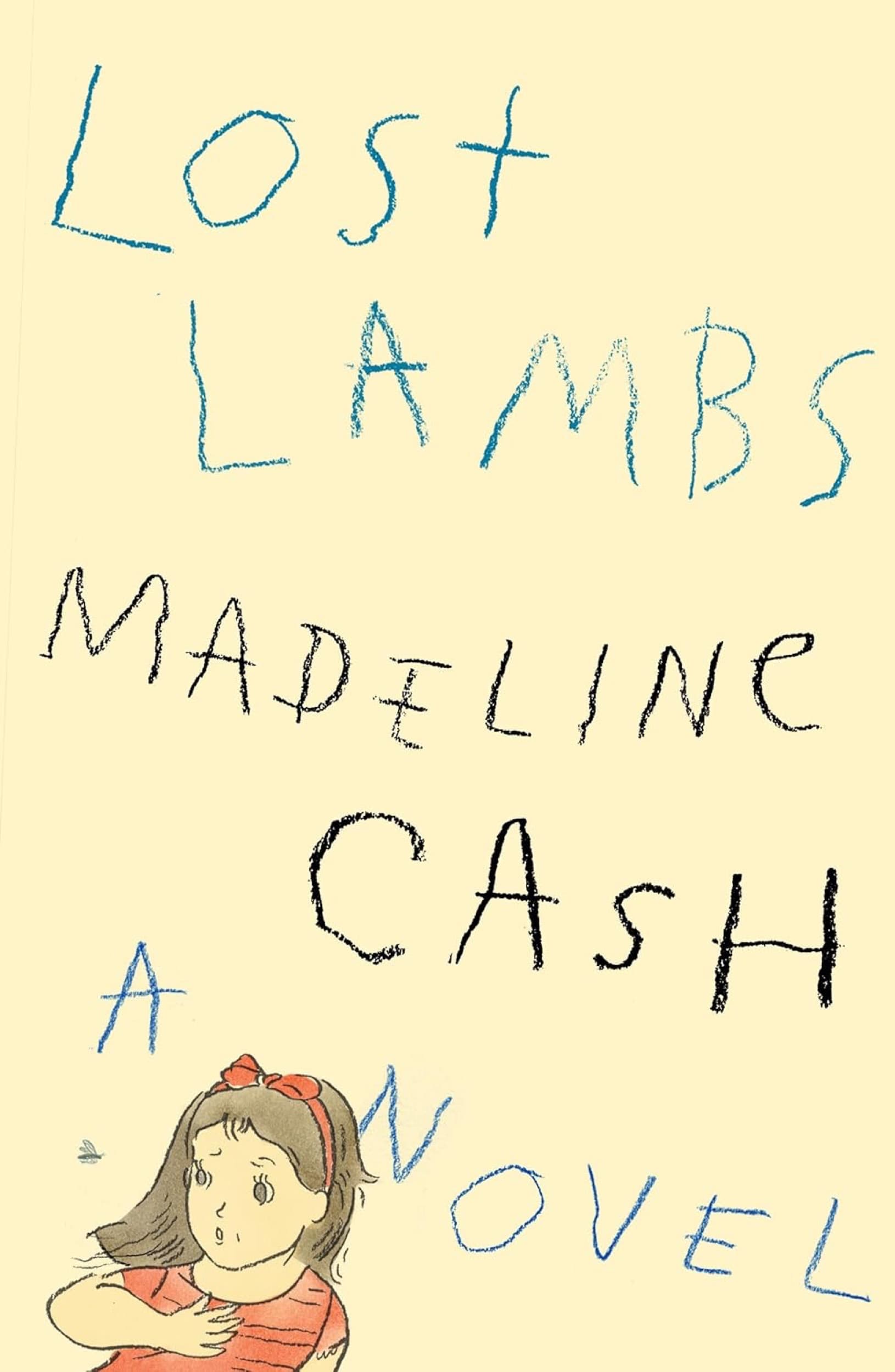
Over the last decade, numerous studies have shown the average length of the human attention span to be in decline. Whether or not you agree, there’s certainly evidence that much of our current media consumption reflects this deficit: the scrolling, the micro-ads, the amped up shock and awe of news stories meant to turn heads, but not lock eyes. When something fails to entertain or intrigue, we immediately move on with little thought to an endless number of alternatives at the ready. Brevity is a marketing ploy acted upon us, leaving us wanting more. However, it may also be that consumers have evolved to prefer momentary satisfaction to surrendering a span of time to one story. But when it comes to art forms that are inherently long by nature, are we still able to collect meaning skimming from a series of shallow pools, or does a worthwhile experience still necessitate a deep dive? One answer may be Madeline Cash’s debut novel, Lost Lambs, a family-saga that holds as many characters and storylines as a one-minute scroll of a newsfeed.
The family at the center of the novel is the Flynns: parents Bud and Catherine—whose attempt at an open marriage has resulted in Bud living in their minivan in the driveway and Catherine chastely dating a neighbor who has a gallery of ceramic vaginas on his basement wall—and their three daughters. Harper is a preteen polyglot who can’t stay out of trouble and entertains herself by logging into her father’s work computer, cleaning up his error-riddled spreadsheets. Louise, the classic shrinking-violet middle child graced with neither her younger sister’s brains or her older sister’s looks, has a unique anxiety-fueled speech impediment and a budding online relationship with an anonymous jihadist. Abigail, the knockout high school senior, dates a veteran called War Crime Wes and gets pulled into the world of a wealthy cult lead by her father’s employer, the shipping magnate Paul Alabaster. If this sounds like a lot, it is. But in a digital age where we can access so much about so many with a simple click, perhaps a lot is the point.
It takes more than compelling characters for a novel to sustain itself, and the storylines that rose to the top in Lost Lambs were too enticing and topical to abandon: billionaires seeking eternal youth; the tension between parenthood and selfhood; the role of art and religion in modern life, the epidemic of loneliness proffered by technology. The prose, often crowded with the stuff of life, is at its best when Cash’s humor is on display: “Bud Flynn took four Trizoletin he’d pillaged from his daughter’s bedroom, masturbated into a tea towel, and prepared to drive the minivan into the sea.” These concise, specifically detailed, wry sentences were the type of writing I was hoping to encounter by someone like Cash, who co-founded the alt-lit print publication Forever Magazine and has a knack for satirizing the emptiness of the modern age. But they were overridden by over-the-top cliched moments, like when the short-haired female contractor remodeling Catherine’s bathroom turns out to be the answer to Catherine’s sexual needs, or learning that the corrupt local priest, Father Andrew, is annoyed at having to endure sexual harassment training—“He didn’t need an instructor of uncertain morals and pronouns to tell him how to do his job. Father Andrew did not want to molest anyone. He just wanted society to chill out a little.” It was surprising to encounter these less-than-fresh plot lines, but with so many other avenues for my attention to wander, so many conspicuous details to distract me, it hardly mattered.
Though the wealth of details can feel chaotic, Cash does seem to be nudging us to pay attention to them. Take the gnats, for example. The novel opens, “The gnat situation in the church was getting out of hand.” We learn that despite his best efforts, Father Andrew has been unable to eradicate the pests, and they show up periodically to plague those inside the church. But it’s not just the physical pests that are invading: there are over two dozen instances of what seem to be intentional misspellings of words where a soft “n” is written as “gn,” as in “gnat”: gnatural, unfortugnately, carbognated water, ice cream altergnatives. It’s as if the idea of pestilence has been embodied by language in a very literal sense. But why? Is this silent “g” supposed to represent the ubiquity of god? Or perhaps greed? Or goodness? Or is my very search for its meaning the thing that Cash is critiquing? How quickly we scan from one clue to the next, hoping for fulfillment, abandoning it when the hit is not instantaneous.
Literature has always presented a means of escape, and the novel in particular comes with the expectation of an elongated trip. Though it’s easy to bemoan the lack of depth in Cash’s story and characters, her ability to mirror contemporary consumption habits and touch on so many headline issues with humor is laudable. I suspect my frustration with Lost Lambs arises from the same part of me that refuses to download TikTok, the same part of me that has set a fifteen-minute a day limit on Instagram—it’s a fear that I’m wasting time, missing something more worthwhile, more meaningful, than sponcon and celebrity soundbytes and reposted footage from a political protest. But this is the stuff of life, and the meaning is there to be made from it, the stories there to be written.
Mary Karmelek is a writer and a current National Book Critics Circle Emerging Critic Fellow.